
Trump Administration Moves to Eliminate Forest Service Research Budget Ahead of Fire Season
A sweeping reorganization of the U.S. Forest Service aims to close 57 research facilities and zero out the agency's science budget to prioritize timber production. Scientists and conservationists warn the cuts will cripple real-time wildfire tracking and evacuation planning.
By Factlen Editorial Team
- Fire Scientists & Researchers
- Warns that eliminating the agency's research capacity will blind first responders and set fire science back decades.
- Conservationists & Unions
- Views the reorganization as deliberate sabotage designed to privatize public lands and enrich the timber industry.
- Administration & Timber Industry
- Argues the Forest Service is bloated and must pivot toward aggressive timber management to reduce wildfire fuel loads.
What's not represented
- · Local communities living in high-risk fire zones
- · State-level forestry departments inheriting new responsibilities
- · Indigenous tribes whose ancestral lands are managed by the Forest Service
Why this matters
The U.S. Forest Service manages 193 million acres of public land and provides the real-time smoke, fire, and evacuation data relied upon by millions of Americans and local fire departments. Gutting its research arm directly threatens public safety and property in the fire-prone American West.
Key points
- The Trump administration's 2027 budget proposes eliminating the Forest Service's entire $309 million research budget.
- The reorganization plan will close 57 of 77 research facilities and move the agency's headquarters to Utah.
- USDA leadership argues the cuts are necessary to streamline the agency and focus on timber production to reduce wildfire fuel loads.
- Scientists warn the closures will cripple real-time tools like the Fire and Smoke Map used for evacuations.
- The agency has already lost 16% of its workforce, including 1,400 wildfire-certified employees, to early retirements.
- Unions and environmental groups are suing, claiming the reorganization is illegal and designed to privatize public lands.
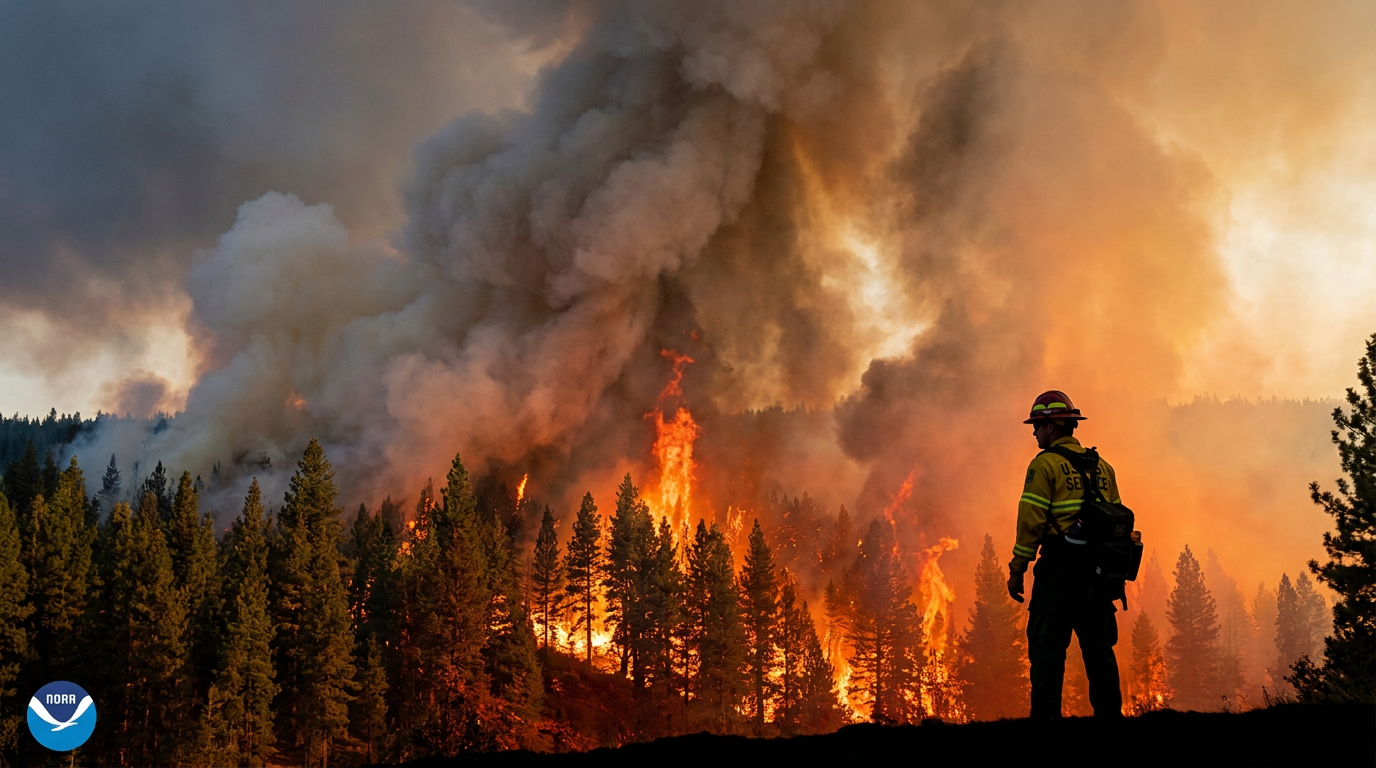
The Trump administration is executing a sweeping reorganization of the United States Forest Service, proposing the complete elimination of its research budget and the closure of dozens of scientific facilities just as the American West braces for a severe summer fire season.[1][4]
The overhaul, spearheaded by the U.S. Department of Agriculture, includes a 2027 budget proposal that zeroes out the agency's $309 million research and development funding. Alongside the budget cuts, the administration plans to close 57 of the Forest Service's 77 research stations across the country, relocate its headquarters from Washington, D.C., to Salt Lake City, and replace nine regional offices with 15 politically appointed "state directors."[2][4][5]
USDA Secretary Brooke Rollins and Forest Service leadership defend the restructuring as a necessary modernization to streamline a bloated bureaucracy. Associate Chief Chris French has stated that the agency faces a "fiscal cliff" regarding facility maintenance, arguing that consolidating underused buildings will make the Forest Service more nimble and bring decision-makers closer to the western lands they manage.[2][5]

The administration's broader strategy pivots the agency away from conservation and heavily toward resource extraction. Secretary Rollins recently issued an "Emergency Situation Determination" covering 112 million acres of national forests to expedite logging, and rescinded the 2001 Roadless Rule to allow road construction and timber harvesting on an additional 59 million acres. The administration argues that aggressive logging and "common-sense timber production" are the most effective ways to reduce the fuel loads that drive catastrophic wildfires.[6]
But fire ecologists and climate scientists are sounding the alarm, warning that the cuts will dismantle the world's premier wildfire research organization. At the Pacific Wildland Fire Sciences Laboratory in Seattle—one of the facilities slated for closure—researchers maintain the federal Fire and Smoke Map. This real-time tool is used by millions of residents, local governments, and elite firefighting teams to track air quality and plan evacuations.[1][7]
But fire ecologists and climate scientists are sounding the alarm, warning that the cuts will dismantle the world's premier wildfire research organization.
Experts warn that shuttering such labs will blind first responders to critical data. The Union of Concerned Scientists has characterized the overhaul as an "assault on science," noting that the loss of decades of institutional knowledge regarding fire behavior, drought patterns, and forest pathogens will leave communities highly vulnerable as climate change accelerates the intensity of fire seasons.[7]

The structural changes compound a severe staffing crisis within the agency. Following a wave of early retirement buyouts and workforce reductions initiated by the administration's efficiency mandates, the Forest Service has already lost approximately 16% of its workforce—nearly 6,000 employees. Crucially, this exodus includes an estimated 1,400 wildfire-certified staff, leaving the agency depleted ahead of the summer.[3][4]
Conservation groups and public lands advocates view the reorganization as an existential threat. Organizations like the Natural Resources Defense Council argue the overhaul is a deliberate sabotage designed to set the agency up for failure. They warn that a manufactured collapse of the agency will inevitably be used to justify the privatization of federal lands, handing vast tracts of pristine wilderness over to the timber and fossil fuel industries.[4][8][9]

The restructuring is now facing fierce legal and union opposition. The National Federation of Federal Employees, which represents 20,000 Forest Service workers, claims the mass relocation of offices is illegal under fiscal year 2026 congressional appropriations, which explicitly forbade the reprogramming of funds for such moves. Meanwhile, environmental groups have filed lawsuits in federal court to block the administration's emergency timber mandates.[3][8][9]
As the legal battles unfold, the immediate consequences will be tested on the ground. With a depleted workforce, researchers facing relocation or termination, and a mandate to dramatically increase logging, the federal government's ability to manage the upcoming infernos is facing an unprecedented and highly controversial stress test.[1][3]
How we got here
March 2025
President Trump issues an executive order to expand American timber production by 25%.
April 2025
USDA Secretary Brooke Rollins issues an 'Emergency Situation Determination' to expedite logging on 112 million acres.
June 2025
The USDA rescinds the 2001 Roadless Rule, opening 59 million acres to road construction and timber harvest.
March 2026
The administration announces a sweeping reorganization, moving HQ to Utah and closing 57 research stations.
May 2026
The proposed 2027 federal budget is released, eliminating the Forest Service's entire $309 million research budget.
Viewpoints in depth
The Administration's View
The Forest Service is bloated and needs to pivot toward aggressive timber management to reduce wildfire fuel loads.
USDA leadership argues that the agency's massive footprint is financially unsustainable and bogged down by bureaucratic red tape. By closing underutilized research facilities and moving headquarters to the West, they aim to bring decision-makers closer to the lands they manage. Furthermore, they contend that the most effective way to prevent catastrophic wildfires is not through endless ecological study, but through active logging and timber production to clear out the dense fuel loads that have built up over decades of fire suppression.
Fire Scientists' View
Eliminating the agency's research capacity will blind first responders and set fire science back decades.
Researchers warn that the Forest Service is the world's premier wildland fire research organization, and its data is irreplaceable. Facilities like the Pacific Wildland Fire Sciences Lab produce real-time smoke maps and fire behavior models that local governments and elite firefighting teams rely on to execute safe evacuations. Scientists argue that as climate change drives hotter, drier, and more unpredictable fire seasons, dismantling the very institutions that study these threats will inevitably cost lives and property.
Conservationists' View
The reorganization is a deliberate sabotage designed to privatize public lands and enrich the timber industry.
Public lands advocates and environmental groups characterize the overhaul as an 'execution' rather than a reorganization. They argue that by gutting the agency's scientific expertise, slashing its workforce, and replacing regional offices with political appointees, the administration is setting the Forest Service up to fail. This manufactured failure, they warn, will then be used as a pretext to transfer federal lands to state control or sell them off entirely to the fossil fuel and timber industries.
What we don't know
- Whether federal courts will issue injunctions to halt the relocation of offices and the implementation of the timber mandates.
- How state and local fire departments will replace the real-time smoke and fire modeling data if the federal research labs are shuttered.
- The exact number of remaining Forest Service employees who will choose to resign rather than relocate to the new state-based offices.
Key terms
- National Forest System
- A network of 154 national forests and 20 national grasslands encompassing 193 million acres of public land managed by the U.S. Forest Service.
- Fuel Load
- The amount of flammable material, such as dead trees, brush, and dry grass, that has accumulated in a forest and can feed a wildfire.
- Roadless Rule
- A 2001 federal regulation that prohibited road construction and timber harvesting on nearly 60 million acres of pristine national forest land, which the current administration recently rescinded.
- Emergency Situation Determination
- A federal designation that allows the government to bypass standard environmental reviews and public comment periods to expedite actions like logging.
Frequently asked
What is the U.S. Forest Service?
The U.S. Forest Service is a federal agency within the Department of Agriculture that manages 193 million acres of public forests and grasslands, and conducts world-leading research on wildfires and forestry.
Why is the administration closing research stations?
The administration argues that the agency's facility footprint is financially unsustainable, and that the Forest Service should refocus its resources on active timber management rather than ecological research.
How will this affect wildfire fighting?
Scientists warn that closing these labs will eliminate real-time tools like the Fire and Smoke Map, which local governments and firefighters use to track air quality, predict fire behavior, and plan evacuations.
Is the reorganization legal?
The National Federation of Federal Employees argues the move is illegal because the fiscal year 2026 budget explicitly forbade the reprogramming of funds to relocate offices or employees.
Sources
Source coverage
9 outlets
3 viewpoints surfaced









[1]NPRFire Scientists & Researchers
President Trump is taking aim at forest and wildfire research just as the West is poised to burn
Read on NPR →[2]KTVU FOX 2Fire Scientists & Researchers
Trump Forest Service overhaul raises concerns about California wildfire research
Read on KTVU FOX 2 →[3]The GuardianConservationists & Unions
'Illegal' forest service overhaul risks causing 'chaos' across US public lands, union claims
Read on The Guardian →[4]Los Angeles TimesConservationists & Unions
Why a major reorganization at the Forest Service has people concerned
Read on Los Angeles Times →[5]WBURFire Scientists & Researchers
Is Trump taking a chainsaw to the Forest Service?
Read on WBUR →[6]U.S. Department of AgricultureAdministration & Timber Industry
Secretary Rollins Announces Sweeping Reforms to Protect National Forests and Boost Domestic Timber Production
Read on U.S. Department of Agriculture →[7]Union of Concerned ScientistsFire Scientists & Researchers
Smokey's Last Stand: What We Lose When President Trump Guts the Forest Service
Read on Union of Concerned Scientists →[8]Natural Resources Defense CouncilConservationists & Unions
USDA Plan to Gut the Forest Service Threatens America's Forests, Water, and Wildfire Preparedness
Read on Natural Resources Defense Council →[9]Democracy Now!Conservationists & Unions
Trump Admin Aims to "Break the Forest Service," Nearly 200 Million Acres at Stake
Read on Democracy Now! →

More in news politics
See all 91 stories →US-Iran Conflict
US Halts Strikes on Iran as Trump Claims Peace Deal is Imminent; Tehran Denies Final Agreement
8 sources

Public Records
New Jersey Supreme Court Rules Private Email Logs of Public Officials Are Subject to Public Records Law
6 sources
US-Iran Conflict
US Halts Military Strikes on Iran Amid Conflicting Claims Over Imminent Peace Deal
8 sources

Clean Air Policy
Fact-Checking Urban Clean Air Zones: Do They Actually Reduce Hospital Admissions?
7 sources

Every angle. Every day.
Get news politics stories with full source coverage and perspective breakdowns delivered to your inbox.