
Fact-Checking Urban Clean Air Zones: Do They Actually Reduce Hospital Admissions?
A new comprehensive analysis of London's ultra-low emission zones reveals a measurable drop in emergency hospital visits, providing concrete data in the ongoing debate over urban air quality policies.
By Factlen Editorial Team
- Public Health Researchers
- Argues that clean air zones are a necessary and highly effective intervention to reduce preventable respiratory illnesses and save lives.
- Municipal Policymakers
- Focuses on the long-term urban planning benefits, emphasizing that the policies successfully accelerate the transition to cleaner transport.
- Motorist Advocates
- Argues that the policies act as a regressive tax, placing an unfair economic burden on low-income drivers and small businesses.
What's not represented
- · Electric Vehicle Manufacturers
- · Urban Planners
Why this matters
As cities worldwide consider charging drivers to enter urban centers, this data proves that these controversial policies directly reduce severe respiratory emergencies, saving both lives and taxpayer healthcare funds.
Key points
- A new Imperial College study links London's clean air zones to a measurable drop in emergency hospital admissions.
- The policies target nitrogen dioxide and fine particulate matter, which are known to trigger asthma and heart disease.
- Data from Bradford shows a 25% reduction in GP visits for breathing problems, saving the NHS an estimated £30,000 monthly.
- Critics maintain that the financial cost of the zones falls unfairly on low-income drivers and small businesses.
- Advanced statistical modeling confirms the health improvements are directly tied to the emissions policies, not just broader trends.
Urban air pollution is a silent public health crisis, but cities globally have been fighting back with low-emission zones. The debate surrounding these policies has often been fierce and highly politicized, but new data is finally moving the conversation from political rhetoric to measurable health outcomes.[7]
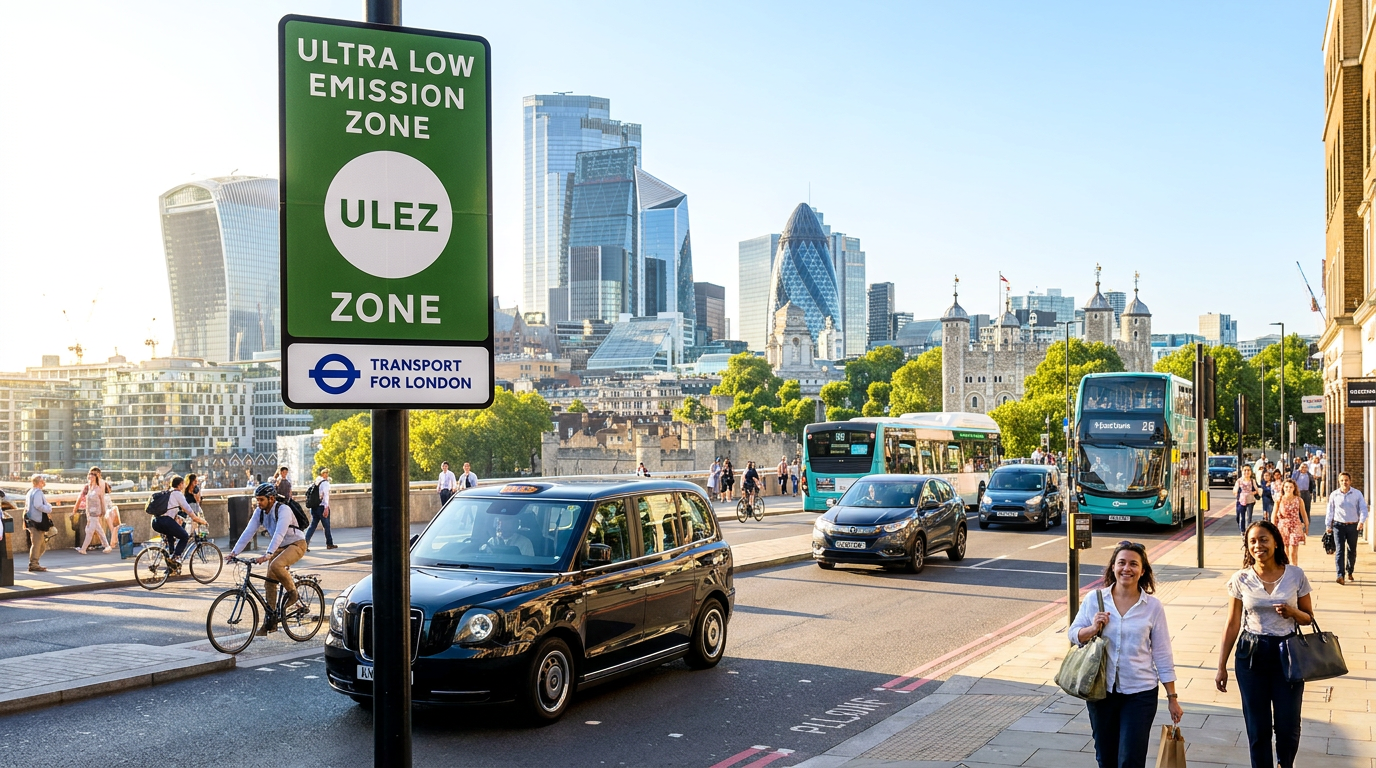
The core question for policymakers and residents alike has been straightforward: Do these zones actually keep people out of the hospital? A new study from Imperial College London provides some of the most robust evidence to date, analyzing millions of health records before and after the introduction of London's T-charge and Ultra Low Emission Zone.[1][2]
The findings are striking. Researchers observed a statistically significant drop in emergency hospital admissions for respiratory and cardiovascular conditions immediately following the implementation of these air quality reduction zones.[1][2]
To understand why this happens, we must look at the biological mechanism. Combusion engine vehicles emit nitrogen dioxide and fine particulate matter, both of which inflame human airways, restrict lung function, and exacerbate chronic conditions like asthma and heart disease.[5][7]

By charging highly polluting vehicles a daily fee to enter the city center, the policy rapidly accelerated the transition to cleaner engines and electric vehicles. The Mayor of London's office reports that nitrogen dioxide concentrations in central London have fallen by nearly half since the policies were first introduced.[6]
London is not an isolated case. Evidence from other cities corroborates the trend, proving that the health benefits are replicable. In Bradford, the implementation of a targeted Clean Air Zone was followed by a dramatic reduction in regional healthcare utilization.[3][5]
Specifically, a peer-reviewed study published in ScienceDirect found a 25 percent reduction in general practitioner visits for heart and breathing problems in the first year of the Bradford zone's operation.[1][3]
This drop in medical emergencies translates directly into economic relief for strained healthcare systems. The Bradford study estimated that the reduction in clinical visits saved the National Health Service over £30,000 a month in that city alone.[1][3]

This drop in medical emergencies translates directly into economic relief for strained healthcare systems.
Despite the overwhelmingly positive health data, the policies remain highly contested on economic grounds. Critics argue that the financial burden of upgrading vehicles or paying daily charges falls disproportionately on lower-income workers, tradespeople, and small businesses who rely on older vans.[4]
Motorist advocacy groups and several right-leaning publications have questioned whether the marginal health benefits justify the steep economic costs imposed on drivers, particularly during a prolonged cost-of-living crisis.[4]
Furthermore, isolating the exact impact of emission zones is scientifically complex. Researchers must carefully control for confounding variables, such as seasonal weather changes, broader national trends in electric vehicle adoption, and the lingering effects of the COVID-19 pandemic on hospital admissions.[2][5]
However, the Imperial College researchers utilized advanced statistical modeling to isolate the specific impact of the London zones. They compared the actual hospital admissions data against a synthetic control model of what would have happened without the policy, confirming the drop was directly linked to the air quality intervention.[2]

The consensus emerging from the data is that while clean air zones are not a silver bullet for all urban environmental issues, they are a highly effective, rapid-acting public health intervention. The reduction in acute medical emergencies is both measurable and sustained over time.[5][7]
As more cities globally consider implementing similar zones, this growing body of evidence provides a crucial foundation for policymakers. The debate is now likely to shift from whether these zones work to how they can be implemented more equitably to protect vulnerable workers.[6][7]
Ultimately, the data suggests a clear and quantifiable trade-off: localized economic friction for motorists in exchange for immediate, city-wide improvements in cardiovascular and respiratory health.[7]
How we got here
2017
London introduces the T-charge, an initial emissions surcharge for older, highly polluting vehicles.
2019
The Ultra Low Emission Zone (ULEZ) is officially launched in central London to further restrict toxic air.
2022
Bradford implements its own Clean Air Zone, targeting commercial vehicles to reduce local pollution.
June 2026
Imperial College researchers publish comprehensive data showing a definitive drop in emergency hospital admissions linked to the zones.
Viewpoints in depth
Public Health Consensus
Medical researchers emphasize the undeniable link between reduced emissions and saved lives.
For public health officials and epidemiologists, the data from London and Bradford represents a monumental victory. They argue that air pollution has long been an invisible killer, responsible for thousands of premature deaths annually. By providing concrete evidence that policy interventions directly reduce emergency room visits and ease the burden on healthcare systems, this camp believes the moral and scientific argument for clean air zones is now indisputable.
Economic Skeptics
Advocates for motorists focus on the regressive nature of the financial penalties.
While rarely disputing the underlying science of air quality, motorist advocates and some economists argue that the implementation of these zones is fundamentally inequitable. They point out that wealthy residents can easily afford to purchase compliant electric vehicles, while lower-income workers, tradespeople, and small businesses are forced to pay punitive daily charges just to commute to work. This camp argues that the transition to clean air must be subsidized, rather than achieved through regressive taxation.
What we don't know
- Whether the health benefits will plateau as the easiest emissions reductions are achieved.
- The exact long-term impact of these zones on the economic vitality of city-center retail businesses.
- How the rise of heavier electric vehicles might offset some benefits by increasing tire-wear particulate pollution.
Key terms
- ULEZ
- Ultra Low Emission Zone, a specific area in London where a fee is charged for driving the most polluting vehicles.
- PM2.5
- Fine particulate matter, tiny pollution particles from exhausts and tires that can penetrate deep into the lungs and enter the bloodstream.
- NO2
- Nitrogen dioxide, a harmful gas emitted by combustion engines that inflames airways and exacerbates respiratory conditions.
Frequently asked
What exactly is a Clean Air Zone?
A designated urban area where highly polluting vehicles are charged a fee to enter, designed to encourage the use of cleaner transport and reduce local emissions.
Did the London ULEZ actually improve health?
Yes. Recent studies from Imperial College London show a statistically significant drop in emergency hospital admissions for respiratory and cardiovascular issues following its implementation.
Are these zones financially harmful to drivers?
Critics argue the daily charges disproportionately affect lower-income workers and small businesses who cannot easily afford to upgrade to newer, compliant vehicles.
Sources
Source coverage
7 outlets
3 viewpoints surfaced







[1]The GuardianPublic Health Researchers
Emergency hospital admissions fell after introduction of London’s T-charge and Ulez, study suggests
Read on The Guardian →[2]Imperial College LondonPublic Health Researchers
Impact of ultra-low emission zones on acute healthcare utilization: A retrospective cohort study
Read on Imperial College London →[3]ScienceDirectPublic Health Researchers
Evaluating the healthcare cost savings of the Bradford Clean Air Zone
Read on ScienceDirect →[4]The TelegraphMotorist Advocates
Are Ulez health benefits being overstated to justify the economic burden on motorists?
Read on The Telegraph →[5]BBC NewsMunicipal Policymakers
Clean air zones: Do they really improve our health?
Read on BBC News →[6]Mayor of LondonMunicipal Policymakers
London's air quality continues to improve under expanded ULEZ
Read on Mayor of London →[7]Factlen Editorial Team
Synthesis by Factlen editorial team
Read on Factlen Editorial Team →
More in news politics
See all 94 stories →Hormuz Standoff
U.S. and Iran Trade Strikes as Trump Claims Peace Deal is Imminent
7 sources

US-Iran Conflict
Trump Cancels Iran Strikes, Claims Peace Deal Is Imminent as Tehran Cautions No Final Agreement Reached
8 sources
Prebunking
How 'Prebunking' is Replacing Traditional Fact-Checking to Combat Misinformation
7 sources

US-Iran Conflict
US Halts Strikes on Iran as Trump Claims Peace Deal is Imminent; Tehran Denies Final Agreement
8 sources

Every angle. Every day.
Get news politics stories with full source coverage and perspective breakdowns delivered to your inbox.