
Trump Halts Planned Strikes on Iran, Citing Progress on Peace Deal
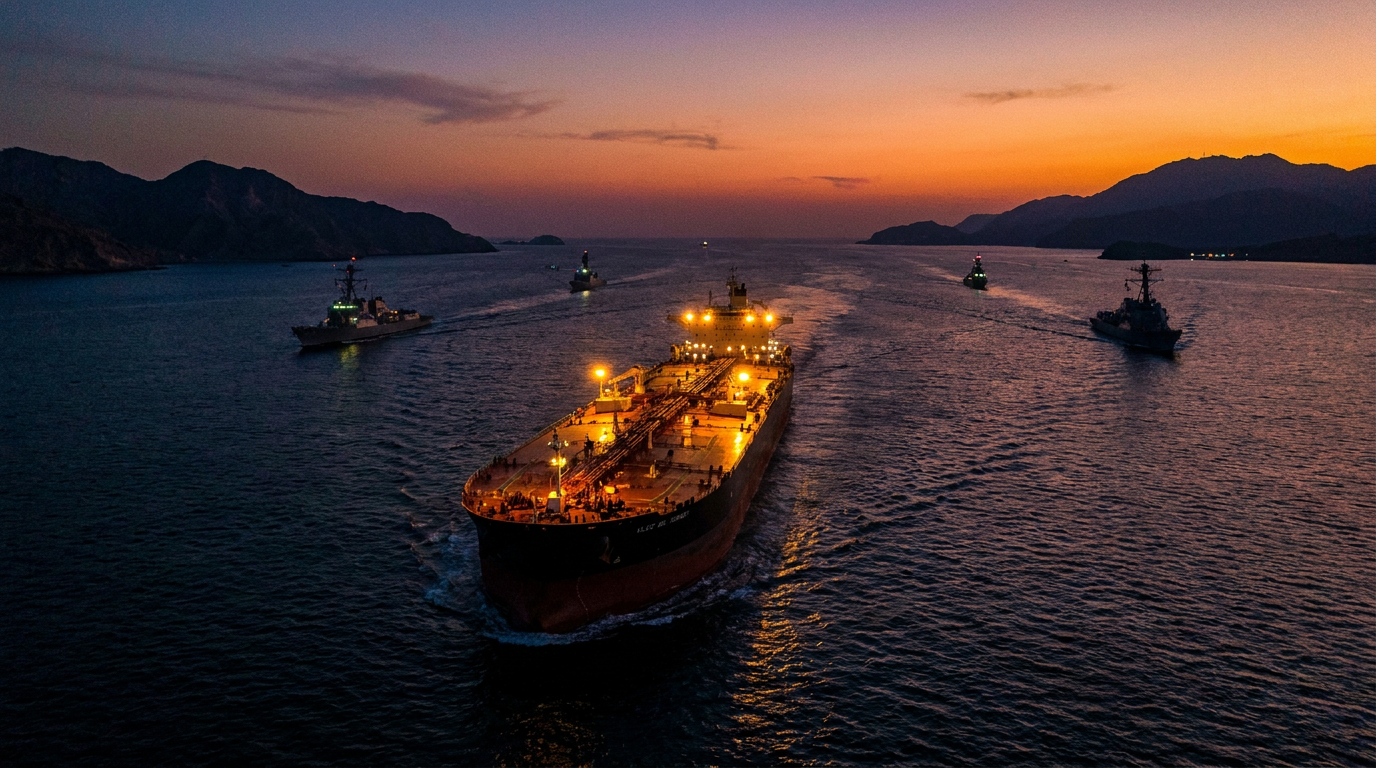
President Trump abruptly canceled military strikes against Iran, announcing that a preliminary agreement to end the three-month war and reopen the Strait of Hormuz is nearing completion. Iranian officials cautioned that no final decision has been made, though mediators report key gaps have narrowed.
By Factlen Editorial Team
- U.S. Administration
- Believes maximum military and economic pressure has forced Iran to the negotiating table.
- Iranian Leadership
- Maintains a cautious posture, denying that any final surrender has been formalized.
- Global Energy Importers
- Desperate for a reopening of the Strait of Hormuz to stabilize energy prices.
- Israeli Government
- Insists any final treaty must completely dismantle Iran's nuclear infrastructure.
What's not represented
- · Iranian civilians enduring the economic and physical toll of the strikes
- · U.S. military personnel deployed in the region facing potential escalation
Why this matters
The three-month war between the U.S. and Iran has choked off global energy supplies and driven up inflation worldwide. A finalized peace deal would reopen the Strait of Hormuz, stabilizing oil markets and pulling the global economy back from the brink of a broader, devastating recession.
Key points
- Trump canceled planned military strikes on Iran just hours before execution.
- The U.S. claims a memorandum of understanding has been approved by Iranian leadership.
- Iranian state media and officials insist no final agreement has been reached.
- The proposed deal would extend the ceasefire and reopen the Strait of Hormuz.
- Israel insists any final treaty must dismantle Iran's nuclear enrichment infrastructure.
- The war has already caused economic contraction in Western nations due to energy spikes.
President Donald Trump abruptly canceled a wave of planned military strikes against Iran on Thursday evening, announcing that the two nations are on the verge of a historic peace agreement to end their three-month war. Speaking from the Oval Office, Trump declared that a preliminary settlement had been reached and could be signed in Europe within days, marking a sudden de-escalation in a conflict that has rattled the globe.[1][2][4]
The diplomatic breakthrough centers on a proposed memorandum of understanding. According to the White House, the framework has been approved by the highest levels of Iranian leadership, as well as a coalition of regional stakeholders including Saudi Arabia, Qatar, and the United Arab Emirates.[1][3]
However, officials in Tehran immediately moved to temper expectations. Iran's Foreign Ministry and state media outlets pushed back against the American president's timeline, stating that no final decision has been made and characterizing reports of an imminent signing as "speculative." Despite the public denials, mediators from Qatar have reportedly helped narrow key gaps between the two sides in recent days.[3][5]
If finalized, the memorandum would establish a 60-day extension of the current, fragile ceasefire. Crucially for the global economy, the pact requires Iran to reopen the Strait of Hormuz to commercial shipping. In exchange, the two nations would launch a new, intensive round of negotiations aimed at permanently restricting Iran's nuclear program and addressing the unfreezing of certain Iranian financial assets.[1][3][4]

The potential deal is being closely monitored by Israel, which launched the initial wave of strikes alongside the U.S. in late February. Israeli Prime Minister Benjamin Netanyahu stated that while Israel is not a direct party to the memorandum, Trump has committed that any final treaty will mandate the removal of Iran's enriched nuclear material, the dismantling of its enrichment infrastructure, and the cessation of its support for regional proxy militias.[1]
The potential deal is being closely monitored by Israel, which launched the initial wave of strikes alongside the U.S.
The pivot toward diplomacy followed a morning of intense saber-rattling that had the region bracing for a massive escalation. Just hours before calling off the attack, Trump took to social media to warn that the U.S. military would hit Iran "VERY HARD" and threatened to seize control of Kharg Island "in the not too distant future."[4][6]
Kharg Island is the undisputed linchpin of the Iranian economy, a small coral island in the Persian Gulf that handles approximately 90 percent of the nation's crude oil exports. While occupying the island would effectively give the U.S. total control over Iran's energy markets, Trump later walked back the threat in a television interview, questioning whether the American public had the "appetite" for the ground invasion such an operation would require.[6][8]

The U.S. military was reportedly taking the president's initial threats seriously. Defense officials indicated that forces were just three hours away from executing the planned strikes—which were expected to target radar and air defense systems similar to a bombardment carried out the previous night—before the stand-down order was issued.[1][4]
The urgency to finalize a peace deal is heavily driven by the war's mounting economic toll. Iran's blockade of the Strait of Hormuz has choked off a vital artery for global oil production, sending energy prices soaring. The shockwaves are already visible in Western economies; official figures released Thursday showed the United Kingdom's economy shrank by 0.1 percent in April directly due to the conflict's inflationary pressures.[7]

Financial markets, which have been battered by the uncertainty of a prolonged Middle Eastern war, surged on the news of the canceled strikes. Trump pointed to a 1,000-point stock market rally as evidence that investors "like the deal" and are pricing in a return to maritime stability.[1]
The coming days will test whether the tentative memorandum can survive the deep-seated mistrust between Washington and Tehran. As diplomats race to finalize the paperwork and arrange a potential signing ceremony in Europe, the region remains in a tense holding pattern, suspended between the promise of a ceasefire and the looming threat of renewed bombardment.[3][5]
How we got here
Feb 2026
The U.S. and Israel launch large-scale strikes on Iran, initiating the war.
April 2026
A fragile, temporary ceasefire is negotiated between Washington and Tehran.
June 11, 2026 (Morning)
Trump threatens to hit Iran 'very hard' and seize the Kharg Island oil terminal.
June 11, 2026 (Evening)
Trump cancels the strikes, announcing a breakthrough in peace negotiations.
Viewpoints in depth
U.S. Administration's view
Believes maximum military and economic pressure has forced Iran to the negotiating table.
The White House and its allies argue that the relentless bombardment of Iranian radar and air defense systems, coupled with the credible threat of seizing the nation's primary oil terminal, broke the stalemate. From this perspective, the proposed memorandum of understanding is a direct result of American leverage, proving that Tehran's leadership will ultimately prioritize regime survival over continued conflict.
Iranian Leadership's view
Maintains a cautious posture, denying that any final surrender has been formalized.
Tehran's public messaging is designed to project strength and avoid the appearance of capitulation. Iranian state media and foreign ministry officials emphasize that no final decisions have been made and that the country's 'red lines' remain intact. For the Iranian establishment, any deal must guarantee the lifting of crippling sanctions and the preservation of its sovereignty, framing the current pause as a tactical maneuver rather than a definitive concession.
Global Energy Importers' view
Desperate for a reopening of the Strait of Hormuz to stabilize energy prices.
For nations reliant on Middle Eastern oil, the geopolitical posturing is secondary to the immediate economic crisis. The closure of the Strait of Hormuz has triggered a global energy shock, directly causing economic contractions in countries like the U.K. This camp views the peace deal primarily as an economic rescue package, prioritizing the swift resumption of commercial shipping over the granular details of nuclear inspections.
Israeli Government's view
Insists any final treaty must completely dismantle Iran's nuclear infrastructure.
While not a direct signatory to the preliminary memorandum, Israel views the negotiations through an existential lens. The Israeli government supports the U.S. military pressure but remains deeply skeptical of diplomatic promises. They demand that any finalized treaty go beyond a mere ceasefire, requiring the physical destruction of Iran's enriched uranium stockpiles and a permanent end to Tehran's funding of proxy militias like Hezbollah.
What we don't know
- Whether Iran's Supreme Leader has formally signed off on the memorandum of understanding.
- The exact timeline and location for a potential signing ceremony.
- How the U.S. plans to verify the dismantling of Iran's nuclear sites buried under rubble.
Key terms
- Kharg Island
- A small Iranian island in the Persian Gulf that serves as the country's primary oil export terminal.
- Strait of Hormuz
- A narrow, strategically vital waterway between the Persian Gulf and the Gulf of Oman through which roughly a fifth of global oil production flows.
- Memorandum of Understanding
- A formal agreement between two or more parties that outlines the framework of a deal before a final, legally binding treaty is signed.
Frequently asked
Is the US-Iran war officially over?
Not yet. A fragile ceasefire is in place, and a preliminary agreement is reportedly being negotiated, but a final peace treaty has not been signed.
Why did Trump threaten Kharg Island?
Kharg Island handles about 90% of Iran's crude oil exports, making it the most critical vulnerability in the Iranian economy.
What does Israel want from the deal?
Israeli Prime Minister Benjamin Netanyahu stated that any final agreement must include the complete removal of Iran's enriched nuclear material and an end to its funding of proxy groups.
Sources
Source coverage
8 outlets
4 viewpoints surfaced








[1]CBS NewsIsraeli Government
Trump says he's canceled tonight's strikes, citing progress on a potential deal
Read on CBS News →[2]Fox NewsU.S. Administration
Trump cancels scheduled strikes against Iran, claiming progress in talks
Read on Fox News →[3]AxiosIranian Leadership
Trump claims Iran deal reached, Tehran says no "final decision"
Read on Axios →[4]The Washington PostU.S. Administration
Trump withdraws threats to take Iran's oil terminal, citing peace deal progress
Read on The Washington Post →[5]Al JazeeraIranian Leadership
Iran weighs proposed deal but remains wary of US intentions
Read on Al Jazeera →[6]Military TimesU.S. Administration
Trump threatens to seize Kharg Island, then walks back amid ceasefire talks
Read on Military Times →[7]The GuardianGlobal Energy Importers
UK economy shrank by 0.1% in April as Iran war held back growth
Read on The Guardian →[8]Council on Foreign RelationsGlobal Energy Importers
Kharg Island: The Flash Point in the U.S.-Iran Conflict
Read on Council on Foreign Relations →
More in news politics
See all 94 stories →Hormuz Standoff
U.S. and Iran Trade Strikes as Trump Claims Peace Deal is Imminent
7 sources
US-Iran Conflict
Trump Cancels Iran Strikes, Claims Peace Deal Is Imminent as Tehran Cautions No Final Agreement Reached
8 sources
Prebunking
How 'Prebunking' is Replacing Traditional Fact-Checking to Combat Misinformation
7 sources

US-Iran Conflict
US Halts Strikes on Iran as Trump Claims Peace Deal is Imminent; Tehran Denies Final Agreement
8 sources
Every angle. Every day.
Get news politics stories with full source coverage and perspective breakdowns delivered to your inbox.