
Former South Korean President Yoon Suk Yeol Sentenced to 30 Years for Drone Plot
A Seoul court sentenced the ousted leader to 30 years in prison, ruling he ordered drone flights over North Korea to manufacture a crisis and justify his 2024 martial law declaration.
By Factlen Editorial Team
- South Korean Judiciary
- Argues that the drone flights were a calculated abuse of power intended to manufacture a national crisis and justify the illegal suspension of civilian rule.
- Yoon's Defense Team
- Maintains that the drone operations were a legitimate, proportionate military response to North Korean provocations, and that prosecuting a former commander-in-chief endangers national security.
- Current Administration
- Views the convictions as necessary accountability for a rogue administration that recklessly endangered the public and damaged diplomatic stability for private political gain.
What's not represented
- · North Korean citizens exposed to the dropped propaganda leaflets
- · Frontline South Korean soldiers stationed at the border during the heightened tensions
Why this matters
This unprecedented conviction exposes the extreme lengths a democratic leader took to subvert civilian rule, highlighting the fragility of geopolitical stability when domestic political survival is prioritized over national security.
Key points
- Former South Korean President Yoon Suk Yeol was sentenced to 30 years in prison for ordering covert drone flights over North Korea.
- The court ruled the October 2024 flights were designed to provoke an armed response and manufacture a crisis to justify martial law.
- Former Defense Minister Kim Yong-hyun was also found guilty of abuse of power and aiding an adversary.
- Prosecutors revealed that crashed drones exposed sensitive South Korean military capabilities to North Korean authorities.
- Yoon is already serving a life sentence for leading an insurrection related to his December 2024 martial law declaration.
- Yoon's defense team claims the flights were a legitimate military response to North Korean trash balloons.
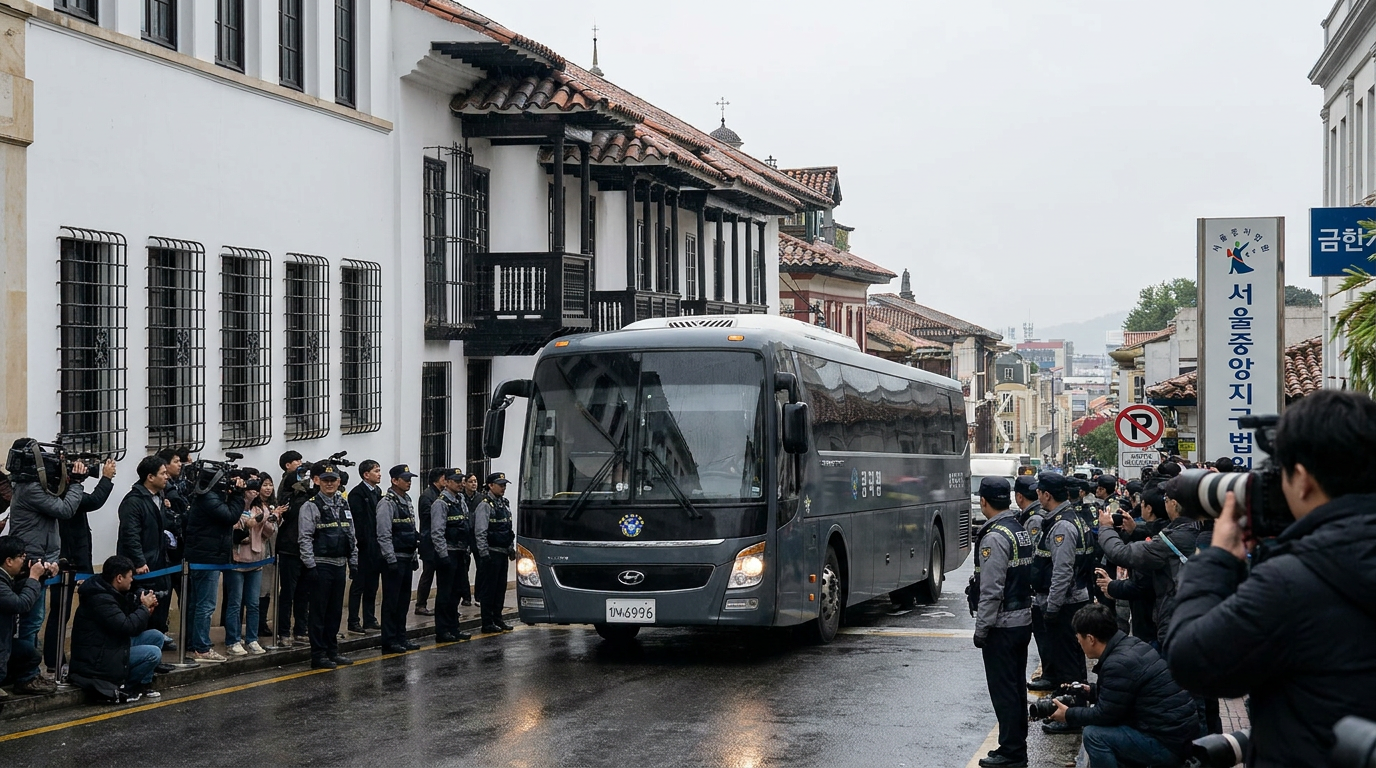
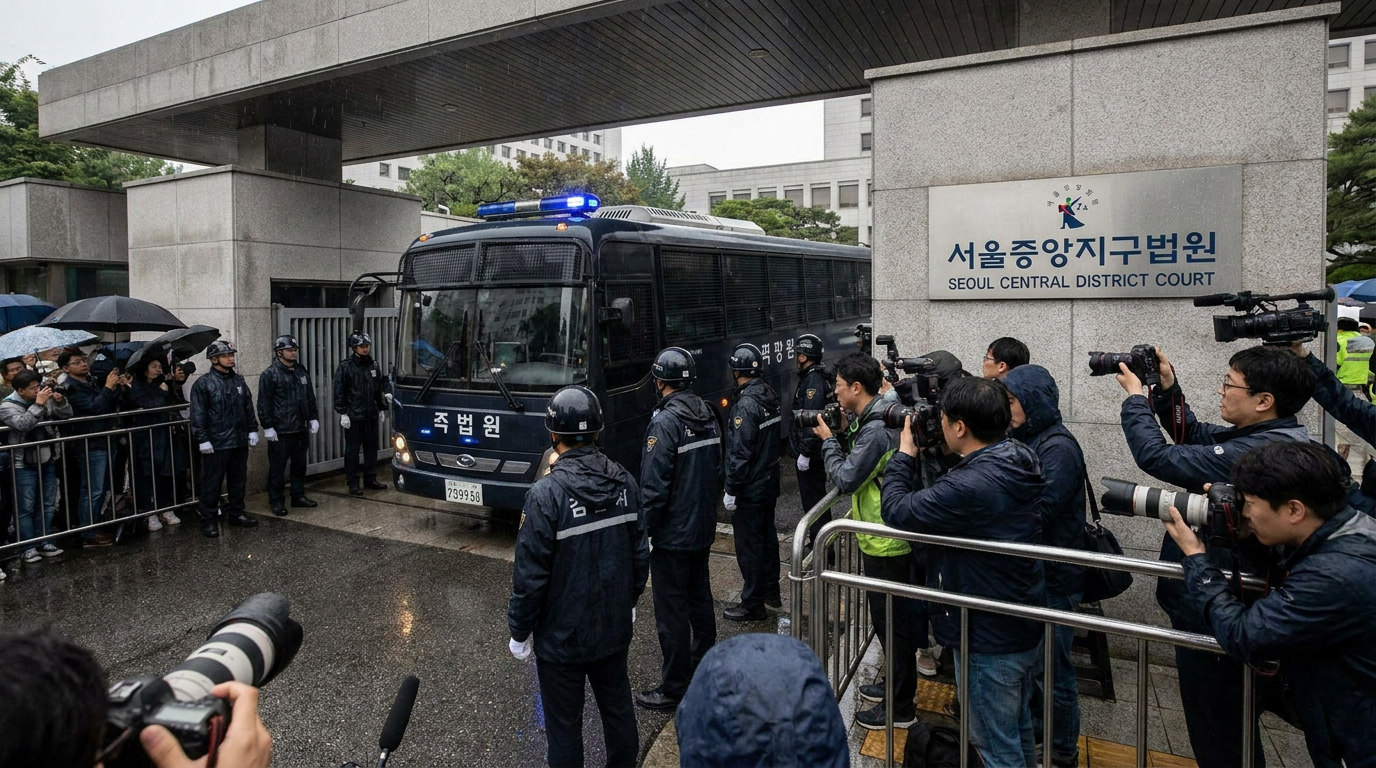
A South Korean court has sentenced ousted President Yoon Suk Yeol to 30 years in prison for orchestrating a covert military drone operation over North Korea, a move judges ruled was a deliberate attempt to manufacture a national security crisis. The Seoul Central District Court delivered the verdict on Friday, concluding that the October 2024 drone flights were not a routine military maneuver, but a calculated provocation designed to justify Yoon's disastrous declaration of martial law two months later. The ruling adds another layer of criminality to a scandal that has deeply shaken Asia's fourth-largest economy.[1][2][6]
The ruling marks a historic and severe judicial rebuke, representing the first time a former South Korean president has been convicted of 'benefiting the enemy'—a grave offense classified under crimes against the state. According to the court, Yoon and his former Defense Minister, Kim Yong-hyun, conspired from the outset to fly unmanned aerial vehicles over Pyongyang to drop anti-regime propaganda leaflets. The explicit goal, prosecutors successfully argued, was to goad the nuclear-armed North into an armed retaliation that would terrify the South Korean public and create the wartime conditions necessary to suspend civilian rule.[3][6][7]
This 30-year sentence compounds the legal ruin of the once-powerful conservative leader, who is already in custody appealing a life sentence handed down in February 2026 for leading an insurrection. That earlier conviction stemmed directly from the events of December 3, 2024, when Yoon shocked the world by appearing on late-night television to declare martial law. During that broadcast, he accused his liberal political opponents of being 'anti-state' forces sympathetic to Pyongyang, attempting to use the military to arrest lawmakers and seize control of the government.[4][5][8]

The mechanism of Yoon's plot relied heavily on escalating the already fraught border dynamics between the two Koreas, which remain technically at war since the 1950-1953 conflict ended in an armistice rather than a peace treaty. Throughout early 2024, North Korea had been sending thousands of balloons filled with trash and refuse across the border into the South. Yoon's defense team argued throughout the trial that the October drone incursions were a proportionate, legitimate military response to these balloon launches, fiercely denying any connection to his domestic political maneuvering.[4][6][8]
However, the special prosecution team, led by Cho Eun-suk, dismantled that defense by presenting evidence that the drone operation was executed for private political purposes rather than national defense. The court found that Yoon intended to provoke Pyongyang 'into carrying out armed or equivalent acts against South Korea's military or people.' By deliberately escalating the threat level, Yoon sought a pretext to deploy the military domestically, sideline the opposition-controlled National Assembly, and consolidate authoritarian power without facing immediate public backlash over his subversion of democratic norms.[1][2][8]
The fallout from the drone operation extended beyond domestic political scheming, actively damaging South Korea's military readiness. Prosecutors revealed during the trial that several of the drones crashed near Pyongyang, allowing North Korean authorities to recover them. This critical failure exposed highly sensitive South Korean military capabilities, including drone specifications, onboard surveillance equipment, and classified flight routes. The court noted that this effectively handed the adversary a tactical advantage, undermining future intelligence operations and compromising the safety of South Korean forces.[5][6]

The fallout from the drone operation extended beyond domestic political scheming, actively damaging South Korea's military readiness.
Former Defense Minister Kim Yong-hyun, a key confidant who helped mobilize forces for the eventual martial law decree, was also found guilty of abuse of power and aiding an adversary. The court noted that both men bypassed standard military protocols to execute the flights, prioritizing their political survival over the safety of the twenty-five million residents living in the Seoul metropolitan area. The capital city sits just miles from the heavily fortified border and well within range of North Korean conventional artillery, making any provoked retaliation potentially catastrophic.[6][8]
The October 2024 drone flights did succeed in spiking tensions across the peninsula. At the time, North Korea furiously accused Seoul of the incursions, while the South Korean Defense Ministry issued vague statements, neither confirming nor denying the allegations. While the situation did not spiral into the full-scale military clash Yoon allegedly hoped for, the heightened anxiety provided the atmospheric backdrop for his December 3 martial law decree, allowing him to claim that the nation was facing an imminent existential threat from the North.[4][8]
That decree ultimately collapsed within six hours. In a dramatic display of democratic resilience, South Korean lawmakers physically broke through military and police blockades at the National Assembly building to vote down the martial law order, forcing Yoon's cabinet to rescind the measure. The ensuing political earthquake triggered massive street protests, sent the South Korean stock market plunging, and caught key international allies, including the United States, completely off guard as they scrambled to understand the sudden suspension of civilian rule in a vital allied nation.[2][8]

The failed insurrection led to Yoon's rapid downfall. He was suspended from office, formally impeached by the legislature, and permanently removed by the Constitutional Court in 2025. The resulting power vacuum necessitated a snap election, which ushered liberal President Lee Jae-myung into power. Lee's administration has since focused on stabilizing the nation's democratic institutions, rebuilding public trust in the military, and managing the severe diplomatic fallout resulting from Yoon's aggressive and unauthorized border tactics, which deeply strained relations with neighboring countries.[2][4]
Earlier this year, President Lee expressed formal regret after a government investigation confirmed the drone flights had indeed taken place, attempting to de-escalate the lingering animosity with Pyongyang. Yet, the border remains a volatile flashpoint. North Korea has repeatedly cited the drone incursions as justification for further entrenching its military posture and accelerating its weapons programs, proving that the geopolitical consequences of Yoon's manufactured crisis continue to reverberate across the peninsula long after his removal from power. The incident has also prompted calls for stricter civilian oversight of covert military operations.[4][8]
Yoon's legal team has heavily criticized Friday's ruling, arguing that convicting a former commander-in-chief for authorizing covert operations sets a dangerous precedent that will paralyze future administrations and undermine South Korea's security interests. While they have not formally announced an appeal for this specific 30-year sentence, Yoon continues to fight his life sentence for insurrection. Maintaining his innocence from his detention cell, the ousted leader insists that his actions were taken 'solely for the sake of the nation,' a defense that the South Korean judiciary has now comprehensively rejected twice.[2][5][8]
How we got here
Oct 2024
South Korean military drones drop anti-regime leaflets over Pyongyang, spiking cross-border tensions.
Dec 3, 2024
President Yoon Suk Yeol declares martial law, which is defeated by lawmakers within six hours.
2025
Yoon is impeached by the legislature, permanently removed from office by the Constitutional Court, and arrested.
Feb 2026
Yoon is sentenced to life in prison for leading an insurrection related to the martial law decree.
Jun 12, 2026
A Seoul court sentences Yoon to an additional 30 years in prison for the drone operation.
Viewpoints in depth
The Judicial and Prosecutorial View
Details the legal argument that Yoon committed crimes against the state by deliberately trying to provoke an armed conflict to save his political career.
Prosecutors successfully argued that the drone operation was never about national defense, but rather a calculated subversion of democracy. By intentionally escalating tensions with a nuclear-armed neighbor, Yoon sought to manufacture a crisis severe enough to justify suspending civilian rule. The court agreed that exposing military assets and risking the lives of millions in the Seoul metropolitan area constituted a profound abuse of power and directly benefited the enemy.
The Conservative Defense
Expands on Yoon's argument that the military must be able to respond to threats without fear of future prosecution.
Yoon's legal team and conservative allies maintain that the October 2024 drone flights were a necessary and proportionate response to North Korea's relentless campaign of sending trash-filled balloons into the South. They argue that prosecuting a former commander-in-chief for authorizing covert military operations sets a dangerous precedent, potentially paralyzing future administrations from taking decisive action against provocations out of fear of political retaliation.
The Liberal Administration's View
Explains President Lee Jae-myung's stance on restoring democratic norms and managing the diplomatic damage.
For the current administration, the convictions represent a necessary cleansing of democratic institutions following a rogue presidency. President Lee Jae-myung's government has focused on repairing the diplomatic fallout, formally expressing regret for the drone flights to de-escalate tensions. Liberals argue that accountability is essential not only for justice but to assure international allies that South Korea's military cannot be hijacked for domestic political gain.
What we don't know
- Whether Yoon's legal team will formally appeal the 30-year sentence, adding to his ongoing appeal against his life sentence.
- How North Korea will leverage the public confirmation of the drone flights in future diplomatic or military standoffs.
- The full extent of the military intelligence compromised by the drones that crashed and were recovered by Pyongyang.
Key terms
- Martial Law
- The temporary substitution of military authority for civilian rule, usually declared in times of extreme national crisis.
- Benefiting the Enemy
- A severe criminal charge in South Korea applied to actions that provide a tactical or strategic advantage to hostile foreign entities, such as North Korea.
- National Assembly
- The unicameral national legislature of South Korea, which successfully voted to overturn Yoon's martial law decree within hours of its declaration.
Frequently asked
Why was Yoon Suk Yeol sentenced to 30 years in prison?
A South Korean court found him guilty of ordering military drones to fly over North Korea in 2024 to provoke an armed response, creating a pretext for declaring martial law.
Is Yoon already in prison?
Yes, he is currently in custody and appealing a life sentence handed down in February 2026 for leading an insurrection related to his martial law declaration.
How did the drone flights affect South Korea's military?
Prosecutors revealed that some drones crashed in North Korea, exposing sensitive South Korean military capabilities, surveillance equipment, and flight routes to Pyongyang.
What is Yoon's defense?
His lawyers argue the drone flights were a legitimate military response to North Korea sending trash-filled balloons across the border, not a political plot.
Sources
Source coverage
8 outlets
3 viewpoints surfaced








[1]NPRCurrent Administration
Ousted South Korean President Yoon given prison term for drone flights over Pyongyang
Read on NPR →[2]Al JazeeraCurrent Administration
South Korea’s ex-President Yoon gets 30 years over drone operation
Read on Al Jazeera →[3]The New York TimesCurrent Administration
Drones Flown Over North Korea Were Part of Martial Law Plot by Former South Korean President
Read on The New York Times →[4]The GuardianCurrent Administration
South Korea's former-president Yoon Suk Yeol has been sentenced to 30 years in prison for sending drones into North Korea
Read on The Guardian →[5]Channel News AsiaYoon's Defense Team
South Korea's ex-president Yoon Suk Yeol gets 30 years over North Korea drone incident
Read on Channel News Asia →[6]The Korea HeraldSouth Korean Judiciary
Former President Yoon Suk Yeol sentenced to 30 years in prison over covert drone operation
Read on The Korea Herald →[7]The Korea TimesSouth Korean Judiciary
Ex-President Yoon sentenced to 30 years in prison in drone infiltration case
Read on The Korea Times →[8]1NewsYoon's Defense Team
South Korea's ousted President Yoon Suk Yeol and his former defence minister have been sentenced to 30 years in prison
Read on 1News →

More in news politics
See all 86 stories →Strait of Hormuz
US Halts Strikes as Iran Weighs Proposed Ceasefire Deal to End 105-Day War
6 sources
Public Lands
Trump Administration Moves to Eliminate Forest Service Research Budget Ahead of Fire Season
9 sources
Yoon Conviction
Former South Korean President Yoon Suk Yeol Sentenced to 30 Years for Provoking North Korea
7 sources
Workplace Policy
The Evidence Is In: Four-Day Workweeks Boost Productivity and Slash Burnout
7 sources

Every angle. Every day.
Get news politics stories with full source coverage and perspective breakdowns delivered to your inbox.