
The Science of No-Dig Gardening: Why Leaving Soil Undisturbed Yields Better Results
A quiet revolution in horticulture is urging gardeners to put away their spades and rototillers. By leaving the soil completely undisturbed, the no-dig method protects vital microscopic ecosystems, sequesters carbon, and dramatically reduces weeds.
By Factlen Editorial Team
- Soil Scientists & Extension Agents
- Focus on the biological and physical mechanisms of soil health and long-term sustainability.
- Horticultural Institutions & Analysts
- Focus on practical garden applications, environmental impact, and shifting traditional practices.
- Market Gardeners & Practitioners
- Focus on labor reduction, weed suppression, and crop yield efficiency.
What's not represented
- · Traditional rototiller manufacturers
- · Synthetic fertilizer producers
Why this matters
Traditional tilling releases stored carbon into the atmosphere and destroys the microscopic ecosystems that plants rely on to thrive. Adopting a no-dig approach allows home gardeners to actively combat climate change while significantly reducing the physical labor and time required to grow their own food.
Key points
- No-dig gardening involves layering compost over the soil rather than turning it with a spade or tiller.
- Tilling destroys delicate mycorrhizal fungal networks and earthworm channels essential for plant health.
- Leaving the soil undisturbed keeps dormant weed seeds buried in the dark, drastically reducing garden maintenance.
- Undisturbed soil acts as a massive carbon sink, preventing the release of CO2 caused by plowing.
- Gardeners can start a no-dig bed immediately by smothering grass with cardboard and adding a thick layer of compost.
Spring arrives, and across the globe, millions of gardeners instinctively reach for their spades, forks, and rototillers. For generations, the unquestioned first step of the growing season has been to turn the earth—breaking up clods, burying weeds, and aerating the beds in preparation for new seeds. It is a labor-intensive tradition that leaves backs aching and boots muddy. But a quiet, science-backed revolution is sweeping through the horticultural world, telling growers to put their heavy tools away. The prevailing wisdom among soil scientists and organic growers is shifting dramatically toward a radically simpler approach: leaving the ground completely alone.[8]
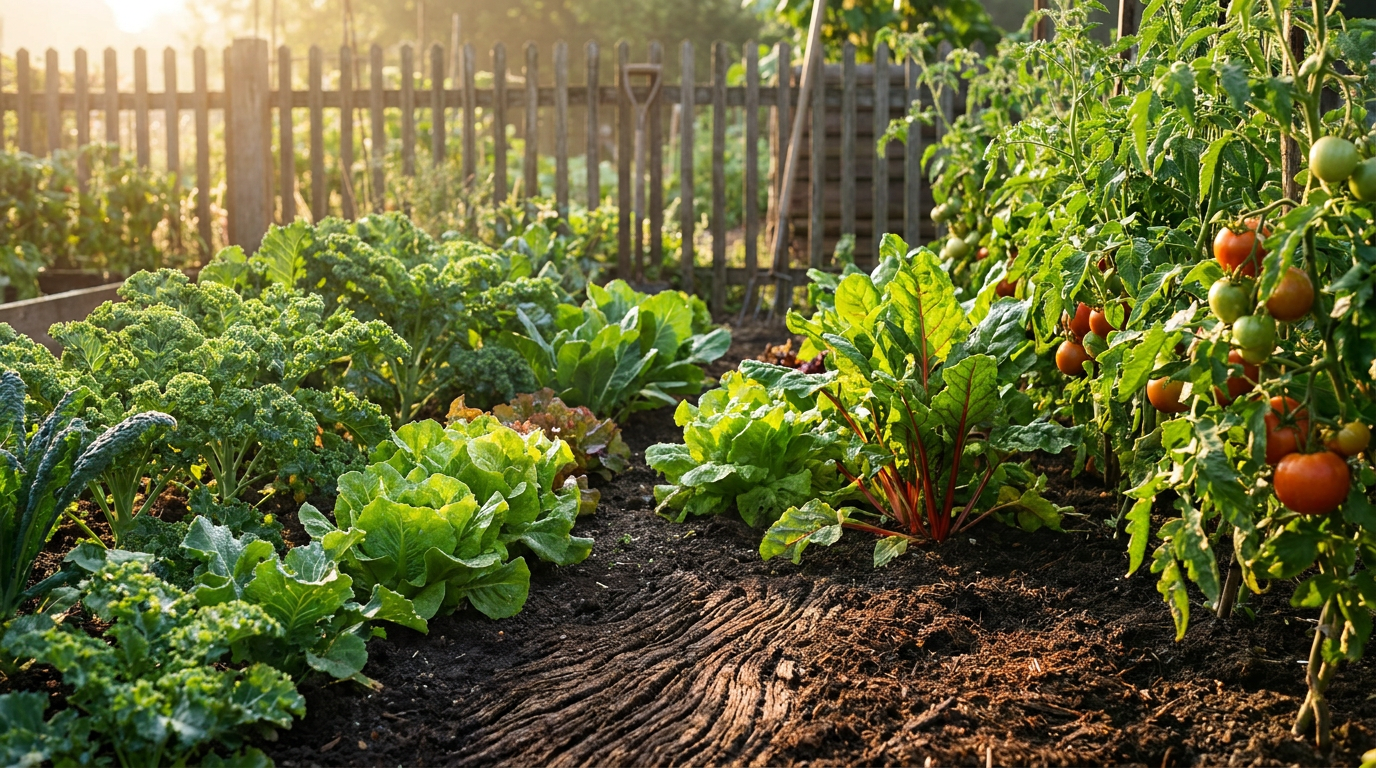
Known interchangeably as "no-dig" or "no-till" gardening, this method completely abandons the centuries-old practice of turning and disrupting the earth. Instead of breaking up the ground to create a planting area, gardeners simply layer organic matter—such as well-rotted compost, leaf mold, or straw—directly on top of the existing soil. This technique intentionally mimics the natural accumulation processes found on a forest floor, where fallen leaves and organic debris slowly decay on the surface, feeding the ecosystem below without any mechanical intervention.[3][4]
This fundamental shift in gardening philosophy is driven by a much deeper, microscopic understanding of soil mechanics. The University of New Hampshire Extension describes optimal soil health as a "three-legged stool" comprising physical structure, biological properties, and chemical makeup. When a gardener aggressively tills a bed, they are effectively kicking the legs out from under that stool. Tilling weakens the microbial communities that metabolize nutrients, destroys the physical aggregates that hold water, and accelerates the loss of vital organic matter.[1]
Beneath the surface of a healthy garden lies a bustling, microscopic highway system that is entirely invisible to the naked eye. Earthworms act as the heavy machinery, boring deep into the earth to create essential drainage channels and aeration tunnels. Meanwhile, mycorrhizal fungi form expansive, delicate, web-like networks that attach themselves symbiotically to plant roots. These fungal highways effectively extend the reach of the plants, allowing them to access water and essential nutrients from soil pockets far beyond their own physical catchment area.[4][7]

When a spade or a motorized rototiller slices through the earth, it acts like a bulldozer tearing through this delicate subterranean infrastructure. The Royal Horticultural Society notes that mechanical cultivation systematically destroys these vital fungal networks, forcing the ecosystem to rebuild from scratch every single spring. Furthermore, the natural aeration tunnels built by earthworms collapse under the weight of the turned soil, leading to compaction issues that ironically make the ground harder and less hospitable to delicate new plant roots over time.[3]
The paradox of traditional digging is perhaps most evident when it comes to the endless battle against garden weeds. For generations, gardeners have tilled their beds with the express intention of burying surface weeds and creating a clean slate. However, this practice inadvertently acts as a massive germination trigger. Turning the soil brings thousands of dormant weed seeds up from the depths, exposing them to the sudden flash of sunlight and oxygen they need to sprout, virtually guaranteeing a fresh crop of unwanted plants.[7]
No-dig gardening elegantly solves this perennial problem by smothering existing weeds under a thick, heavy layer of compost or mulch, while intentionally leaving dormant seeds buried in the dark where they cannot germinate. Because the soil is never inverted, the hidden seed bank remains undisturbed and inactive. Practitioners of the no-till method consistently report a dramatic, life-changing reduction in the amount of time they have to spend weeding, transforming gardening from a grueling chore into a more observant, peaceful practice.[6][7]
Beyond the boundaries of the backyard vegetable patch, the widespread adoption of the no-till movement has profound implications for global climate change. Undisturbed soil acts as a massive, highly efficient carbon sink. Humus, the dark, spongy organic matter found in healthy soil, is composed of roughly 60 percent carbon. When left alone, this carbon can remain safely locked underground for hundreds or even thousands of years, keeping it out of the atmosphere where it would otherwise contribute to global warming.[5]
Beyond the boundaries of the backyard vegetable patch, the widespread adoption of the no-till movement has profound implications for global climate change.
Conversely, plowing or deep digging exposes this safely stored carbon to excess oxygen and direct sunlight. This sudden exposure triggers a process of rapid microbial oxidation, which effectively burns up the organic matter and releases large plumes of carbon dioxide back into the atmosphere. By making the conscious choice to leave the soil intact, everyday gardeners can actively sequester carbon, transforming their local flower beds and vegetable patches into decentralized, micro-climate solutions that help offset greenhouse gas emissions.[5]
The environmental benefits of the no-dig approach also extend heavily into water conservation, which is becoming a critical factor as summer droughts become more frequent and severe. A thick, undisturbed layer of surface compost acts exactly like a giant sponge, absorbing heavy rainfall and preventing runoff. The University of California Cooperative Extension highlights that the decaying roots from previous crops create natural, deep pathways for water to penetrate the earth, significantly reducing the need for constant artificial irrigation during the hottest months of the year.[7]
Traditionalists and skeptics often wonder if abandoning the plow means sacrificing crop yields in the name of environmentalism. However, extensive agricultural trials suggest the exact opposite is true. Charles Dowding, widely considered a pioneer of the modern no-dig movement, ran meticulous side-by-side comparisons over an eight-year period. Planting the exact same crops in both tilled and undisturbed beds, his no-dig plots consistently outperformed the traditional ones, ultimately yielding roughly 100 kilograms more produce while requiring a fraction of the physical labor.[6]

Transitioning a traditional garden to a no-dig system is surprisingly straightforward, utilizing a technique often affectionately referred to as "lasagna gardening." To convert a patch of stubborn lawn or a heavily weeded bed into a productive growing space, gardeners do not need to rip up the turf. Instead, they simply lay down a continuous layer of plain, unwaxed brown cardboard directly over the existing vegetation, ensuring the edges overlap so that no sunlight can slip through the cracks.[6][7]
Next, a thick, generous layer of organic compost—typically measuring four to six inches deep—is spread evenly over the cardboard base. The cardboard serves a dual purpose: it completely blocks sunlight, effectively smothering and killing the grass and weeds below, while gradually softening and decomposing over a few months. As the cardboard breaks down, it allows the roots of the newly planted crops to push effortlessly through the barrier and access the rich, native soil underneath.[6]
One of the most appealing aspects of this conversion process is its immediacy. Gardeners can plant their seeds or transplant young seedlings directly into the fresh top layer of compost on the very same day they build the bed. There is absolutely no need to wait weeks or months for the underlying vegetation to fully break down; the compost provides a perfect, nutrient-rich nursery for the young plants while the cardboard does the silent work of weed suppression below.[6][7]

Maintaining a no-dig garden through the winter also requires a fundamental shift in end-of-season habits. Instead of aggressively pulling dead tomato vines and spent pepper plants out of the ground by their roots during the autumn cleanup, the University of New Hampshire Extension advises gardeners to simply cut the plants off at the soil line. The above-ground foliage can be composted to prevent disease, but the extensive root systems should be left entirely undisturbed beneath the surface.[1]
Leaving these dead roots in the ground provides a crucial winter food source for the billions of soil microbes that keep the ecosystem thriving. As the roots slowly decompose over the cold months, they add valuable organic matter directly into the soil profile. More importantly, when the roots finally rot away, they leave behind perfectly structured, hollow aeration channels that allow spring rains to penetrate deeply and give new plant roots an easy path to follow.[1][2]
While the transition can seem daunting for those dealing with notoriously difficult earth, the University of Minnesota Extension notes that the no-till approach is proving especially effective at rehabilitating heavy, compacted clay soils. Rather than engaging in the back-breaking, often futile labor of double-digging sand and organic matter into the clay, the top-down application of compost encourages earthworms to do the heavy lifting, gradually improving the soil structure year after year without a single strike of a spade.[2]
Ultimately, the widespread adoption of no-dig gardening represents a profound philosophical shift in how humans interact with the land. Rather than focusing myopically on feeding the plant with synthetic fertilizers and fighting the earth with heavy steel tools, the gardener's only real job is to feed and protect the soil ecosystem. By stepping back and allowing the microscopic world to thrive undisturbed, growers are discovering that nature, when left to its own devices, is more than capable of doing the hardest work for them.[3][8]
How we got here
1949
F.C. King and A. Guest publish early works advocating for gardening without digging.
1982
Charles Dowding begins his extensive no-dig market garden experiments in Somerset, UK.
2019
The National Audubon Society highlights no-till gardening as a crucial tool for carbon farming.
2026
University extension programs widely adopt no-till as a primary recommendation for sustainable home landscaping.
Viewpoints in depth
Soil Scientists & Extension Agents
Focus on the biological and physical mechanisms of soil health and long-term sustainability.
Agricultural and university extension programs emphasize the microscopic damage caused by tilling. They view the soil not as inert dirt, but as a living ecosystem—a 'three-legged stool' of physical, biological, and chemical properties. From their perspective, leaving the soil undisturbed is crucial for protecting mycorrhizal fungal networks, preserving earthworm habitats, and preventing the rapid oxidation of stored carbon that occurs when soil is exposed to the air.
Horticultural Institutions
Focus on practical garden applications, environmental impact, and shifting traditional practices.
Organizations like the Royal Horticultural Society advocate for no-dig methods as a way to minimize the environmental footprint of home gardening. They highlight that traditional digging destroys natural drainage channels and brings dormant weed seeds to the surface. For these institutions, the transition to no-till is about working with nature rather than against it, reducing the reliance on synthetic fertilizers and chemical weedkillers by fostering a naturally resilient soil structure.
Market Gardeners & Practitioners
Focus on labor reduction, weed suppression, and crop yield efficiency.
For those growing food at scale, the primary appeal of the no-dig method is efficiency. Pioneers like Charles Dowding point to decades of trials showing that undisturbed beds yield more produce with significantly less physical labor. By eliminating the need for annual rototilling and drastically reducing the time spent weeding, market gardeners find that the initial investment in heavy compost layers pays off rapidly in both crop health and time saved.
What we don't know
- How quickly heavily compacted urban soils can fully recover their fungal networks using only top-down compost applications.
- The exact volume of carbon sequestered annually by the global transition of home gardens to no-till methods.
Key terms
- Mycorrhizal fungi
- Microscopic fungal networks in the soil that form a symbiotic relationship with plant roots, helping them absorb water and nutrients.
- Humus
- The dark, organic material in soil formed by the decomposition of plant and animal matter, essential for retaining moisture and storing carbon.
- Lasagna gardening
- A colloquial term for the no-dig method of building garden beds by layering materials like cardboard and compost directly over the ground.
- Carbon sequestration
- The process of capturing and storing atmospheric carbon dioxide, which undisturbed garden soils do naturally.
Frequently asked
Can I start a no-dig garden on top of an existing lawn?
Yes. You can lay plain cardboard directly over the grass to smother it, then add a thick layer of compost on top and plant immediately.
Won't my soil become compacted if I never dig it?
No. Earthworms, root systems, and soil microbes naturally aerate the soil, creating a porous structure that digging actually destroys.
How do I deal with weeds in a no-dig system?
The thick layer of compost smothers existing weeds, and because you aren't turning the soil, dormant weed seeds remain buried in the dark where they cannot germinate.
Sources
Source coverage
8 outlets
3 viewpoints surfaced








[1]University of New Hampshire ExtensionSoil Scientists & Extension Agents
Low and No Till Gardening
Read on University of New Hampshire Extension →[2]University of Minnesota ExtensionSoil Scientists & Extension Agents
Healthier soil, less work with no-till gardening
Read on University of Minnesota Extension →[3]Royal Horticultural SocietyHorticultural Institutions & Analysts
No-dig gardening
Read on Royal Horticultural Society →[4]Soil AssociationHorticultural Institutions & Analysts
What is no-dig gardening?
Read on Soil Association →[5]National Audubon SocietySoil Scientists & Extension Agents
How to Create a Carbon-Friendly Garden
Read on National Audubon Society →[6]Charles DowdingMarket Gardeners & Practitioners
What is no dig
Read on Charles Dowding →[7]University of California Cooperative ExtensionSoil Scientists & Extension Agents
No Till Gardening
Read on University of California Cooperative Extension →[8]Factlen Editorial TeamHorticultural Institutions & Analysts
Synthesis by Factlen editorial team
Read on Factlen Editorial Team →

More in home
See all 26 stories →Neuroaesthetics
How Neuroaesthetics in Interior Design Shapes Brain Chemistry and Mental Health
7 sources

Kitchen Tech
The Science of Induction Cooking: How Magnets Are Revolutionizing the Modern Kitchen
8 sources

Household Science
Why Enzymatic Cleaners Are Replacing Harsh Chemicals in Homes
8 sources

Building Science
The Science of the 'Deep Energy Retrofit': How Older Homes Are Achieving Net-Zero
6 sources

Every angle. Every day.
Get home stories with full source coverage and perspective breakdowns delivered to your inbox.