
Why Rucking Is Emerging as the Ultimate Longevity and Fitness Protocol
Walking with a weighted backpack, known as rucking, is moving from military training to mainstream fitness. Science shows it builds bone density, corrects posture, and burns fat while sparing joints.
By Factlen Editorial Team
- Longevity & Aging Experts
- Focuses on rucking as a critical tool for maintaining bone density, preventing sarcopenia, and extending healthspan.
- Cardiovascular Physiologists
- Values rucking for its ability to sustain Zone 2 heart rates, maximizing fat oxidation and metabolic efficiency.
- Functional Fitness Advocates
- Emphasizes the postural benefits, posterior chain strength, and mental resilience gained from carrying loads outdoors.
- Everyday Walkers & Beginners
- Appreciates the low barrier to entry, joint-friendly nature, and simple progression of adding weight to a backpack.
What's not represented
- · Physical therapists treating severe spinal pathologies
- · Ultralight backpackers who minimize load
Why this matters
As the population ages, finding low-impact ways to build cardiovascular health and bone density simultaneously is critical. Rucking offers a highly accessible, time-efficient solution that requires minimal equipment and can be done anywhere.
Key points
- Rucking combines cardiovascular exercise with resistance training, offering a highly efficient 'triple threat' for longevity.
- The added weight naturally pushes the heart rate into Zone 2, the optimal intensity for fat oxidation and metabolic health.
- Axial loading from the backpack stimulates bone remodeling, helping to prevent osteoporosis and age-related decline.
- Carrying a load forces postural correction, strengthening the posterior chain and reversing the 'desk hunch.'
- Beginners should start with a standard backpack and no more than 10% of their body weight to allow joints to adapt.
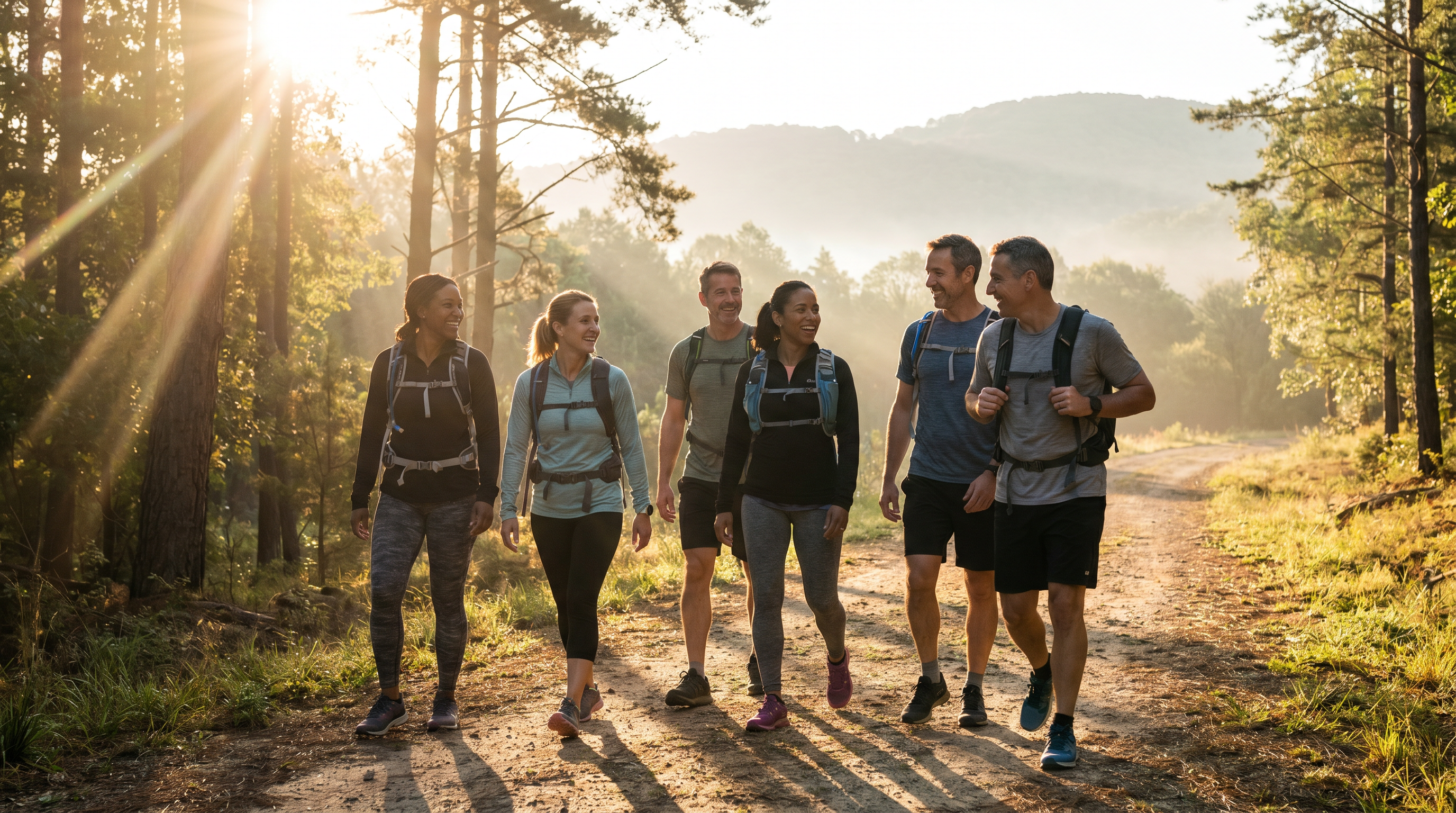
For decades, the formula for longevity and physical fitness seemed split into two distinct, often opposing camps: lift heavy weights in the gym to build muscle, and run long distances on the pavement to condition the heart. But a growing consensus in exercise science and preventative medicine is pointing to a simpler, ancestral movement pattern that bridges this gap perfectly. It is called rucking—the act of walking outdoors with a weighted backpack. By combining resistance training with cardiovascular endurance, rucking is fundamentally changing how experts approach healthy aging and accessible fitness.[1]
Originally a cornerstone of military conditioning used to prepare soldiers for the physical demands of carrying gear over long distances, rucking has quietly transitioned into a massive civilian fitness boom. The appeal lies in its raw efficiency and accessibility. By simply adding a moderate load to a standard daily walk, everyday people are unlocking a 'triple threat' of health benefits: cardiovascular conditioning, muscular endurance, and bone density reinforcement. Best of all, it delivers these adaptations without the severe joint punishment and high injury rates typically associated with high-impact sports like running or plyometrics.[2][4]
The core mechanism that makes rucking so effective is how it manipulates the body's energy demands without requiring a change in biomechanics. According to the Adult Compendium of Physical Activities, walking at a brisk, unloaded pace has a Metabolic Equivalent (MET) value of around 3.5. However, by adding a 20-pound backpack, that value jumps past 7.0. This means the body must burn roughly double to triple the calories to cover the exact same distance, simply because it requires significantly more energy to accelerate and decelerate the heavier total mass with every single step.[5][9]

This elevated energy demand naturally pushes the cardiovascular system into what exercise physiologists call 'Zone 2.' Zone 2 cardio is a moderate-intensity aerobic state—typically defined as 60% to 70% of a person's maximum heart rate. In this zone, the body is working noticeably harder, but the effort remains entirely aerobic, meaning a person can still maintain a steady conversation without gasping for breath. Achieving this zone is critical for long-term metabolic health, mitochondrial efficiency, and building a robust aerobic base that supports all other physical activities.[3][6]
Why does Zone 2 matter so much for the average person? Research published in the journal Sports Medicine demonstrates that fat oxidation peaks at this specific intensity. Because rucking requires the body to constantly move a heavier load, it sustains this optimal fat-burning zone far more easily than an unloaded walk. At the same time, it avoids the premature muscular exhaustion or lactic acid buildup that often cuts running sessions short, allowing individuals to maintain the fat-burning state for 45 to 60 minutes with relative ease.[5][6]
Beyond the cardiovascular system, rucking delivers profound structural benefits through a biomechanical process called axial loading. Axial loading refers to the vertical pressure applied downward through the spine, hips, and legs when carrying a weight. While the term might sound intimidating, this controlled, manageable pressure creates the exact mechanical stress the human skeletal system requires to signal bone remodeling and fortify its internal architecture. Without this stress, bones slowly lose their density over time, making them fragile and prone to fractures later in life.[3]

As humans age, bone mineral density naturally declines, accelerating the risk of conditions like osteopenia and osteoporosis, particularly in post-menopausal women. The mechanical stress generated by carrying a weighted pack directly combats this decline. For healthy aging, this load-bearing stimulus is widely considered one of the most effective, accessible tools to maintain structural resilience. Furthermore, the added weight forces the lower body to work harder, helping to stave off sarcopenia, which is the natural, age-related loss of muscle mass and functional strength.[3][4]
As humans age, bone mineral density naturally declines, accelerating the risk of conditions like osteopenia and osteoporosis, particularly in post-menopausal women.
Rucking also acts as a powerful, active corrective tool for modern posture. In today's digital age, hours spent hunched over steering wheels, desks, and smartphones chronically weaken the posterior chain. The posterior chain encompasses the interconnected muscles of the upper back, glutes, hamstrings, and calves—the exact muscles responsible for keeping the human body upright, balanced, and powerful. When these muscles atrophy from disuse, the result is often chronic lower back pain, rolled shoulders, and a forward head posture that plagues millions of office workers.[1]
Carrying a weighted rucksack forces an immediate postural correction. To balance the load safely and efficiently, the body must instinctively pull the shoulders back, engage the abdominal core, and activate the glutes with every single step. Over time, this repetitive, low-intensity engagement builds deep muscular endurance in the exact areas required to alleviate generalized lower back pain and reverse the dreaded 'desk hunch.' It transforms a passive, leisurely walk into an active resistance session for the entire back, building a corset of muscle that protects the spine during daily activities.[4][8]

Despite the addition of heavy external weight, rucking is remarkably joint-friendly, especially when compared to running. Sports medicine statistics reveal that between 26% and 56% of recreational runners sustain an injury each year. These injuries are largely due to the 'flight phase' of the running gait, where both feet leave the ground simultaneously. When a runner lands, the resulting impact forces can send shockwaves equal to two or three times the person's body weight straight through the knees, hips, and lower back.[5]
Because rucking is fundamentally built on a walking gait, one foot is always in contact with the ground. This completely eliminates the high-impact collision and flight phase of running. The forces absorbed by the joints during a ruck are only marginally higher than a brisk walk, yet the cardiovascular and caloric benefits rival those of a steady jog. This unique combination makes rucking an ideal alternative for heavier individuals, older adults, or anyone recovering from impact-related joint injuries who still wants a rigorous, sweat-inducing cardiovascular workout without the orthopedic risk.[2][5]
The benefits of this practice extend far beyond the physical adaptations. Rucking is inherently an outdoor activity, and emerging research continues to highlight the compounding psychological effects of nature exposure. Stepping outside for a morning ruck exposes the eyes to natural sunlight, which helps reset the body's circadian rhythm, improving nighttime sleep quality and regulating daily hormones. Furthermore, the simple act of moving through green spaces or quiet neighborhoods has been shown to significantly lower cortisol levels, reduce anxiety, and boost overall mental clarity.[4][7]
For those looking to start, the barrier to entry is exceptionally low, requiring almost no financial investment. Fitness experts emphasize that specialized, expensive gear is not required on day one. A sturdy, everyday day-pack loaded with household items—like water bottles, heavy books, or a towel-wrapped dumbbell—is more than enough to initiate the physical stimulus. The key is to ensure the weight is packed securely so it doesn't shift, and that it sits relatively high on the back between the shoulder blades to prevent unnecessary pulling or strain on the lower lumbar region.[8]

The most critical rule for beginners is checking the ego at the door. Fitness professionals universally recommend starting with a load equal to 10% of your total body weight, or roughly 10 to 15 pounds—whichever is lighter. While this might feel too easy during the first ten minutes, the cumulative fatigue sets in quickly. The goal of starting light is to let the tendons, ligaments, and connective tissues, which adapt much slower than the cardiovascular system, adjust safely to the new mechanical demands.[4][8]
Progression should be slow, deliberate, and periodized to avoid overuse injuries. Muscles and joints require 24 to 48 hours to fully recover from load-bearing work, meaning rucking two to three times a week is the optimal frequency for most people, rather than an everyday habit. By gradually increasing the distance first, and only later adding more weight in small increments, everyday walkers can safely transform their daily stroll into a comprehensive, longevity-boosting practice. It is a simple, ancestral habit that pays immense physical and mental dividends for decades to come.[5][8]
How we got here
1970s
The military develops the Pandolf Equation to accurately predict the massive energy expenditure of carrying heavy loads over terrain.
2008
GORUCK is founded, beginning the transition of rucksack training from exclusive military use to civilian fitness events.
2018
Landmark sports medicine research highlights the fat-oxidation benefits of Zone 2 cardio, a state naturally achieved by rucking.
2024–2026
Rucking surges in mainstream popularity as longevity experts champion it for bone density and low-impact cardiovascular health.
Viewpoints in depth
Longevity & Aging Experts
Focuses on rucking as a critical tool for maintaining bone density, preventing sarcopenia, and extending healthspan.
For longevity researchers, the primary appeal of rucking lies in its ability to combat the natural physical declines associated with aging. By applying axial load to the spine and hips, rucking stimulates bone remodeling, offering a powerful defense against osteoporosis. Furthermore, the resistance required to move the weighted pack helps preserve lean muscle mass in the lower body, directly counteracting sarcopenia without the high injury risk of heavy barbell lifting.
Cardiovascular Physiologists
Values rucking for its ability to sustain Zone 2 heart rates, maximizing fat oxidation and metabolic efficiency.
Exercise physiologists highlight rucking as an almost perfect vehicle for Zone 2 cardio. Unlike running, which often pushes the heart rate into anaerobic zones and causes premature fatigue, rucking keeps the body in a steady, aerobic state where fat oxidation peaks. This sustained effort improves mitochondrial function, lowers resting heart rates, and builds a massive aerobic base that supports overall metabolic health.
Functional Fitness Advocates
Emphasizes the postural benefits, posterior chain strength, and mental resilience gained from carrying loads outdoors.
From a functional movement perspective, rucking is seen as the ultimate antidote to modern sedentary lifestyles. Advocates point out that carrying a load forces the shoulders back and engages the core, actively reversing the 'desk hunch' that plagues office workers. Beyond the physical, this camp heavily values the mental health benefits of training outdoors, citing improvements in circadian rhythms and stress reduction from nature exposure.
Everyday Walkers & Beginners
Appreciates the low barrier to entry, joint-friendly nature, and simple progression of adding weight to a backpack.
For the general public, the greatest strength of rucking is its accessibility. There is no need for expensive gym memberships or complex skill acquisition; anyone who can walk can ruck. By starting with household items in a standard backpack and adhering to the 10% bodyweight rule, beginners can safely scale their workouts, enjoying the caloric burn of a run while keeping the joint impact similar to a brisk walk.
What we don't know
- The exact upper limit of weight before joint wear outweighs cardiovascular benefits for older adults
- How recreational rucking compares to heavy resistance training for late-stage osteoporosis reversal
Key terms
- Rucking
- The act of walking or hiking outdoors while carrying a weighted backpack or vest.
- Zone 2 Cardio
- A moderate-intensity aerobic state (60-70% of max heart rate) where the body primarily burns fat for fuel and a conversation can be maintained.
- Axial Loading
- Vertical pressure applied downward along the spine and through the legs, which stimulates the skeletal system to increase bone density.
- Posterior Chain
- The interconnected group of muscles on the back of the body, including the calves, hamstrings, glutes, and lower back, crucial for posture.
- Sarcopenia
- The natural, age-related loss of muscle mass, strength, and physical function.
- Metabolic Equivalent (MET)
- A ratio used by scientists to estimate the energy expenditure and caloric burn of a physical activity compared to resting.
Frequently asked
Does rucking hurt your knees or lower back?
When progressed gradually, rucking is highly joint-friendly. Because one foot always remains on the ground, it eliminates the high-impact 'flight phase' of running, keeping forces on the knees and back manageable.
Do I need to buy a special weighted vest or rucksack?
Not to start. Beginners can use any sturdy, comfortable backpack loaded with household items like water bottles or books. Specialized gear only becomes necessary as you progress to heavier weights.
How much weight should I start with?
Fitness experts universally recommend starting with 10% of your body weight, or roughly 10 to 15 pounds—whichever is lighter. This allows your connective tissues to adapt safely.
Can I ruck every day?
It is not recommended. Muscles and connective tissues need 24 to 48 hours to recover from load-bearing exercise, making two to three sessions per week the optimal frequency.
Sources
Source coverage
9 outlets
4 viewpoints surfaced








[1]Factlen Editorial TeamFunctional Fitness Advocates
Synthesis by Factlen editorial team
Read on Factlen Editorial Team →[2]Cleveland ClinicEveryday Walkers & Beginners
Should You Add Rucking to Your Workout?
Read on Cleveland Clinic →[3]Inform HealthLongevity & Aging Experts
Rucking for Healthy Aging: Bone Density and Muscle Mass
Read on Inform Health →[4]Wild GymLongevity & Aging Experts
Why Rucking Works for Longevity
Read on Wild Gym →[5]RuckawayCardiovascular Physiologists
The Science of Rucking: Bone Density and Fat Loss
Read on Ruckaway →[6]Sports MedicineCardiovascular Physiologists
Fat Oxidation Peaks at Zone 2 Intensity
Read on Sports Medicine →[7]Official Project GritFunctional Fitness Advocates
Weighted Walking: Strength and Endurance Together
Read on Official Project Grit →[8]Pathfinder Ruck TrainingEveryday Walkers & Beginners
A Beginner's Guide to Rucking
Read on Pathfinder Ruck Training →[9]Adult Compendium of Physical ActivitiesCardiovascular Physiologists
Metabolic Equivalents (METs) for Load Carriage
Read on Adult Compendium of Physical Activities →
More in fitness
See all 31 stories →Zone 2 Training
The Science of Zone 2 Cardio: Why the 'Talk Test' is Outperforming Heart Rate Formulas
7 sources

Endurance Science
The Science of Zone 2: Why Runners Are Slowing Down to Get Faster
7 sources
Cardio Science
Zone 2 Cardio vs. HIIT: The Evidence on Fat Loss, Longevity, and Which You Should Choose
7 sources
Diet Science
Intermittent Fasting vs. Caloric Restriction: Which Weight Loss Strategy Fits Your Lifestyle?
7 sources

Every angle. Every day.
Get fitness stories with full source coverage and perspective breakdowns delivered to your inbox.