
Trump Cancels Strikes on Iran, Claims 'Great Settlement' Reached as Tehran Cites Unfinished Deal
President Trump announced a preliminary peace agreement to end the three-month U.S.-Iran war, calling off planned military strikes and a threatened seizure of Kharg Island. Iranian officials confirmed a draft exists but cautioned that a final decision has not yet been made.
By Factlen Editorial Team
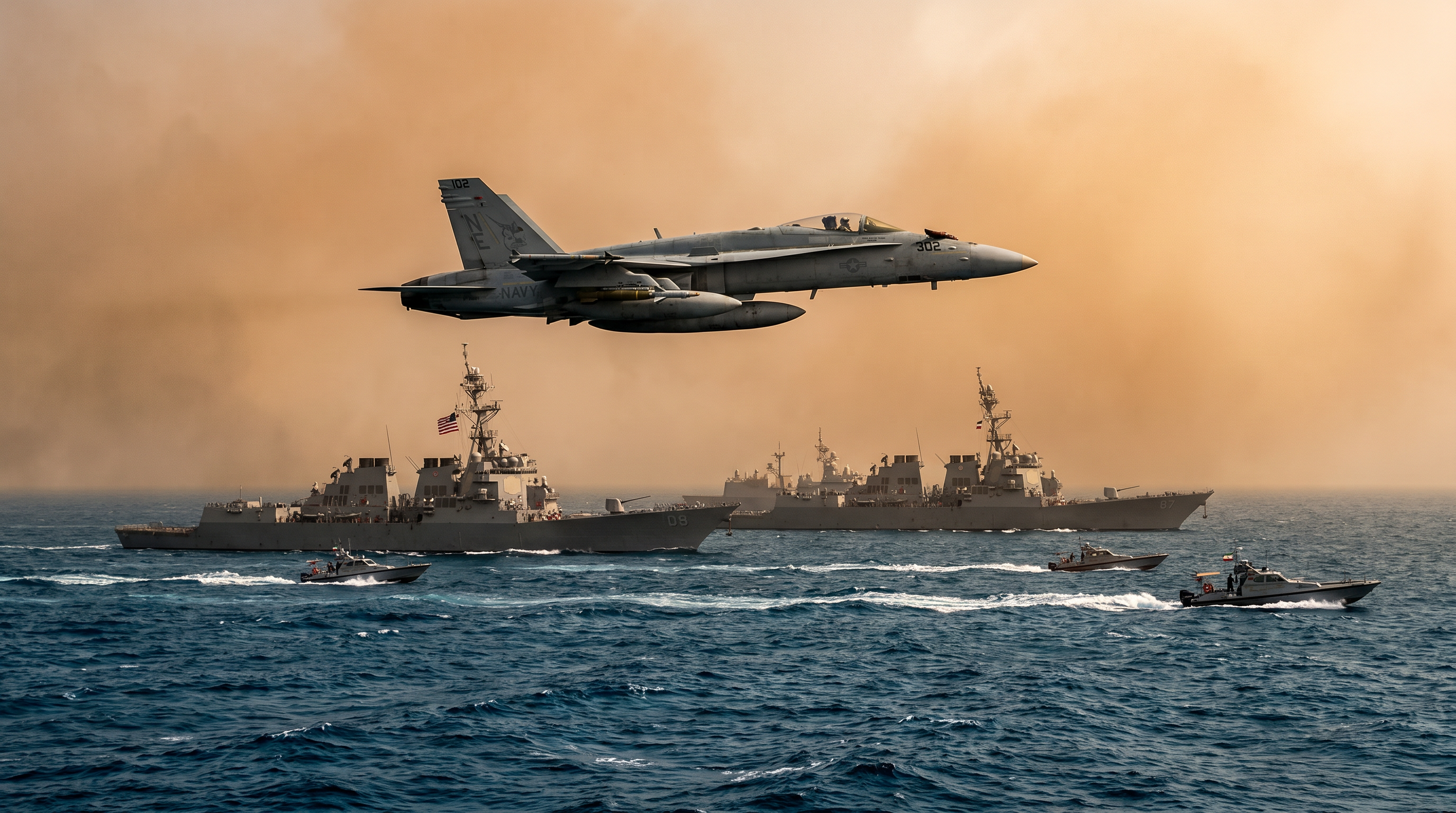
- U.S. Administration & Allies
- Confident that a decisive military posture forced Iran to the negotiating table to accept strict nuclear constraints.
- Iranian Government & State Media
- Cautious and skeptical, insisting that no final surrender has been made and demanding tangible economic relief.
- Regional Mediators & Neutral Observers
- Desperate for de-escalation to protect their own infrastructure and restore global shipping lanes.
What's not represented
- · Iranian Civilians
- · Global Shipping Companies
Why this matters
A finalized peace agreement would end a three-month conflict that has disrupted global shipping, spiked energy prices, and threatened to pull neighboring Gulf states into a wider war. The lifting of the U.S. naval blockade would immediately stabilize global oil markets and ease inflation pressures worldwide.
Key points
- President Trump canceled planned military strikes on Iran, announcing a 'great settlement' to end the war.
- The proposed deal includes a 60-day ceasefire, lifting the U.S. naval blockade, and reopening the Strait of Hormuz.
- Iranian officials cautioned that while a draft exists, no final decision has been made by Tehran's leadership.
- Trump had previously threatened to seize Kharg Island, Iran's primary oil export terminal.
- Global markets reacted positively to the de-escalation, with stocks rising and oil prices dropping up to 4 percent.
In a sudden diplomatic pivot that halted a major military escalation, President Donald Trump announced on Thursday evening that the United States and Iran have reached a "great settlement" to end their three-month war. Claiming that a preliminary agreement had been approved by the highest levels of Iranian leadership, Trump abruptly canceled a wave of scheduled missile strikes and bombings against Tehran. The proposed deal, described as a highly detailed Memorandum of Understanding, aims to implement a ceasefire, lift the U.S. naval blockade, and reopen the Strait of Hormuz to global shipping.[1][3]
The announcement marked a dramatic reversal from the White House's posture just hours earlier. On Thursday morning, Trump had publicly threatened to hit Iran "very hard" and warned that U.S. forces would seize Kharg Island—Iran's primary oil export terminal—in the "not too distant future." The president had suggested the U.S. could assume total control of Iranian oil and gas markets, though he later acknowledged to Fox News that he was unsure if the American public had the "stomach" for such a prolonged occupation.[3][5]
If finalized, the settlement would mark the most significant diplomatic breakthrough since the conflict erupted in late February 2026. According to the White House, the framework includes a 60-day ceasefire extension to facilitate formal nuclear negotiations. Trump asserted that the agreement guarantees Iran will never obtain a nuclear weapon, though he conceded to reporters that the current nuclear provisions are "a little conceptual." He noted that Iran's enriched material remains inaccessible because it was "buried under a mountain" following U.S. bunker-buster strikes earlier in the campaign.[1][4]

Despite the optimism in Washington, officials in Tehran quickly cautioned that the war is not yet over. Iranian Foreign Ministry spokesperson Esmaeil Baghaei confirmed that while large portions of the draft text have been finalized, the Islamic Republic has not formally approved the agreement. Baghaei accused U.S. negotiators of repeatedly shifting their positions and attempting to impose "illegitimate" new demands at the eleventh hour. He emphasized that any final decision remains under review by Iran's supreme decision-making bodies.[2][6]
The diplomatic friction centers on Iran's core demands, which include the complete lifting of international sanctions and the release of billions of dollars in frozen assets. Iranian state media has warned that Tehran will not compromise on its "red lines" simply to secure a pause in American airstrikes. A European diplomat briefed on the negotiations noted that while the broad strokes of the deal were agreed upon weeks ago, there remains a "50 percent chance" that the fragile framework could collapse before a formal signing.[2][6]

The breakthrough follows a perilous 48-hour window in which the conflict threatened to spiral into a broader regional conflagration. On Wednesday night, U.S. Central Command launched a barrage of Tomahawk missiles and fighter jet attacks against Iranian military surveillance and air defense sites. In response, Iran fired waves of drones and ballistic missiles at bases hosting U.S. forces in Kuwait, Bahrain, and Jordan. The exchange effectively shattered a fragile two-month truce and prompted frantic intervention from international mediators.[3][7]
The breakthrough follows a perilous 48-hour window in which the conflict threatened to spiral into a broader regional conflagration.
Behind the scenes, diplomats from Qatar and Pakistan worked aggressively to salvage the negotiations even as bombs fell. Pakistani officials confirmed they remained engaged in shuttle diplomacy to broker a negotiated settlement, while Qatar condemned the regional strikes and urged an immediate return to the drafting table. Their efforts culminated in the draft text that Trump ultimately touted in the Oval Office, which he claimed had been reviewed by regional stakeholders including Saudi Arabia, the UAE, and Egypt.[7][8]
The human and economic toll of the three-month war has been severe. Thousands of casualties have been reported across the region, and commercial shipping has been paralyzed by the crossfire. Just a day prior to the settlement announcement, a U.S. military strike on a tanker in the Gulf of Oman resulted in the deaths of three Indian seafarers, prompting formal protests from New Delhi and underscoring the escalating danger to international maritime crews caught in the blockade zone.[8]
The prospect of seizing Kharg Island had deeply alarmed energy analysts and military strategists alike. The island handles the overwhelming majority of Iran's crude oil shipments; capturing and holding it would have required a massive amphibious assault and a long-term deployment of U.S. ground troops. Furthermore, analysts warned that such a move would almost certainly trigger Iranian retaliation against the oil infrastructure of neighboring Gulf states, potentially crippling global energy supplies.[3][7]

Global financial markets reacted instantly to the de-escalation. The S&P 500 jumped 1.3 percent on Thursday afternoon, while the Dow Jones Industrial Average and Nasdaq composite posted similar gains. Simultaneously, global oil futures dropped between 3 and 4 percent as the immediate threat to the Strait of Hormuz—a maritime chokepoint through which a fifth of the world's oil flows—began to recede. Trump explicitly pointed to the market rally as proof that investors "like the deal."[4][5]

The sudden announcement appeared to catch some key U.S. allies off guard. Israeli Prime Minister Benjamin Netanyahu was reportedly not given advance notice of the canceled strikes or the finalized Memorandum of Understanding. However, following a phone call with Trump, Netanyahu's office released a statement expressing appreciation for the U.S. commitment that any final treaty would require the dismantling of Iran's enrichment infrastructure and limitations on its ballistic missile production.[4]
Looking ahead, the White House expects the Memorandum of Understanding to be formally signed in Europe as early as this weekend. While President Trump indicated he would not attend the ceremony in person, he announced that Vice President JD Vance, alongside top peace envoys Jared Kushner and Steve Witkoff, would travel to represent the United States. The immediate next step will be the formal lifting of the U.S. naval blockade, which the administration has promised will occur the moment the ink dries.[3][4]
For now, the Middle East remains in a tense holding pattern. U.S. forces in the Persian Gulf remain on high alert, and the naval blockade continues to restrict maritime traffic. Whether the "great settlement" translates into a durable peace treaty depends entirely on the closed-door deliberations currently underway in Tehran, where Iranian leadership must weigh the promise of economic relief against the stringent nuclear concessions demanded by Washington.[1][2]
How we got here
Late Feb 2026
The U.S. and Israel launch a military campaign against Iran, beginning a three-month war.
April 2026
A fragile ceasefire is agreed upon but is repeatedly breached by ongoing hostilities.
June 10, 2026
The U.S. strikes Iranian military sites; Iran retaliates against U.S. bases in Kuwait, Bahrain, and Jordan.
June 11, 2026 (Morning)
President Trump threatens to seize Iran's Kharg Island oil terminal and launch heavier strikes.
June 11, 2026 (Evening)
Trump cancels the strikes, announcing a 'great settlement' has been reached and an MoU could be signed within days.
Viewpoints in depth
The U.S. Administration's View
Confident that a decisive military posture forced Iran to the negotiating table to accept strict nuclear constraints.
White House officials argue that the "maximum pressure" campaign—culminating in the threat to seize Kharg Island—successfully broke the diplomatic stalemate. President Trump and his allies maintain that the resulting Memorandum of Understanding will permanently dismantle Iran's nuclear ambitions while allowing the U.S. to safely lift its naval blockade. They view the immediate market rally as validation of their hardline negotiating tactics.
The Iranian Government's View
Cautious and skeptical, insisting that no final surrender has been made and demanding tangible economic relief.
Tehran's leadership frames the negotiations not as a capitulation, but as a necessary step to remove "illegitimate" U.S. sanctions and unfreeze billions in national assets. Foreign Ministry officials have repeatedly accused Washington of negotiating in bad faith by launching airstrikes during active talks. They maintain that Iran will not compromise on its core "red lines" and that the agreement remains merely a draft until supreme decision-makers are satisfied.
Regional Mediators & Gulf States
Desperate for de-escalation to protect their own infrastructure and restore global shipping lanes.
Countries like Qatar, Pakistan, Kuwait, and Bahrain view the conflict as an existential threat to their domestic security and economic lifelines. Having suffered collateral damage from retaliatory drone strikes, Gulf states are aggressively pushing both sides to finalize the ceasefire. Their primary objective is the immediate reopening of the Strait of Hormuz and the prevention of any U.S. ground invasion of Kharg Island, which they fear would trigger a catastrophic regional energy war.
What we don't know
- Whether Iran's supreme leadership will formally approve the Memorandum of Understanding.
- The exact timeline and mechanisms for lifting international sanctions and unfreezing Iranian assets.
- How the U.S. intends to verify the 'conceptual' nuclear constraints mentioned by President Trump.
Key terms
- Kharg Island
- Iran's primary oil export terminal in the Persian Gulf, handling the vast majority of the country's crude shipments.
- Strait of Hormuz
- A crucial maritime chokepoint between the Persian Gulf and the Gulf of Oman, through which a significant portion of the world's oil passes.
- Memorandum of Understanding (MoU)
- A preliminary agreement outlining the broad concepts of a deal before a formal, legally binding treaty is signed.
Frequently asked
Is the US-Iran war officially over?
Not yet. While President Trump announced a "great settlement," Iranian officials state that a final agreement has not been approved and negotiations are ongoing.
What did Trump threaten to do before canceling the strikes?
Trump threatened to launch "very hard" strikes and seize Kharg Island, Iran's main oil export hub, to take control of their oil and gas markets.
What are the terms of the proposed deal?
The preliminary framework includes a 60-day ceasefire, the lifting of the U.S. naval blockade, the reopening of the Strait of Hormuz, and conceptual agreements to prevent Iran from obtaining a nuclear weapon.
Sources
Source coverage
8 outlets
3 viewpoints surfaced







[1]Fox NewsU.S. Administration & Allies
Trump cancels scheduled strikes against Iran, claiming progress in talks
Read on Fox News →[2]The GuardianRegional Mediators & Neutral Observers
Donald Trump claimed on Thursday that the US and Iran are on the verge of signing a peace agreement
Read on The Guardian →[3]CBS NewsU.S. Administration & Allies
What to know about the Iran war today: President Trump said Thursday that a 'great settlement' has been reached
Read on CBS News →[4]Times of IsraelU.S. Administration & Allies
Iran says no final decision made following latest US claim that agreement is at hand
Read on Times of Israel →[5]The Washington PostU.S. Administration & Allies
President Donald Trump on Thursday withdrew threats to take Iran's most critical oil terminal
Read on The Washington Post →[6]WANA NewsIranian Government & State Media
Baghaei: Iran Has Not Yet Reached a Final Decision on an Agreement with the United States
Read on WANA News →[7]The NationalRegional Mediators & Neutral Observers
Trump says US and Iran are nearing 'great settlement' to end war
Read on The National →[8]The HinduRegional Mediators & Neutral Observers
U.S. President Donald Trump on Thursday announced a 'great settlement' with Iran
Read on The Hindu →
More in news politics
See all 68 stories →Workplace Trends
Fact Check: Does a Four-Day Workweek Actually Improve Revenue and Employee Health?
8 sources

Electoral Reform
Evidence Pack: Fact-Checking the Biggest Claims About Ranked-Choice Voting
7 sources

US-Iran Conflict
U.S. Halts Strikes on Iran as Trump Claims Peace Deal is Reached, Though Tehran Urges Caution
7 sources
Capital Punishment
Supreme Court Blocks Alabama From Executing Inmate Using Nitrogen Gas
8 sources
Every angle. Every day.
Get news politics stories with full source coverage and perspective breakdowns delivered to your inbox.