
How Data Center REITs Became the Physical Backbone of the AI Boom
As artificial intelligence drives unprecedented demand for power and cooling, real estate investment trusts specializing in data centers have transformed from niche landlords into critical infrastructure providers.
By Factlen Editorial Team
- Real Estate Bulls
- Believe data centers are the most critical and lucrative asset class of the 21st century.
- Tech Infrastructure Analysts
- Focus on the technical transition to liquid cooling and the staggering capital expenditures required.
- Supply Skeptics
- Warn that the massive 134-gigawatt development pipeline faces severe power grid constraints.
What's not represented
- · Local Municipalities
- · Environmental Advocates
Why this matters
Artificial intelligence is entirely dependent on physical infrastructure. Understanding data center REITs gives investors a tangible way to participate in the AI revolution without having to pick winners among highly volatile software and semiconductor stocks.
Key points
- Data center REITs own the physical buildings, power systems, and cooling infrastructure that house the internet's servers.
- After underperforming in 2025, the sector surged in early 2026 as investors recognized the physical bottlenecks of the AI boom.
- The extreme heat generated by AI processors is forcing a rapid industry transition from traditional air conditioning to liquid cooling.
- Big Tech companies are projected to spend $1.4 trillion on data center infrastructure through 2029.
- A massive development pipeline of 134 gigawatts faces potential headwinds from national power grid constraints.
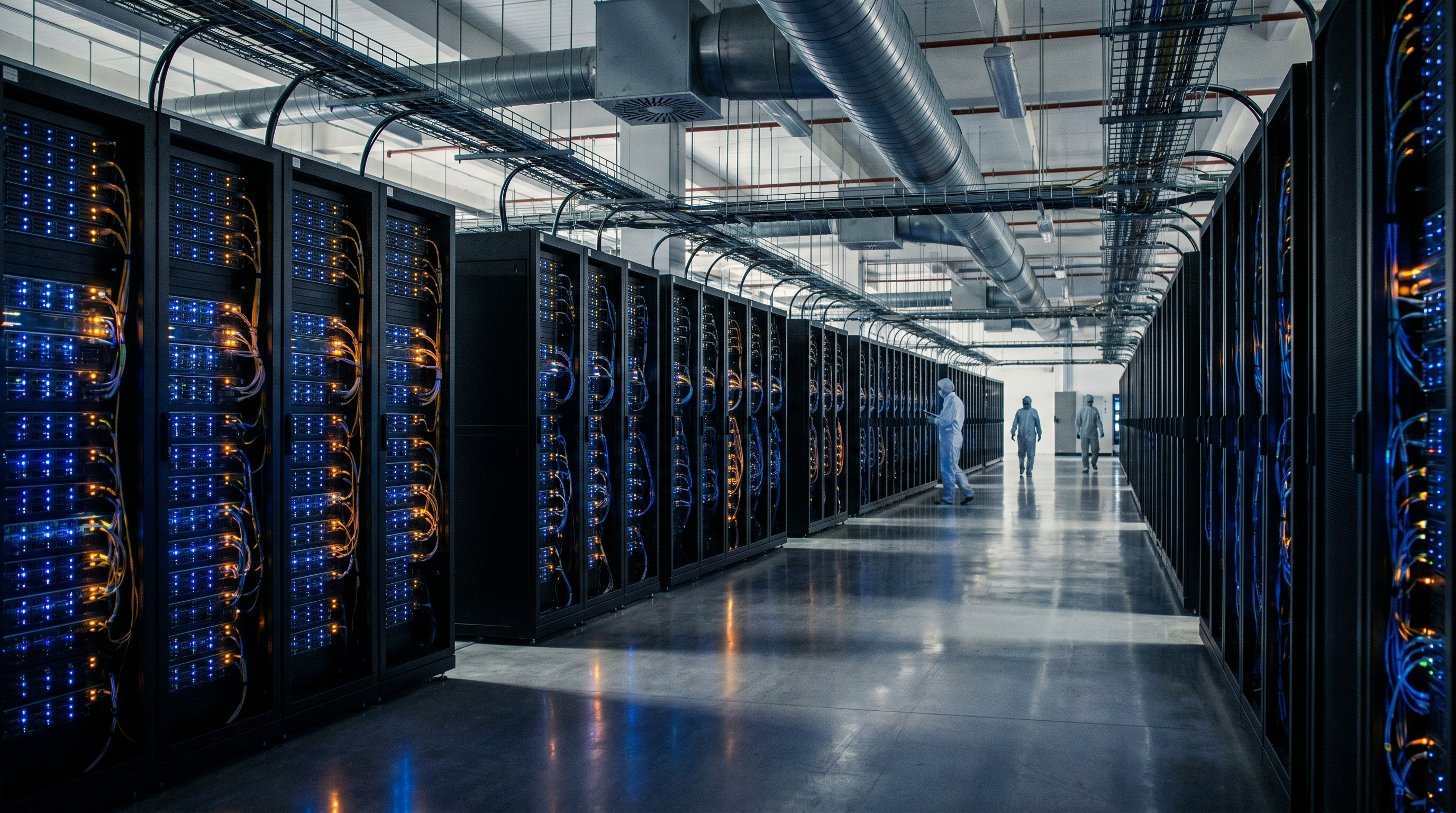
The artificial intelligence revolution is frequently described in highly abstract terms—neural networks, large language models, machine learning algorithms, and the omnipresent cloud. But the reality of artificial intelligence is intensely physical. Every single prompt processed, every image generated, and every complex algorithm trained requires concrete, copper, and massive amounts of electricity. The cloud is not a vaporous entity floating in the sky; it is a highly secure, heavily fortified building full of computers. As the world races to build smarter and faster AI, the physical footprint required to support this technology is expanding at an unprecedented rate, creating a massive boom in the real estate sector.[1]
At the center of this physical reality are Data Center Real Estate Investment Trusts (REITs). These specialized financial vehicles own, develop, and manage the highly engineered facilities that house the internet's most critical infrastructure. A REIT is a corporate structure that allows everyday investors to pool their capital to buy shares in large-scale real estate portfolios. While traditional REITs might own shopping malls, apartment buildings, or office towers, data center REITs focus exclusively on the specialized buildings required to keep the digital economy running around the clock.[1][6]
As the AI boom accelerates, data center REITs have transformed from a relatively niche corner of the commercial real estate market into the undisputed backbone of the modern digital economy. They offer everyday investors a unique way to participate in the artificial intelligence gold rush without having to place risky bets on which software company or semiconductor manufacturer will ultimately win the algorithm wars. Instead of betting on the miners, investors are buying the companies that sell the picks, shovels, and—most importantly—the electricity.[1]
To understand the mechanism behind a data center REIT, it helps to look closely at what these companies actually own. They generally do not own the servers, the graphics processing units (GPUs), or the proprietary data itself. Instead, they own the 'shell and core' of the facility. This includes the reinforced physical building, the industrial-scale power grid connections, the massive backup diesel generators, the complex fiber-optic network entry points, and the heavy-duty cooling systems required to keep the hardware from melting down.[6]

Tenants—ranging from enterprise businesses to massive 'hyperscalers' like Amazon Web Services, Microsoft Azure, and Google Cloud—lease this space in a business model known as colocation. The tenants bring their own expensive computing hardware and rack it inside the facility. The REIT, in turn, provides the secure, climate-controlled environment and the massive, uninterrupted electrical capacity required to run it. This separation of physical real estate from computing hardware allows tech companies to scale rapidly without tying up billions of dollars in property development.[6]
This landlord-tenant dynamic creates a highly stable and attractive financial model for the REIT. Because physically moving thousands of fragile, highly sensitive servers is incredibly risky, logistically complex, and prohibitively expensive, data center tenants typically sign long-term leases spanning anywhere from five to fifteen years. Once a hyperscaler installs its infrastructure in a facility, it is highly unlikely to leave. For the real estate investment trust, this translates into highly predictable, recession-resistant cash flows that continue to generate steady dividend revenue regardless of short-term macroeconomic fluctuations or volatility in the broader technology sector.[6]
The financial trajectory of these trusts over the past two years tells a fascinating story of shifting market awareness and investor psychology. In 2025, despite the obvious and accelerating growth of artificial intelligence, data center REITs were actually the worst-performing real estate sector on the market, with total returns plummeting by more than 14 percent. This severe underperformance baffled some industry analysts, given the clear secular tailwinds driving the fundamental need for expanded digital infrastructure across the globe.[2]
During that period, the broader stock market was entirely captivated by the 'end source' of AI profits. Capital flooded aggressively into semiconductor manufacturers like Nvidia, as well as high-profile AI software startups and consumer-facing tech giants. Investors wanted direct, immediate exposure to the companies building the models and designing the chips, leaving the physical infrastructure companies starved for attention and capital. The market temporarily forgot a fundamental truth of the digital age: software cannot run without hardware, and hardware cannot run without a highly specialized building to plug into.[2]
During that period, the broader stock market was entirely captivated by the 'end source' of AI profits.
But in early 2026, the trade violently flipped. As tech giants realized that physical bottlenecks—specifically access to massive amounts of power and advanced cooling—were the true constraints on AI scaling, investor focus pivoted sharply back to the landlords. By mid-2026, data center REITs had posted year-to-date total returns between 22 and 33 percent, drastically outperforming both the broader stock market and every other real estate sector. The sudden realization that physical infrastructure is the ultimate bottleneck to artificial intelligence triggered a massive reallocation of capital back into the REIT space.[2][3]

This recent market surge is underpinned by a profound shift in facility economics that industry analysts refer to as the 'structural inversion.' Historically, the physical infrastructure of a data center—the concrete building shell, the industrial power systems, the cooling towers, and the land itself—accounted for roughly 60 to 70 percent of the total capital expenditure required to bring a facility online. The IT equipment, including servers and networking gear, made up the remaining 30 to 40 percent of the cost.[7]
Artificial intelligence has completely inverted that historical ratio. Today, a modern AI-focused facility allocates approximately 63 percent of its total all-in cost to ultra-expensive servers—primarily advanced GPU accelerators—while the physical infrastructure now represents only 35 to 40 percent of the total cost. However, because the absolute cost of the computing hardware is so astronomically high, the absolute demands on the physical infrastructure have skyrocketed in tandem. The buildings must now support vastly more expensive and power-hungry equipment per square foot than ever before.[7]
The most dramatic physical shift resulting from this inversion is happening in the realm of thermal management. Traditional data centers relied on massive, industrial-scale air conditioning units to blow cold air through the server racks and keep the equipment from overheating. But modern AI processors run so incredibly hot, and are packed so densely together, that traditional air cooling is no longer physically sufficient to dissipate the heat. Air simply cannot carry thermal energy away fast enough to prevent the chips from melting.[7]
As a result, the industry is undergoing a rapid and mandatory transition to liquid cooling—a highly efficient method where specialized fluids absorb and dissipate heat directly from the hardware components. Industry projections indicate that 80 percent of all new AI facilities will require liquid cooling, not as an optional efficiency upgrade, but as a strict physical requirement for operation. This technological shift is driving a massive sub-market for advanced cooling systems, which analysts expect to grow at a staggering rate and reach up to $29 billion by the early 2030s.[7]

Funding this unprecedented physical expansion requires staggering amounts of capital. Financial analysts estimate that Big Tech companies will need to spend roughly $1.4 trillion on data center infrastructure through 2029, representing an annual pace of $350 billion. This level of capital expenditure is fundamentally reshaping the global commercial real estate market, as developers race to secure suitable land, negotiate massive power rights with local utilities, and procure the specialized construction materials required to build these digital fortresses.[4]
Because this scale of spending outpaces what traditional equity markets can comfortably fund, data center REITs are increasingly turning to the debt markets for structural support. The securitization of AI data center debt—the financial practice of pooling facility leases, ground loans, and tenant payments into tradable commercial mortgage-backed securities (CMBS)—is booming. Major financial institutions project that annual data center securitization issuance could reach $40 billion by 2027, providing the massive, continuous liquidity needed to keep building the infrastructure that powers the artificial intelligence revolution.[5]
Despite the immense optimism surrounding the sector, it still faces genuine uncertainties and potential macroeconomic headwinds. The most immediate concern for investors is the sheer size of the upcoming supply pipeline. Real estate research groups currently track over 134 gigawatts of proposed data center capacity in the United States alone. To put that staggering number in perspective, it represents more than three times the entire existing U.S. data center inventory, raising valid questions about potential oversupply if AI demand were to suddenly cool.[4]

Whether this massive pipeline represents a sustainable, multi-decade boom or a looming real estate bubble depends heavily on the physical limitations of the national power grid. Many of these proposed facilities may never actually be built simply because local utility companies cannot generate or transmit enough electricity to turn them on. Power procurement, rather than access to capital or tenant demand, has become the ultimate deciding factor in whether a new data center project succeeds or fails in the current market environment.[4]
For now, however, the demand for AI-ready infrastructure vastly outstrips the available supply in almost every major global market. As long as the world's appetite for artificial intelligence continues to grow, the concrete and copper fortresses owned by data center REITs will remain some of the most critical and highly valued real estate on the planet. They are the physical anchors keeping the cloud tethered to the ground, ensuring that the digital economy has the power, cooling, and space it needs to keep expanding.[1]
How we got here
2023–2024
The generative AI boom triggers a massive surge in demand for computing power and cloud storage.
2025
Data center REITs underperform the broader market as investors focus heavily on AI software and semiconductor stocks.
Early 2026
The sector rebounds sharply, posting up to 33% year-to-date returns as the physical constraints of AI become apparent.
2026–2029
Big Tech companies are projected to deploy $1.4 trillion in capital expenditure to build out global data center capacity.
Viewpoints in depth
Infrastructure Investors
Focus on the stable, long-term yields generated by hyperscaler leases.
For real estate investors, data centers offer a rare combination of high growth and recession resistance. Because migrating thousands of servers is prohibitively expensive and risky, tenants typically sign leases spanning a decade or more. Investors argue that this creates a highly predictable cash flow stream, insulated from short-term economic downturns, while still providing direct exposure to the exponential growth of the artificial intelligence sector.
Technology Hyperscalers
View physical data centers as the primary bottleneck to advancing artificial intelligence.
Companies like Amazon, Microsoft, and Google view the physical world as the ultimate speed limit on their AI ambitions. They argue that the current supply of data centers is vastly insufficient for the power-hungry demands of next-generation large language models. For hyperscalers, partnering with REITs is a strategic necessity to offload the immense capital burden of real estate development, allowing them to focus their spending on acquiring expensive GPUs and developing software.
Market Skeptics
Warn that the massive development pipeline could lead to oversupply or hit hard physical limits.
Skeptics caution that the sector may be entering bubble territory. They point to the staggering 134 gigawatts of proposed capacity—more than triple the existing U.S. inventory—as evidence of irrational exuberance. Furthermore, they argue that many of these proposed facilities will never come online due to severe constraints on the national power grid. If utilities cannot generate or transmit the necessary electricity, billions of dollars in real estate development could be stranded.
What we don't know
- Whether local power grids can actually support the 134 gigawatts of proposed data center capacity.
- How quickly the transition to liquid cooling will render older, air-cooled data centers obsolete.
- If the massive capital inflows from debt securitization will lead to an eventual oversupply in the market.
Key terms
- REIT
- Real Estate Investment Trust; a company that owns, operates, or finances income-producing real estate, allowing everyday investors to buy shares.
- Hyperscaler
- Massive cloud service providers like Amazon Web Services, Microsoft Azure, and Google Cloud that require vast data center capacity.
- Liquid Cooling
- A thermal management technique using specialized fluids, rather than air, to absorb and dissipate the extreme heat generated by AI processors.
- Colocation
- A data center facility where businesses can rent space for servers and computing hardware, sharing the cost of power and cooling.
- Securitization
- The financial practice of pooling debt—such as data center loans—and selling them as consolidated bonds to institutional investors.
Frequently asked
Why did data center REITs underperform in 2025?
Investors were heavily focused on the 'end source' of AI profits, like semiconductor manufacturers and software developers, causing data center REITs to drop 14% before rebounding in 2026.
Do data center REITs own the servers?
Generally, no. They own the physical building, the power distribution systems, and the cooling infrastructure, while tenants supply their own computing hardware.
How is AI changing data center design?
AI requires significantly more power density per square foot, forcing a rapid industry transition from traditional air conditioning to advanced liquid cooling systems.
Sources
Source coverage
7 outlets
3 viewpoints surfaced







[1]Factlen Editorial TeamTech Infrastructure Analysts
Synthesis by Factlen editorial team
Read on Factlen Editorial Team →[2]The Real DealReal Estate Bulls
Publicly traded real estate investment trusts staging a comeback
Read on The Real Deal →[3]Seeking AlphaReal Estate Bulls
Data Center REITs: The AI Infrastructure Boom
Read on Seeking Alpha →[4]AFIRESupply Skeptics
The Data Center Pipeline: Is it a Boom, or a Bubble?
Read on AFIRE →[5]The AI Consulting NetworkTech Infrastructure Analysts
AI Data Center Debt Securitization, Explained
Read on The AI Consulting Network →[6]The Motley FoolReal Estate Bulls
Understanding Data Center REITs
Read on The Motley Fool →[7]Infrastructure ResearchTech Infrastructure Analysts
The Structural Inversion That Changes Everything
Read on Infrastructure Research →
More in real estate
See all 16 stories →Home Selling
Selling Your Home in 2026: The iBuyer vs. Traditional Agent Trade-Off
7 sources

Adaptive Reuse
The Evidence on Office-to-Residential Conversions: What the Data Actually Shows
9 sources
Zoning Reform
The Evidence Is In: Zoning Reform and 'Missing Middle' Housing Successfully Lower Rents
7 sources

Mass Timber
How 'Plyscrapers' and Mass Timber Are Rewriting the Rules of Global Real Estate
7 sources
Every angle. Every day.
Get real estate stories with full source coverage and perspective breakdowns delivered to your inbox.