
The Rise of Build-to-Rent: How Purpose-Built Subdivisions Are Reshaping the Housing Market
As high mortgage rates and home prices keep ownership out of reach, developers are building entire subdivisions of single-family homes exclusively for renters.
By Factlen Editorial Team
- Lifestyle Renters
- Renters who prioritize flexibility, space, and a maintenance-free lifestyle over building home equity.
- Institutional Developers
- Real estate investors and operators who view BTR as a highly efficient, scalable asset class.
- Housing Analysts & Advocates
- Urban planners and consumer advocates concerned about the corporatization of single-family neighborhoods.
What's not represented
- · First-time homebuyers competing for developable land
- · Local zoning boards managing suburban sprawl
Why this matters
For millions of Americans priced out of the traditional housing market, build-to-rent communities offer a new middle ground: the space, privacy, and school districts of a suburban house without the financial anchor of a mortgage or the burden of maintenance.
Key points
- Build-to-rent (BTR) communities are purpose-built subdivisions of single-family homes designed exclusively for renters.
- The sector accounted for 7.2% of all single-family housing starts in 2025, remaining historically robust.
- High mortgage rates and home prices are driving demand from families seeking space without a down payment.
- Institutional investors favor BTR for its operational efficiency and higher tenant retention compared to apartments.
- Critics warn that institutionalizing single-family homes may lock a generation out of wealth-building through homeownership.
The American Dream of a single-family home with a backyard and a two-car garage is undergoing a structural redesign. For decades, that lifestyle was inextricably linked to a 30-year mortgage, a hefty down payment, and the weekend burden of lawn care and gutter cleaning. Today, a rapidly expanding real estate sector is uncoupling the house from the mortgage, offering a highly flexible alternative for a new generation of residents.[8]
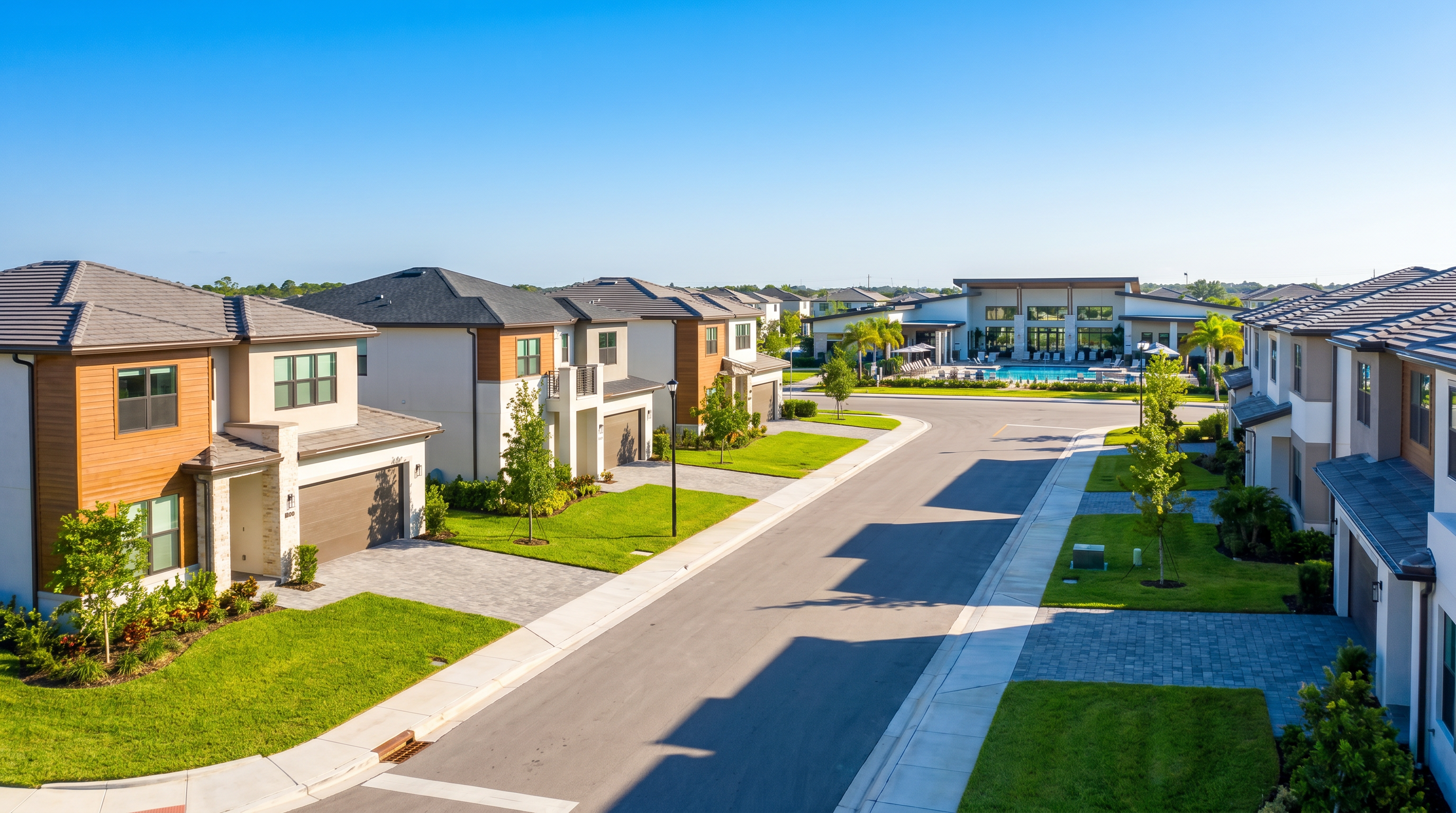
Welcome to the era of "Build-to-Rent" (BTR) communities. Unlike traditional rental houses—which are typically owned by mom-and-pop landlords and scattered randomly across various neighborhoods—BTR developments are entire subdivisions constructed exclusively for renters. They operate much like luxury apartment complexes, complete with centralized leasing offices, professional maintenance teams, and shared amenities, but they offer the physical footprint and privacy of a detached home.[3][8]
What began as a niche experiment following the 2008 financial crisis has matured into a permanent, institutional asset class. By the end of 2025, purpose-built rental communities had moved from an emerging trend to an established segment of the U.S. housing market. According to recent data, BTR accounted for 7.2% of all single-family housing starts over the year, remaining well above historical averages that rarely eclipsed 6% prior to 2022.[2][5][7]
The sheer scale of the boom is reshaping suburban landscapes across the country. The U.S. saw 68,000 single-family rental housing starts in 2025, maintaining a historically robust pipeline even as the initial post-pandemic construction frenzy cooled. In the previous year, single-family rental completions hit an all-time record of 113,000 units, capturing a staggering 16% of all new rental units nationwide.[2][4][5]

The primary engine driving this surge is a widening affordability gap in the traditional housing market. Elevated mortgage rates, sticky home prices, and a chronic shortage of resale inventory have kept homeownership out of reach for millions of households. The annual income required to comfortably afford a typical home in major Sunbelt metros has surged past six figures, forcing many would-be buyers to remain renters longer than previous generations.[3][5]
But these renters are not content to stay in cramped urban apartments. Millennials and older Gen Z cohorts are forming families, acquiring pets, and seeking out better school districts. They want an extra bedroom for a home office, a private backyard, and a quiet suburban setting—without the financial barrier of a down payment or the lifestyle commitment of a 30-year loan.[5][6]
Industry analysts note that demand for this product is holding up remarkably well, even better than the sector's pricing power. Even as advertised rents softened slightly to an average of $2,180 in late 2025, occupancy rates for single-family BTR units held exceptionally strong at 94.9%. Renters are demonstrating a clear willingness to absorb premium rental rates in exchange for the space and privacy of a detached home.[1][5]

Industry analysts note that demand for this product is holding up remarkably well, even better than the sector's pricing power.
For institutional investors and developers, the BTR model solves several historic headaches associated with single-family rentals. Traditionally, Wall Street firms bought up scattered homes across multiple neighborhoods, leading to a logistical nightmare of dispatching plumbers, electricians, and landscapers across a 50-mile radius.[6]
Purpose-built communities eliminate that friction entirely. By clustering 100 to 200 homes in a single subdivision, operators achieve the operational efficiency of a high-rise apartment building. Maintenance teams can service multiple units in a day, landscaping is centralized, and leasing can be handled on-site. This cohesive structure provides cleaner data, lower operating costs, and a far more consistent resident experience.[5][6]
Furthermore, BTR communities boast significantly higher tenant retention rates than traditional multifamily apartments. Once families move their furniture into a three-bedroom house and enroll their children in the local school district, they are far less likely to move when the lease expires. This predictable, recurring cash flow is highly attractive to pension funds and private equity firms underwriting long-term investments.[5][8]
Geographically, the BTR boom is heavily concentrated in the Sunbelt, where large tracts of developable land intersect with booming job markets and rapid population growth. Phoenix consistently ranks as the top market for BTR developments, followed closely by Atlanta, Dallas, Houston, and Charlotte. In Charlotte alone, the number of purpose-built rentals surged by nearly 900% compared to pre-pandemic levels.[3][5]

The architectural design of these communities is also evolving rapidly. Early iterations often resembled "horizontal apartments"—dense clusters of small, attached townhomes or cottages. Today, developers are increasingly building true detached single-family homes, complete with private fenced yards, smart-home technology, and two-car garages, seamlessly blending into adjacent owner-occupied neighborhoods.[3][8]
However, the rise of purpose-built rental subdivisions is not without controversy. Housing advocates and some urban planners express concern over the long-term implications of corporate-owned neighborhoods. They argue that by diverting land, labor, and materials toward rental properties, developers are further constraining the supply of entry-level homes available for purchase, effectively locking a generation out of the primary vehicle for American wealth creation.[4][8]
Developers counter that they are injecting desperately needed housing supply into a severely constrained market. They argue that BTR communities provide a vital stepping stone for families who need space now but require time to save for a down payment, while also serving empty-nesters who want to downsize and shed the burdens of home maintenance without sacrificing their standard of living.[2][6][8]

As the market normalizes in 2026, the speculative frenzy has given way to disciplined, institutional growth. The sector is no longer viewed as a temporary pandemic anomaly or a niche side-bet. Instead, it has cemented its role as a distinct, permanent tier in the residential real estate hierarchy—a hybrid model that offers the physical comforts of homeownership with the financial flexibility of a lease.[5][8]
How we got here
Pre-2020
Build-to-rent remains a niche market, accounting for a tiny fraction of overall single-family construction.
2021–2023
Pandemic-driven demand for space and soaring home prices trigger a massive surge in purpose-built rental developments.
2024
Single-family rental completions hit a record high of 113,000 units, capturing 16% of all new rental units nationwide.
Late 2025
Despite a cooling construction pipeline, BTR occupancy rates hold exceptionally strong at nearly 95%.
Early 2026
The sector matures into an established, permanent asset class bridging the gap between apartments and homeownership.
Viewpoints in depth
Lifestyle Renters
Renters who prioritize flexibility, space, and a maintenance-free lifestyle over building home equity.
For this demographic, the American Dream has shifted from owning a home to simply living in one. Many are high-earning millennials who can afford a mortgage but refuse to be tied down to a 30-year loan or spend their weekends fixing leaky roofs. They view the premium rent of a BTR community as a fair trade for access to top-tier school districts, private yards for their pets, and the ability to relocate for career opportunities without the friction of selling a property.
Institutional Developers
Real estate investors and operators who view BTR as a highly efficient, scalable asset class.
Wall Street and private equity firms have long struggled with the logistics of managing scattered single-family rentals. Purpose-built communities solve this by clustering homes together, allowing for centralized maintenance, leasing, and landscaping. Developers argue that they are providing a necessary product that bridges the gap between dense multifamily apartments and traditional homeownership, all while securing stable, long-term yields driven by tenant retention rates that far exceed those of standard apartments.
Housing Advocates
Urban planners and consumer advocates concerned about the corporatization of single-family neighborhoods.
Critics warn that the explosive growth of BTR communities is a double-edged sword. While it adds raw housing supply, it diverts land, labor, and construction materials away from building entry-level homes for purchase. By institutionalizing the single-family home, advocates fear that developers are permanently locking a segment of the population into a cycle of renting, denying them the primary mechanism for generational wealth creation that homeownership has historically provided in the United States.
What we don't know
- How the long-term aging and maintenance costs of these purpose-built communities will impact investor yields over a 20-year horizon.
- Whether a significant drop in mortgage rates would trigger an exodus of BTR tenants transitioning into traditional homeownership.
Key terms
- Build-to-Rent (BTR)
- Real estate developments consisting of single-family homes constructed specifically for long-term renting rather than selling.
- Single-Family Rental (SFR)
- A standalone, detached house that is rented out to tenants, which can include both scattered individual homes and purpose-built communities.
- Scattered-Site Portfolio
- A collection of rental properties owned by a single investor but spread out across various different neighborhoods and subdivisions.
- Housing Starts
- An economic indicator reflecting the number of privately owned new houses on which construction has been started in a given period.
Frequently asked
What is a Build-to-Rent (BTR) community?
It is a subdivision of single-family homes designed, built, and managed exclusively for renters, operating much like a luxury apartment complex.
Why are people renting these instead of buying?
High mortgage rates and home prices have priced many out of buying. BTR offers the space and privacy of a home without the down payment or maintenance costs.
Are BTR homes cheaper than traditional apartments?
No. They typically command a premium over standard apartments due to the added space, private yards, and detached nature of the homes.
Do these communities have amenities?
Yes. Most purpose-built rental communities feature shared amenities like pools, fitness centers, dog parks, and centralized leasing offices.
Sources
Source coverage
8 outlets
3 viewpoints surfaced








[1]Yardi MatrixInstitutional Developers
Single-Family Build-to-Rent Report
Read on Yardi Matrix →[2]Arbor Realty TrustInstitutional Developers
Single-Family Rental Investment Trends Report
Read on Arbor Realty Trust →[3]Realtor.comLifestyle Renters
Affordability woes fueling growth of BTR developments
Read on Realtor.com →[4]Harvard Joint Center for Housing StudiesHousing Analysts & Advocates
The State of the Nation's Housing
Read on Harvard Joint Center for Housing Studies →[5]Catalyst Capital PartnersInstitutional Developers
What Is Driving Build-to-Rent Demand in 2026?
Read on Catalyst Capital Partners →[6]Accio Real EstateInstitutional Developers
Build-to-Rent Market Overview
Read on Accio Real Estate →[7]U.S. Census BureauHousing Analysts & Advocates
New Residential Construction Data
Read on U.S. Census Bureau →[8]Factlen Editorial TeamHousing Analysts & Advocates
Synthesis by Factlen editorial team
Read on Factlen Editorial Team →

More in real estate
See all 16 stories →Home Selling
Selling Your Home in 2026: The iBuyer vs. Traditional Agent Trade-Off
7 sources
Adaptive Reuse
The Evidence on Office-to-Residential Conversions: What the Data Actually Shows
9 sources
Zoning Reform
The Evidence Is In: Zoning Reform and 'Missing Middle' Housing Successfully Lower Rents
7 sources
Mass Timber
How 'Plyscrapers' and Mass Timber Are Rewriting the Rules of Global Real Estate
7 sources
Every angle. Every day.
Get real estate stories with full source coverage and perspective breakdowns delivered to your inbox.