
Trump Cancels Iran Strikes, Claims Peace Deal to Reopen Strait of Hormuz is Imminent
President Donald Trump called off planned military strikes against Iran, announcing that a tentative peace agreement has been reached to end the three-month conflict. While Iranian officials cautioned that a final decision is still pending, the proposed deal would reportedly reopen the Strait of Hormuz and restrict Tehran's nuclear program.
By Factlen Editorial Team
- U.S. Administration
- Views the tentative deal as a victory achieved through maximum military and economic pressure.
- Iranian Leadership
- Insists no deal is final until sanctions are lifted and accuses the U.S. of shifting negotiating terms.
- Regional Allies
- Demands strict, verifiable dismantling of Iran's nuclear infrastructure and proxy networks.
- U.S. Domestic Critics
- Criticizes the administration's erratic handling of the conflict and the risks of military escalation.
What's not represented
- · Global energy market analysts assessing the immediate impact on oil prices.
- · Civilian populations in Iran and the Middle East affected by the three-month conflict.
Why this matters
A finalized peace agreement would end a volatile three-month war that has disrupted global energy markets and blocked 20% of the world's oil supply. Reopening the Strait of Hormuz would immediately lower global energy prices and ease inflation pressures in the United States and abroad.
Key points
- President Trump canceled scheduled military strikes against Iran, citing progress on a peace agreement.
- The proposed deal would end a three-month war and reopen the Strait of Hormuz to global shipping.
- Trump claims Iran has agreed to permanently abandon its pursuit of nuclear weapons.
- Iranian officials state that no final decision has been made and negotiations are ongoing.
- Israel clarified it is not a party to the agreement but supports the dismantling of Iran's nuclear infrastructure.
President Donald Trump abruptly canceled a wave of scheduled military strikes against Iran on Thursday evening, declaring that the two nations are on the verge of signing a peace agreement to end their three-month war. Speaking from the Oval Office, Trump claimed that the foundational concepts of the deal had been approved by the "highest level of Iranian leadership" and that a formal signing could take place in Europe as early as this weekend. The sudden reversal came just hours after the president publicly threatened to launch a massive bombardment against Iranian infrastructure, underscoring the volatile nature of the ongoing negotiations.[2][5][7]
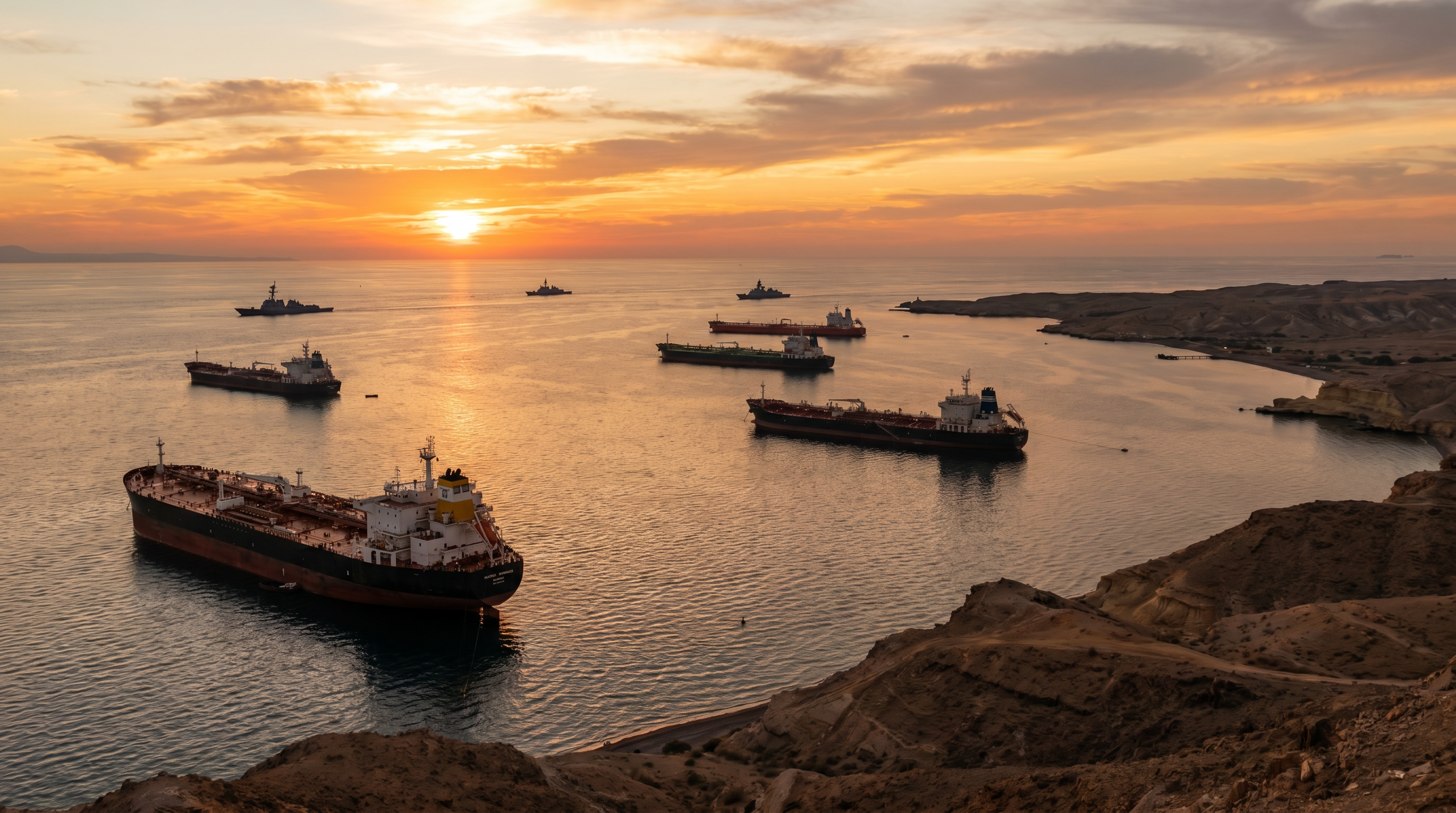
The announcement marks a potential breakthrough in a conflict that has severely disrupted global energy markets and heightened geopolitical anxieties. For months, the vital Strait of Hormuz—a narrow waterway through which approximately 20% of the world's oil flows—has been effectively closed due to a U.S. naval blockade and Iranian military actions. Trump stated that the strait would reopen immediately upon the deal's signing, a move that would relieve mounting inflationary pressures on the global economy. Financial markets reacted swiftly to the news, with U.S. stocks rallying and global oil prices experiencing a sharp decline in anticipation of restored supply lines.[2][3][5]
However, officials in Tehran quickly tempered expectations, pushing back against the narrative that a deal is already secured. Iranian Foreign Ministry spokesperson Esmaeil Baghaei stated that while large portions of the negotiating text have been finalized, "no final conclusion" has been reached by the country's decision-making bodies. Baghaei accused the United States of repeatedly shifting its positions during the talks and emphasized that any final accord must respect Iran's established red lines. These demands reportedly include the comprehensive lifting of international sanctions, the unfreezing of billions of dollars in assets, and formal recognition of Iranian sovereignty over its territorial waters.[3][4]

At the center of the proposed memorandum of understanding is the future of Iran's nuclear program. Trump told reporters that Tehran has committed to permanently abandoning any effort to obtain a nuclear weapon, stating unequivocally, "They will not purchase, develop in any way, shape or form a nuclear weapon." When pressed on whether the agreement requires Iran to surrender its existing stockpile of enriched uranium, Trump remarked that the issue had been resolved "conceptually." He noted that much of the material is currently "buried under a mountain" following previous U.S. strikes, leaving the exact mechanisms for physical disarmament and international verification ambiguous.[1][2][3][4]
At the center of the proposed memorandum of understanding is the future of Iran's nuclear program.
Regional allies, who have borne the brunt of the conflict's spillover effects, are closely monitoring the diplomatic developments. Following a phone call with Trump, Israeli Prime Minister Benjamin Netanyahu's office clarified that Israel is not a party to the emerging memorandum of understanding. Nevertheless, Netanyahu expressed appreciation for Trump's assurances that the final agreement would mandate the dismantling of Iran's enrichment infrastructure, limit its ballistic missile production, and halt its financial and military support for proxy militant groups operating across the Middle East. The Israeli government maintains that any deal must include strict, verifiable enforcement mechanisms to ensure regional security.[3][4]
The sudden pivot to diplomacy follows days of intense military escalation that threatened to spiral into a broader regional war. Earlier on Thursday, Trump had warned that the U.S. would hit Iran "very hard," floating the possibility of seizing Kharg Island, Iran's primary oil export hub. This aggressive rhetoric coincided with a U.S. strike on an oil tanker in the Gulf of Oman, which resulted in the deaths of three Indian crew members, and Iranian retaliatory drone attacks targeting U.S. military installations in Kuwait and Bahrain. The rapid succession of strikes and counter-strikes highlighted the fragility of the situation prior to the peace announcement.[2][5]

Domestically, the whiplash between threats of massive bombardment and declarations of imminent peace has drawn sharp criticism from political opponents. Senate Minority Leader Chuck Schumer condemned the administration's handling of the crisis, calling the three-month war a "fiasco." Schumer specifically targeted Trump's earlier threat to seize Kharg Island, warning that such an operation would have risked putting American boots on the ground and further entangling the U.S. military in a protracted Middle Eastern conflict. Critics argue that the administration's erratic messaging undermines U.S. credibility and complicates the efforts of diplomats working to finalize the complex agreement.[1][7]
If the diplomatic track holds, Vice President JD Vance and top U.S. negotiators are expected to travel to Europe to finalize the paperwork and participate in the signing ceremony. Until the signatures are officially secured, however, the U.S. naval blockade remains in full effect, and military forces on both sides remain on high alert. The coming days will be critical in determining whether the conceptual agreements can be translated into a binding treaty, leaving the region in a precarious state of limbo between a historic diplomatic settlement and a return to open warfare.[2][4][5]
How we got here
March 2026
A volatile conflict breaks out between the U.S. and Iran, leading to the closure of the Strait of Hormuz.
April 2026
A fragile ceasefire is implemented but is repeatedly tested by skirmishes and proxy attacks.
June 10, 2026
Hostilities escalate with U.S. strikes on oil tankers and Iranian drone attacks on regional U.S. bases.
June 11, 2026
President Trump threatens massive strikes, then abruptly cancels them, announcing a tentative peace deal.
Viewpoints in depth
The U.S. Administration
Views the tentative agreement as a decisive victory that neutralizes Iran's nuclear threat and stabilizes global markets.
President Trump and his allies argue that the administration's maximum pressure campaign—culminating in the recent three-month military conflict and naval blockade—has successfully forced Tehran to the negotiating table. By securing a commitment that Iran will never acquire a nuclear weapon and forcing the reopening of the Strait of Hormuz, the administration believes it has achieved its primary strategic objectives without committing to a prolonged ground war.
The Iranian Government
Maintains that no deal is final until all demands, including the lifting of sanctions, are met.
Iranian officials are projecting caution, emphasizing that while a draft text exists, the United States has been an unreliable negotiating partner. Tehran insists that any final agreement must include the complete removal of international sanctions and the release of frozen assets. Furthermore, Iranian leadership frames their resistance over the past three months as a successful defense of their sovereignty, refusing to publicly concede on the dismantling of their domestic nuclear infrastructure.
Regional Allies
Support the containment of Iran but remain skeptical of the enforcement mechanisms in the proposed deal.
Israel and neighboring Gulf nations, who have borne the brunt of regional instability and proxy attacks, are cautiously optimistic but demand stringent verification. Israeli leadership has explicitly stated they are not bound by the U.S.-Iran memorandum. Their primary concern is ensuring that the agreement goes beyond 'conceptual' promises and results in the physical dismantling of Iran's nuclear enrichment facilities and a verifiable halt to its funding of militant groups.
What we don't know
- Whether Iran will actually agree to physically dismantle its underground nuclear enrichment facilities.
- The exact timeline for lifting the U.S. naval blockade and international sanctions.
- If the signing ceremony will definitively take place in Europe this weekend as proposed by the U.S.
Key terms
- Strait of Hormuz
- A narrow, strategically vital waterway between the Persian Gulf and the Gulf of Oman through which roughly 20% of the world's oil supply passes.
- Memorandum of Understanding (MoU)
- A formal agreement between two or more parties that outlines the terms and details of a mutual understanding, often serving as the foundation for a binding treaty.
- Kharg Island
- Iran's primary oil export terminal located in the Persian Gulf, which handles the vast majority of the country's crude oil exports.
Frequently asked
Is the war between the U.S. and Iran officially over?
Not yet. While President Trump has announced a tentative settlement and canceled immediate strikes, Iranian officials say a final agreement has not been reached, and the U.S. naval blockade remains in place.
Will the Strait of Hormuz reopen?
If the peace deal is finalized and signed, the U.S. has committed to lifting its naval blockade, which would allow commercial shipping and oil tankers to resume transit through the strait.
Did Iran agree to give up its nuclear weapons?
President Trump claims Iran has conceptually agreed never to purchase or develop a nuclear weapon, though the specific mechanisms for dismantling their existing underground enrichment facilities remain unclear.
Sources
Source coverage
7 outlets
4 viewpoints surfaced







[1]Fox NewsU.S. Administration
Trump says Iran deal near after second day of US strikes and attacks
Read on Fox News →[2]CBS NewsU.S. Administration
Trump says he's canceled tonight's strikes, citing progress on a potential deal
Read on CBS News →[3]The Straits TimesIranian Leadership
Trump announces 'great' Iran settlement that will trigger opening of Hormuz strait
Read on The Straits Times →[4]Times of IsraelRegional Allies
Trump claims Iran peace deal imminent, cancels strikes
Read on Times of Israel →[5]ForbesU.S. Administration
Trump Cancels Iran Strikes, Claims Tehran Agreed To Peace Deal
Read on Forbes →[6]Al JazeeraIranian Leadership
Iran war live: Trump claims Tehran deal 'approved', cancels new strikes
Read on Al Jazeera →[7]The GuardianU.S. Domestic Critics
Trump news at a glance: another day, another claim of imminent peace deal with Iran
Read on The Guardian →
More in news politics
See all 71 stories →US-Iran Conflict
Trump Cancels Strikes on Iran, Claiming Imminent Peace Deal as Markets Surge
10 sources
Death Penalty
Supreme Court Blocks Alabama From Executing Inmate Using Nitrogen Gas
6 sources
Capital Punishment
Supreme Court Blocks Alabama From Executing Inmate Using Nitrogen Gas
6 sources
Workplace Trends
Fact Check: Does a Four-Day Workweek Actually Improve Revenue and Employee Health?
8 sources

Every angle. Every day.
Get news politics stories with full source coverage and perspective breakdowns delivered to your inbox.