
Solid-State MEMS Speakers Are Replacing Traditional Headphone Drivers
A new generation of silicon-based micro-speakers is replacing century-old magnet technology, promising clearer audio, smaller earbuds, and active micro-cooling.
By Factlen Editorial Team
- Consumer Tech Reviewers
- Prioritizing practical benefits like battery life, comfort, and everyday usability.
- Audiophile Purists
- Focused entirely on acoustic fidelity, phase consistency, and transient response.
- Hardware Engineers
- Viewing MEMS as a scalable semiconductor platform that solves long-standing design bottlenecks.
What's not represented
- · Hearing Aid Manufacturers
- · Traditional Audio Driver Suppliers
Why this matters
If you are shopping for premium wireless earbuds or over-ear headphones in the near future, understanding solid-state drivers will help you navigate the biggest leap in portable audio hardware in decades. This technology not only improves sound clarity but also enables smaller, lighter, and more comfortable designs.
Key points
- Solid-state MEMS speakers use piezoelectric silicon to generate sound, replacing traditional magnets and moving coils.
- The stiff, lightweight silicon reacts instantly to electrical signals, delivering superior audio clarity and phase consistency.
- MEMS drivers are up to 98 percent smaller than traditional speakers, freeing up space for larger batteries in wireless earbuds.
- Current consumer models use a hybrid approach, pairing a solid-state tweeter with a traditional dynamic driver to ensure deep bass response.
The speakers inside most modern wireless earbuds operate on the same fundamental physics as the loudspeakers invented in the 19th century. Despite massive leaps in Bluetooth connectivity and digital signal processing, the actual mechanism pushing air into the ear canal has remained stubbornly mechanical.
That century-old architecture—a heavy magnet pushing a voice coil attached to a vibrating membrane—is finally being phased out. In its place, the audio industry is adopting solid-state micro-speakers, fundamentally changing how portable audio devices are engineered.[1]
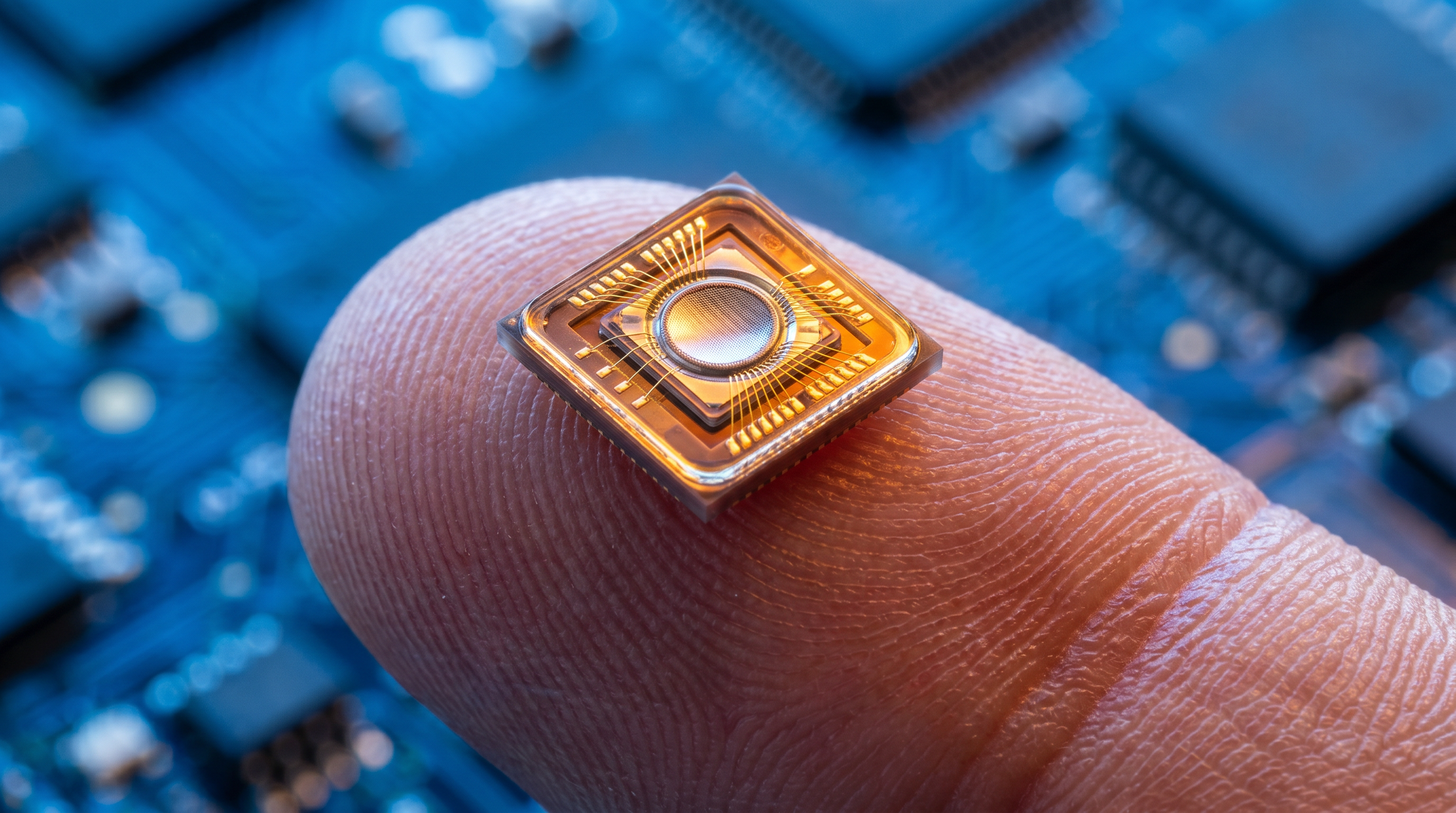
This shift is driven by Micro-Electro-Mechanical Systems (MEMS) technology. Instead of assembling macroscopic moving parts, engineers are now etching complete speaker assemblies directly onto silicon wafers using the same semiconductor manufacturing processes used to build computer chips.[1][4]
The secret to these solid-state drivers lies in piezoelectric materials. Rather than relying on electromagnetism to move a coil, a MEMS speaker features ultra-thin silicon beams that physically contract and expand when an electrical voltage is applied.[1][4]

This direct conversion of electrical energy into mechanical movement eliminates the need for bulky magnets, springs, and suspended diaphragms. The result is a monolithic, all-silicon component that acts as both the actuator and the speaker membrane.[4][7]
For listeners, the primary benefit of this silicon architecture is speed. Traditional dynamic drivers suffer from mechanical inertia; the heavy membrane takes a fraction of a millisecond to start moving and continues to resonate slightly after the signal stops.[6][7]
Silicon, by contrast, is incredibly stiff and lightweight, allowing it to react to electrical impulses almost instantly. This "lightning-fast transient response" means the speaker stops and starts with absolute precision, delivering a cleaner, more detailed high-frequency response.[6]
Silicon, by contrast, is incredibly stiff and lightweight, allowing it to react to electrical impulses almost instantly.
Furthermore, because MEMS speakers are manufactured in semiconductor foundries, they boast near-perfect phase consistency and left-right channel matching. This uniformity is virtually impossible to achieve with mass-produced mechanical coils, and it translates to a vastly superior spatial audio experience.[4]
Beyond acoustic fidelity, solid-state drivers are rewriting the rules of industrial design through extreme miniaturization. xMEMS, a leading manufacturer in the space, recently unveiled its "Sycamore" driver, which measures just 1.28 millimeters thick and weighs a mere 150 milligrams.[3][5]

This represents a 98 percent reduction in physical volume compared to traditional headphone drivers. By shrinking the acoustic engine to the size of a grain of rice, manufacturers are freeing up critical real estate inside the earbud shell for larger batteries and advanced processing chips.[5]
However, the technology still faces a significant hurdle: bass response. Deep sub-bass frequencies require moving a substantial volume of air, a physical challenge for microscopic silicon membranes with limited displacement capabilities.[2][6]
To solve this, current consumer models rely on a hybrid acoustic architecture. For example, the Creative Aurvana Ace 3 pairs an xMEMS solid-state tweeter with a traditional 10-millimeter dynamic driver.[2]
In this hybrid setup, the dynamic driver handles the heavy lifting of the low-end thump, while the silicon MEMS driver takes over for the midrange and treble. This allows listeners to enjoy the pristine clarity of solid-state audio without sacrificing the deep resonance required by modern music genres.[2]

As the technology matures, its applications are expanding beyond traditional earbuds into open-ear designs and AI-enabled smart glasses. Because MEMS drivers do not require the large acoustic back-volumes of traditional speakers, they can be seamlessly integrated into ultra-thin eyewear frames.[3][5]
The solid-state revolution is also tackling the longstanding comfort issues associated with over-ear headphones. Engineers are now applying MEMS technology to create "µCooling" systems—microscopic, solid-state air pumps.[4][5]
Operating silently as a "fan-on-a-chip," these micro-coolers actively exchange the air inside a sealed earcup 12 to 16 times per minute. By continuously venting heat and humidity, the technology eliminates the sweaty discomfort that typically accompanies extended listening sessions.[4][5]

With major production runs scaling up through 2026, solid-state audio is transitioning from a niche audiophile curiosity to a mainstream consumer standard. By replacing 19th-century mechanics with 21st-century silicon, the headphone industry is finally giving its hardware the upgrade required to match modern high-resolution audio formats.[1][7]
How we got here
2018
xMEMS Labs is founded with the goal of developing monolithic, all-silicon micro-speakers.
Late 2023
Creative Labs launches the Aurvana Ace series, the first consumer earbuds to feature hybrid xMEMS solid-state drivers.
Mid 2024
xMEMS releases reference designs to accelerate the adoption of solid-state tweeters and full-range in-ear monitors.
Late 2025
The industry unveils the 'Sycamore' driver and 'µCooling' micro-pumps, expanding solid-state tech to AI glasses and over-ear headphones.
Viewpoints in depth
Audiophile Purists
Focused entirely on acoustic fidelity, phase consistency, and transient response.
For high-end audio enthusiasts, the appeal of solid-state drivers lies in their ability to eliminate the mechanical distortion inherent in moving-coil designs. Because silicon is incredibly stiff, MEMS drivers stop moving the instant the electrical signal ceases, preventing the "smearing" of high-frequency details. This lightning-fast transient response, combined with perfect phase alignment across the frequency spectrum, allows for a level of spatial accuracy and instrumental separation that traditional dynamic drivers struggle to match.
Consumer Tech Reviewers
Prioritizing practical benefits like battery life, comfort, and everyday usability.
Mainstream reviewers acknowledge the audio improvements but are more focused on how solid-state tech changes the physical footprint of earbuds. By shrinking the acoustic engine by 98 percent, manufacturers can either build significantly smaller, more comfortable earbuds or use the freed-up space for larger batteries and more powerful processing chips. However, these reviewers remain cautious about the current need for hybrid setups, noting that until MEMS drivers can independently produce deep sub-bass, the complexity and cost of dual-driver systems will remain a factor.
Hardware Engineers
Viewing MEMS as a scalable semiconductor platform that solves long-standing design bottlenecks.
From an engineering perspective, the transition to solid-state audio is about manufacturing consistency and thermal management. Traditional voice coils are mechanical assemblies prone to microscopic variations during mass production, leading to left-right channel imbalances. MEMS speakers, etched from silicon wafers in semiconductor foundries, offer near-perfect uniformity. Furthermore, engineers are excited by the adjacent applications of the technology, such as using solid-state micro-pumps to actively vent heat and humidity from over-ear headphones.
What we don't know
- When solid-state drivers will be able to independently produce deep sub-bass without relying on hybrid dynamic driver pairings.
- How quickly the manufacturing costs of silicon-based speakers will drop to allow their inclusion in budget-tier wireless earbuds.
Key terms
- MEMS (Micro-Electro-Mechanical Systems)
- Microscopic devices that integrate mechanical and electrical components on a single silicon chip.
- Piezoelectric Effect
- The ability of certain materials to generate mechanical movement when an electrical voltage is applied.
- Transient Response
- How quickly a speaker can start and stop producing sound in reaction to an audio signal, which is crucial for clarity.
- Dynamic Driver
- The traditional speaker technology using a magnet, a voice coil, and a vibrating membrane to produce sound.
- Phase Consistency
- The accuracy with which a speaker reproduces the timing of audio frequencies, essential for realistic spatial audio.
Frequently asked
What is a solid-state MEMS speaker?
It is a microscopic speaker etched from silicon that uses piezoelectric materials to generate sound, replacing traditional magnets and moving coils.
Do solid-state earbuds sound better?
Yes, their stiff silicon construction allows for lightning-fast transient response, resulting in clearer, more detailed treble and improved spatial audio accuracy.
Why do current MEMS earbuds still use traditional speakers too?
Solid-state drivers currently struggle to move enough air for deep sub-bass, so manufacturers pair them with traditional dynamic drivers in a hybrid setup.
How does MEMS technology cool headphones?
Engineers have developed solid-state micro-pumps that act as silent fans, actively venting heat and humidity from inside over-ear headphone cups.
Sources
Source coverage
7 outlets
3 viewpoints surfaced






[1]TechRadarConsumer Tech Reviewers
Why solid-state drivers are the headphones tech you won't stop hearing about
Read on TechRadar →[2]SoundGuysConsumer Tech Reviewers
Creative Aurvana Ace 3 review: Amazing sound for a mid-tier price
Read on SoundGuys →[3]Android CentralConsumer Tech Reviewers
This solid-state micro speaker aims to bring huge sound upgrades to earbuds, XR glasses, and smartwatches
Read on Android Central →[4]Design NewsHardware Engineers
MEMS Tech Transforms Headphone Design Engineering
Read on Design News →[5]TechPowerUpHardware Engineers
xMEMS Debuts Breakthrough Headphone Architecture with Full Range MEMS Speaker and Active Humidity Control
Read on TechPowerUp →[6]Sound & VisionAudiophile Purists
xMEMS Labs Unveils 'Reference Design' for Wireless Earbuds in Push to Accelerate Adoption of Solid-State Microspeakers
Read on Sound & Vision →[7]eCousticsAudiophile Purists
xMEMS Debuts New Designs for True Wireless Stereo Earbuds
Read on eCoustics →

More in shopping
See all 52 stories →E-Bike Tech
The 2026 E-Bike Buying Guide: Motors, Batteries, and Finding Your Perfect Ride
8 sources

EV Transition
EV vs. PHEV in 2026: The Complete Cost and Lifestyle Comparison
7 sources

E-Bike Tech
The 2026 E-Bike Buying Guide: Motors, Batteries, and the New Safety Rules
8 sources

Nursery Tech
Smart Bassinets vs. Traditional Sleepers: The Complete Trade-Off Analysis
8 sources

Every angle. Every day.
Get shopping stories with full source coverage and perspective breakdowns delivered to your inbox.