
Engineers Develop a Jacket That Harvests Drinking Water Directly From the Air
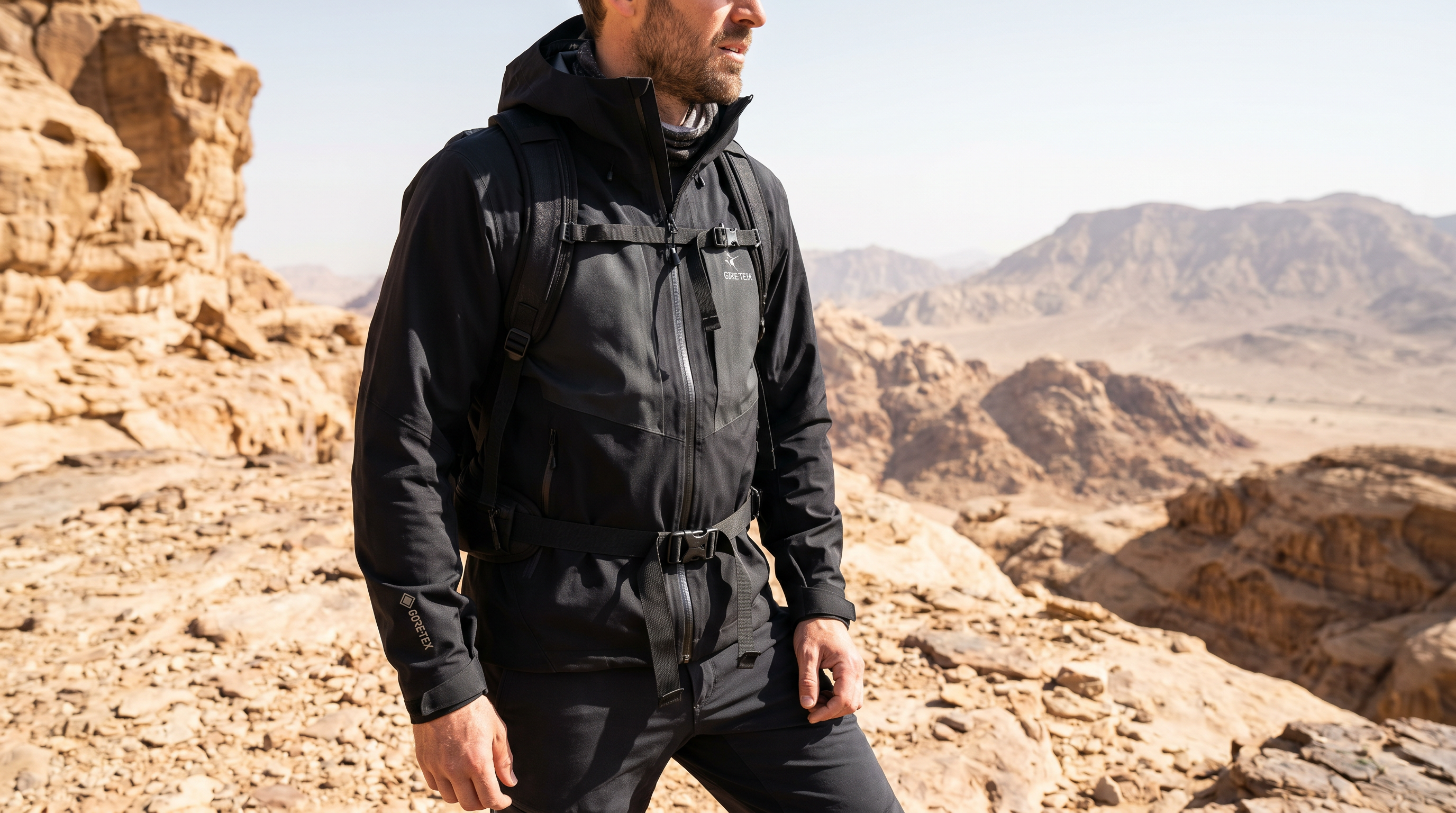
Researchers at the University of Texas at Austin have created a wearable textile that passively pulls moisture from ambient humidity. The prototype jacket can produce up to 900 milliliters of drinkable water per day, offering a zero-energy hydration solution for remote environments.
By Factlen Editorial Team
- Materials Scientists
- Focused on the chemical and structural breakthroughs that make fiber-level water transport possible.
- Humanitarian Planners
- Focused on the logistical advantages of decentralized, zero-energy water generation.
- Consumer Tech Analysts
- Focused on the commercial potential for lightweight, self-sustaining camping and hiking gear.
What's not represented
- · Apparel Manufacturers
- · Water Rights Regulators
Why this matters
By turning everyday clothing into a passive water generator, this technology could provide a lifesaving, zero-energy hydration source for emergency responders, soldiers, and hikers operating far from traditional infrastructure.
Key points
- Engineers at UT Austin have developed a prototype jacket that harvests drinking water directly from the air.
- The garment uses a specialized hydrogel fabric to passively collect moisture without requiring electricity or compressors.
- Depending on humidity, the jacket can produce between 400 and 900 milliliters of drinkable water per day.
- The fabric funnels moisture to detachable units, which are heated by the sun to release the clean water.
- The technology could provide a lifesaving hydration source for soldiers, emergency responders, and hikers in remote areas.
The concept of pulling drinking water directly from the air has long been a staple of science fiction, most famously envisioned as the moisture-recycling stillsuits worn by the desert dwellers in Frank Herbert's Dune. Now, materials science is turning that speculative concept into a wearable reality.[1]
Researchers at the University of Texas at Austin have developed a prototype jacket capable of passively harvesting drinking water from ambient humidity. The breakthrough, detailed in the journal Science Advances, represents a major shift in how engineers approach decentralized water generation.[1][3][4]
Built around a specially engineered textile, the jacket can produce between 400 and 900 milliliters, roughly 14 to 30 ounces, of drinkable water per day. The exact yield fluctuates based on the surrounding humidity, but the baseline performance is enough to provide a critical hydration supplement in remote environments.[1][2][3]

Atmospheric water harvesting is not a new field, but traditional systems are notoriously cumbersome. Standard setups rely on stationary boxes, large sorbent beds, and power-hungry compressors to force condensation. They are effective, but they tether the user to a power grid and a fixed location.[2][3][5]
UT Austin researchers Guihua Yu and Keith Johnston wanted to rethink the form factor entirely. If the fabric itself can collect water from air, it opens a new direction for personal and portable water access, Yu explained. By focusing on the fibers themselves, the team eliminated the need for bulky mechanical components.[1][3]
The secret lies in a hydrogel fabric constructed from biomass-derived materials. This textile features engineered surface patterns that combine hydrophilic, water-attracting, and hydrophobic, water-repelling, regions.[3][5]
The secret lies in a hydrogel fabric constructed from biomass-derived materials.
These microscopic structures mimic natural systems, such as the moisture-gathering shell of the Namib Desert beetle. As humid air passes over the fabric, the temperature gradients and surface tension effects cause water vapor to rapidly condense into liquid droplets directly on the fiber surface.[3][5]

Crucially, the engineering team did not simply create a sponge that gets heavy and wet. They designed a highly efficient transport pathway. Once the water condenses, the fabric actively funnels the moisture away from the surface and channels it into detachable harvesting units hidden within the garment.[1][3]
To access the drinking water, the wearer removes these harvesting units and places them inside a foldable collector piece. When exposed to heat, typically ambient sunlight, the units release their trapped moisture, which then condenses into a clean, drinkable liquid.[1][3]
In laboratory and field testing, this specialized textile demonstrated a three- to ten-fold improvement in water yield at scale compared to conventional water-harvesting materials. That leap in efficiency is what makes a wearable application viable for the first time.[1][3]
The immediate applications for this technology are profound. For soldiers, emergency responders, and agricultural workers operating in arid or infrastructure-limited regions, a self-replenishing water supply could be lifesaving. It offers a passive, zero-energy hydration safety net when supply lines are cut.[3][5]

On the commercial side, the technology offers obvious benefits for the outdoor recreation industry. Hikers, campers, and extreme sports enthusiasts could significantly reduce the heavy water weight they are forced to carry on long expeditions, relying instead on their clothing to generate a steady trickle of hydration.[1][3]
While the initial prototype takes the form of a jacket, the researchers envision integrating the moisture-wicking textile into a wide array of outdoor gear. Tents, backpacks, and emergency shelters could all be manufactured with water-collecting capabilities, turning standard equipment into passive utilities.[1][3][5]
As global water scarcity accelerates, decentralized solutions that require no electricity will become increasingly critical. Wearable water harvesting represents a major leap toward making clean water accessible anywhere the air holds moisture, proving that the most vital survival tools of the future might just be the clothes on our backs.[5][6]
How we got here
2018
Metal-organic frameworks (MOFs) are first successfully used to facilitate the production of drinking water from desert air.
2025
The UT Austin engineering team wins the top prize in the graduate category of the National Collegiate Inventors Competition for their AirGel invention.
June 2026
Researchers publish findings in Science Advances detailing a wearable jacket that successfully harvests water from ambient humidity.
Viewpoints in depth
Materials Scientists
Focused on the chemical and structural breakthroughs that make fiber-level water transport possible.
For researchers in this camp, the true innovation isn't the jacket itself, but the underlying transport mechanism. Traditional atmospheric water harvesting relies on bulky sorbent beds that act like sponges, requiring mechanical force to extract the water. By engineering a hydrogel fabric with distinct hydrophilic and hydrophobic regions, the UT Austin team solved the sponge problem. The fabric actively funnels liquid away from the surface, allowing continuous condensation without the material becoming saturated and heavy. This represents a fundamental leap in passive fluid dynamics.
Humanitarian & Defense Planners
Focused on the logistical advantages of decentralized, zero-energy water generation.
Logistics experts view water as one of the heaviest and most vulnerable supply chain dependencies in remote operations. Whether supplying soldiers in austere environments or disaster-relief workers in zones with destroyed infrastructure, transporting water requires immense resources. A wearable technology that generates up to a liter of water per day passively transforms the logistical equation. It provides a decentralized safety net, ensuring that personnel have a baseline hydration source even if supply lines are severed or contaminated.
Outdoor Recreation Industry
Focused on the commercial potential for lightweight, self-sustaining camping and hiking gear.
Consumer technology and outdoor gear analysts see massive commercial upside in water-harvesting textiles. Water is typically the heaviest item in a hiker's pack, weighing roughly 2.2 pounds per liter. If a jacket, tent, or backpack can passively generate 14 to 30 ounces of water over the course of a day, it drastically reduces the required carry weight for extreme sports enthusiasts. Analysts predict that as the manufacturing costs of these hydrogel fabrics decrease, premium outdoor brands will race to integrate the technology into their flagship survival lines.
What we don't know
- It remains unclear how much the specialized hydrogel fabric will cost to manufacture at a commercial scale.
- The long-term durability of the hydrophilic and hydrophobic surface patterns after repeated washing and outdoor wear has not yet been fully established.
- We do not yet know how quickly premium outdoor brands or military contractors will move to integrate this specific textile into their supply chains.
Key terms
- Atmospheric Water Harvesting (AWH)
- The process of extracting drinkable water directly from ambient air, typically through condensation or specialized absorbent materials.
- Hydrogel
- A network of polymer chains that can absorb and retain massive amounts of water relative to their physical size.
- Hydrophilic
- Having a strong affinity for water; materials that attract and absorb moisture.
- Hydrophobic
- Tending to repel or fail to mix with water; used in textiles to push water droplets in a specific direction.
- Sorbent bed
- A layer of material used in traditional water-harvesting devices to absorb liquids or gases from the air.
Frequently asked
How much water can the jacket produce?
The prototype jacket produces between 400 and 900 milliliters (about 14 to 30 ounces) of drinkable water per day, depending on the ambient humidity.
Does the jacket require batteries or electricity?
No. The fabric passively collects moisture from the air. The user then places the detachable harvesting units in the sun, using ambient heat to release and condense the water.
Is the water safe to drink?
Yes. Atmospheric water harvesting acts as a natural distillation process, meaning the collected water is generally free of the ground contaminants or sediment found in surface water.
Will this work in a dry desert?
While the system produces more water in humid environments, the advanced hydrogel materials are designed to pull available moisture even from arid climates, though the daily yield will be closer to the 400-milliliter baseline.
Sources
Source coverage
6 outlets
3 viewpoints surfaced






[1]EngadgetConsumer Tech Analysts
Researchers are developing textiles that can produce drinking water from the air
Read on Engadget →[2]KTEM NewsConsumer Tech Analysts
Spectacular news comes out of Austin, Texas: Engineers develop a way to drink water directly from the air
Read on KTEM News →[3]The University of Texas at AustinMaterials Scientists
Engineers Develop Jacket That Harvests Drinking Water From Air
Read on The University of Texas at Austin →[4]Science AdvancesMaterials Scientists
Wearable atmospheric water harvesting textiles for personal and portable water access
Read on Science Advances →[5]EnvisioningHumanitarian Planners
Atmospheric water-harvesting textiles
Read on Envisioning →[6]Factlen Editorial TeamMaterials Scientists
Synthesis by Factlen editorial team
Read on Factlen Editorial Team →

More in technology
See all 49 stories →Battery Tech
Solid-State Batteries Move From Lab to Road, Promising 1,000-Kilometer EV Ranges
7 sources

Atmospheric Water Harvesting
Engineers Develop a Wearable Jacket That Harvests Drinking Water Directly From the Air
6 sources

AI Scaffolding
Microsoft and Xiaomi Open-Source Breakthroughs in AI Coding Memory and Skills
8 sources

Battery Tech
Silicon-Carbon Batteries Hit the Global Market, Promising Multi-Day Smartphone Lifespans
7 sources

Every angle. Every day.
Get technology stories with full source coverage and perspective breakdowns delivered to your inbox.