
How Solid-State Batteries Could Solve the Electric Vehicle Range Problem
By replacing flammable liquid electrolytes with solid materials, next-generation batteries promise to double EV ranges, cut charging times to 15 minutes, and virtually eliminate fire risks.
By Factlen Editorial Team
- Automotive Innovators
- Automakers and startups pushing aggressive timelines for commercialization to dominate the next era of EVs.
- Battery Researchers
- Materials scientists focused on the remaining technical hurdles like dendrite formation and scaling manufacturing.
- Industry Analysts
- Market observers tracking the economic impact, cost curves, and timeline for mainstream consumer adoption.
What's not represented
- · Fossil Fuel Industry
- · Lithium Mining Communities
Why this matters
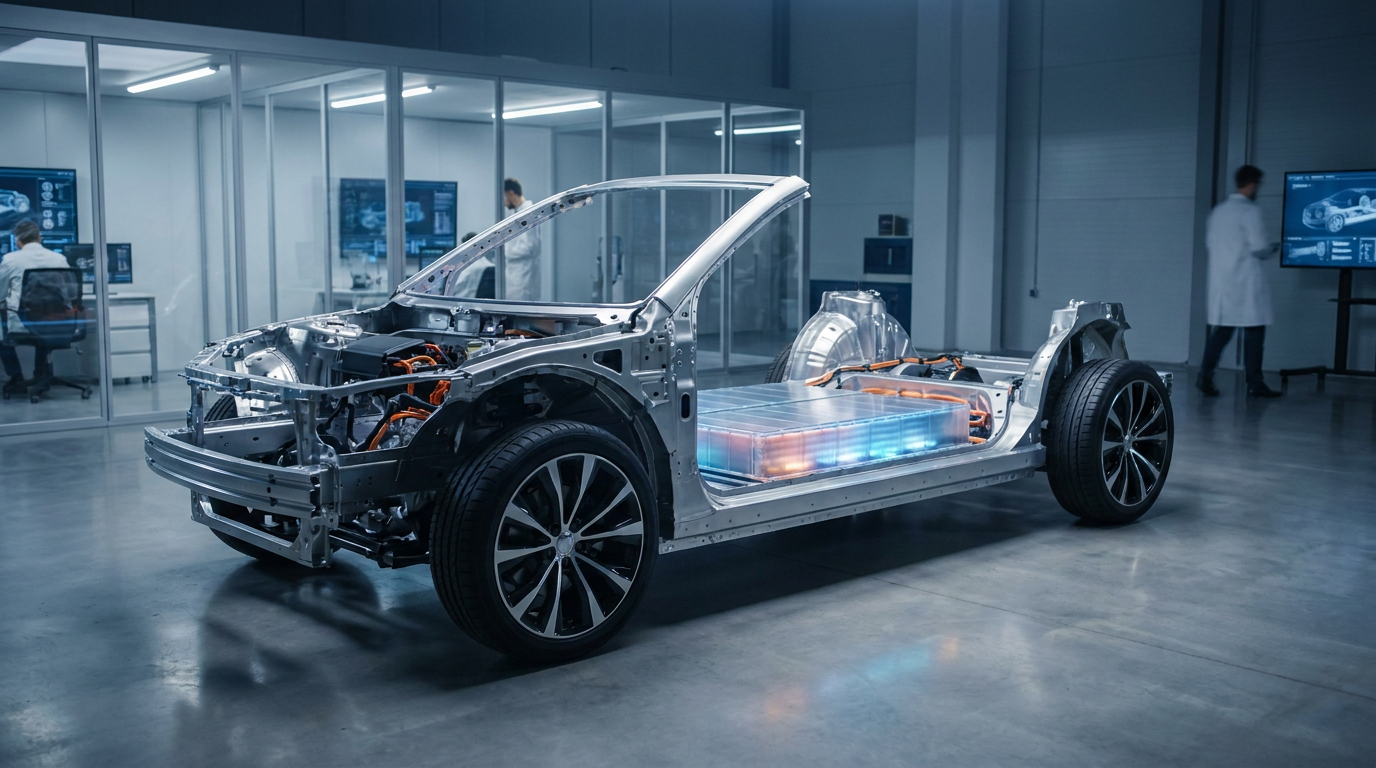
Battery anxiety remains the biggest hurdle for drivers considering an electric vehicle. If commercialized successfully, solid-state technology will make EVs lighter, cheaper, and capable of driving over 700 miles on a single 10-minute charge—fundamentally changing the economics of driving.
Key points
- Solid-state batteries replace flammable liquid electrolytes with solid materials like ceramics or sulfides.
- The technology promises to double or triple energy density, allowing for 700-mile ranges.
- Solid electrolytes enable 10-to-15-minute fast charging without the risk of overheating.
- Major automakers like Toyota and QuantumScape target mass production by 2027.
- Engineering challenges remain, including preventing micro-cracks and scaling up factory production.
The electric vehicle revolution is currently facing a critical technological bottleneck. While global adoption continues to climb and governments mandate the phase-out of internal combustion engines, millions of prospective buyers remain sidelined by three persistent anxieties. Drivers worry about how far the car can drive on a single charge, how long they will be forced to wait at a charging station, and how the battery's safety holds up in the event of a severe crash. These concerns are not entirely unfounded; they represent the physical limitations of the technology currently powering the vast majority of the world's electric fleet. To overcome this final hurdle and push EVs into true ubiquity, the automotive industry is betting billions of dollars on a next-generation successor that promises to rewrite the rules of energy storage.[5]
For the past three decades, the lithium-ion battery has been the undisputed king of portable power, fueling everything from the smartphone in your pocket to massive grid-scale energy storage facilities. Its invention in the 1980s revolutionized modern electronics by providing a reliable, rechargeable, and relatively lightweight power source. However, traditional lithium-ion technology is now approaching its theoretical chemical limits. Engineers are struggling to squeeze significantly more energy into the same physical space without compromising stability or lifespan. Recognizing that incremental improvements will no longer suffice to meet the demanding requirements of long-haul transportation and heavy-duty vehicles, researchers have turned their attention to a fundamentally different architecture: the solid-state battery.[1][3]
The promise of solid-state technology sounds almost like science fiction compared to today's standards. Automakers and battery startups are targeting single-charge ranges of over 700 miles (1,200 kilometers)—enough to drive from New York to Chicago without stopping to plug in. Furthermore, they aim to slash charging times to under 15 minutes, effectively mirroring the convenience of a traditional gas station visit. Beyond performance, these next-generation cells are being engineered for a lifespan that could outlast the vehicle itself, potentially retaining their full capacity for decades. If these targets are met, solid-state batteries will not just improve electric vehicles; they will fundamentally change the economics of vehicle ownership and the global energy landscape.[7]
To understand why solid-state batteries represent such a monumental leap forward, one must first look at the mechanics of how current batteries operate—and how they fail. In a conventional lithium-ion cell, energy is stored and released as lithium ions move back and forth between a positive electrode, known as the cathode, and a negative electrode, called the anode. This movement of ions is what generates the electrical current that powers the vehicle's motors. However, these ions cannot travel through empty space; they require a medium to facilitate their journey across the microscopic gap separating the two electrodes.[2]

In today's batteries, these ions travel through a liquid electrolyte—a chemical solvent that is highly conductive but inherently problematic. This liquid is highly volatile and flammable. If the battery is physically punctured in a severe traffic accident, or if it overheats due to an internal short circuit, this liquid solvent can ignite. This ignition often leads to a dangerous, self-sustaining chain reaction known as thermal runaway, which is notoriously difficult for firefighters to extinguish. Managing this risk requires automakers to encase the battery cells in heavy protective armor and install complex, liquid-cooling systems to keep the temperatures strictly regulated, adding significant weight and cost to the vehicle.[3][4]
Solid-state batteries eliminate this critical vulnerability by entirely replacing the liquid solvent with a solid material. Depending on the manufacturer, this solid electrolyte is typically engineered from advanced ceramics, glass, or sulfide-based compounds. This solid layer still allows lithium ions to pass through freely during the charging and discharging cycles, but it acts as a rigid, physical barrier that prevents the positive and negative electrodes from ever touching. By removing the liquid component, the battery's internal architecture is fundamentally simplified, paving the way for a cascade of secondary engineering benefits that extend far beyond just safety.[5][6]
The most immediate and profound benefit of this solid architecture is inherent safety. Without a flammable liquid core, solid-state batteries are vastly more resistant to fires and explosions, even when subjected to extreme conditions like being crushed, pierced, or exposed to intense external heat. This inherent chemical stability means that automakers can safely strip out the heavy, bulky cooling systems and the thick protective armor currently required for EV battery packs. By removing this dead weight, the vehicle becomes lighter and more efficient, which in turn allows the motors to extract more driving range from the exact same amount of stored energy.[2][9]
The most immediate and profound benefit of this solid architecture is inherent safety.
But enhanced safety is only half of the solid-state equation; the other half is a massive leap in energy density. Because the solid electrolyte is so physically robust, it allows battery engineers to completely rethink the negative electrode. In traditional lithium-ion batteries, the anode is typically made of graphite, a bulky material that acts like a sponge to absorb the lithium ions. The graphite itself does not generate energy; it merely houses the ions, taking up valuable space and adding unnecessary weight to the cell. Solid-state technology allows manufacturers to discard the graphite entirely and replace it with a pure lithium metal anode.[5]
A pure lithium metal anode can store significantly more energy in the exact same physical footprint, acting as a dense, highly concentrated reservoir of power. Current laboratory estimates suggest that solid-state cells utilizing lithium metal could deliver two to three times the energy density of today's absolute best lithium-ion batteries. For everyday drivers, this translates directly to dramatically extended driving ranges without having to make the vehicle larger or heavier. It also opens the door for electrifying larger modes of transportation, such as commercial semi-trucks and short-haul aircraft, which currently struggle with the immense weight of traditional battery packs.[3][7]

Beyond range and safety, the technology also promises to solve the charging bottleneck that frustrates many EV owners. The combination of a solid electrolyte and a lithium metal anode facilitates much faster and more efficient ion transfer. While today's fastest DC fast chargers can still take 30 to 40 minutes to replenish a depleted battery to 80 percent capacity, solid-state cells are being engineered to accept a massive influx of power without overheating. Automakers are targeting a full charge in just 10 to 15 minutes—roughly the same amount of time it takes a driver to fill a gas tank, grab a coffee, and use the restroom.[3][5]
Despite these massive theoretical advantages, transitioning solid-state technology from controlled laboratory prototypes to mass manufacturing has proven notoriously difficult. One of the primary engineering hurdles is maintaining perfect, continuous contact between the solid layers as the battery naturally expands and contracts during its charging and discharging cycles. In a liquid battery, the solvent naturally flows to fill any microscopic gaps. In a solid-state battery, even the slightest separation between the rigid layers can drastically increase internal electrical resistance, crippling the battery's ability to deliver power efficiently.[6][9]
Over time, this repeated mechanical stress can lead to the formation of micro-cracks within the solid electrolyte itself. These tiny fractures further degrade the battery's performance and shorten its overall lifespan, presenting a major durability challenge for engineers trying to guarantee a battery that will last for hundreds of thousands of miles. Additionally, while solid electrolytes are undeniably safer than their liquid counterparts, recent independent research has demonstrated that they are not entirely immune to failure under extreme, edge-case conditions.[8][9]
Researchers at Sandia National Laboratories have found that under extreme pressure or rapid charging conditions, lithium metal can still form microscopic, needle-like spikes called dendrites. If these dendrites grow large enough and rigid enough, they can actually pierce through the solid electrolyte, bridging the gap between the electrodes and causing a localized short circuit. While the absence of flammable liquid means this short circuit is highly unlikely to result in a catastrophic fire, it proves that solid-state technology still requires rigorous, precise engineering to be completely foolproof for mass consumer adoption.[8]
The race to solve these final manufacturing challenges has triggered a global arms race among automotive giants, battery manufacturers, and well-funded tech startups. Toyota, which currently holds one of the world's largest patent portfolios in solid-state technology, has publicly announced plans to begin mass production by 2027. The Japanese automaker is aggressively targeting a massive range boost and 10-minute charging capabilities, viewing the technology as the ultimate differentiator that will cement its leadership in the next generation of zero-emission mobility.[7]

Meanwhile, competitors are refusing to cede ground. Volkswagen-backed QuantumScape recently inaugurated a pilot production line in California, demonstrating tangible progress toward scaling up its proprietary solid-state architecture. Simultaneously, major Asian battery manufacturers like Samsung SDI and CATL are aggressively scaling their own sulfide-based solid-state manufacturing capabilities. Governments are also stepping in; China recently established a national collaborative innovation platform, uniting its top automakers and researchers in a state-backed drive to commercialize the technology and dominate the global supply chain by 2030.[7][9]
Industry analysts project that when the first commercial solid-state batteries finally hit the market, they will likely debut exclusively in premium, high-performance electric vehicles. The initial manufacturing costs will be substantial as factories learn to produce the complex cells at scale. However, as production lines mature, yield rates improve, and economies of scale take effect in the late 2020s and early 2030s, the technology is expected to rapidly trickle down to mainstream, affordable models, much like the adoption curve of early flat-screen televisions or the first lithium-ion electronics.[9]
If successful, the widespread commercialization of solid-state batteries will mark the most significant leap in energy storage since the commercialization of the lithium-ion cell in the early 1990s. It is a generational breakthrough that could finally remove the last remaining psychological and physical barriers to global electric vehicle adoption. By offering internal-combustion convenience with zero tailpipe emissions, solid-state technology is poised to pave the way for a truly sustainable, electrified transportation future.[1][9]
How we got here
1991
Sony commercializes the first lithium-ion battery, revolutionizing portable electronics.
2010s
Research into solid-state electrolytes accelerates as the global electric vehicle market begins to expand.
2024
QuantumScape inaugurates its first pilot production line in California, signaling a shift toward manufacturing.
2027
Toyota's target date to launch its first mass-produced electric vehicles equipped with solid-state batteries.
Viewpoints in depth
Automotive Innovators
Automakers view solid-state batteries as the ultimate differentiator that will make internal combustion engines obsolete.
Companies like Toyota, QuantumScape, and Samsung SDI are pouring billions into solid-state research, viewing it as the key to dominating the next decade of transportation. They argue that the technology's ability to deliver 700-mile ranges and 10-minute charging times will completely eliminate consumer range anxiety. For these innovators, the focus is rapidly shifting from basic chemistry to scaling up pilot production lines, with aggressive targets to have commercial vehicles on the road by 2027.
Battery Researchers
Materials scientists emphasize that moving from lab-scale prototypes to mass production remains a monumental challenge.
While acknowledging the massive theoretical benefits, researchers caution that solid-state batteries are not a magic bullet yet. Independent studies, such as those from Sandia National Laboratories, highlight that extreme conditions can still cause microscopic lithium dendrites to pierce the solid electrolyte, potentially causing short circuits. Furthermore, scientists point out the immense difficulty of manufacturing these cells at a commercial scale, where maintaining perfect contact between rigid layers during thousands of charge cycles remains a significant engineering hurdle.
Industry Analysts
Market observers focus on the economic realities of scaling a brand-new manufacturing supply chain.
Analysts predict a staggered rollout for solid-state technology. Because early production yields will be low and manufacturing costs high, the first solid-state batteries will almost certainly be reserved for luxury, high-performance vehicles. However, market observers expect that as economies of scale take effect in the late 2020s and early 2030s, costs will plummet. They argue that the ultimate success of solid-state batteries will depend not just on chemistry, but on how quickly the industry can build a reliable, cost-effective global supply chain.
What we don't know
- The exact cost premium of solid-state batteries when they first hit the consumer market.
- How well the solid electrolytes will resist micro-cracking over a decade of real-world driving.
- Whether the global supply chain can scale up raw material extraction fast enough to meet 2030 production targets.
Key terms
- Electrolyte
- The medium inside a battery that allows ions to flow between the positive and negative electrodes.
- Anode
- The negative electrode of a battery, where lithium ions are stored while the battery is fully charged.
- Cathode
- The positive electrode of a battery, which receives the lithium ions as the battery discharges power.
- Thermal Runaway
- A dangerous, self-sustaining chain reaction where a battery overheats uncontrollably, often leading to a fire.
- Dendrites
- Microscopic, needle-like structures of lithium metal that can grow inside a battery and cause internal short circuits.
Frequently asked
Can I buy a car with a solid-state battery today?
No. While working prototypes exist in laboratories and pilot production lines, major automakers do not expect to begin mass production of solid-state EVs until 2027 or 2028.
Are solid-state batteries completely fireproof?
They are vastly safer than current lithium-ion batteries because they do not contain flammable liquid solvents. However, extreme physical damage or manufacturing defects can still cause localized short circuits.
Will solid-state batteries make electric cars cheaper?
Eventually, yes. While the first generation of solid-state batteries will be expensive and reserved for luxury vehicles, scaling up manufacturing is expected to drastically lower costs by the early 2030s.
Do solid-state batteries degrade over time?
Yes, but at a much slower rate than current batteries. Automakers are engineering solid-state cells to potentially last for decades, though repeated charging can still cause micro-cracks in the solid electrolyte over time.
Sources
Source coverage
9 outlets
3 viewpoints surfaced









[1]Alternative Energy TutorialsBattery Researchers
Solid State Batteries - Beyond Lithium-Ion for Storage
Read on Alternative Energy Tutorials →[2]QuratorBattery Researchers
What exactly are solid-state batteries, and how do they work?
Read on Qurator →[3]Signicent LLPAutomotive Innovators
Solid-State Batteries vs. Lithium-Ion: A Comparison
Read on Signicent LLP →[4]Journal of Energy StorageBattery Researchers
Solid-State Vs Lithium-Ion Batteries in Evs: A Performance and Safety Perspective
Read on Journal of Energy Storage →[5]WikipediaBattery Researchers
Solid-state battery
Read on Wikipedia →[6]LipowerBattery Researchers
The Three Core Structures of Solid-State Batteries Explained 2025
Read on Lipower →[7]CleanTechnicaAutomotive Innovators
Solid-State Battery Milestones Appear Encouraging For Near Future
Read on CleanTechnica →[8]Green Car ReportsBattery Researchers
Research suggests solid-state EV battery cells aren't always safer than conventional lithium-ion
Read on Green Car Reports →[9]Factlen Editorial TeamIndustry Analysts
Synthesis by Factlen editorial team
Read on Factlen Editorial Team →

Every angle. Every day.
Get guides stories with full source coverage and perspective breakdowns delivered to your inbox.