
How Passkeys Work: The Cryptographic Shift Replacing Passwords in 2026
Passkeys have reached 5 billion active users by replacing vulnerable passwords with device-bound cryptographic keys. Here is how the WebAuthn standard eliminates phishing and fundamentally changes online security.
By Factlen Editorial Team
- Security Architects
- Advocate for passkeys because they eliminate shared secrets and neutralize phishing.
- Everyday Consumers
- Embrace passkeys for their speed, convenience, and reduction of login friction.
- Enterprise IT Leaders
- Focus on the economic benefits of reduced helpdesk costs and the challenges of legacy fallback.
What's not represented
- · Users without access to modern smartphones or biometric-capable hardware.
- · Privacy advocates concerned about the consolidation of identity management within a few major tech ecosystems.
Why this matters
Passwords are the weakest link in digital security, responsible for over 80% of data breaches. By switching to passkeys, users can permanently immunize their accounts against phishing, credential stuffing, and server leaks, while cutting login times by more than half.
Key points
- Passkeys replace passwords with cryptographic key pairs, eliminating shared secrets.
- The private key never leaves your device, making passkeys immune to server breaches.
- Passkeys are domain-bound, meaning they structurally defeat phishing attacks.
- Over 5 billion passkeys are in active use globally as of 2026.
- Average login times drop from 31.2 seconds with passwords to 8.5 seconds with passkeys.
- Cloud ecosystems sync passkeys across devices to prevent lockouts if a phone is lost.
For over six decades, the internet has relied on a fundamentally flawed security model: a shared secret. Passwords demand that users memorize complex strings of characters and trust that every website they visit will store those strings securely. This system has comprehensively failed. According to industry tracking, over 80 percent of all data breaches involve weak, reused, or stolen passwords, costing the global economy billions annually in fraud, account takeovers, and IT support.[7][8]
But in 2026, the technology industry has reached a tipping point in the transition away from passwords. The FIDO Alliance now tracks over 5 billion passkeys in active use globally, supported by eight of the top ten websites on the internet. What began as an optional security upgrade for tech-savvy early adopters has rapidly become the operational baseline for consumer applications and enterprise networks alike.[1][5]
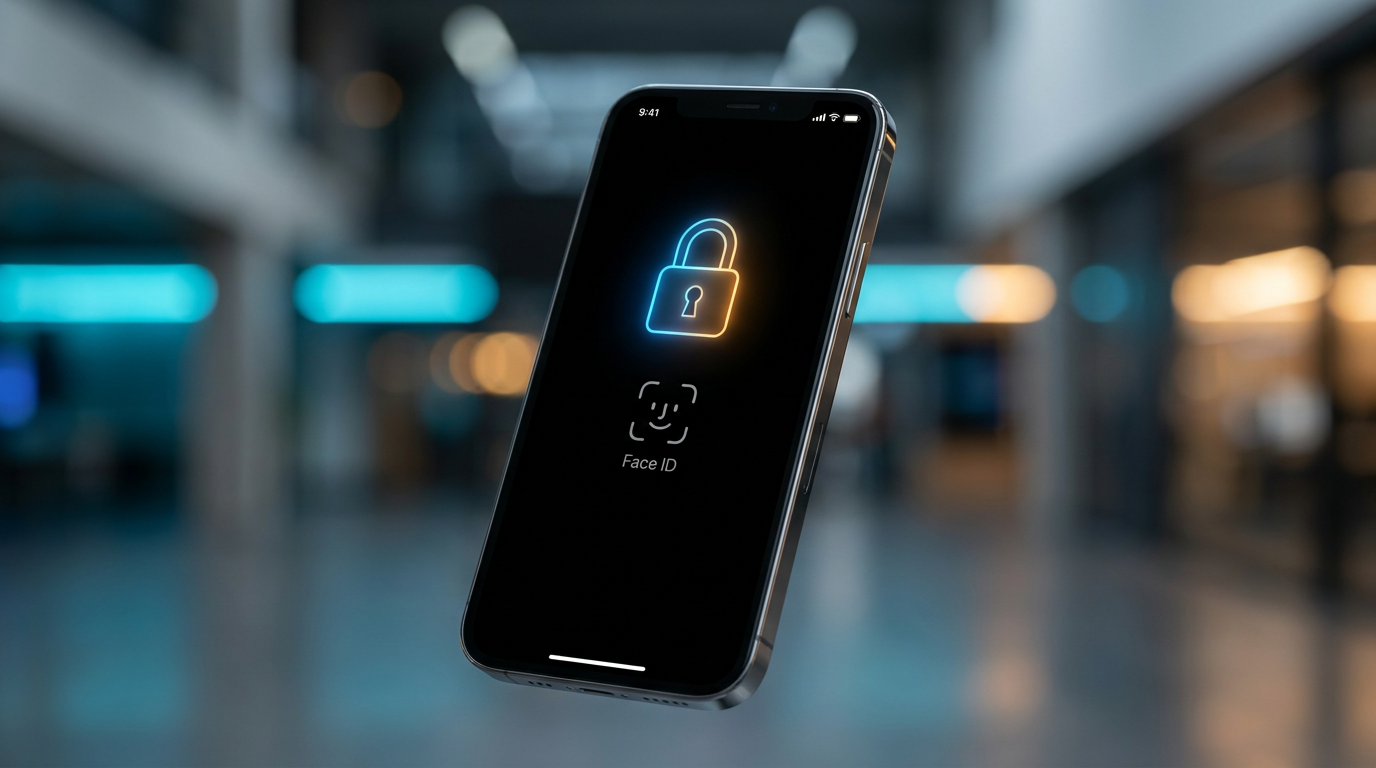
A passkey is a digital credential that replaces a password entirely. Instead of typing a phrase, users authenticate themselves using the same biometric methods they already use to unlock their devices—such as Apple's Face ID, Android's fingerprint scanner, or Windows Hello. The experience is frictionless, but the real revolution lies in the underlying mathematics that make passkeys immune to the internet's most common attacks.[2][8]
The speed advantage is immediately obvious to anyone who makes the switch. Telemetry data shows that the average passkey sign-in completes in just 8.5 seconds, with a success rate of 93 percent. By contrast, the traditional routine of typing a password and hunting for a two-factor authentication (2FA) code takes an average of 31.2 seconds, with a success rate of only 63 percent. Passkeys eliminate the cognitive load of remembering credentials and the friction of secondary codes.[1][2]

To understand why passkeys are safer, one must look at the WebAuthn standard that powers them. WebAuthn is an open API developed by the World Wide Web Consortium (W3C) and the FIDO Alliance. It shifts authentication away from "something you know" (a password) to "something you have" (your device) combined with "something you are" (your biometric signature).[3][4]
Under the hood, passkeys rely on public-key cryptography, also known as asymmetric cryptography. When a user registers a passkey on a website, their device generates a unique pair of mathematically linked keys. The "public key" is sent to the website's server, where it is stored in a database. The "private key" remains securely locked inside the user's device, often within a specialized hardware component like a Secure Enclave or Trusted Platform Module (TPM).[3][6]
Under the hood, passkeys rely on public-key cryptography, also known as asymmetric cryptography.
During a login attempt, the website does not ask for a password. Instead, it sends a cryptographic "challenge"—a random string of data—to the user's device. The device prompts the user for biometric approval. Once the user provides a fingerprint or face scan, the device uses the private key to sign the challenge and sends the signature back to the server. The server then uses the public key to verify the signature, granting access.[4][8]
Crucially, the private key never leaves the user's device, and no shared secret is ever transmitted across the internet. This architecture structurally defeats phishing. Even if a user is tricked into visiting a perfectly forged replica of their bank's website, the passkey will simply refuse to work. Passkeys are cryptographically bound to the specific domain they were created for; the device will not sign a challenge from a fraudulent URL.[3][6]

This mechanism also neutralizes the threat of server breaches. If hackers compromise a company's database and steal millions of public keys, they gain nothing actionable. A public key is useless without its corresponding private key, which remains safely in the user's pocket. There are no password hashes to crack, and credential stuffing—where attackers use passwords stolen from one site to unlock accounts on another—becomes mathematically impossible.[6][8]
Early critics of passkeys worried about device loss: if the private key lives on a smartphone, what happens when that phone falls into a lake? The industry solved this by introducing synced passkeys. Ecosystems like Apple's iCloud Keychain, Google Password Manager, and third-party tools like 1Password now securely encrypt and sync passkeys across all of a user's devices. If a phone is lost, the user simply logs into their cloud account on a new device to restore their credentials.[2][5]
For enterprise IT leaders, the shift to passkeys is driven as much by economics as by security. Helpdesk calls for forgotten passwords routinely consume massive portions of IT budgets. By deploying passkeys, companies are seeing dramatic reductions in support tickets, alongside a near-total elimination of successful employee phishing campaigns. The focus for Chief Information Security Officers has shifted from enforcing password complexity rules to managing the governance of passkey recovery.[1][8]

Despite the rapid adoption, the transition is not yet complete. The internet has a long memory, and millions of legacy websites still rely on outdated authentication infrastructure. Passwords will continue to exist as a fallback mechanism for years to come, particularly for account recovery flows. Security experts advise users to maintain a password manager to handle these legacy logins while enabling passkeys wherever they are supported.[1][5]
The era of the password is drawing to a close. By replacing human memory with cryptographic certainty, passkeys represent the most significant upgrade to consumer cybersecurity in the history of the web. As the technology becomes ubiquitous, the anxiety of data breaches and the daily friction of forgotten logins will increasingly become relics of the past.[1][8]
How we got here
2012
The FIDO Alliance is founded to develop open standards for passwordless authentication.
2019
The W3C officially publishes WebAuthn as a web standard, laying the technical groundwork for passkeys.
2022
Apple, Google, and Microsoft announce expanded support for the FIDO standard, coining the consumer-friendly term 'passkeys'.
2023
Major consumer platforms, including Google Accounts and Amazon, begin rolling out passkey support to billions of users.
2026
Passkey adoption reaches a tipping point, with over 5 billion active credentials deployed globally.
Viewpoints in depth
Security Architects
Focus on the structural elimination of shared secrets and phishing vectors.
For cybersecurity professionals, passkeys represent the holy grail of authentication: the removal of human error from the security chain. Because passkeys rely on asymmetric cryptography, there is no shared secret for attackers to intercept or steal from a database. Security architects emphasize that passkeys structurally defeat Man-in-the-Middle (MitM) attacks and phishing, as the credential is mathematically bound to the legitimate domain and cannot be tricked into authenticating a spoofed website.
Everyday Consumers
Value the friction-free experience and the end of password anxiety.
From the consumer perspective, the primary appeal of passkeys is convenience. Users are exhausted by the cognitive load of managing dozens of complex passwords and the friction of hunting for 2FA codes sent via SMS. Consumer advocates highlight that passkeys align digital security with the physical habits users already have—unlocking their phones with a glance or a touch. The fact that this easier method is also vastly more secure is seen as a rare win-win in consumer tech.
Enterprise IT Leaders
Navigate the practical challenges of deployment, legacy fallback, and account recovery.
While enterprise leaders recognize the security benefits, their focus is on the operational realities of deployment. IT departments must manage hybrid environments where modern SaaS applications support passkeys, but legacy on-premise software still requires passwords. Furthermore, enterprise architects are heavily focused on 'recovery governance'—establishing secure protocols for employees who lose their devices, ensuring that the fallback methods do not introduce new vulnerabilities that attackers can exploit.
What we don't know
- How quickly legacy websites and smaller platforms will upgrade their infrastructure to support WebAuthn.
- The long-term security implications of relying heavily on cloud providers (like Apple or Google) to sync private keys across devices.
- How regulatory bodies will standardize account recovery processes when a user loses all their hardware authenticators.
Key terms
- WebAuthn
- A web standard API that allows browsers to communicate with authenticators to create and use passkeys securely.
- Public-Key Cryptography
- A security system using two mathematically linked keys—one public, one private—to verify identity without sharing secrets.
- FIDO Alliance
- An open industry association whose mission is to reduce the world's reliance on passwords through standardized authentication protocols.
- Authenticator
- The device or software (such as a smartphone, security key, or password manager) that securely generates and stores the private key.
- Credential Stuffing
- A cyberattack where hackers use lists of compromised passwords from one breach to attempt logins on entirely different websites.
Frequently asked
What happens if I lose my phone?
Most passkeys are synced to your cloud account (like Apple iCloud Keychain or Google Password Manager). If you lose your phone, you can simply log into your cloud account on a new device to restore your passkeys.
Can a website steal my fingerprint?
No. Your biometric data (fingerprint or face scan) never leaves your device. It is only used locally to unlock the private key, which then signs a cryptographic challenge sent by the website.
Do I still need a password manager?
Yes. While passkeys are growing rapidly, many older websites still require passwords. Modern password managers have evolved to store both legacy passwords and new passkeys in one secure vault.
Are passkeys tied to just one company?
No. Passkeys are built on open FIDO standards, meaning they work across Apple, Google, Microsoft, and third-party platforms, though moving them between different tech ecosystems can sometimes require a one-time transfer process.
Sources
Source coverage
8 outlets
3 viewpoints surfaced








[1]FIDO AllianceSecurity Architects
2026 State of Passkeys Report
Read on FIDO Alliance →[2]Google Security BlogEveryday Consumers
Making authentication faster than ever: passkeys vs. passwords
Read on Google Security Blog →[3]WebAuthn.meSecurity Architects
Web Authentication and Passkeys
Read on WebAuthn.me →[4]AuthgearSecurity Architects
A practical developer guide to passkey authentication and WebAuthn
Read on Authgear →[5]1PasswordEveryday Consumers
Passkey adoption in 2025 and beyond
Read on 1Password →[6]GlobalSignEnterprise IT Leaders
Passkeys vs Passwords: What's the Difference?
Read on GlobalSign →[7]IBM SecurityEnterprise IT Leaders
Cost of a Data Breach Report
Read on IBM Security →[8]Factlen Editorial TeamSecurity Architects
Synthesis by Factlen editorial team
Read on Factlen Editorial Team →
Every angle. Every day.
Get guides stories with full source coverage and perspective breakdowns delivered to your inbox.