
Evidence Pack: The Fragile US-Iran Ceasefire and the Battle for the Strait of Hormuz
The US and Iran have signed a tentative agreement to end their 3.5-month war and reopen the Strait of Hormuz, but intelligence leaks and regional military postures reveal severe vulnerabilities in the deal.
By Factlen Editorial Team
- US Administration
- Argues the deal secures a toll-free Strait of Hormuz and forces Iran to the table on nuclear concessions.
- US Intelligence & Hawks
- Skeptical of Iranian compliance, citing intelligence that Tehran has no intention of making nuclear concessions.
- Iranian Leadership
- Views the deal as a victory that lifts the US blockade and establishes sovereignty over the Strait.
- Global Shipping & Markets
- Relieved by the breakthrough but warns that physical supply chains will take months to normalize.
- Israeli Government
- Rejects the premise that the war is over, maintaining military operations in Lebanon.
What's not represented
- · European and Asian energy importers reliant on the Strait
- · Iranian civilians facing severe economic hardship
- · Lebanese civilians caught in the ongoing Israel-Hezbollah conflict
Why this matters
The reopening of the Strait of Hormuz promises to end a historic global energy crisis that has driven up inflation and gas prices worldwide. However, if the fragile ceasefire collapses over nuclear disagreements or the ongoing conflict in Lebanon, the global economy could face an immediate, devastating relapse.
Key points
- The US and Iran signed a Memorandum of Understanding for a 60-day ceasefire.
- The deal promises to reopen the Strait of Hormuz, though Iran may demand transit fees.
- US intelligence reportedly doubts Iran will make the required nuclear concessions.
- Israel is not bound by the agreement and continues operations in Lebanon.
- Shipping experts warn it will take months for global oil flows to fully normalize.
The United States and Iran have signed a Memorandum of Understanding (MOU) to end their devastating 3.5-month war, triggering a euphoric global market rally. Brokered by Pakistan and Qatar, the tentative agreement establishes a 60-day ceasefire and promises the immediate reopening of the Strait of Hormuz, the world's most critical energy chokepoint.[2][6]
However, an examination of the primary evidence, intelligence leaks, and regional military postures reveals a highly fragile framework. The agreement defers the most intractable issues—nuclear enrichment, proxy forces, and ballistic missiles—while leaving critical operational questions regarding maritime security entirely unanswered.[2][5]
The most immediate claim is that the Strait of Hormuz will reopen "toll-free." Following the announcement, the US administration stated that the American naval blockade on Iranian ports would be lifted in exchange for unrestricted commercial shipping through the Strait.[2]
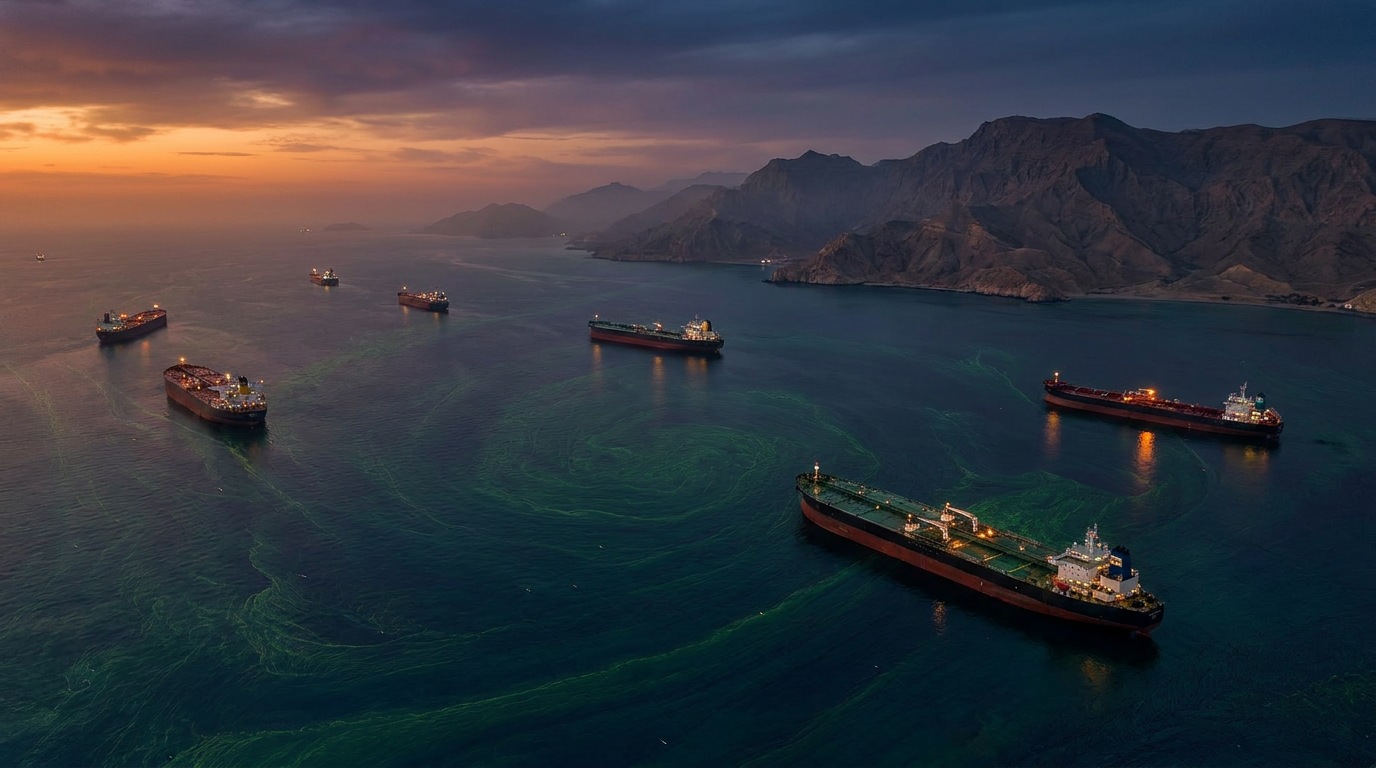
The text of the MOU reportedly mandates a return to the pre-war status quo for the waterway, which historically handles 20% of global seaborne oil and a fifth of the world's liquefied natural gas trade. The closure of this route in early March sent Brent crude soaring past $120 a barrel.[2][3]

Yet, the evidence for a seamless reopening is heavily contested. Iranian lawmakers have publicly contradicted the "toll-free" narrative. Alaeddin Boroujerdi, a member of Iran's National Security Committee, asserted that Iran has established a "new concept of sovereignty" over the waterway and intends to charge a $2 million transit fee per vessel.[4]
Legal experts note that while charging tolls for international transit violates the UN Convention on the Law of the Sea, Iran's de facto physical control of the chokepoint provides it with immense coercive leverage. Enforcing a toll-free regime may require continuous military escorts, which the current ceasefire seeks to avoid.[7]
Furthermore, shipping analytics firms warn that the maritime sector is not rushing back. Mine clearance, exorbitant war-risk insurance premiums, and a 45-day transit loop to Asia mean that physical oil flows will not normalize for weeks, if not months, regardless of the political declarations in Geneva.[3]

The second major claim underpinning the deal is that Iran will make verifiable nuclear concessions. The 60-day ceasefire is explicitly designed to facilitate negotiations over Iran's highly enriched uranium stockpile, with the US demanding strict policing powers.[1][2]
The second major claim underpinning the deal is that Iran will make verifiable nuclear concessions.
The US administration argues that the deal forces Tehran to the table by tying sanctions relief, the unfreezing of $12 billion in assets, and a proposed $300 billion reconstruction fund to strict compliance benchmarks.[2]
But US intelligence agencies assess with high confidence that Iran's internal directives contradict its diplomatic promises. CIA Director John Ratcliffe recently briefed the White House that Iranian leadership has no intention of accepting the required nuclear limits, viewing the negotiations as a stalling tactic.[1]
Secretary of State Marco Rubio and Defense Secretary Pete Hegseth have echoed these intelligence concerns in internal debates. They highlight the severe risk that Tehran is using the 60-day window merely to rebuild military and nuclear infrastructure damaged during the February strikes.[1]

The third pillar of the agreement claims to end regional hostilities. The MOU includes provisions for a cessation of violence across multiple fronts, including a halt to operations by Iran's extensive proxy network.[2][5]
Hezbollah officials in Lebanon confirmed they have paused operations following the announcement. However, they explicitly tied their ongoing compliance to Israel's behavior, stating they are monitoring the border closely.[5]
This exposes a massive structural vulnerability: Israel is not a party to the US-Iran pact. Israeli Defense Minister Israel Katz stated that the Israel Defense Forces will not withdraw from Lebanon, and Prime Minister Benjamin Netanyahu has heavily criticized the deal for omitting restrictions on Iran's ballistic missiles.[2][5]
An Israeli strike in Lebanon could easily trigger a resumption of Hezbollah rocket fire. Tehran could then use this escalation to justify abandoning the MOU, collapsing the nuclear talks, and re-closing the Strait of Hormuz.[2][5]

Finally, there is the claim of immediate economic relief. Global markets reacted euphorically to the ceasefire announcement, with equities surging on the prospect of restored energy supplies and lower fuel costs.[2][3]
The lifting of the US blockade will undoubtedly inject immediate liquidity into Tehran's battered economy, while lower spot prices offer a psychological boost to Western consumers heading into the summer.[2]
However, macroeconomic data suggests the inflation shock is already baked into the system. Central banks project that inflation will remain above target through early 2027, as the secondary effects of the spring energy spike have already permeated wage demands and global manufacturing costs.[2][3]
Ultimately, the evidence indicates that the Geneva signing ceremony represents a tactical pause rather than a permanent resolution. The core drivers of the conflict—Iran's nuclear threshold status, Israel's security imperatives, and the weaponization of global energy arteries—remain entirely unresolved.[1][2][5]
How we got here
Feb 28, 2026
The US and Israel launch a joint aerial war against Iran, prompting Tehran to close the Strait of Hormuz.
Mar 2026
Global oil prices surge past $120 per barrel as 20% of the world's seaborne oil supply is blocked.
Apr 13, 2026
The US Navy imposes a blockade on Iranian ports after initial ceasefire talks in Islamabad collapse.
Jun 14, 2026
Pakistan and Qatar broker a Memorandum of Understanding, establishing a 60-day ceasefire.
Jun 19, 2026
Formal signing ceremony scheduled in Geneva to officially lift blockades and begin nuclear negotiations.
Viewpoints in depth
US Administration
Views the deal as a successful use of maximum pressure to force Tehran to the negotiating table.
The White House argues that the combination of military strikes and a naval blockade successfully broke Iran's economic resilience. By securing a 60-day window and the reopening of the Strait of Hormuz, the administration believes it has stabilized global markets while retaining the leverage of 'snapback' military action if Iran fails to meet strict nuclear compliance benchmarks.
US Intelligence & Hawks
Highly skeptical of Iranian compliance, warning that the ceasefire is a tactical delay.
Figures like CIA Director John Ratcliffe and Secretary of State Marco Rubio point to intelligence suggesting Iran's internal communications contradict its diplomatic promises. This camp argues that Tehran is using the 60-day pause to rebuild its damaged nuclear and military infrastructure, with no genuine intention of dismantling its highly enriched uranium stockpiles.
Iranian Leadership
Frames the agreement as a strategic victory that broke the US blockade and asserted regional sovereignty.
Tehran emphasizes that it survived a massive joint US-Israeli assault without capitulating on its core security architecture. By forcing the unfreezing of billions in assets and asserting the right to manage traffic (and potentially charge tolls) in the Strait of Hormuz, Iranian hardliners view the MOU as a validation of their resistance strategy.
Israeli Government
Views the bilateral US-Iran deal as dangerously incomplete, particularly regarding proxy forces.
Israel, which is not bound by the agreement, argues that leaving Iran's ballistic missile program and proxy network intact poses an existential threat. Israeli leadership maintains that the war is not over as long as Hezbollah remains a threat in Lebanon, reserving the right to continue military operations regardless of the US-Iran ceasefire.
What we don't know
- Whether Iran will actually attempt to enforce a $2 million transit fee on commercial shipping.
- If the US intelligence assessment regarding Iran's nuclear intentions will derail the talks.
- How Israel's ongoing military operations in Lebanon will impact Hezbollah's adherence to the ceasefire.
Key terms
- Strait of Hormuz
- A narrow maritime chokepoint between the Persian Gulf and the Gulf of Oman, through which a fifth of the world's oil passes.
- Memorandum of Understanding (MOU)
- A non-binding agreement outlining the broad terms of a ceasefire and a framework for future negotiations.
- UN Convention on the Law of the Sea
- An international treaty that guarantees the right of peaceful, toll-free transit for ships through international straits.
- Highly Enriched Uranium
- Uranium that has been processed to a purity level close to what is required to build a nuclear weapon.
Frequently asked
Is the war between the US and Iran officially over?
No. The current agreement is a 60-day ceasefire designed to allow for negotiations. A permanent peace treaty has not yet been signed.
Will gas prices go down immediately?
While crude oil prices dropped on the news, experts warn it will take weeks or months for physical shipping to normalize and for savings to reach consumers.
Did Iran agree to give up its nuclear program?
The agreement defers the nuclear issue to future talks. US intelligence reportedly doubts Iran's willingness to make verifiable concessions.
How does Israel fit into this deal?
Israel is not a party to the US-Iran agreement and has stated it will not halt its military operations against Hezbollah in Lebanon.
Sources
Source coverage
7 outlets
5 viewpoints surfaced







[1]AxiosUS Intelligence & Hawks
Scoop: CIA director doubts Iran's intentions on deal, sources say
Read on Axios →[2]The GuardianUS Administration
US-Iran peace deal hinges on shipping, sanctions relief and deferred nuclear talks
Read on The Guardian →[3]Associated PressGlobal Shipping & Markets
The tentative agreement to end the war in Iran and reopen the Strait of Hormuz would be good news for the global economy
Read on Associated Press →[4]TRT WorldIranian Leadership
Iran collects $2M transit fee for some ships in Strait of Hormuz, lawmaker says
Read on TRT World →[5]Fox NewsIsraeli Government
Netanyahu's Israel grapples with Trump-Iran deal as details remain unclear
Read on Fox News →[6]Al JazeeraIranian Leadership
World reacts as Iran and US reach tentative deal to end war
Read on Al Jazeera →[7]Chatham HouseGlobal Shipping & Markets
Freedom of passage through the Strait of Hormuz is a key issue for all maritime nations
Read on Chatham House →
Every angle. Every day.
Get news politics stories with full source coverage and perspective breakdowns delivered to your inbox.