
US Government Pays $765 Million to Cancel Four Major Offshore Wind Projects
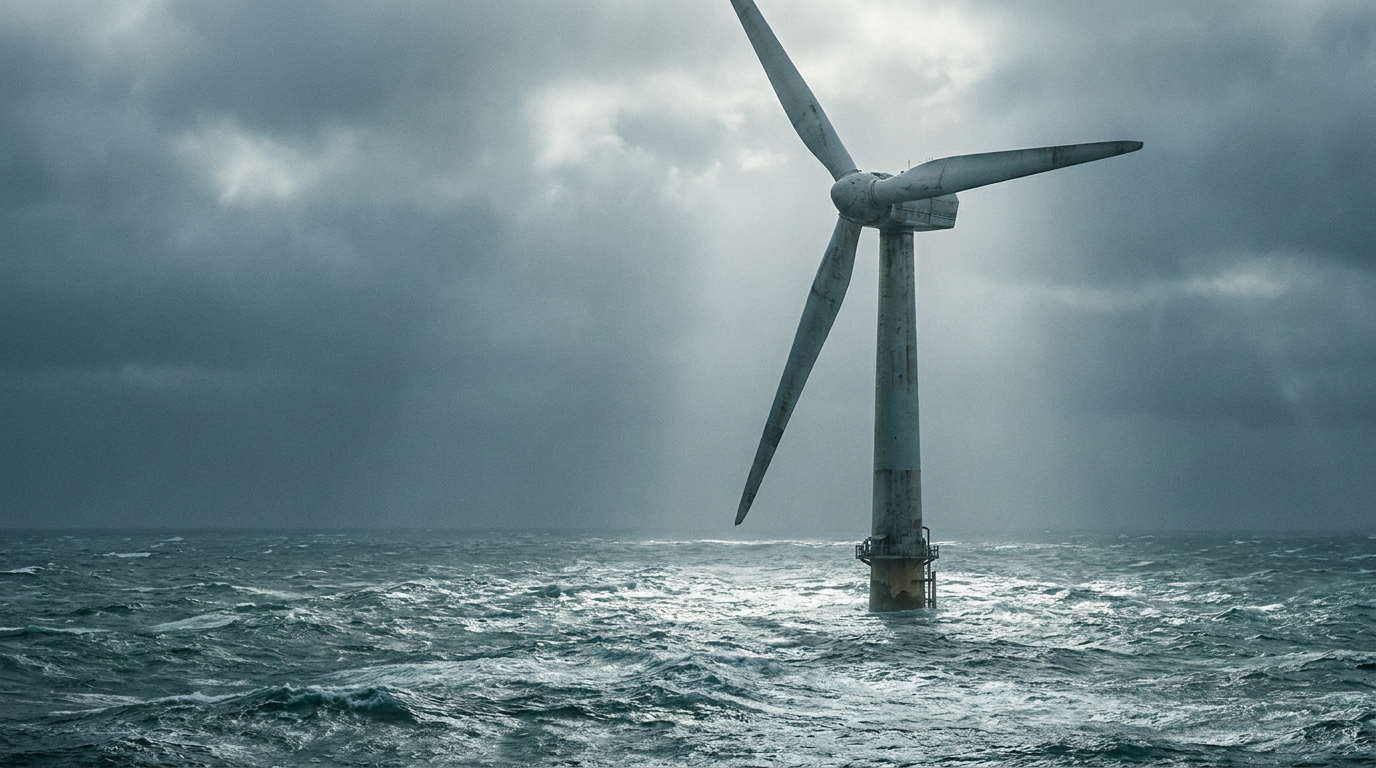
The Department of the Interior has finalized a $765 million agreement with developer Invenergy to terminate four offshore wind leases, redirecting the funds toward natural gas and geothermal energy.
By Factlen Editorial Team
- Federal Administration
- Prioritizes firm baseload power and views offshore wind as an expensive, subsidized risk to grid stability.
- State Policymakers
- Argues the buyouts are an illegal misuse of taxpayer funds that sabotage state-level clean energy mandates.
- Environmental Organizations
- Warns that the cancellations lock in decades of new carbon emissions and enrich fossil fuel interests.
- Energy Policy Analysts
- Evaluates the macroeconomic trade-offs between immediate natural gas dispatchability and long-term wind decarbonization.
What's not represented
- · Offshore wind supply chain workers and maritime unions
- · Midwestern communities hosting the new natural gas plants
- · Utility ratepayers facing potential price fluctuations
Why this matters
The federal government has now spent $2.6 billion to actively dismantle the U.S. offshore wind industry, redirecting capital toward natural gas and geothermal energy. This unprecedented policy reversal directly impacts state climate goals, the future of the American energy grid, and how taxpayer funds are utilized to shape domestic infrastructure.
Key points
- The Interior Department finalized a $765 million deal with Invenergy to cancel four offshore wind leases.
- The canceled projects were located off the coasts of California, New York, and Maine.
- Invenergy will redirect the capital toward natural gas plants in the Midwest and geothermal projects in the West.
- The administration has now spent roughly $2.6 billion this year to terminate offshore wind contracts.
- Seven states are currently suing the federal government, alleging the buyouts are an illegal misuse of taxpayer funds.
- The cancellations severely complicate efforts by states like California and New York to meet their statutory clean energy targets.
The U.S. Department of the Interior has executed a $765 million agreement with energy developer Invenergy to voluntarily terminate four major offshore wind leases. The canceled projects, which were in the early stages of development, span federal waters in the New York Bight, the Gulf of Maine, and off the Central Coast of California. Under the terms of the settlement, the federal government will partially reimburse the Chicago-based company for the costs of acquiring the leases during the previous administration. In exchange, Invenergy has committed to redirecting the capital toward building natural gas-fired power plants across five Midwestern states and exploring geothermal power generation in the Western United States.[1][2][3]
This transaction is not an isolated policy maneuver, but rather the third major buyout in a systematic, $2.6 billion federal strategy to dismantle the nascent U.S. offshore wind industry. Earlier this year, the administration paid nearly $1 billion to the French energy giant TotalEnergies to abandon its leases off the coasts of New York and North Carolina. Shortly after, an $885 million deal was struck with Golden State Wind and Bluepoint Wind to terminate their respective projects. By actively paying developers to walk away from their contractual rights, the federal government is effectively reversing the trajectory of domestic renewable energy infrastructure, prioritizing fossil fuels and alternative baseload power over oceanic wind generation.[1][2][3][7]
The primary claim advanced by the Department of the Interior is that offshore wind is fundamentally unreliable and overly dependent on perpetual taxpayer subsidies. Interior Secretary Doug Burgum has explicitly argued that the leases were originally sold under false premises regarding their cost-efficiency and grid value. The administration contends that by shifting capital back toward dependable, secure energy infrastructure like natural gas, the government is protecting consumers from the spiraling utility costs associated with intermittent renewable sources. The evidence supporting this claim rests largely on the severe macroeconomic headwinds the offshore wind sector has faced globally, including supply chain bottlenecks, soaring turbine costs, and high interest rates that have rendered many early-stage projects economically unviable without massive state-level interventions.[1][2][3][7]

Invenergy’s corporate pivot provides a clear illustration of this market reality. The company’s senior vice president for development, Daniel Runyan, stated that the settlement allows the firm to deploy capital into projects that can be delivered on a commercially reasonable timeline to meet surging customer demand. By abandoning the complex, decade-long permitting and construction cycles of offshore wind in favor of natural gas plants in Indiana, Wisconsin, Iowa, Kansas, and Missouri, Invenergy is opting for established technologies with predictable regulatory pathways and immediate returns. The inclusion of geothermal energy in the pivot also signals a recognition that clean, firm baseload power remains a priority, provided it avoids the logistical nightmares of maritime construction.[2][3][7]
However, the administration's strategy faces intense scrutiny and legal challenges regarding the unprecedented use of federal funds to cancel existing contracts. The core counter-claim, articulated by environmental organizations and Democratic lawmakers, is that these buyouts represent a blatant misuse of taxpayer dollars designed to artificially prop up the fossil fuel industry. Critics point out that the government is utilizing a federal fund traditionally reserved for resolving active litigation settlements, even though no formal lawsuits existed between the Interior Department and the wind developers prior to these agreements. Seven U.S. states have already sued the administration over the previous TotalEnergies payout, alleging severe violations of administrative procedure.[2][4][5][6]
The evidence supporting the critics' position highlights the sheer scale of the financial diversion. Public Citizen and Defenders of Wildlife note that the administration has now spent billions to actively prevent the construction of infrastructure that would have generated gigawatts of emission-free electricity. Senator Alex Padilla of California emphasized that the two canceled West Coast projects alone would have produced approximately four gigawatts of clean energy—enough to power two million homes. By eliminating this future capacity, opponents argue, the federal government is exposing American families to the volatile price shocks inherent in global fossil fuel markets, particularly during periods of geopolitical instability.[4][5][6]

The evidence supporting the critics' position highlights the sheer scale of the financial diversion.
A critical area of uncertainty lies in the long-term impact on state-level climate mandates. California and New York have codified aggressive statutory targets for grid decarbonization, relying heavily on the assumption that massive offshore wind farms would eventually replace retiring nuclear and natural gas plants. With the federal government systematically erasing the lease areas required to build those turbines, state regulators are now facing a severe mathematical deficit in their energy planning. It remains unclear how these states will replace the lost gigawatts, or whether they possess the legal authority to compel the federal government to resume offshore leasing in adjacent waters.[3][7]
The tension between federal energy dominance and state environmental policy is further complicated by the administration's broader regulatory posture. Beyond the buyouts, the Interior Department and the Army Corps of Engineers have implemented policies requiring senior political appointees to personally sign off on wind and solar permits, adding layers of bureaucratic friction to the approval process. A federal judge in Massachusetts recently ruled that clean energy developers have standing to challenge these administrative hurdles, noting that the policies plausibly inflict imminent injury on the renewable sector by slow-walking construction.[1][7]
Despite the overwhelming focus on the cancellation of wind projects, the inclusion of geothermal energy in the Invenergy settlement introduces a nuanced variable into the policy landscape. Geothermal technology, which taps into subterranean heat to spin power-generating turbines, offers the holy grail of renewable energy: zero-carbon, firm baseload power that operates around the clock, regardless of weather conditions. The administration's willingness to subsidize geothermal exploration in California, Idaho, and Nevada suggests a bifurcated approach to clean energy—hostility toward highly visible, intermittent sources like wind, but cautious support for reliable, subterranean technologies that mimic the operational profile of fossil fuel plants.[3][7]

Yet, the evidence supporting geothermal's immediate viability as a replacement for offshore wind remains weak. While next-generation geothermal techniques show immense promise, the industry is still in its infancy compared to the mature, globally scaled wind sector. Exploratory drilling is capital-intensive and carries significant geological risks, meaning the gigawatts lost from the canceled oceanic leases will not be replaced by geothermal power within the same decade. In the interim, the bulk of Invenergy's redirected $765 million will flow into conventional natural gas, locking in decades of new carbon emissions.[2][5][7]
The economic arguments surrounding the buyouts also feature heavily contested narratives. The administration asserts that offshore wind is a perpetual drain on the public purse, requiring endless subsidies to remain solvent. Conversely, clean energy advocates cite data indicating that obstructing renewable projects and forcing reliance on legacy coal and gas plants will ultimately cost American consumers an additional $11.6 billion annually in higher electricity bills. The strength of these competing economic claims depends entirely on the time horizon applied: natural gas offers cheaper upfront capital costs today, while wind power offers zero-marginal-cost fuel over a thirty-year lifespan, insulating ratepayers from commodity price spikes.[3][4][7]

Ultimately, the $765 million Invenergy settlement crystallizes a profound ideological shift in American industrial policy. The United States is currently the only major developed economy actively paying private corporations to dismantle its own renewable energy pipeline. As the legal battles over the settlement funds escalate and states scramble to revise their grid models, the long-term consequences of this $2.6 billion strategy remain highly uncertain. What is definitively clear, however, is that the federal government has successfully frozen the development of oceanic wind power, fundamentally altering the trajectory of the nation's energy transition.[1][7]
The evidentiary record surrounding these cancellations reveals a stark polarization in how energy reliability is calculated. The administration's data prioritizes immediate dispatchability and the avoidance of maritime supply chain risks, heavily weighting the near-term financial viability of energy developers. In contrast, the environmental and state-level data prioritizes long-term decarbonization and insulation from global fuel markets, heavily weighting the systemic costs of climate change. Until the courts resolve the legality of using federal settlement funds for these buyouts, the offshore wind industry will remain in a state of suspended animation, entirely dependent on the shifting winds of federal policy.[2][4][6][7]
How we got here
March 2026
The Interior Department announces a $1 billion deal with TotalEnergies to abandon wind leases off New York and North Carolina.
April 2026
The administration strikes an $885 million agreement with Golden State Wind and Bluepoint Wind to terminate their offshore leases.
Early June 2026
Seven U.S. states file a lawsuit against the administration, alleging the TotalEnergies buyout illegally misused federal settlement funds.
June 17, 2026
The administration finalizes a $765 million deal with Invenergy to cancel four additional leases, bringing total cancellation spending to $2.6 billion.
Viewpoints in depth
Federal Administration
Argues that offshore wind is a costly, unreliable drain on taxpayers that threatens grid stability.
The Department of the Interior contends that the macroeconomic realities of offshore wind—plagued by supply chain delays and inflation—prove the industry cannot survive without perpetual government subsidies. By paying developers to pivot to natural gas and geothermal, the administration believes it is securing firm, reliable baseload power that will lower utility costs for consumers and protect national energy security.
State Governments & Democrats
Argues the buyouts are an illegal misuse of taxpayer funds that sabotage state climate goals.
Lawmakers like Senator Alex Padilla and coalitions of state attorneys general view the cancellations as a targeted attack on blue-state energy policies. They argue that the administration is unlawfully raiding federal settlement funds to pay off energy developers, destroying thousands of projected green jobs, and forcing states to rely on volatile fossil fuel markets just as they are attempting to decarbonize their grids.
Environmental Advocates
Warns that the cancellations lock in decades of new carbon emissions and enrich fossil fuel interests.
Groups like Public Citizen and the Environmental Defense Fund characterize the $2.6 billion strategy as a massive corporate handout to the fossil fuel industry. They emphasize that while developers are being paid with public money not to build clean energy, the redirected funds will largely finance new natural gas plants, accelerating climate change and exposing ratepayers to the price shocks of global gas markets.
What we don't know
- Whether federal courts will block the use of government settlement funds for these voluntary lease cancellations.
- How states like California and New York will replace the gigawatts of clean energy lost from their long-term grid planning.
- Whether Invenergy's exploratory geothermal projects will yield commercially viable baseload power in the near future.
Key terms
- Offshore Wind Lease
- A contractual right granted by the federal government allowing a company to develop wind energy infrastructure in a specific area of the ocean.
- Baseload Power
- The minimum amount of electric power needed to be supplied to the electrical grid at any given time, typically provided by continuous sources like natural gas, coal, or nuclear plants.
- Geothermal Energy
- Power generated by tapping into heat from beneath the Earth's surface to create steam and spin electricity-generating turbines.
- Intermittent Energy
- Renewable energy sources, such as wind and solar, that do not generate power continuously and depend on weather conditions.
- New York Bight
- An area of the Atlantic Ocean off the coasts of New Jersey and New York that had been heavily targeted for offshore wind development.
Frequently asked
Why is the government paying companies not to build wind farms?
The administration argues that offshore wind projects are too expensive and unreliable, and that paying developers to cancel their leases and invest in natural gas or geothermal energy is a better use of resources to secure stable baseload power.
Where is the $765 million coming from?
The funds are being drawn from a federal account typically reserved for legal settlements, a move that several states are currently challenging in court as an illegal misuse of taxpayer money.
What will Invenergy do with the money?
Invenergy plans to redirect the capital to build natural gas-fired power plants in five Midwestern states and to fund exploratory geothermal energy projects in the Western United States.
How does this affect state climate goals?
The cancellations severely disrupt the energy planning of states like California and New York, which were relying on the gigawatts of electricity from these offshore wind farms to meet their statutory clean energy mandates.
Sources
Source coverage
7 outlets
4 viewpoints surfaced






[1]The New York TimesFederal Administration
Trump Administration to Pay $765 Million to Cancel 4 More Wind Projects
Read on The New York Times →[2]ReutersFederal Administration
Trump Administration to Pay $765 Million to Scrap Four More Offshore Wind Leases
Read on Reuters →[3]Los Angeles TimesState Policymakers
Trump administration paying wind developers to walk away from California offshore leases
Read on Los Angeles Times →[4]U.S. SenateState Policymakers
Padilla, Schumer Slam Trump Administration's Efforts to Undo Offshore Wind Energy Projects
Read on U.S. Senate →[5]Public CitizenEnvironmental Organizations
Trump to Pay Off Wind Energy Developer to Not Build Wind Energy
Read on Public Citizen →[6]Defenders of WildlifeEnvironmental Organizations
Trump Administration Cancels Critical Offshore Wind Projects and Increases Costs for Taxpayers
Read on Defenders of Wildlife →[7]Factlen Editorial TeamEnergy Policy Analysts
Synthesis by Factlen editorial team
Read on Factlen Editorial Team →


Every angle. Every day.
Get science stories with full source coverage and perspective breakdowns delivered to your inbox.