
The U.S.-Iran Peace Deal and the $300 Billion Reconstruction Fund, Explained
The United States and Iran have reached a preliminary agreement to reopen the Strait of Hormuz and end hostilities, featuring a proposed $300 billion international reconstruction fund.
By Factlen Editorial Team
- U.S. Administration
- Focuses on the security victories of halting Iran's nuclear program and the economic relief of reopening the Strait of Hormuz.
- Energy Markets & Economists
- Cautiously optimistic about the deal but emphasizes the logistical delays in normalizing global supply chains.
- Iranian Leadership
- Views the $300 billion fund as necessary reconstruction compensation for war damages.
- International Mediators
- Focuses on the fragility of the 60-day window and the need for strict compliance to prevent a return to hostilities.
What's not represented
- · Lebanese civilians affected by the halt in proxy fighting
- · Gulf Coast Coalition nations expected to finance the $300 billion fund
Why this matters
The reopening of the Strait of Hormuz directly impacts global inflation and the cost of living, as 20 percent of the world's oil passes through the corridor. For consumers, the diplomatic breakthrough signals an eventual end to the severe energy price spikes that have defined the last four months.
Key points
- The U.S. and Iran have reached a preliminary agreement to end hostilities and reopen the Strait of Hormuz.
- The deal includes a proposed $300 billion international reconstruction fund for Iran, financed by regional partners.
- Iran has pledged to halt its pursuit of a nuclear weapon and end military operations on all fronts.
- Global oil markets reacted immediately, with Brent crude dropping to a three-month low of $80 to $83 per barrel.
- Average U.S. gasoline prices have fallen below $4 a gallon for the first time in months.
- Experts warn that clearing naval mines and normalizing the energy supply chain will take months to complete.
The United States and Iran have reached a preliminary framework agreement to end the military conflict that erupted in February, signaling a potential close to months of intense geopolitical volatility that has rattled the global economy. The draft agreement, which is expected to be formally signed by delegations in Switzerland, establishes an immediate 60-day pause in hostilities and outlines a comprehensive roadmap for broader regional stability. At the absolute center of this diplomatic breakthrough is the immediate reopening of the Strait of Hormuz, a critical maritime chokepoint that has been effectively blockaded by naval forces and mines since the war began, choking off a massive portion of the world's energy supply.[5][7]
The economic centerpiece of the negotiations—and undoubtedly the most politically contentious element of the framework—is a proposed international reconstruction fund for Iran valued at up to $300 billion. According to leaked drafts of the 14-point framework circulating among diplomats, the massive fund is designed to rehabilitate Iran's war-torn economy while providing a powerful economic incentive for Tehran to finalize a permanent peace treaty. In exchange for this financial lifeline, Iranian officials have pledged to permanently halt any pursuit of a nuclear weapon and agree to an immediate end to fighting on all fronts, including proxy conflicts in Lebanon that have threatened to draw neighboring countries into a wider war.[4][7]
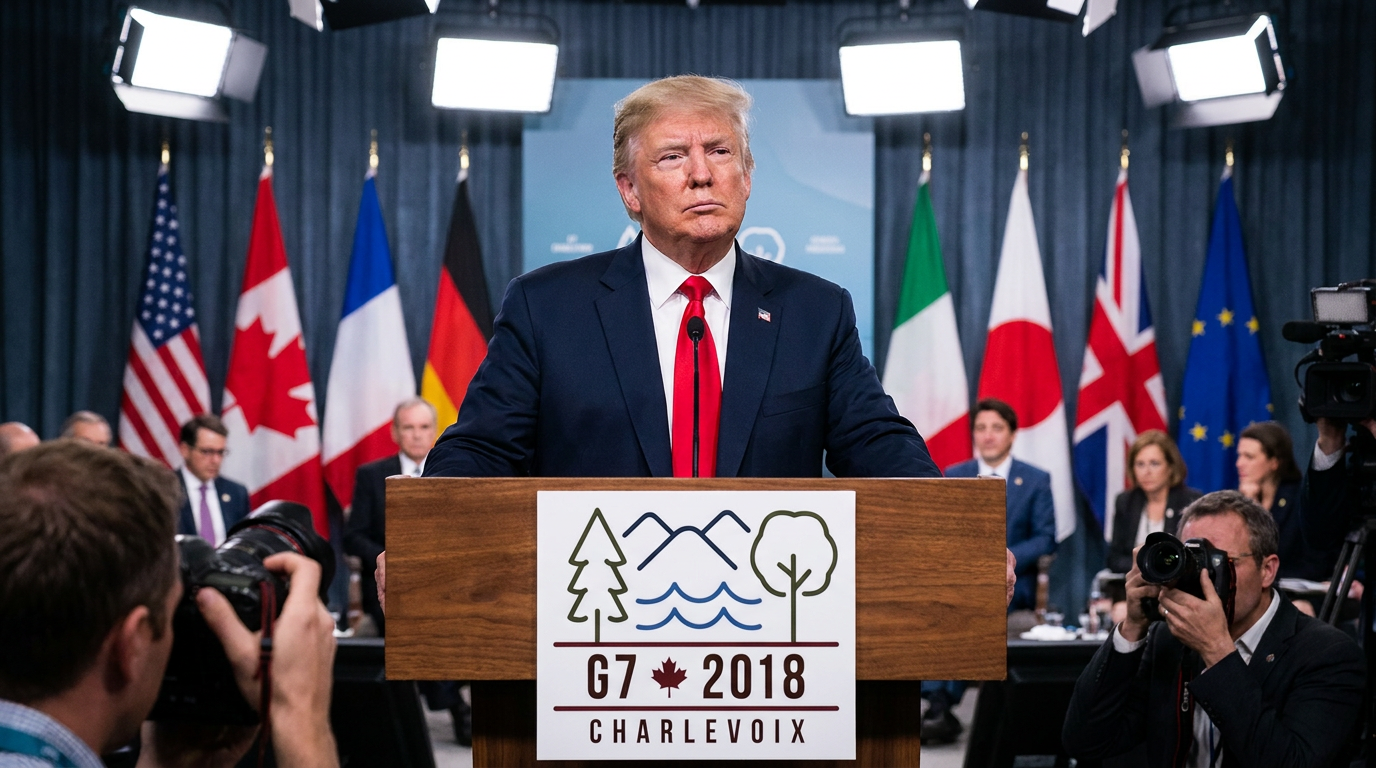
The sheer size of the $300 billion figure immediately sparked intense domestic debate within the United States, dominating political discourse and media coverage. Critics quickly characterized the sum as a massive financial concession to an adversarial regime, questioning the optics of rewarding Tehran after months of conflict. In response, the U.S. administration has aggressively pushed back against the narrative that American taxpayers are footing the bill for the reconstruction. During a marathon press conference at the G7 summit, President Donald Trump dismissed reports of direct U.S. payments as "fake news," emphasizing instead that his administration had successfully forced Iran to agree to strict, permanent nuclear limitations without committing the U.S. to a prolonged ground occupation.[2][4]
Vice President JD Vance further clarified the complex funding mechanism during subsequent media appearances, explaining that the $300 billion would actually be financed by the Gulf Coast Coalition and other international partners, rather than the U.S. Treasury. Vance noted that Tehran would only have access to the capital "so long as they honor their end of the obligation," framing the fund as a conditional escrow rather than a blank check. For the United States, the primary commitment under the draft agreement involves lifting its naval blockade and facilitating the release of previously frozen Iranian assets, contingent entirely on verified progress during the initial 60-day negotiation window.[4][7]

For Iranian leadership, the establishment of the reconstruction fund is viewed not as a concession, but as a non-negotiable requirement for lasting peace. Iranian officials have consistently framed the capital as partial compensation for the extensive infrastructure damage sustained during the U.S. military campaign over the past four months. Some internal Iranian estimates have placed the total economic toll of the conflict at closer to $1 trillion. Securing the $300 billion commitment allows Tehran to present the ceasefire as a domestic victory to its citizens, even as the government makes significant, verifiable concessions regarding its nuclear enrichment program and its deeply entrenched regional proxy networks.[7]
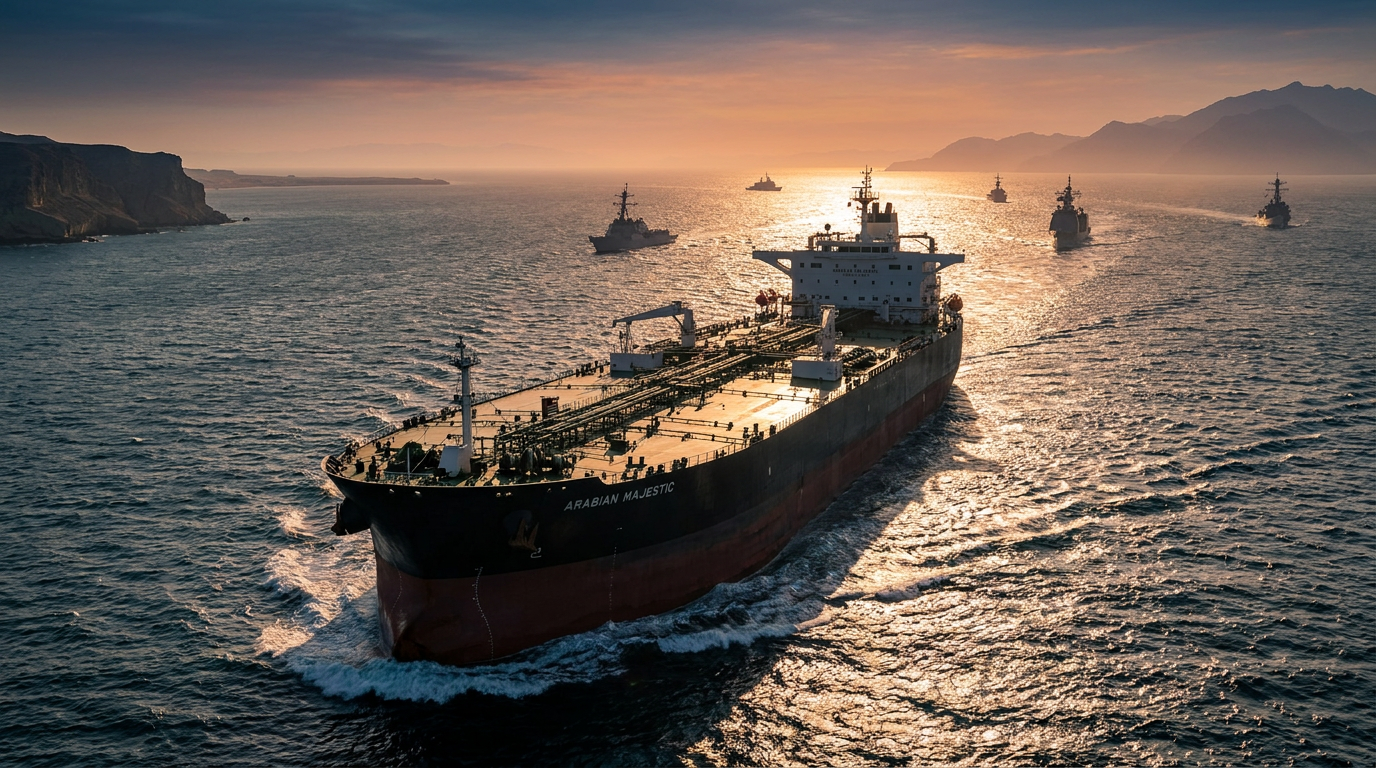
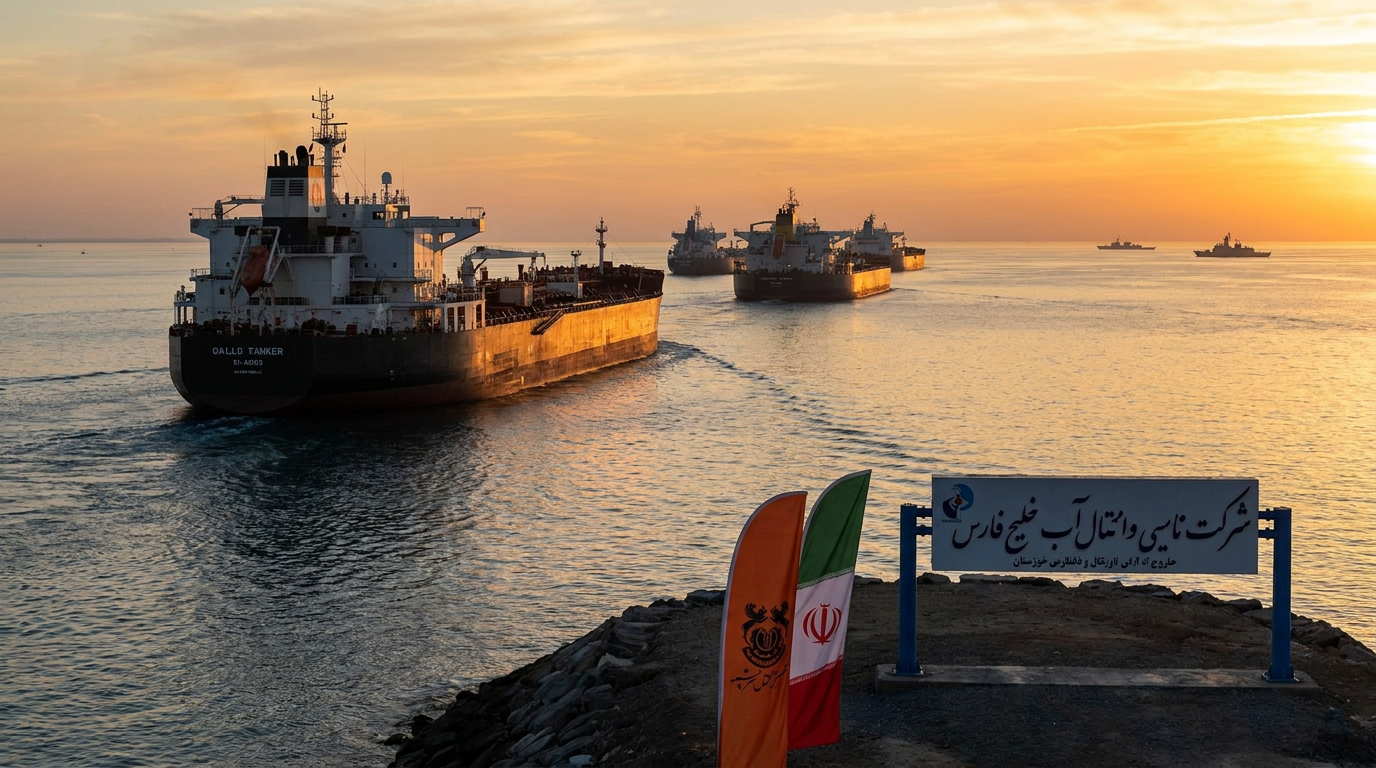
Beyond the political maneuvering, the most immediate global impact of the agreement is the unblocking of the Strait of Hormuz. The narrow waterway situated between the Persian Gulf and the Gulf of Oman is widely considered the world's most important oil transit chokepoint, normally facilitating the movement of roughly 20 percent of the global oil and liquefied natural gas supply. The wartime blockade of the strait had triggered the greatest energy supply crisis in modern market history, sending massive shockwaves through the global economy and driving up the cost of everything from agricultural fertilizer to everyday consumer goods.[3][6]
Beyond the political maneuvering, the most immediate global impact of the agreement is the unblocking of the Strait of Hormuz.
Global financial markets reacted almost instantly to the news of the impending signature in Switzerland. President Trump took to his social media platform to declare, "Ships of the world, start your engines. Let the oil flow!" Within hours of the announcement, the price of Brent crude—the global oil benchmark that dictates energy costs worldwide—tumbled by roughly 4 percent to hit a three-month low of $80 to $83 per barrel. Simultaneously, European wholesale gas prices fell by 6 percent, and Wall Street indices rallied to record highs as investors breathed a collective sigh of relief over the averted worst-case energy scenarios.[3][5]

That top-line market relief is already beginning to materialize for American consumers at the local level. For the first time in months, the average price of gasoline in the United States has fallen below the critical $4-per-gallon mark. This psychological milestone provides a significant and immediate boost to a public that has grown increasingly weary of conflict-driven inflation. However, energy economists and industry analysts caution that the immediate drop in wholesale crude prices will not instantly translate to a complete return to pre-war prices at the neighborhood pump or the local grocery store.[1][6]
The lag in consumer pricing is driven entirely by the rigid mechanics of the global energy supply chain. Refineries typically purchase their crude oil a month or more in advance, meaning the fuel currently reaching gas stations was refined from oil bought at peak wartime prices when crude was trading well over $100 a barrel. Retail prices adjust slowly as the cheaper raw materials gradually work their way through the massive logistical system. Industry analysts estimate that while marginal relief will continue to arrive over the next few weeks, a complete normalization of global energy markets will take several months to fully realize.[6]
Furthermore, the physical reopening of the Strait of Hormuz presents massive logistical and security challenges that cannot be solved overnight with a signature. The waterway has been heavily mined by Iranian naval forces during the conflict to deter U.S. warships. The draft agreement stipulates that maritime traffic should reach pre-war volumes within 30 days, explicitly "taking into account the need for the removal of technical obstacles and the neutralization of mines." The U.S. Navy and international maritime coalitions must now undertake the painstaking and highly dangerous work of clearing the explosives before commercial shipping companies and their insurers will feel confident sending massive, vulnerable tankers through the corridor.[5][7]

Until that massive backlog of waiting ships is cleared and the route is definitively proven safe, the flow of oil will remain artificially constrained. Shipping companies are expected to proceed with extreme caution in the coming weeks, requiring vessels to carefully hug the coastline to avoid uncleared hazards and relying heavily on military escorts. Maritime experts warn that it could take a month or longer for the strait to fully ramp up to its previous capacity, meaning the global energy supply will remain somewhat tight in the near term despite the diplomatic breakthrough.[6]
The economic ripple effects of the war's uncertainty are still being felt acutely across the globe, particularly in Europe. In the United Kingdom, the nation's largest retailer, Tesco, reported that its sales growth had more than halved in recent months, directly attributing the severe slowdown to the ongoing uncertainty the Middle East conflict created for household budgets. Meanwhile, despite the optimism surrounding the peace deal, UK unemployment figures fell and wages grew this week, maintaining intense pressure on the Bank of England to keep interest rates elevated to combat the sticky inflation initially sparked by the energy crisis.[8]
As the 60-day negotiation period officially begins, international diplomats face the daunting task of converting the preliminary framework into a binding, permanent treaty. The initial agreement explicitly leaves the most complex and historically intractable issues—such as the exact verification mechanisms for Iran's nuclear pledge and the specific timeline for permanent sanctions relief—for this secondary phase of talks. Both sides have a long history of divergent interpretations, and the extreme fragility of the ceasefire means that any miscalculation or localized skirmish could quickly derail the diplomatic progress.[4][5]
Ultimately, the long-term success of the $300 billion peace deal hinges on strict mutual compliance and the successful navigation of volatile domestic politics in both Washington and Tehran. While the immediate threat of a wider, catastrophic regional war has been paused and the global oil markets have begun to stabilize, the structural challenges of rebuilding Iran's shattered economy and securing the Middle East's most vital maritime waterways remain formidable tasks that will test the resolve of the international community for years to come.[5][7]
How we got here
Feb 2026
The U.S. launches a military campaign, leading to the closure of the Strait of Hormuz and a spike in global energy prices.
Apr 2026
An initial 40-day ceasefire is announced, temporarily pausing the heaviest bombardments.
May 2026
Mediators from Pakistan and Qatar intensify negotiations, drafting a 14-point framework for a permanent resolution.
Jun 14, 2026
President Trump announces the preliminary peace agreement and authorizes the end of the U.S. naval blockade.
Jun 19, 2026
The official signing of the agreement is scheduled to take place in Switzerland, triggering a 60-day negotiation window.
Viewpoints in depth
U.S. Administration
The White House frames the deal as a definitive victory that neutralizes Iran's nuclear threat and lowers domestic gas prices.
U.S. officials emphasize that the $300 billion reconstruction fund is not a taxpayer handout, but a coalition-financed incentive strictly contingent on Iran's verifiable compliance. By securing a pledge against nuclear weapon development and reopening the Strait of Hormuz, the administration argues it has achieved its primary security and economic objectives without committing to a permanent ground war.
Iranian Leadership
Tehran views the financial package as essential compensation for war damages and a prerequisite for any permanent peace.
For Iran, the $300 billion fund is framed domestically as a reconstruction mechanism necessary to rebuild infrastructure devastated by the U.S. military campaign. Iranian diplomats argue that the economic relief is the only viable trade-off for their concessions on nuclear enrichment and regional proxy operations, positioning the capital as a hard-won diplomatic victory rather than a conditional reward.
Energy Markets & Economists
Industry analysts are relieved by the diplomatic breakthrough but warn that logistical realities will delay consumer price drops.
While traders immediately priced in the end of the conflict—sending crude oil to a three-month low—supply chain experts caution against premature celebration. Economists point out that clearing naval mines from the Strait of Hormuz and working through the backlog of advanced refinery contracts means that true normalization at the gas pump and in global shipping lanes will take months, not days.
What we don't know
- How quickly the U.S. Navy and international partners can safely clear the Strait of Hormuz of naval mines.
- The exact verification mechanisms that will be used to ensure Iran complies with its nuclear pledges.
- Whether all regional proxy groups, particularly in Lebanon, will fully adhere to the ceasefire terms.
Key terms
- Strait of Hormuz
- A narrow, strategically vital waterway between the Persian Gulf and the Gulf of Oman through which roughly 20 percent of the world's oil supply passes.
- Brent Crude
- A major trading classification of sweet light crude oil that serves as a benchmark price for purchases of oil worldwide.
- Gulf Coast Coalition
- A bloc of regional Middle Eastern nations that U.S. officials say will provide the financial backing for Iran's $300 billion reconstruction fund.
- Naval Blockade
- A military operation in which ships are used to prevent vessels from entering or leaving a nation's ports, heavily restricting its trade.
Frequently asked
Is the U.S. paying Iran $300 billion?
No. According to U.S. officials, the proposed $300 billion reconstruction fund will be financed by international partners, including the Gulf Coast Coalition, rather than U.S. taxpayers.
When will gas prices go back to normal?
While average U.S. prices have already dipped below $4 a gallon, experts say it will take weeks or months for prices to fully normalize due to supply chain lags and the time required to clear mines from the Strait of Hormuz.
Did Iran agree to give up its nuclear program?
Under the preliminary framework, Iran has pledged to permanently halt the pursuit of a nuclear weapon, though the exact verification mechanisms will be negotiated over the next 60 days.
Is the war completely over?
The current agreement establishes a 60-day pause in hostilities to allow for broader negotiations. A permanent end to the war depends on both sides finalizing a formal treaty.
Sources
Source coverage
8 outlets
4 viewpoints surfaced







[1]The New York TimesEnergy Markets & Economists
Average U.S. Gasoline Price Falls Below $4 for First Time in Months
Read on The New York Times →[2]Fox NewsU.S. Administration
Trump defends war deal in marathon presser, using semantics on why Iran is getting $300 billion
Read on Fox News →[3]The GuardianEnergy Markets & Economists
Donald Trump posts 'Let the oil flow' as US-Iran peace deal sparks immediate drop for Brent crude
Read on The Guardian →[4]ForbesU.S. Administration
Iran Could Get $300 Billion In Reconstruction Funds Under Peace Deal
Read on Forbes →[5]CBS NewsInternational Mediators
US and Iran reach agreement to end war, reopen Strait of Hormuz
Read on CBS News →[6]PBSEnergy Markets & Economists
Even with a deal to reopen the Strait of Hormuz, it could take weeks or months for oil to fully flow
Read on PBS →[7]The HinduIranian Leadership
Iran pledges no bomb; U.S. promises sanctions relief, $300 billion financing; agreement's leaked text shows
Read on The Hindu →Tesco’s UK sales growth more than halves amid Iran war uncertainty
Read on The Guardian →
Every angle. Every day.
Get news politics stories with full source coverage and perspective breakdowns delivered to your inbox.