
AI and Drone Swarms Are Accelerating Global Landmine Clearance
New sensor-fusion drones are mapping minefields 1,000% faster than manual sweeping, transforming a centuries-long hazard into a solvable logistical challenge.
By Factlen Editorial Team
- Humanitarian Demining Organizations
- Focuses on the immediate safety of clearance teams and the rapid return of safe land to local communities.
- Defense Tech Innovators
- Emphasizes the exponential gains in speed, cost reduction, and the scaling potential of sensor-fusion algorithms.
- Field Researchers & Academics
- Highlights the empirical evidence, the limitations of current sensors, and the necessity of rigorous human verification.
What's not represented
- · Local farmers in contaminated regions
- · Insurance underwriters for post-conflict zones
Why this matters
More than 100 million landmines remain buried globally, rendering vast tracts of farmland unusable and threatening civilian lives. Accelerating clearance means faster post-conflict recovery, restored agricultural economies, and thousands of lives saved.
Key points
- More than 110 million unexploded landmines remain buried globally, with traditional clearance methods proving slow and highly dangerous.
- New drone platforms utilize sensor fusion—combining optical, thermal, magnetic, and radar data—to map minefields without risking human lives.
- Machine learning models can analyze thousands of aerial images in hours, increasing survey speeds by over 1,000% compared to manual sweeping.
- Current AI accuracy ranges from 70% to 90%, meaning human sappers are still required for final verification and physical explosive removal.
- Environmental factors like highly mineralized soil and plastic-cased mines remain significant hurdles for automated detection.
More than 110 million unexploded landmines and explosive remnants of war remain buried across the globe, silently threatening civilians in over 60 countries. The scale of the crisis has recently peaked in Eastern Europe, where years of intense conflict have left Ukraine as the most heavily mined country in the world, with over 130,000 square kilometers of land potentially contaminated by lethal ordnance.[1][3]
For decades, the traditional method of clearing these hazards has been agonizingly slow and inherently dangerous. Sappers must painstakingly crawl through fields, sweeping handheld metal detectors inch by inch and investigating every piece of buried shrapnel. The human cost is severe: the United Nations reports that for every 5,000 mines recovered, three workers are injured or killed. Relying solely on these manual methods, security analysts estimate it would take 757 years to fully clear Ukraine's contaminated territories.[2][4]
But a major technological breakthrough is fundamentally altering that timeline. The deployment of AI-powered drone swarms is shifting the burden of detection from human sappers to autonomous aerial systems. By mapping terrain from the sky and processing the data through advanced machine learning models, demining organizations are ensuring that human operators only step foot in areas where explosives are confirmed to exist.[1][4]
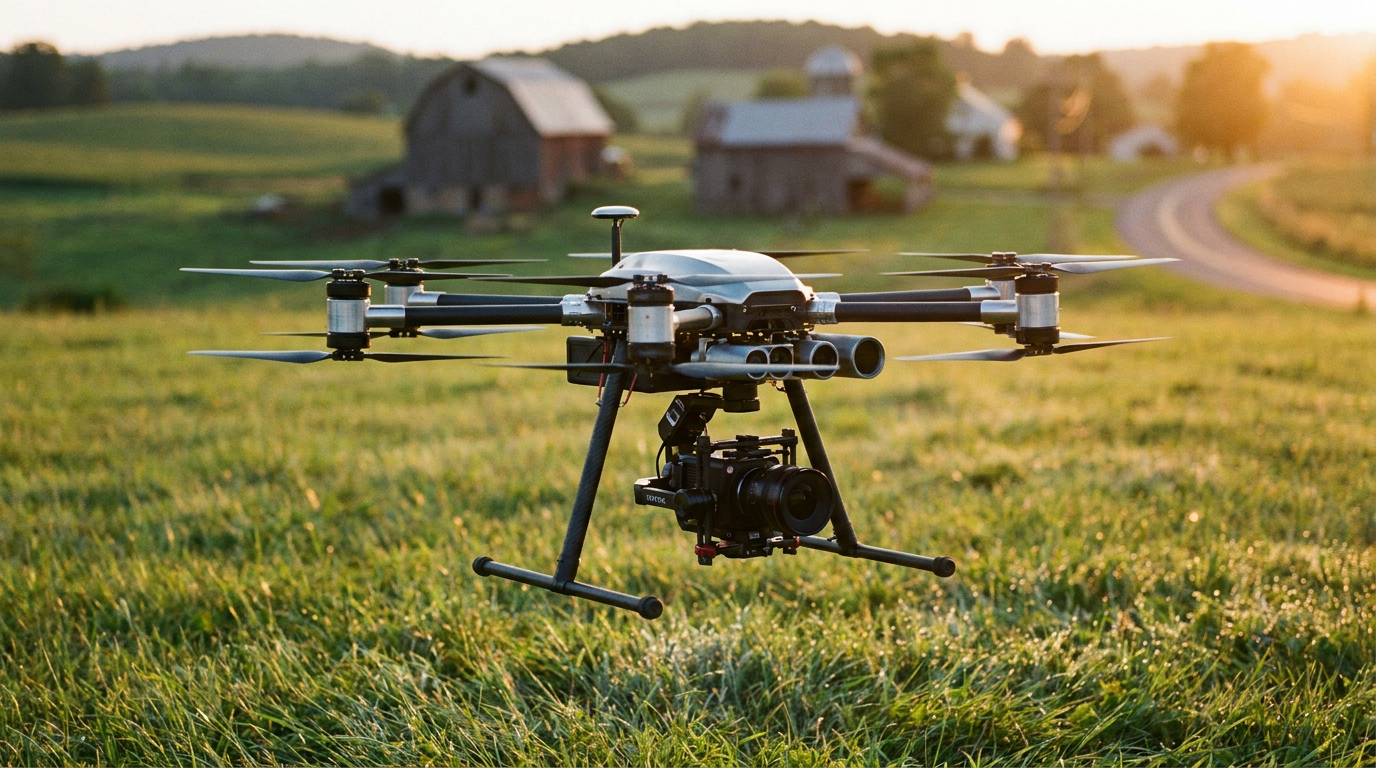
The core of this breakthrough lies in "sensor fusion." Rather than relying on a single detection method, modern demining drones fly as low as 20 centimeters above the ground, carrying an array of specialized equipment. This payload typically includes high-resolution RGB cameras, thermal and infrared sensors, highly sensitive magnetometers, and ground-penetrating radar (GPR) capable of seeing beneath the soil.[6]

As the drones sweep a designated area, they collect thousands of data points and images. This massive dataset is then fed into proprietary artificial intelligence models trained on hundreds of thousands of images of various landmines and unexploded ordnance (UXO). The AI cross-references visual anomalies with magnetic spikes and thermal signatures, ultimately generating a color-coded map that delineates safe zones from high-risk areas.[4][6]
The resulting increase in operational speed is exponential. The HALO Trust, the world's largest humanitarian mine clearance organization, recently partnered with cloud computing providers to process their drone imagery. Tasks that previously required human analysts three to five days of painstaking visual review are now completed by AI algorithms in a matter of hours.[3]
Commercial defense technology firms are reporting similar leaps in efficiency. Platforms like SpotlightAi have demonstrated a 1,000% increase in survey speed compared to traditional human-based methodologies. By automating the reconnaissance phase, these systems have also managed to reduce the financial cost of surveying land by nearly 90%, stretching the budgets of underfunded humanitarian groups.[5]

Commercial defense technology firms are reporting similar leaps in efficiency.
The accuracy of these systems is also reaching unprecedented levels, particularly for notoriously difficult targets. Researchers at Columbia University developed an airborne system specifically designed to spot the Russian-made PFM-1 "butterfly" mine—a small, plastic explosive that evades traditional metal detectors. By training the AI to sense minute temperature differences between the plastic casing and the surrounding vegetation, the system achieved a 90% detection accuracy rate.[2]
In active recovery zones, domestic tech sectors are rapidly scaling these solutions. Ukrainian startups utilizing sensor-fusion drones have already surveyed tens of thousands of square meters of minefields. These systems are successfully detecting up to 90% of surface and shallow-buried UXO, digitizing the threat landscape so that clearance teams can prioritize their efforts efficiently.[6]
The economic implications of this speed are profound. The World Bank previously estimated that clearing Ukraine's landmines could cost upwards of $37 billion over a decade. However, because AI drone mapping can rapidly and definitively prove which agricultural lands are not contaminated, vast tracts of farmland can be instantly returned to local communities without requiring a single shovel to hit the dirt.[1][4]
Despite the immense optimism surrounding the technology, experts caution that AI is not yet a silver bullet. Current machine learning models hover between 70% and 90% accuracy in real-world conditions. While this is revolutionary for initial surveying and mapping, it remains insufficient for the final clearance phase, where a single missed explosive can cost a civilian their life.[7]
Environmental factors heavily degrade sensor performance, introducing a layer of transparent uncertainty. High soil mineralization naturally interferes with magnetometers, while battlefields littered with metallic war debris—spent casings, shrapnel, and destroyed vehicles—generate thousands of false positives that the AI must learn to filter out.[8]

Plastic mines remain the most critical vulnerability in the automated detection pipeline. Because they contain minimal metal, they easily evade magnetic sweeps. This forces drones to rely heavily on thermal imaging, which is highly dependent on specific weather conditions, sunlight exposure, and the time of day to create the necessary temperature contrast in the soil.[8]
Furthermore, there is a significant regulatory gap. Currently, there are no established international standards for certifying AI sensor technologies in humanitarian demining. Industry experts and safety regulators argue that before automated systems can be trusted without human backup, the equipment must consistently demonstrate a 99% reliability rate across diverse terrains.[8]

Ultimately, AI does not replace the human sapper; it redefines their role. Drones handle the dangerous reconnaissance, but the physical excavation and neutralization of the explosive still require the steady hands of trained personnel or the deployment of remote-controlled ground robotics.[4][7]
The fusion of artificial intelligence and drone technology is transforming a centuries-long crisis into a manageable logistical challenge. While human courage remains the final step in the clearance process, technology is finally giving deminers the high ground, promising to return stolen land to communities decades faster than previously thought possible.[1][3]
How we got here
1999
The Ottawa Treaty (Anti-Personnel Mine Ban Convention) comes into force, though millions of legacy mines remain buried globally.
2022
The rapid escalation of remote mine deployment in Eastern Europe creates the world's largest modern contamination zone.
2023
Early AI demining platforms begin field testing, proving that machine learning can drastically reduce imagery analysis time.
2025–2026
Sensor-fusion drones transition from experimental trials to scaled commercial deployment, surveying tens of thousands of square meters.
Viewpoints in depth
Humanitarian Demining Organizations
Focuses on the immediate safety of clearance teams and the rapid return of safe land to local communities.
For NGOs operating on the ground, the primary metric of success is lives saved—both civilian and professional. Organizations like The HALO Trust view AI not as a replacement for human expertise, but as a critical triage tool. By rapidly identifying which areas are completely free of explosives, they can immediately release safe farmland back to the local economy. Their focus remains on integrating these advanced tools into existing safety protocols to ensure that when sappers do enter a field, they know exactly what threats await them.
Defense Tech Innovators
Emphasizes the exponential gains in speed, cost reduction, and the scaling potential of sensor-fusion algorithms.
Technology developers and commercial defense firms argue that the sheer scale of modern mine contamination makes traditional manual clearance mathematically impossible to complete in a reasonable timeframe. They point to the 1,000% increases in survey speeds and 90% cost reductions as proof that automation is the only viable path forward. This camp is heavily focused on iterating sensor payloads—adding ground-penetrating radar and better thermal optics—to push AI accuracy closer to the elusive 99% threshold required for full autonomy.
Field Researchers & Academics
Highlights the empirical evidence, the limitations of current sensors, and the necessity of rigorous human verification.
The academic and scientific community provides a necessary counterbalance to technological optimism. Researchers emphasize that while an 80% or 90% detection rate is a massive leap for reconnaissance, it is a failing grade for final clearance. They are actively studying the edge cases where AI fails—such as highly mineralized soils that blind magnetometers, or plastic mines that leave no thermal signature on cloudy days. This camp advocates for the establishment of strict international certification standards before AI systems are trusted to declare any land definitively safe.
What we don't know
- When international regulatory bodies will establish official certification standards for AI demining accuracy.
- How effectively thermal imaging can detect deeply buried plastic mines across different seasons and weather conditions.
- Whether the high cost of advanced sensor-fusion drones will remain a barrier for underfunded NGOs in developing nations.
Key terms
- Unexploded Ordnance (UXO)
- Explosive weapons, such as bombs, shells, grenades, and landmines, that did not detonate when deployed and still pose a lethal risk.
- Sensor Fusion
- The process of combining data from multiple different sensors—like optical cameras, radar, and thermal imagers—to create a highly accurate model of the environment.
- Ground-Penetrating Radar (GPR)
- A geophysical method that uses radar pulses to image the subsurface, allowing operators to detect buried objects without digging.
- Magnetometer
- An instrument that measures magnetic forces, heavily used in demining to detect the metallic components of buried explosives.
- Sapper
- A military engineer or specialist trained to perform dangerous field tasks, including the manual clearing of minefields and the demolition of explosives.
Frequently asked
Can AI drones physically remove the landmines?
No. Drones are used to safely map and identify the locations of explosives. The physical excavation and neutralization still require trained human sappers or remote-controlled ground robots.
How do drones detect buried mines?
They utilize a process called sensor fusion, combining data from ground-penetrating radar, magnetometers to detect metal, and thermal cameras that spot temperature differences in the soil above a mine.
Why isn't AI accuracy at 100% yet?
Environmental factors like dense vegetation, highly mineralized soil, and plastic-cased mines—which evade traditional metal detectors—make perfect automated detection highly challenging.
How much faster is AI-assisted demining?
Organizations report that AI can reduce the time needed to analyze aerial imagery of a minefield from several days to just a few hours, increasing overall survey speed by over 1,000%.
Sources
Source coverage
8 outlets
3 viewpoints surfaced








[1]United NationsHumanitarian Demining Organizations
Technology can make mine action faster and safer
Read on United Nations →[2]Columbia UniversityField Researchers & Academics
Drones and AI Could Revolutionize Land-Mine Detection
Read on Columbia University →[3]The HALO TrustHumanitarian Demining Organizations
How AI and drones are transforming mine clearance
Read on The HALO Trust →[4]ForbesDefense Tech Innovators
Sappers Will Get Robotic Support
Read on Forbes →[5]Safe Pro GroupDefense Tech Innovators
Safe Pro Group Introduces SpotlightAi for Demining
Read on Safe Pro Group →[6]MilitarnyiDefense Tech Innovators
Ukraine Develops AI Drone for Mine Detection
Read on Militarnyi →[7]Modern DiplomacyField Researchers & Academics
AI systems help identify likely locations of mines
Read on Modern Diplomacy →[8]LigaField Researchers & Academics
Sensor technologies in humanitarian demining
Read on Liga →
Every angle. Every day.
Get defense security stories with full source coverage and perspective breakdowns delivered to your inbox.