
SpaceX Shares Stabilize After Historic Retail-Driven Public Debut
The aerospace giant's transition to the public markets has triggered a massive wave of retail investment, marking a watershed moment for the commercial space industry.
By Factlen Editorial Team
- Retail Bulls
- View the public listing as a long-overdue opportunity to participate in the space economy and back a generational technology company.
- Market Skeptics & Advisers
- Urge portfolio diversification and warn against the volatility of single-stock investments driven by retail hype.
- Space Industry Optimists
- See the successful debut as a validation of the commercial space sector that will unlock more capital for early-stage space ventures.
What's not represented
- · Legacy aerospace competitors
- · Institutional index fund managers
Why this matters
SpaceX's successful public debut not only validates the commercial viability of the space economy but also opens the door for everyday investors to own a stake in off-planet infrastructure, potentially paving the way for a new wave of aerospace startups to go public.
Key points
- SpaceX's public debut triggered a massive influx of retail investors buying shares.
- The stock saw a three-day rally before cooling off by roughly 5% as early backers took profits.
- Financial advisers are warning retail investors about the risks of heavily weighting a single stock.
- Industry experts view the successful listing as a major catalyst for the broader commercial space sector.
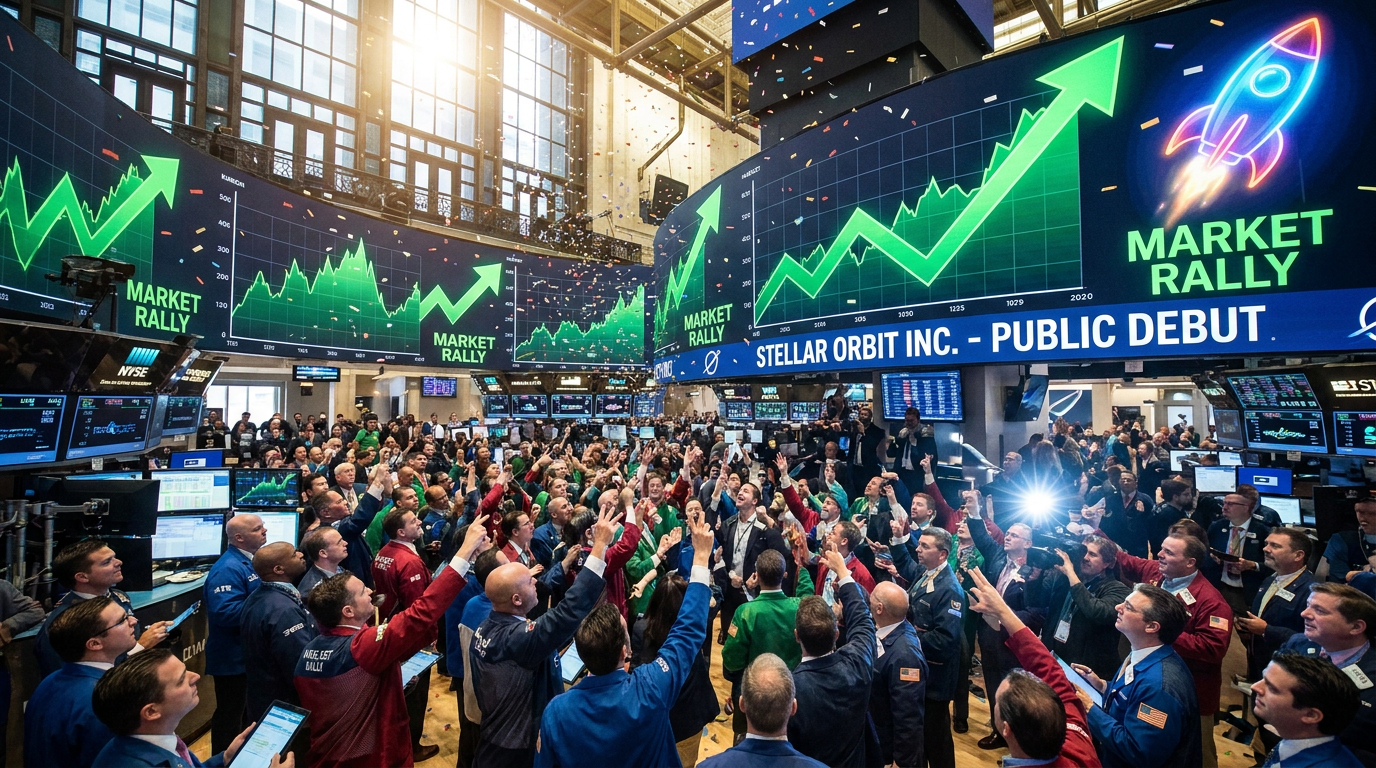
The long-awaited public debut of SpaceX has officially transformed the aerospace behemoth from a closely guarded private unicorn into a retail trading phenomenon. Over the past three days, individual investors have flooded brokerage platforms to secure a piece of Elon Musk's rocket and satellite company, marking one of the most anticipated market events of the decade.[1][5]
The initial surge sent shares soaring well above their listing price, driven by immense pent-up demand. For years, retail traders have watched from the sidelines as SpaceX achieved historic milestones—from landing reusable orbital boosters to deploying the global Starlink internet constellation—while ownership remained restricted to venture capitalists and private equity firms.[1][6]
By Wednesday morning, the frenetic three-day rally began to cool. Shares sank roughly 5% as early institutional backers took profits and the market searched for a stable trading floor. Despite the slight pullback, the stock has held steady, demonstrating resilience amid the massive volume of shares changing hands.[3]

The debut is being hailed as a watershed moment for the broader space economy. Industry analysts note that SpaceX's successful transition to the public markets provides a crucial liquidity event that will likely encourage a new generation of aerospace startups to pursue public listings, unlocking fresh capital for deep-tech innovation.[7][8]
Financial advisers, however, are urging caution amid the euphoria. Wealth managers emphasize that while SpaceX's technological achievements are unparalleled, investing heavily in a single stock—especially one trading at a premium valuation driven by retail enthusiasm—carries inherent portfolio risks.[2]
Financial advisers, however, are urging caution amid the euphoria.
Veteran market watchers have also weighed in on the retail frenzy. Some long-term strategists have drawn comparisons between the current excitement over space technology and previous market manias, warning investors to remain vigilant about potential bubble dynamics in high-growth, capital-intensive sectors.[4]
Yet, proponents argue that SpaceX's fundamentals justify the enthusiasm. The company's near-monopoly on global launch services and the rapid expansion of its Starlink satellite internet constellation provide a dual-engine revenue model that few legacy aerospace competitors can match, offering a tangible path to long-term profitability.[6][8]

For the broader startup ecosystem, the SpaceX listing serves as a powerful proof of concept. Venture capitalists who have poured billions into hardware and space-tech startups now have a definitive benchmark for what a successful exit looks like, potentially sparking a renewed wave of early-stage investment in the sector.[8]
Looking ahead, market regulators and brokerage firms are closely monitoring trading volumes to ensure platform stability. The sheer volume of retail participation has tested the infrastructure of several major trading apps, underscoring the immense public interest in owning a piece of the space economy.[1][5]
As the dust settles on its first week of trading, SpaceX enters a new era of public scrutiny. The company will now have to balance its ambitious, capital-heavy projects—such as the development of the Starship rocket and the long-term goal of Mars colonization—with the quarterly earnings expectations of Wall Street and millions of individual shareholders.[3][7]
How we got here
Early 2000s
SpaceX is founded as a private venture with the goal of reducing space transportation costs.
2020
Becomes the first private company to send humans to the International Space Station.
2024-2025
Rapidly expands Starlink revenue and achieves consistent Starship orbital flights, cementing its market dominance.
June 2026
Officially debuts on the public markets, triggering a massive retail investment wave.
Viewpoints in depth
Retail Investors
Viewing the listing as a rare chance to back a generational technology shift.
For years, everyday investors have been locked out of the massive wealth generated by private tech unicorns. Retail bulls see SpaceX's public debut not just as a financial opportunity, but as a chance to actively participate in the expansion of human infrastructure into space. They point to the company's tangible achievements—reusable rockets and a functional global satellite network—as proof that the high valuation is justified by unprecedented execution.
Financial Advisers
Urging caution and portfolio diversification amid the trading frenzy.
Wealth managers and market strategists are sounding a note of caution, reminding clients that investing in a single, highly-valued stock carries significant risk. They argue that while SpaceX is a phenomenal company, its stock price is currently being driven by retail euphoria rather than traditional earnings multiples. Advisers are encouraging investors to limit their exposure and maintain diversified portfolios to protect against potential volatility as the stock finds its true market floor.
Aerospace Startups
Hoping the successful debut unlocks more capital for the entire space sector.
Founders and venture capitalists in the broader space economy are celebrating the debut as a rising tide that lifts all boats. For the last decade, investing in space hardware was seen as incredibly risky due to the lack of clear exit opportunities. SpaceX's successful transition to the public markets proves that Wall Street has an appetite for space tech, which industry insiders believe will make it easier for early-stage startups to raise the capital needed to build next-generation satellites, space stations, and propulsion systems.
What we don't know
- Where the stock price will ultimately settle once the initial retail trading frenzy subsides.
- How the pressure of quarterly public earnings reports will impact SpaceX's long-term, capital-intensive projects like Mars colonization.
Key terms
- Retail Investor
- Individual, non-professional investors who buy and sell securities for their personal accounts, often using online brokerage platforms.
- Liquidity Event
- A financial milestone, such as an initial public offering (IPO), that allows founders and early investors in a private company to cash out some or all of their ownership shares.
- Deep-tech
- Startup companies based on substantial scientific advances and high-tech engineering innovation, requiring significant capital and time to develop.
Frequently asked
Why did SpaceX go public now?
After years of private funding, the company reached a scale where public markets offered the best path for liquidity and the massive capital needed for future projects like Mars colonization.
Is the stock price still going up?
After a massive three-day rally driven by retail investors, the stock price cooled and sank roughly 5% as early investors took profits.
What does this mean for other space startups?
Analysts believe SpaceX's success provides a clear exit benchmark, which will likely encourage other aerospace startups to pursue public listings and attract more venture capital.
Sources
Source coverage
8 outlets
3 viewpoints surfaced







[1]NYTMarket Skeptics & Advisers
Retail Investors Help Send SpaceX Shares Soaring
Read on NYT →What to Know Before Buying SpaceX Stock, According to Financial Advisers
Read on NYT →[3]CNBCMarket Skeptics & Advisers
SpaceX shares hold steady after three-day rally loses steam
Read on CNBC →[4]BloombergMarket Skeptics & Advisers
Jeremy Grantham on How to Tell If a Bubble Is About to Burst
Read on Bloomberg →[5]The Wall Street JournalRetail Bulls
SpaceX's Historic Debut Mints New Millionaires
Read on The Wall Street Journal →[6]Financial TimesSpace Industry Optimists
Retail Frenzy Meets Space Age: Decoding the SpaceX IPO
Read on Financial Times →[7]ReutersSpace Industry Optimists
SpaceX valuation crosses new threshold in public market debut
Read on Reuters →[8]TechCrunchSpace Industry Optimists
What SpaceX's public debut means for the next generation of space startups
Read on TechCrunch →


Every angle. Every day.
Get business stories with full source coverage and perspective breakdowns delivered to your inbox.