
Scotland's 'Tartan Army' Wins Over Boston as National Team Ends 36-Year World Cup Drought
Tens of thousands of Scottish football fans have transformed Boston into a sea of tartan, bringing a wave of goodwill, economic stimulus, and viral moments of sportsmanship to the 2026 World Cup. The joyous invasion coincides with Scotland's first men's World Cup victory since 1990.
By Ryder James

- Traveling Supporters
- View the tournament as a generational celebration and a chance to showcase Scottish culture on the global stage.
- Local Bostonians & Businesses
- Focus on the massive economic windfall and the surprisingly polite, friendly nature of the massive crowds.
- Global Football Observers
- Highlight the Tartan Army as a positive counter-narrative to the hooliganism that often plagues international football.
The streets of Boston have been painted navy and white, punctuated by flashes of traditional tartan, as tens of thousands of Scottish football fans descend on the city for the 2026 FIFA World Cup. The influx has transformed the historic New England metropolis into a vibrant outpost of Glasgow and Edinburgh.[1]
Known affectionately as the "Tartan Army," the traveling support has brought a wave of bagpipes, bonhomie, and good-natured revelry to the tournament. From impromptu singalongs outside Fenway Park to packed fan zones near the harbor, the supporters have become one of the defining cultural stories of the group stages.[1]
The jubilation is fueled by a generational release of sporting tension. Prior to this tournament, Scotland's men's national team had not appeared at a World Cup since France 1998. That 28-year absence left an entire generation of fans watching the globe's premier sporting event from the sidelines, waiting for their moment to rejoin the global festival.[4]
That agonizing wait was fully exorcised this week when Scotland secured a historic victory over Haiti, marking the nation's first win at a men's World Cup in 36 years. The final whistle sparked scenes of unbridled joy both in the stadium and across the Atlantic.[2][4]
The last time Scotland tasted victory on this stage was a 2-1 triumph over Sweden in 1990. For many younger fans in attendance, this week marked the first time they had ever seen their country win a match at the pinnacle of international football.[2][4]
Boston, a city with deep Celtic roots and a rich sporting heritage of its own, has enthusiastically embraced the influx. Local businesses report a massive economic windfall, with pubs famously running their kegs dry to keep up with the celebratory demand of the traveling supporters.[1]
The Greater Boston Chamber of Commerce estimates that the influx of over 40,000 international supporters will inject upwards of $35 million into the local hospitality, transit, and retail sectors over the course of the group stage alone.
But beyond the economic stimulus, it is the character of the Tartan Army that has captured the attention of global observers and local residents alike. In an era where international football is occasionally marred by hooliganism or fan violence, the Scottish contingent has consciously cultivated a reputation as the "best guests in the world."[3][5]
But beyond the economic stimulus, it is the character of the Tartan Army that has captured the attention of global observers and local residents alike.
Viral videos broadcast across US networks have shown Scottish fans helping local sanitation workers clean up city squares after late-night parties, donating to Boston-area food banks, and teaching locals traditional folk songs on the subway.[5]
This cultural exchange is part of a broader renaissance in Scottish football. The men's success on the global stage coincides with a golden era for the women's national team, who recently topped their qualifying group for the 2027 Women's World Cup, creating a unified sense of national sporting pride.[2]
For the players on the pitch, the traveling wall of sound has provided a tangible advantage. Team veterans noted that walking out to a stadium that felt "more like Hampden Park than Massachusetts" galvanized the squad during the crucial, tense moments of their opening matches.[3][4]
Logistically, hosting such a massive, spontaneous festival has tested local infrastructure. Fan zones have been stretched to absolute capacity, and public transit has seen record ridership on match days, requiring rapid adjustments from city planners.
However, local law enforcement agencies have praised the self-policing nature of the Scottish fans. Police officials noted an exceptionally low number of arrests or public order offenses despite the high volume of alcohol consumed and the sheer density of the crowds.[5]
Key takeaways
- Tens of thousands of Scottish fans have taken over Boston for the 2026 World Cup.
- The national team secured its first men's World Cup victory in 36 years.
- Fans are generating an estimated $35 million for the local New England economy.
- The 'Tartan Army' has gone viral for acts of sportsmanship and community service.
- Local police report very few incidents despite the massive, celebratory crowds.
Background
June 1990
Scotland defeats Sweden 2-1, their last men's World Cup victory for over three decades.
June 1998
Scotland appears at the World Cup in France, beginning a 28-year absence from the tournament.
June 2026
The Tartan Army descends on Boston as Scotland returns to the World Cup stage.
June 2026
Scotland secures a historic victory over Haiti, ending the 36-year winless drought.
Sources
Source coverage
5 outlets
3 viewpoints surfaced





- [1]ESPNTraveling Supporters
Full hearts, empty kegs, can't lose: Scotland's Tartan Army takes over World Cup
Read on ESPN → - [2]The GuardianGlobal Football Observers
OL Lyonnes and Scotland’s Caroline Weir: ‘I would love to be competing for the Champions League’
Read on The Guardian → - [3]BBC SportGlobal Football Observers
The night the Tartan Army took over iconic Fenway Park
Read on BBC Sport → - [4]The AthleticTraveling Supporters
As Messi Dominates the World Cup, a War Is Waged Over Maradona’s Image
Read on The Athletic → - [5]Fox SportsLocal Bostonians & Businesses
The best guests in the world: Scottish fans go viral for cleaning up Boston streets
Read on Fox Sports →
Comments
More in sports
See all →Transfer Market
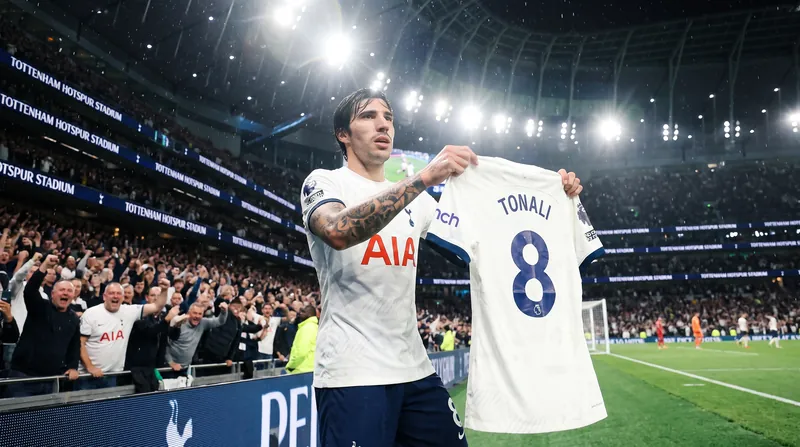
Tottenham Finalizes £92.5 Million Blockbuster Signing of Midfielder Sandro Tonali from Newcastle
4 sources
Preview
Hawthorn Chases Top-Four Finish and Percentage Boost in High-Stakes Clash Against West Coast
7 sources

Preview
2026 Wuhan Open Preview: Xiao Guodong Chases Hat-Trick as World No. 1 Race Heats Up
6 sources
Recap
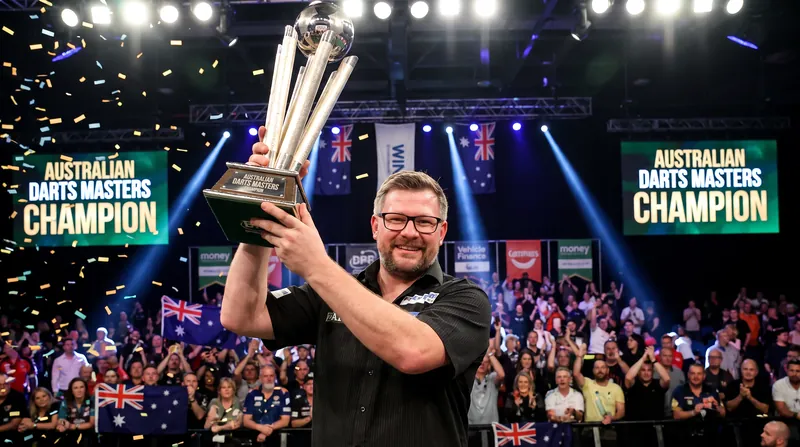
James Wade Ends Five-Year Televised Title Drought with Australian Darts Masters Victory
2 sources
Every angle. Every day.
Get sports stories with full source coverage and perspective breakdowns delivered to your inbox.