
The 2026 E-Bike Buying Guide: How to Choose the Right Electric Bicycle
Electric bicycles are replacing car trips and flattening hills, but navigating the technical jargon can be overwhelming. Here is how to decode motors, batteries, and safety certifications to find the perfect ride.
By Factlen Editorial Team
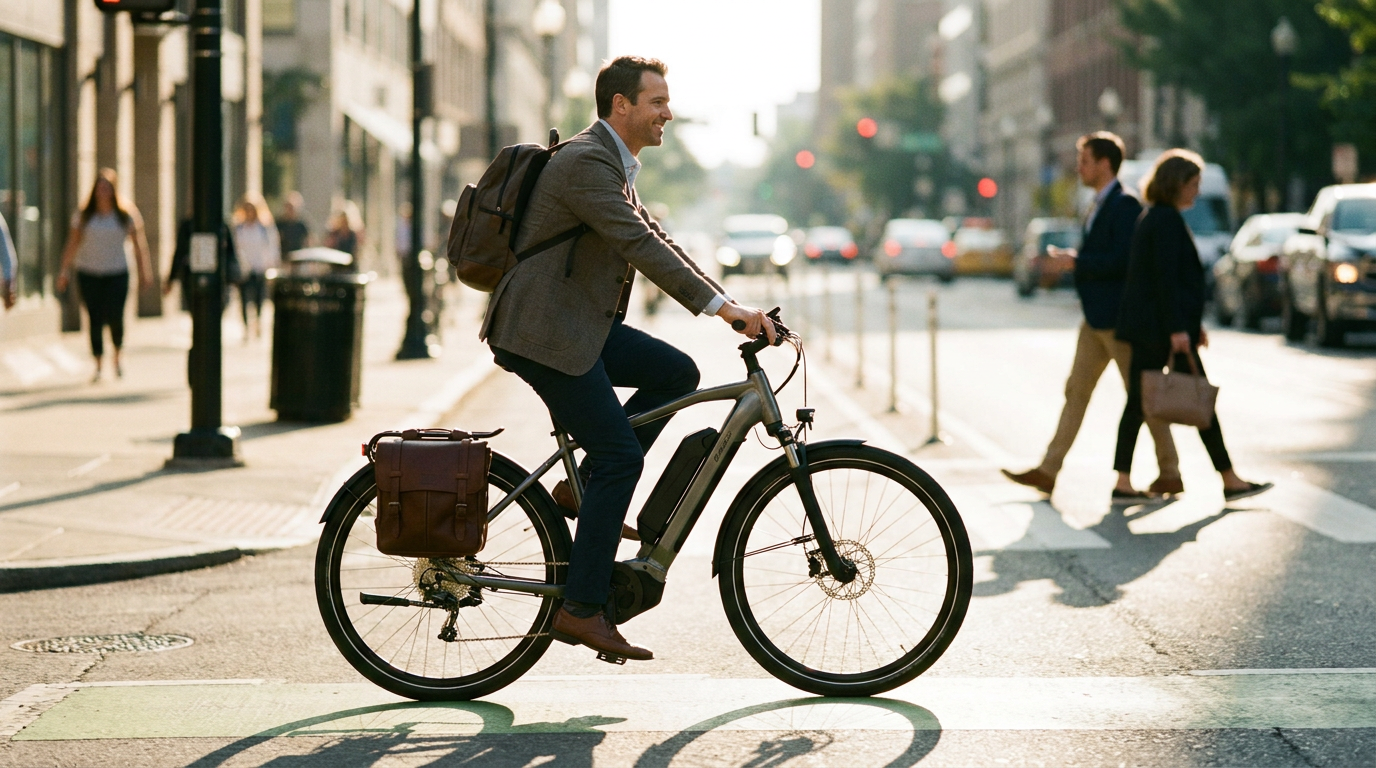
- Urban Commuters
- Focuses on replacing car trips with reliable, low-maintenance electric bicycles.
- Off-Road & Performance Riders
- Prioritizes high torque, natural ride feel, and premium mechanical components.
- Value & Utility Buyers
- Seeks maximum range and cargo capacity for the lowest possible price.
- Safety & Standards Advocates
- Emphasizes strict battery certifications and clear legal classifications to protect consumers.
What's not represented
- · Traditional acoustic bicycle purists
- · Pedestrian advocates concerned about path speeds
Why this matters
Purchasing an e-bike is a major financial investment that can fundamentally change how you commute, exercise, and run errands. Understanding the technical specifications ensures you buy a safe, reliable machine that actually fits your daily needs, rather than overpaying for marketing hype.
Key points
- Hub motors are affordable and great for flat commutes, while mid-drive motors excel on steep hills.
- Watt-hours (Wh) are the only accurate metric for comparing the true range of different e-bike batteries.
- Torque sensors provide a smoother, more natural riding experience compared to basic cadence sensors.
- Understanding the Class 1, 2, and 3 legal framework ensures your bike is permitted on local paths.
- Purchasing an e-bike with a UL 2849 certification is essential to prevent dangerous battery fires.
Electric bicycles have officially transitioned from a niche novelty to a mainstream transportation staple in 2026. By flattening steep hills, eliminating arrival sweat, and drastically reducing the cost of daily transit, e-bikes are replacing millions of short car trips worldwide. For many consumers, the realization that an e-bike can serve as a primary vehicle rather than just a weekend toy is a paradigm shift. Cities are rapidly expanding their cycling infrastructure to accommodate the boom, and government rebate programs are making the initial purchase more accessible than ever. However, making the leap from a traditional acoustic bicycle to an electric model requires a fundamental shift in how consumers evaluate their purchase.[1]
The surge in popularity has flooded the market with hundreds of brands, ranging from legacy cycling manufacturers to direct-to-consumer startups, resulting in a dizzying array of technical specifications. For first-time buyers, shopping for an e-bike can feel less like buying a bicycle and more like taking an exam in electrical engineering. Sales floors and online product pages are littered with jargon about torque ratings, watt-hours, and sensor types. Without a clear understanding of what these terms mean in the real world, buyers risk overpaying for features they do not need, or worse, purchasing a bike that lacks the power to handle their daily commute. Navigating this landscape requires a structured approach to the core components.[1]
The most fundamental decision a buyer must make is the type of motor that will power the bike. The motor is the beating heart of the e-bike, dictating not only how fast it can go, but how it feels to ride and how it handles different types of terrain. The industry is currently divided into two dominant designs: hub motors and mid-drive motors. Each architecture serves entirely different riding styles, maintenance expectations, and budgets. Understanding the mechanical differences between the two is the single most important step in narrowing down the vast field of available options.[4]
Hub motors are housed directly inside the center of the front or rear wheel, making them the most common and recognizable power source on entry-level and mid-tier e-bikes. Because they push the wheel directly and operate entirely independently of the bicycle's mechanical chain and gears, they are mechanically simpler and significantly more affordable to manufacture. For riders navigating relatively flat city streets or looking for a budget-friendly entry point into electric cycling, a rear-hub motor provides a reliable, zippy ride with minimal maintenance. However, because they have only a single gear ratio, they can struggle and draw excessive battery power when forced to climb long, steep inclines.[4]

Mid-drive motors, conversely, are mounted at the bottom bracket, directly between the rider's pedals. Instead of pushing the wheel, they drive the bike's chain, allowing the electric motor to leverage the bicycle's existing mechanical gear system. When a rider encounters a steep 15 percent grade, they can shift the bike into a lower gear, allowing the mid-drive motor to spin efficiently at a high RPM and deliver massive torque without overheating. This mechanical advantage makes mid-drives the undisputed choice for mountainous terrain, heavy cargo hauling, and premium electric mountain bikes. The trade-off is a higher upfront cost and increased wear and tear on the bike's chain and cassette.[4]
Beyond the motor's physical location, how the bike decides to deliver its power is equally crucial to the overall riding experience. Entry-level e-bikes typically utilize a cadence sensor, which acts much like a simple on/off switch: once the pedals begin to turn, the motor kicks in and delivers power at a predetermined speed level. Premium models, however, utilize a sophisticated torque sensor. A torque sensor physically measures exactly how hard the rider is pushing on the pedals and amplifies that specific effort in real-time. This results in a buttery-smooth, bionic-leg sensation rather than a sudden jolt of acceleration, making the bike feel like a natural extension of the rider's body.[1]
Once the motor architecture is selected, buyers must decipher the battery specifications, which are frequently obscured by a jumble of electrical acronyms: Volts (V), Amp-hours (Ah), and Watt-hours (Wh). Many manufacturers highlight the highest number on the spec sheet to make their bikes seem more powerful, leading to widespread consumer confusion. Industry experts and battery engineers suggest relying on a simple water-tank analogy to cut through the marketing noise and understand exactly what each metric represents in terms of real-world performance and range.[5]
Many manufacturers highlight the highest number on the spec sheet to make their bikes seem more powerful, leading to widespread consumer confusion.
In the water-tank analogy, Voltage represents the water pressure—how forcefully the electrical energy is pushed from the battery to the motor. A higher voltage system, such as 48V or 52V, can deliver more peak power for rapid acceleration and hill climbing. Amp-hours represent the physical size of the tank, indicating how much current the battery can deliver over a specific period. But Watt-hours (Wh) measure the total amount of usable energy the battery actually holds. To find the Watt-hours, buyers simply multiply the Volts by the Amp-hours, yielding the most critical number on the entire spec sheet.[5]

When comparing the range of two different e-bikes, Watt-hours are the only universal metric that truly matters. For example, a 36V battery with a 14Ah capacity (504 Wh) actually holds more total energy than a 48V battery with a 10Ah capacity (480 Wh), despite the latter's higher voltage. For a typical 20-mile daily commute, a 500 Wh battery provides a comfortable margin of error, factoring in headwinds, steep hills, rider weight, and the inevitable battery degradation that occurs over years of use. Understanding this math prevents buyers from being misled by high-voltage marketing claims that mask a small overall capacity.[5]
Navigating the hardware is only half the battle; buyers must also understand the legal framework governing where these electric bicycles can be ridden. In the United States, e-bikes are legally divided into a standardized three-class system, which dictates their top speed and how the motor is engaged. This classification determines whether the bike is allowed on multi-use bike paths, mountain bike trails, or restricted strictly to the road. Purchasing the wrong class can result in a bike that is legally barred from the rider's intended commuting route.[6]
Class 1 e-bikes provide electrical assistance only when the rider is actively pedaling, and the motor cuts off entirely once the bicycle reaches 20 mph. These are the most universally accepted models, permitted on almost all bike paths and trails. Class 2 models share the 20 mph speed limit but include a thumb or twist throttle, allowing the bike to move without any pedaling effort whatsoever. Class 3 e-bikes are the fastest legal commuter option; they generally lack a throttle but provide pedal assistance up to a brisk 28 mph, making them ideal for riders looking to keep up with urban traffic and minimize their commute time.[6]

Safety certifications have also transitioned from an optional bonus to a mandatory shopping criterion in 2026. Following a series of high-profile, devastating lithium-ion battery fires linked to cheap, uncertified imports, experts and regulators strongly advise purchasing only e-bikes that meet stringent international safety standards. Specifically, buyers should look for the UL 2849 or EN 15194 certifications. These rigorous standards guarantee that the battery, motor, and charger have been tested together as a complete electrical system to prevent thermal runaway, ensuring the bike can be safely charged inside a home or garage.[6]
When it comes to specific recommendations, independent testing in 2026 highlights several standout models across different consumer categories. For everyday urban commuting, the Aventon Level series remains an industry benchmark. Reviewers consistently praise its blend of upright comfort, integrated lighting, included cargo racks, and a highly responsive torque sensor. By offering a refined ride quality that bridges the gap between a traditional bicycle and a light moped, it serves as a highly capable car replacement for city dwellers.[2][7]
For buyers prioritizing budget and portability, the Lectric XP4 dominates the entry-level market. Priced comfortably under the $1,000 threshold, this folding e-bike manages to include premium features like hydraulic disc brakes, a sturdy integrated rack, and enough motor power to rival full-sized models. Its ability to fold in half makes it an exceptional value for apartment dwellers with limited storage space, RV owners looking for a campground cruiser, or commuters who need to combine their bike ride with a train journey.[2]

At the premium end of the spectrum, the Gazelle Medeo T1 earns top marks from consumer advocacy groups and seasoned cycling reviewers alike. Retailing for around $3,000, it features a powerful, whisper-quiet Bosch mid-drive motor and high-end hydraulic brakes that provide immense stopping power in all weather conditions. The Medeo T1 delivers a refined, traditional cycling feel that seamlessly amplifies the rider's effort, easily justifying its higher price tag for those who want a durable, long-lasting machine designed for daily, high-mileage use.[3]
Ultimately, the perfect e-bike does not exist in a vacuum; it depends entirely on the rider's specific daily mission. A mountain biker tackling steep dirt trails needs a radically different machine than a parent hauling groceries across a flat suburban neighborhood. By prioritizing the right motor architecture, calculating true battery capacity in Watt-hours, and insisting on verified UL safety certifications, consumers can confidently navigate the crowded market and invest in a machine that will transform their daily transit for years to come.[1]
Viewpoints in depth
Urban Commuters
Focuses on replacing car trips with reliable, low-maintenance electric bicycles.
For daily city riders, the primary goal is arriving at work sweat-free and avoiding traffic. This camp prioritizes Class 3 speeds (up to 28 mph) to keep pace with urban traffic, alongside integrated utility features like fenders, cargo racks, and built-in lighting. They often favor hub motors for their simplicity and lower maintenance costs, viewing the e-bike strictly as a practical transportation tool rather than a piece of sporting equipment.
Off-Road & Performance Riders
Prioritizes high torque, natural ride feel, and premium mechanical components.
Enthusiasts taking their e-bikes on mountain trails or steep, varied terrain argue that hub motors are insufficient. This camp insists on mid-drive motors that leverage the bike's mechanical gears to conquer steep inclines without overheating. They also heavily favor torque sensors over cadence sensors, demanding a ride that feels like a natural, bionic extension of their own pedaling effort rather than a moped-style push.
Safety & Standards Advocates
Emphasizes strict battery certifications and clear legal classifications to protect consumers.
With the rapid influx of cheap, direct-to-consumer e-bikes, safety advocates and regulators are sounding the alarm on fire risks. This perspective argues that consumers must prioritize UL 2849 or EN 15194 certifications above all other specs, ensuring the battery and motor systems are protected against thermal runaway. They also stress the importance of adhering to the Class 1, 2, and 3 legal frameworks to maintain safe speeds on shared multi-use paths.
What we don't know
- How future battery technologies, like solid-state cells, will impact e-bike weight and range in the coming years.
- Whether local municipalities will begin requiring licenses or registration for high-speed Class 3 e-bikes as they become more prevalent.
Key terms
- Watt-hour (Wh)
- A measurement of the total usable energy stored in a battery, calculated by multiplying Volts by Amp-hours.
- Mid-drive motor
- An electric motor mounted at the bicycle's pedals that drives the chain, allowing it to leverage the bike's mechanical gears for better hill climbing.
- Hub motor
- An electric motor housed directly inside the center of the front or rear wheel that pushes the bike independently of its gears.
- Torque sensor
- A component that measures the physical force a rider applies to the pedals and smoothly amplifies that effort with electric power.
- Class 1 E-bike
- An electric bicycle that provides motor assistance only when the rider is pedaling, with the motor cutting off at 20 mph.
Frequently asked
How far can I go on a single e-bike charge?
Range depends heavily on battery capacity (Watt-hours), terrain, and assist level. A standard 500Wh battery typically provides 20 to 50 miles of range on a single charge.
Do I still get a workout when riding an e-bike?
Yes. Because most e-bikes use pedal-assist technology, the rider must still pedal to engage the motor, providing a customizable cardiovascular workout that flattens hills and extends riding distance.
What is the difference between a torque sensor and a cadence sensor?
A cadence sensor turns the motor on at a set speed as soon as the pedals move, while a torque sensor measures how hard you are pushing and amplifies your specific physical effort for a smoother, more natural ride.
Can I ride an electric bike in the rain?
Most high-quality e-bikes are water-resistant and perfectly safe to ride in the rain. However, they are not waterproof, so they should never be fully submerged or cleaned with a high-pressure power washer.
Sources
Source coverage
7 outlets
4 viewpoints surfaced







[1]Factlen Editorial TeamValue & Utility Buyers
Synthesis by Factlen editorial team
Read on Factlen Editorial Team →[2]OutdoorGearLabUrban Commuters
The Best Electric Bikes of 2026
Read on OutdoorGearLab →[3]QuartzUrban Commuters
The best electric bikes right now, according to Consumer Reports
Read on Quartz →[4]EveloOff-Road & Performance Riders
Mid-Drive vs Hub Motor eBikes: Which is Right for You?
Read on Evelo →[5]EbikegeekValue & Utility Buyers
E-Bike Battery Capacity: Watt-Hours Explained
Read on Ebikegeek →[6]Bicycle ColoradoSafety & Standards Advocates
E-Bike Buying Guide
Read on Bicycle Colorado →[7]BicyclingUrban Commuters
The 7 Best Expert-Tested Electric Bikes of 2026
Read on Bicycling →

Every angle. Every day.
Get shopping stories with full source coverage and perspective breakdowns delivered to your inbox.