
The Rise of Build-to-Rent Communities: What Renters Need to Know
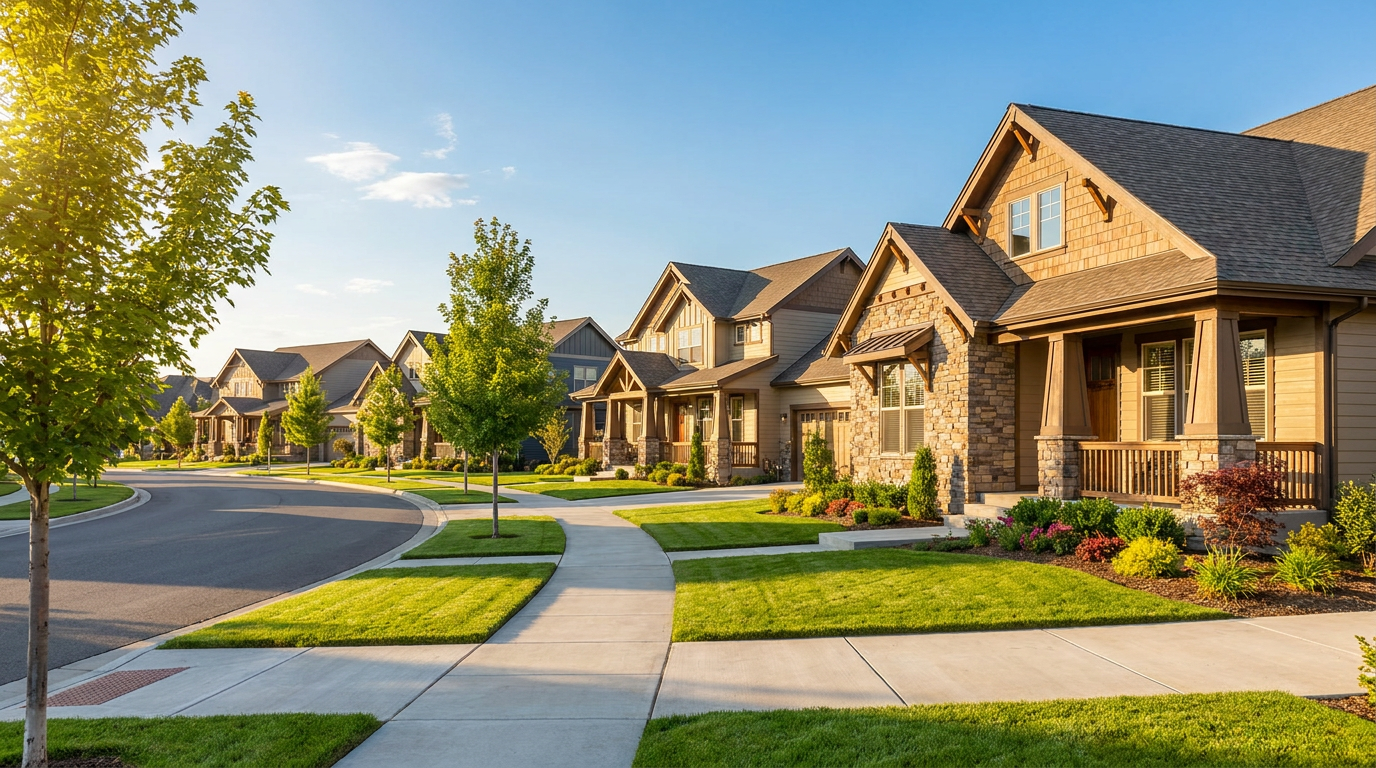
Entire neighborhoods of single-family homes are being built exclusively for renters, offering a new middle ground between apartment living and homeownership.
By Factlen Editorial Team
- Housing Market Analysts
- View BTR as a necessary supply-side innovation to house a changing demographic.
- BTR Residents & Advocates
- Focus on the lifestyle benefits and flexibility of professionalized renting.
- Homeownership Defenders
- Warn that corporate consolidation of housing strips wealth-building opportunities from the middle class.
What's not represented
- · Local Zoning Boards
- · Mom-and-Pop Landlords
Why this matters
As high mortgage rates keep homeownership out of reach for many, Build-to-Rent communities offer a viable alternative for families needing space. Understanding this trend helps renters navigate their long-term housing options without feeling pressured into a 30-year mortgage.
Key points
- Build-to-Rent (BTR) communities are purpose-built subdivisions of single-family homes designed exclusively for long-term renters.
- The sector accounted for 7.2% of all single-family housing starts in late 2025, remaining historically robust.
- Tenants are drawn to the combination of single-family privacy, apartment-style amenities, and professional property management.
- National BTR occupancy remains exceptionally high at 94.9%, indicating strong tenant satisfaction and retention.
- Critics warn that institutional investment in single-family homes crowds out potential homebuyers and prevents middle-class wealth creation.
The traditional American Dream—a house with a yard, a garage, and a white picket fence—has long been synonymous with a thirty-year mortgage. For generations, renting was viewed merely as a temporary stepping stone on the path to owning property, a phase to endure while saving for a down payment. But a quiet, well-funded revolution is currently reshaping the American suburbs. Across the Sunbelt and the Midwest, entire neighborhoods of pristine, newly constructed single-family homes are springing up with a significant catch: absolutely none of them are for sale.
Welcome to the era of "Build-to-Rent" (BTR) communities. These are purpose-built subdivisions designed exclusively from the ground up for long-term renters. Instead of a patchwork of individual landlords managing separate properties, the entire neighborhood is owned, maintained, and operated by a single corporate entity or institutional investor. It is a hybrid model that takes the operational efficiency of a high-rise apartment building and applies it horizontally across acres of suburban land, fundamentally changing the relationship between tenants and their neighborhoods.
For millions of Americans, this emerging model is bridging a critical and painful gap in the housing market. As mortgage rates remain elevated and the supply of affordable starter homes stays stubbornly low, the financial leap from an apartment to homeownership has become a chasm for many young families. Build-to-Rent offers a highly attractive middle ground: the physical space, privacy, and neighborhood feel of a traditional house, entirely without the crushing down payment, closing costs, or the unpredictable maintenance headaches of ownership.
The scale of this shift is staggering, moving rapidly from a niche concept to a dominant force in residential real estate. According to comprehensive data from Arbor Realty Trust and Chandan Economics, Build-to-Rent accounted for a remarkable 7.2% of all single-family housing starts in late 2025. While overall construction has normalized slightly from its pandemic-era peak in 2024, the sector remains historically robust, delivering tens of thousands of new homes annually to a market that is utterly starved for livable inventory.[1]

Industry projections suggest this is only the beginning of a much larger structural shift. Forbes analysts project that Build-to-Rent could rise to represent nearly 15% of all single-family starts over the next five years. The demographic writing is clearly on the wall: millennials aging into their prime family-formation years and Gen Z professionals are driving sustained, structural demand for this asset class. These cohorts increasingly prioritize flexibility and lifestyle quality, making them prime candidates for a housing product that delivers suburban comforts without the decades-long geographical commitment of a traditional mortgage.[3]
So, how does living in a Build-to-Rent community actually work in practice? For the tenant, the day-to-day experience closely mirrors living in a luxury apartment complex, but scaled up to a sprawling neighborhood level. Residents get their own four walls, a private driveway, a fenced backyard for the dog, and the distinct pleasure of having no upstairs neighbors stomping around at midnight. It provides the exact spatial dynamics and privacy of homeownership, neatly packaged into a standard, predictable lease agreement.
Yet, they also get the immense perks of institutional property management. If the water heater breaks, the HVAC system fails, or the roof leaks, a professional on-site maintenance team handles it—often within hours, at zero additional cost to the resident. Furthermore, there is absolutely no risk of a "mom-and-pop" landlord suddenly deciding to sell the property and forcing an unexpected eviction, which has long been a common and highly disruptive anxiety in the traditional single-family rental market.[6]
Yet, they also get the immense perks of institutional property management.
Amenities are another major draw that sets these communities apart from standard residential streets. To justify premium pricing and attract high-income renters, developers are packing these neighborhoods with resort-style features that rival luxury vacation properties. It is increasingly common to find Build-to-Rent communities equipped with massive clubhouse gyms, dedicated co-working spaces for remote workers, community swimming pools, smart-home technology integrations, and even on-site doggy daycares to cater to the heavily pet-owning renter demographic. These shared spaces actively foster a sense of community that isolated rentals lack.[6]

This unique combination of private space and premium service is proving wildly popular across the country. Yardi Matrix reports that nationwide occupancy for single-family build-to-rent units held incredibly strong at 94.9% through late 2025, a figure that outpaces many traditional multifamily apartment sectors. Even as advertised rent prices softened slightly in certain oversupplied Sunbelt markets, the sheer volume of renters renewing their leases indicates that tenants are highly satisfied with the product and are actively choosing to stay put rather than return to apartment living.[2]
"Demand is holding up better than pricing power," Yardi Matrix analysts noted in their market assessment, highlighting that operators are prioritizing stable, long-term communities over aggressive, short-term rent hikes. For renters, this operational philosophy often translates to longer lease options—sometimes offering terms of up to three or five years right from the start. This provides a level of housing stability and predictability that is rarely found in the broader rental market, allowing families to confidently enroll children in local schools without the looming fear of an annual forced relocation.[2]
From an investment standpoint, the logic driving billions of dollars into this sector is bulletproof. Catalyst Investment highlights that the structural demand for Build-to-Rent is deeply rooted in the widening disconnect between what households want and what they can actually afford to buy. Investors are drawn to the sector because tenants in single-family homes tend to stay significantly longer than transient apartment dwellers, drastically reducing turnover costs, minimizing vacancy periods, and ensuring a highly steady stream of cash flow.[5]
However, the rapid rise of Build-to-Rent is not without its vocal and persistent critics. Advocacy groups like the American Economic Liberties Project argue that the massive influx of institutional capital into single-family housing actively exacerbates the national affordability crisis. They point out that corporate investors, armed with billions in private equity, can easily outbid regular families for prime land, construction labor, and building materials. By doing so, they effectively crowd out the development of traditional starter homes meant for individual ownership, artificially restricting the supply of homes available to buy.[4]

Furthermore, committing to renting a Build-to-Rent home means missing out on the primary engine of middle-class wealth creation in the United States: home equity. While residents undoubtedly enjoy a high quality of life, beautiful surroundings, and stress-free maintenance, their monthly rent payments ultimately build a corporate portfolio rather than their own personal net worth. Over a lifetime, this structural shift from owning to renting could have profound implications for generational wealth transfer, leaving families with fewer assets to pass down to their children compared to previous generations.[4][7]
There is also the unavoidable reality of the premium price tag attached to these communities. Build-to-Rent homes typically command a noticeable rental premium over older, individually owned rental houses located in the exact same geographic area. Tenants are explicitly paying extra for the pristine new construction, the resort-style amenities, and the sheer convenience of professional, on-call property management. For budget-conscious renters, these master-planned communities may remain financially out of reach, catering primarily to upper-middle-class professionals who have the income to buy but simply prefer the flexibility of renting.[6]
Despite these financial trade-offs, the Build-to-Rent model is forcing a necessary and fascinating evolution in how Americans think about housing. For decades, renting a house was culturally stigmatized as a temporary fallback option or a sign of financial failure. Today, it is increasingly viewed as a valid, strategic, and long-term lifestyle choice that actively prioritizes geographic flexibility, high-end amenities, and maintenance-free living over the traditional burdens of mortgage debt and weekend property upkeep. It represents a fundamental decoupling of the "American Dream" from the strict requirement of property ownership.[7]

As the housing market pushes deeper into 2026, the rigid lines between renting and owning will only continue to blur. Build-to-Rent communities are definitively proving that a fulfilling, stable suburban life doesn't necessarily require a thirty-year mortgage or a massive down payment. For a rapidly growing demographic of modern renters, having a reliable property manager, access to a community pool, and the absolute freedom to relocate without the hassle of selling a house are exactly the features they need to thrive in today's dynamic economy.[3][7]
How we got here
2012-2019
Institutional investors begin buying distressed single-family homes post-financial crisis, creating the modern single-family rental (SFR) asset class.
2020-2022
The pandemic sparks a surge in demand for suburban space, prompting developers to build entire rental subdivisions from scratch.
2024
BTR construction hits an all-time peak as high mortgage rates lock millions out of the homebuying market.
Late 2025
BTR stabilizes as a mature asset class, maintaining 94.9% occupancy and accounting for 7.2% of all single-family starts.
Viewpoints in depth
BTR Residents & Advocates
Focus on the lifestyle benefits and flexibility of professionalized renting.
For this camp, the traditional American Dream of homeownership is outdated or financially impractical. They argue that BTR communities solve the biggest pain points of renting: unpredictable mom-and-pop landlords, deferred maintenance, and shared walls. By treating housing as a service rather than an investment vehicle, residents gain the freedom to move without being tethered to a 30-year mortgage, all while enjoying premium amenities and neighborhood stability.
Housing Market Analysts
View BTR as a necessary supply-side innovation to house a changing demographic.
Industry analysts and economists point to the math: the U.S. has a severe shortage of housing, and high interest rates have frozen the resale market. From this perspective, institutional capital funding BTR developments is a net positive because it adds desperately needed supply to the market. They argue that without these purpose-built rental communities, the affordability crisis for millennials and Gen Z would be significantly worse.
Homeownership Defenders
Warn that corporate consolidation of housing strips wealth-building opportunities from the middle class.
Critics, including consumer advocacy groups, view the BTR trend as a symptom of a broken housing market. They argue that when Wall Street and institutional investors buy up land to build permanent rental neighborhoods, they directly compete with families trying to buy their first homes. This camp warns that shifting the middle class from homeowners to permanent renters will widen the wealth gap, as tenants pay premium rents to build corporate portfolios instead of their own equity.
What we don't know
- How BTR communities will age over the next 20 years and whether institutional owners will maintain their current high standards of upkeep.
- Whether local municipalities will begin zoning against BTR developments to protect traditional homeownership models.
- How a potential future drop in mortgage rates might impact tenant retention in BTR neighborhoods.
Key terms
- Build-to-Rent (BTR)
- Purpose-built housing developments designed exclusively for renting rather than for sale.
- Single-Family Rental (SFR)
- A standalone house that is rented out, which can include both traditional mom-and-pop rentals and corporate BTR homes.
- Institutional Investor
- Large financial organizations, such as pension funds or private equity firms, that invest massive pools of capital into assets like real estate.
- Occupancy Rate
- The percentage of available rental units that are currently leased and occupied by tenants.
Frequently asked
What is a Build-to-Rent (BTR) community?
A BTR community is a subdivision of single-family homes built specifically for long-term renters. Instead of being sold individually, the entire neighborhood is owned and managed by a single corporate entity.
How is BTR different from a regular rental house?
Unlike traditional rentals managed by individual landlords, BTR neighborhoods are professionally managed and often feature luxury apartment-style amenities like community pools, fitness centers, and co-working spaces.
Are BTR homes more expensive to rent?
Generally, yes. They often carry a rental premium due to being brand-new construction and offering extensive community amenities and professional maintenance services.
Can I eventually buy a home in a BTR community?
No. The entire subdivision is owned by an institutional investor or developer and is strictly maintained as a permanent rental community.
Sources
Source coverage
7 outlets
3 viewpoints surfaced







[1]Arbor Realty TrustHousing Market Analysts
SFR/BTR Construction Activity Normalizes in 2025
Read on Arbor Realty Trust →[2]Yardi MatrixHousing Market Analysts
Single-Family Build-to-Rent Occupancy Strong Amid Negative Rent Growth
Read on Yardi Matrix →[3]ForbesHousing Market Analysts
The Housing Market Outlook For 2026-2027
Read on Forbes →[4]American Economic Liberties ProjectHomeownership Defenders
Ban Corporate Ownership of Single-Family Homes and Mandate Divestiture
Read on American Economic Liberties Project →[5]Catalyst InvestmentHousing Market Analysts
What Is Driving Build-to-Rent Demand in 2026?
Read on Catalyst Investment →[6]AvailBTR Residents & Advocates
The Pros and Cons of Renting a Build-to-Rent Home
Read on Avail →[7]Factlen Editorial TeamHousing Market Analysts
Synthesis by Factlen editorial team
Read on Factlen Editorial Team →
Every angle. Every day.
Get real estate stories with full source coverage and perspective breakdowns delivered to your inbox.