
US and Iran Sign 14-Point Memorandum to End 110-Day War and Reopen Strait of Hormuz
The United States and Iran have digitally signed a 14-point framework to halt military operations, lift the US naval blockade, and trigger a 60-day window for a final nuclear treaty.
By Factlen Editorial Team
- US Administration
- Views the deal as a necessary step to end a costly 110-day war, reopen global shipping lanes, and cap Iran's nuclear ambitions.
- Iranian Leadership & Public
- Focuses on immediate economic survival, the lifting of the US naval blockade, and the unfreezing of assets, though citizens remain wary of inflation.
- Israeli Security Establishment
- Maintains that the US-Iran bilateral agreement does not bind Israel's military operations against Hezbollah in Lebanon.
- US Conservative Critics
- Argues the agreement is appeasement, objecting to the $300 billion reconstruction pledge and upfront oil waivers.
- Global Energy Markets
- Reacts positively to the de-escalation and the immediate return of Iranian crude oil to the compliant fleet.
What's not represented
- · Lebanese civilians affected by the ongoing cross-border strikes
- · European allies who were parties to the original 2015 JCPOA
Why this matters
This agreement pauses a devastating global conflict that choked international shipping and spiked energy prices. If the 60-day negotiation window succeeds, it could permanently reshape Middle Eastern security and global oil markets; if it fails, the region will likely plunge back into a catastrophic war.
Key points
- The US and Iran signed a 14-point MOU to end their 110-day conflict.
- The agreement triggers a 60-day window to negotiate a permanent nuclear treaty.
- Iran agreed to restore commercial shipping through the Strait of Hormuz within 30 days.
- The US will lift its naval blockade and issue immediate waivers for Iranian oil exports.
- The framework includes a proposed $300 billion reconstruction plan for Iran.
- Israel stated it is not bound by the agreement and will continue operations in Lebanon.
The United States and Iran have formally finalized a 14-point Memorandum of Understanding (MOU), pausing a devastating 110-day conflict that has reshaped the Middle East and choked global shipping. The agreement, signed digitally by US President Donald Trump and Iranian President Masoud Pezeshkian, establishes an immediate ceasefire and triggers a 60-day window to negotiate a permanent treaty regarding Tehran's nuclear program and international sanctions.[1][6]
The breakthrough comes after months of intense warfare, a US naval blockade of Iranian ports, and the effective closure of the Strait of Hormuz. Senior US officials, who read the text of the MOU to reporters, described it as a necessary framework to de-escalate hostilities "on all fronts" while providing a structured pathway to a comprehensive diplomatic resolution.[1][3]
At the center of the pact is the immediate resumption of global maritime trade. Under the agreement, the United States will begin lifting its naval blockade immediately, with full removal mandated within 30 days. In exchange, Iran has committed to restoring commercial shipping traffic through the Strait of Hormuz to pre-war levels within the same 30-day timeframe, guaranteeing toll-free passage for at least 60 days.[1][3][7]

To incentivize compliance during the 60-day negotiation period, Washington is granting immediate economic concessions. The US Treasury will issue waivers allowing Iran to resume exporting crude oil and petroleum products, alongside the necessary banking and transportation services. This marks a significant shift from the "maximum pressure" campaign that preceded the conflict.[3][5]
The MOU also outlines a massive financial incentive for a final peace treaty. The United States and its regional partners have pledged to develop a reconstruction and economic rehabilitation plan for Iran valued at a minimum of $300 billion. However, US officials stressed that broad, permanent sanctions relief is strictly tied to Iran's performance on the nuclear file.[1][3][8]
On the nuclear front, the framework requires Iran to reaffirm that it will not procure or develop nuclear weapons. Crucially, the two nations agreed to resolve the disposition of Iran's stockpiled enriched uranium through a mutually agreed mechanism, which will include "down-blending" the material on-site under the supervision of the International Atomic Energy Agency (IAEA).[1][8]
On the nuclear front, the framework requires Iran to reaffirm that it will not procure or develop nuclear weapons.
The economic impact of the MOU was immediate. Global energy markets, which had been battered by the closure of the Strait of Hormuz, breathed a sigh of relief. Brent crude prices dropped sharply as traders priced in the return of Iranian barrels to the compliant fleet.[5]
In Tehran, the diplomatic breakthrough sparked a financial rally. The Iranian Rial rebounded by more than 15% against the US dollar in a matter of days, and the national stock market shattered records. However, the macroeconomic surge has yet to reach ordinary citizens; years of crippling inflation and the recent wartime blockade mean Iranians are still grappling with exorbitant prices for basic groceries and household goods.[2]

Despite the optimism in Washington and Tehran, the MOU faces severe geopolitical complications—most notably in Lebanon. The text explicitly declares the "immediate and permanent termination of military operations on all fronts, including in Lebanon," effectively requiring Iran to rein in its proxy, Hezbollah.[1][3]
Israel, however, was not a party to the US-Iran negotiations and has forcefully rejected the notion that the bilateral pact dictates its security policy. Israeli officials, including National Security Minister Itamar Ben-Gvir, declared that "Trump's agreement does not bind us." Israeli airstrikes in southern Lebanon have continued despite the MOU, signaling that the northern front remains highly volatile.[2][4]
The agreement is also facing fierce headwinds within the United States. Conservative critics and several Republican lawmakers have blasted the MOU as a "foreign policy blunder" and an act of appeasement. Detractors argue that granting upfront oil waivers and promising a $300 billion reconstruction fund surrenders crucial American leverage before a verifiable, permanent nuclear treaty is actually secured.[2][8]

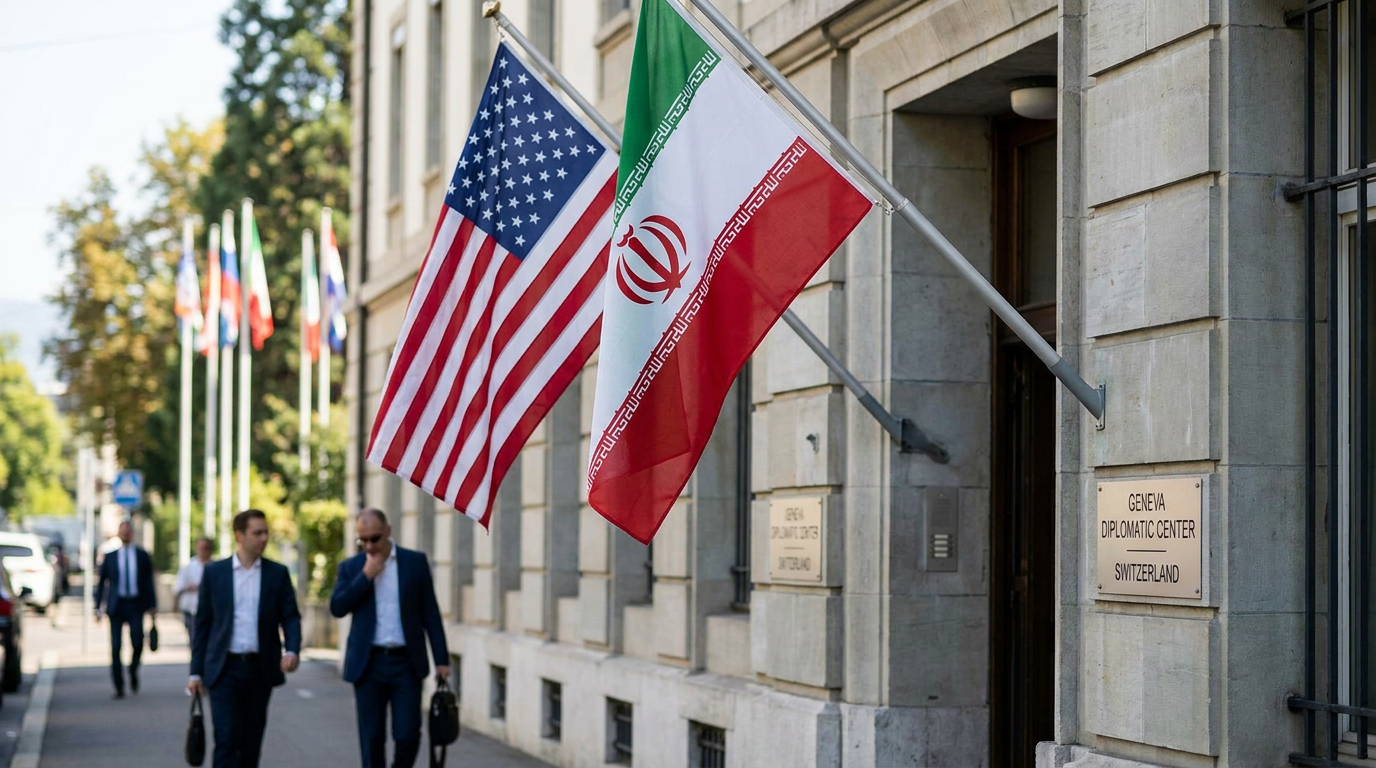
Iranian officials have been equally cautious, warning that they will monitor US implementation "without any leniency." Iran's Foreign Ministry emphasized that the upcoming talks in Geneva will focus exclusively on nuclear issues and sanctions relief, deliberately walling off broader discussions about Tehran's regional influence.[6]
The next 60 days will test the durability of the ceasefire. The MOU is not a final treaty, but rather a fragile bridge. US officials have bluntly acknowledged that either side can walk away at any time. If negotiators in Geneva fail to translate the 14-point framework into a binding, comprehensive agreement, both nations have signaled a readiness to return to military confrontation.[1][3]
How we got here
February 2026
The US and Israel launch military operations against Iran, leading to a US naval blockade and the closure of the Strait of Hormuz.
June 14-15, 2026
US and Iranian officials reach an initial 14-point framework to halt hostilities.
June 17, 2026
Senior US officials publicly read out the contents of the unreleased Memorandum of Understanding.
June 18, 2026
US President Donald Trump and Iranian President Masoud Pezeshkian digitally sign the finalized MOU, triggering a 60-day negotiation window.
Viewpoints in depth
US Administration
Views the deal as a pragmatic triumph that stops a devastating war and secures global energy markets.
US officials argue that the 14-point framework achieves what maximum pressure alone could not: a verifiable halt to Iran's nuclear ambitions and the reopening of the Strait of Hormuz. By offering immediate but reversible economic lifelines, the administration believes it has created the necessary leverage to force Tehran into a permanent, restrictive treaty over the next 60 days.
Iranian Leadership
Frames the agreement as a victory for national resilience that ends a crippling blockade.
For Tehran, the MOU is an economic lifeline. Iranian officials emphasize the immediate lifting of the US naval blockade and the resumption of vital oil exports as major concessions won through endurance. The promise of a $300 billion reconstruction package is viewed as essential compensation for the damage inflicted upon the Iranian economy, though leaders remain highly suspicious of long-term US commitments.
Israeli Security Establishment
Views the bilateral pact with deep skepticism, particularly regarding its provisions on Lebanon.
Israeli leaders insist that a bilateral ceasefire between Washington and Tehran does not restrict their military freedom. Because Israel was not a party to the MOU, officials argue they are not bound by its call to end hostilities 'on all fronts.' The security establishment maintains that neutralizing the threat posed by Hezbollah on Israel's northern border remains an overriding priority, regardless of the Geneva negotiations.
US Conservative Critics
Condemns the upfront concessions as a dangerous capitulation that rewards Tehran.
Detractors within the US argue that granting immediate oil waivers and promising a $300 billion reconstruction fund surrenders crucial American leverage before a permanent nuclear treaty is actually secured. Critics liken the framework to appeasement, warning that the financial influx will only embolden the regime and fund its regional proxies if the 60-day talks collapse.
What we don't know
- Whether Israel will formally agree to halt its military operations against Hezbollah in Lebanon, despite the MOU's provisions.
- The exact technical mechanisms and timeline for down-blending Iran's stockpiled enriched uranium.
- How the proposed $300 billion reconstruction plan for Iran will be funded and structured by the US and its regional partners.
- Whether the US Congress will attempt to block the final comprehensive treaty if an agreement is reached in 60 days.
Key terms
- Memorandum of Understanding (MOU)
- A formal, non-binding agreement outlining the broad terms of a future treaty or contract.
- Strait of Hormuz
- A crucial shipping chokepoint between the Persian Gulf and the Gulf of Oman, through which a significant portion of the world's oil passes.
- Down-blending
- The process of reducing the concentration of the fissile isotope U-235 in enriched uranium, making it unsuitable for nuclear weapons.
- Naval Blockade
- The use of naval forces to cut off a country's ports and coastal areas from international maritime trade.
- Sanctions Waiver
- A temporary exemption granted by a government allowing certain prohibited transactions, such as oil sales, to take place without penalty.
Frequently asked
What does the US-Iran MOU actually do?
It establishes a 60-day ceasefire, reopens the Strait of Hormuz, lifts the US naval blockade, and sets a framework to negotiate a final nuclear treaty.
Will Iran be allowed to sell oil?
Yes. The US is issuing immediate waivers for Iranian crude oil exports and associated banking services while the final terms are negotiated.
How does this affect the war in Lebanon?
The MOU calls for an end to hostilities on all fronts, including Lebanon. However, Israel was not a party to the deal and has stated it will continue its operations against Hezbollah.
What happens to Iran's nuclear program?
Iran reaffirmed it will not develop nuclear weapons and agreed to down-blend its stockpiled enriched uranium under IAEA supervision, with details to be finalized in the next 60 days.
Sources
Source coverage
8 outlets
5 viewpoints surfaced








[1]CBS NewsUS Administration
Senior U.S. officials read out 14 points of U.S.-Iran memorandum of understanding
Read on CBS News →[2]Al JazeeraIranian Leadership & Public
Rial rebounds and stocks soar, but Iranians still grapple with high prices
Read on Al Jazeera →[3]The GuardianUS Administration
US-Iran deal takeaways: reopening the strait of Hormuz, waived oil sanctions and Lebanon
Read on The Guardian →[4]The Times of IsraelIsraeli Security Establishment
US-Iran deal said set to halt regional hostilities, including in Lebanon, lift blockade
Read on The Times of Israel →[5]Argus MediaGlobal Energy Markets
US, Iran confirm signing of peace deal
Read on Argus Media →[6]Anadolu AgencyIranian Leadership & Public
US-Iran memorandum of understanding formally finalized after presidents sign text
Read on Anadolu Agency →[7]AxiosUS Administration
What's in the Iran deal Trump says he's ready to sign
Read on Axios →[8]Fox NewsUS Conservative Critics
READ IT: The full text of the US-Iran Memorandum of Understanding
Read on Fox News →
Every angle. Every day.
Get news politics stories with full source coverage and perspective breakdowns delivered to your inbox.