
Supreme Court Narrows Federal Law Banning Drug Users From Owning Guns
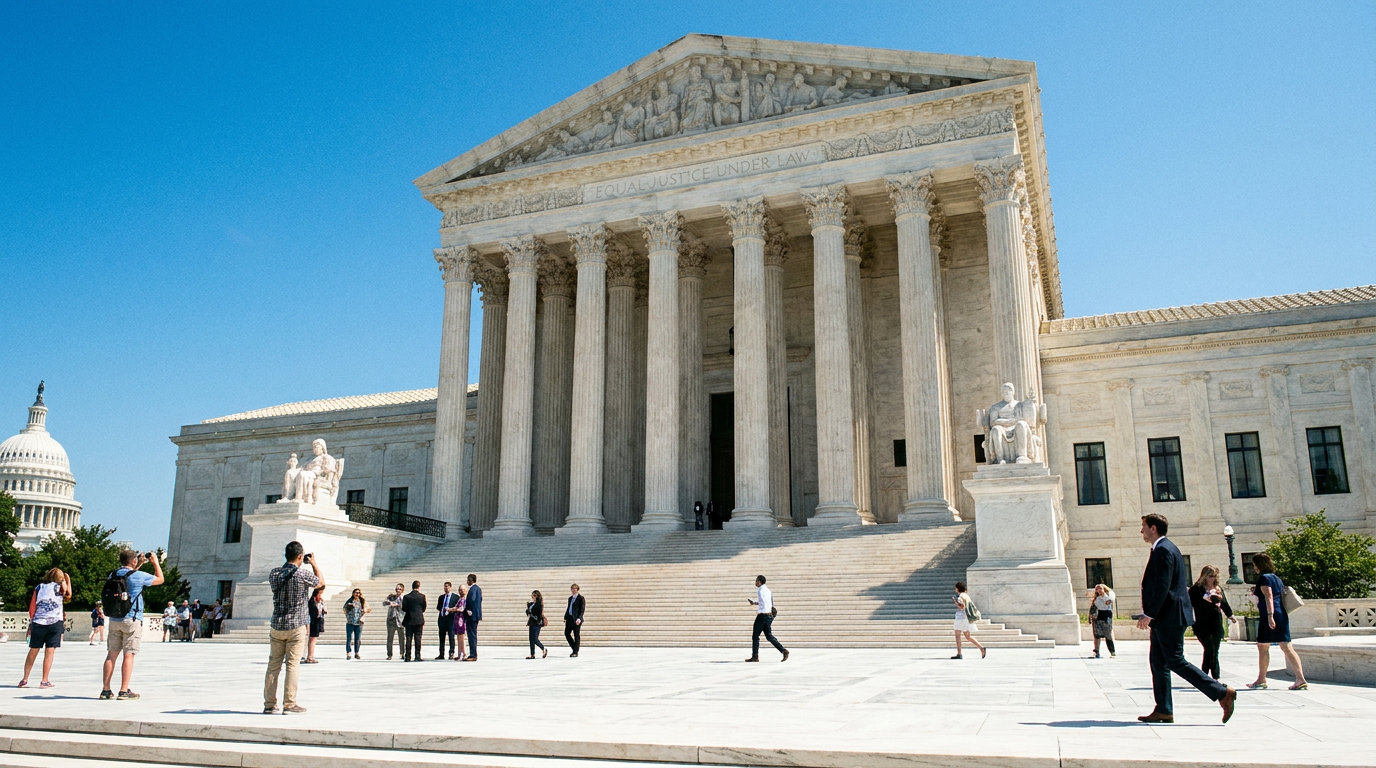
In a unanimous decision, the Supreme Court ruled that the federal government cannot automatically strip Americans of their Second Amendment rights for occasional drug use without proving active intoxication or dangerousness.
By Factlen Editorial Team
- Institutional Legal Analysis
- Focuses on the narrow scope of the ruling, the mechanics of the Supreme Court decision, and the implications for the Justice Department.
- Constitutional & Gun Rights Focus
- Emphasizes the Second Amendment victory and the check on federal overreach.
- Cannabis Policy & Reform Focus
- Highlights the friction between federal gun laws and the widespread state-level legalization of marijuana.
What's not represented
- · Victims of gun violence advocating for stricter federal disarmament tools.
- · State-level law enforcement navigating the gap between federal gun laws and local cannabis legality.
Why this matters
This ruling fundamentally alters how the federal government enforces gun control, raising the bar for prosecuting millions of Americans who consume state-legal cannabis while owning firearms.
Key points
- The Supreme Court unanimously ruled that a federal law banning drug users from owning guns is unconstitutional as applied to a regular marijuana user.
- The 9-0 decision forces the government to prove actual dangerousness or active intoxication rather than relying on a categorical ban.
- The ruling does not strike down the law entirely, leaving room for prosecutors to disarm severe addicts or those actively impaired while armed.
- The decision highlights the growing legal friction between federal firearm prohibitions and widespread state-level cannabis legalization.
The Supreme Court has unanimously ruled that the federal government cannot automatically strip Americans of their Second Amendment rights simply because they occasionally use illegal drugs. The 9-0 decision, authored by Justice Neil Gorsuch, marks a significant narrowing of a decades-old gun control statute and delivers a major blow to the Justice Department's efforts to categorically disarm individuals over routine drug use. By siding with a Texas man who challenged his federal indictment, the justices determined that an admission of regular marijuana use is not sufficient grounds to permanently revoke a citizen's constitutional right to bear arms. The ruling forces federal prosecutors to clear a much higher bar—proving actual dangerousness or active impairment—before prosecuting drug users for simply owning a firearm, fundamentally altering the landscape of federal gun enforcement.[2][4][8]
The case, United States v. Hemani, centered on a Texas man who admitted to using marijuana regularly but was not accused of being intoxicated while handling his firearm. Under 18 U.S.C. § 922(g)(3), a provision of the landmark 1968 Gun Control Act, it is a federal felony for anyone who is an "unlawful user of or addicted to any controlled substance" to possess a gun or ammunition. Violators of the statute face severe penalties, including up to 15 years in federal prison and a lifetime ban on firearm ownership. For decades, the government has relied on this statute as a straightforward mechanism to disarm individuals involved in the drug trade, treating any unlawful drug use as an automatic disqualifier for gun ownership regardless of the specific circumstances.[3][5][6]
The Justice Department prosecutes roughly 300 people under this specific provision each year, though it is frequently utilized as an add-on charge in broader criminal investigations where prosecutors want leverage over a defendant. The most famous recent target of the law was Hunter Biden, the son of former President Joe Biden, who was convicted in 2024 for purchasing a revolver while addicted to crack cocaine. While the younger Biden ultimately received a presidential pardon before his father left office, his high-profile trial brought national attention to the sweeping nature of the statute and raised public awareness about how easily a citizen could run afoul of federal gun laws due to substance abuse issues.[1][4][6]
In Ali Danial Hemani's case, the legal saga began when the FBI searched his family's Texas home in 2022 during an investigation that ultimately yielded no terrorism or drug-trafficking charges. Agents did, however, find a 9mm Glock pistol stored in a closet. During an interview with law enforcement, Hemani was fully cooperative and admitted to investigators that he smoked marijuana "about every other day." The government used that singular admission to indict him months later, arguing that his habitual drug use categorically disqualified him from gun ownership under federal law.[4][7][8]

Hemani’s legal team mounted an "as-applied" challenge to the indictment, arguing that because he was not actively high when possessing the weapon, the application of the law violated his constitutional rights. They contended that the Second Amendment does not allow the government to permanently disarm a citizen based solely on non-violent, occasional drug use. The federal district court and the Fifth Circuit Court of Appeals both agreed, dismissing the indictment and setting the stage for the Justice Department—under the Trump administration—to appeal the case to the Supreme Court.[2][5][7]
During oral arguments in March, government lawyers attempted to defend the statute by pointing to Founding-era laws that disarmed "habitual drunkards." The government argued that these historical analogues gave Congress the authority to temporarily disarm individuals who regularly consume intoxicating substances, asserting that the combination of firearms and controlled substances is inherently volatile. Prosecutors maintained that the law follows a long history of prohibitions on firearm possession by people who pose a threat to themselves or others.[2][3]
But the justices unanimously rejected that sweeping comparison. In the Court's opinion, Justice Gorsuch wrote that the government cannot designate an entire group as dangerous based on "little more than its current say-so." The Court warned that affording the government such broad power to disqualify members of a specific group from having a gun would risk allowing it to "quickly swallow" the Second Amendment entirely. The justices found the government's reliance on historical restrictions regarding habitual drunkards to be a strained comparison that failed to justify a blanket modern ban.[7][8]
But the justices unanimously rejected that sweeping comparison.
Despite the unanimous outcome, the ruling is carefully tailored and does not strike down the 1968 law in its entirety. Justice Gorsuch explicitly noted that the decision does not address whether the government can disarm severe addicts or individuals who are actively intoxicated while holding a weapon. "We do not address efforts to ban addicts, or those presently intoxicated, from possessing a firearm," Gorsuch wrote, leaving the door open for prosecutors to charge drug users if they possess concrete evidence that the person is actively dangerous or impaired.[4][8]

The decision highlights the growing friction between federal firearm restrictions and the rapidly shifting legal landscape of cannabis across the United States. Marijuana is now permitted for medical or recreational use in more than half of U.S. states, creating a massive population of Americans who are legally consuming cannabis under state law but remain federal criminals if they purchase or possess a firearm. Drug policy reform advocates have long criticized the federal statute as a hypocritical relic of the War on Drugs that unfairly targets cannabis users while allowing alcohol consumers to remain armed.[5][7]
By forcing the government to prove actual dangerousness rather than relying on a categorical ban, the Supreme Court has properly aligned modern gun laws with the historical traditions demanded by its recent Second Amendment jurisprudence. The ruling represents a significant loss for the Trump administration, which had defended the 1968 law despite its broader stance against other gun restrictions. Legal experts anticipate that the decision will trigger a wave of appeals from defendants previously convicted under the statute, fundamentally altering how federal prosecutors approach the intersection of drug use and gun ownership.[2][5]
The legal framework underpinning this decision traces back to the Supreme Court's landmark 2022 ruling in New York State Rifle & Pistol Association v. Bruen. In that case, the Court established a new standard for evaluating Second Amendment challenges, requiring the government to prove that modern gun control laws are consistent with the nation's historical tradition of firearm regulation. This originalist approach shifted the burden entirely onto the government to find Founding-era analogues for contemporary restrictions, sparking a tidal wave of litigation against various federal and state gun laws.[2][6]
Lower courts have struggled to apply the Bruen test consistently, particularly when dealing with modern societal issues like widespread drug use that lack direct historical parallels. When the Fifth Circuit evaluated Hemani's case, it concluded that the government's historical examples—such as laws disarming individuals who fired weapons while intoxicated at public gatherings—did not justify disarming someone simply because they admitted to using marijuana in the privacy of their home on alternating days. The appellate court found a stark difference between actively dangerous behavior and the mere status of being a drug user.[2][3]

The Supreme Court's affirmation of the Fifth Circuit's logic underscores a growing skepticism among the justices regarding status-based disarmament. During oral arguments, conservative justices like Neil Gorsuch and Amy Coney Barrett questioned whether the law too broadly categorizes drug users as dangerous. They noted that millions of Americans legally use marijuana under state laws and expressed concern that the government's sweeping interpretation could theoretically extend to individuals using benign prescription medications if those drugs were ever reclassified.[2]
The ruling also exposes the complex political dynamics surrounding gun control and drug policy. The Trump administration found itself in the unusual position of vigorously defending a gun control statute, arguing that the executive branch needs robust tools to disarm individuals involved in the drug trade before violence erupts. Conversely, Second Amendment advocates and progressive drug reform groups found themselves aligned, both arguing that the federal government was overstepping its constitutional bounds by permanently stripping rights from non-violent individuals.[5][7]
For federal law enforcement agencies, the decision removes a highly convenient prosecutorial tool. 18 U.S.C. § 922(g)(3) has frequently been utilized by the FBI and the ATF to secure felony convictions and remove firearms from individuals suspected of broader criminal activity when investigators lack the evidence to prove drug trafficking or violent offenses. Without the ability to rely on a simple admission of drug use or a positive drug test, agents will now have to gather more complex evidence demonstrating that a suspect was actively intoxicated while armed.[4][7]
The immediate practical impact of the ruling will be felt in federal courthouses across the country, where pending prosecutions under the statute will likely face immediate dismissal motions. Defense attorneys are expected to leverage the Hemani decision to challenge not only active cases but also past convictions, arguing that their clients were unconstitutionally disarmed under the now-narrowed law. However, because the Supreme Court explicitly preserved the government's ability to disarm severe addicts, courts will inevitably face messy evidentiary battles over the precise definition of addiction versus habitual use.[2][8]

Looking ahead, the decision places renewed pressure on Congress to modernize federal gun laws to reflect the reality of state-level cannabis legalization. While the executive branch recently moved to reclassify marijuana to a less restrictive schedule, it remains a controlled substance under federal law, meaning the underlying conflict between state legality and federal firearm prohibitions persists. Until lawmakers amend the Gun Control Act, the courts will be left to navigate the murky waters of determining exactly when a drug user becomes dangerous enough to lose their constitutional rights.[5][7]
How we got here
1968
Congress passes the Gun Control Act, including the provision banning unlawful drug users from possessing firearms.
June 2022
The Supreme Court issues the Bruen decision, requiring modern gun laws to have historical analogues.
2022
The FBI searches Ali Danial Hemani's Texas home, finding a handgun and marijuana, leading to his indictment.
June 2024
Hunter Biden is convicted under 18 U.S.C. § 922(g)(3) for buying a gun while addicted to cocaine.
March 2026
The Supreme Court hears oral arguments in United States v. Hemani.
June 18, 2026
The Supreme Court unanimously rules that applying the categorical ban to Hemani violates the Second Amendment.
Viewpoints in depth
Constitutional & Gun Rights Focus
Argues that non-violent drug use should not automatically forfeit constitutional rights.
Gun rights organizations and conservative legal scholars view the ruling as a necessary check on government overreach. They argue that the 1968 statute was overly broad, sweeping up millions of Americans who consume marijuana in states where it is legal. By forcing the government to prove actual dangerousness rather than relying on a categorical ban, advocates believe the Court has properly aligned modern gun laws with the historical traditions demanded by the Bruen framework.
Institutional Legal Analysis
Maintains that habitual drug users pose an inherent risk to public safety when armed.
Federal prosecutors, defending the statute across multiple administrations, argue that the combination of firearms and controlled substances is inherently volatile. The government relied on historical laws that disarmed "habitual drunkards" to justify the modern ban. Law enforcement officials warn that narrowing the statute removes a critical tool used to disarm individuals involved in the drug trade before violence occurs, even if the ruling leaves room to prosecute those who are actively intoxicated.
Cannabis Policy & Reform Focus
Views the decision as a correction to outdated federal policies that criminalize state-legal marijuana consumers.
Drug policy reform groups have long criticized 18 U.S.C. § 922(g)(3) as a relic of the War on Drugs that unfairly targets cannabis users. With more than half of U.S. states legalizing marijuana for medical or recreational use, advocates argue it is hypocritical to strip gun rights from someone who uses cannabis while allowing those who consume alcohol to remain armed. They see the Court's ruling as a step toward reconciling federal firearm regulations with the modern reality of state-level cannabis legalization.
What we don't know
- How lower courts will define the exact threshold of 'active intoxication' required to legally disarm a gun owner.
- Whether the Justice Department will issue new guidance to federal prosecutors regarding when to deploy 18 U.S.C. § 922(g)(3) charges.
- How this ruling will impact ongoing appeals from other defendants previously convicted under the statute.
Key terms
- 18 U.S.C. § 922(g)(3)
- A federal statute that makes it a felony for an 'unlawful user' of a controlled substance to possess a firearm.
- As-applied challenge
- A legal claim arguing that a law is unconstitutional in the specific context of the defendant's case, rather than unconstitutional in all circumstances.
- Bruen framework
- A legal standard established by the Supreme Court in 2022 requiring modern gun laws to align with the historical traditions of firearm regulation from the Founding era.
Frequently asked
Does this mean anyone can use drugs and own a gun?
No. The Court's ruling was narrow, stating that occasional use without active intoxication or proven dangerousness cannot automatically strip someone of their Second Amendment rights.
How does this affect Hunter Biden?
Hunter Biden was convicted under this exact statute, but he was pardoned by his father in 2024, meaning this ruling does not legally impact his closed case.
Can the government still disarm drug addicts?
Yes. Justice Gorsuch noted the ruling does not address efforts to ban severe addicts or those actively intoxicated while possessing a firearm.
Sources
Source coverage
8 outlets
3 viewpoints surfaced








[1]Fox NewsConstitutional & Gun Rights Focus
Supreme Court unanimously strikes down gun law used to prosecute Hunter Biden
Read on Fox News →[2]NYTInstitutional Legal Analysis
Supreme Court Narrows Law Banning Drug Users From Owning Guns
Read on NYT →[3]NPRInstitutional Legal Analysis
Supreme Court sides with marijuana user who was barred from owning guns
Read on NPR →[4]CBS NewsInstitutional Legal Analysis
Supreme Court sides with Texas man who challenged law barring drug users from having guns
Read on CBS News →[5]The GuardianCannabis Policy & Reform Focus
Supreme court sides with marijuana user seeking to legally own a gun
Read on The Guardian →[6]ForbesConstitutional & Gun Rights Focus
Supreme Court Will Consider Overturning Federal Ban On Drug Users Owning Guns
Read on Forbes →[7]Marijuana MomentCannabis Policy & Reform Focus
Supreme Court Says Prosecution Of Marijuana User For Possessing Gun Violates Second Amendment
Read on Marijuana Moment →[8]Associated PressInstitutional Legal Analysis
Supreme Court sides with a Texas man who says it's not a crime for marijuana users to have guns
Read on Associated Press →
More in news politics
See all 7 stories →Migration Policy
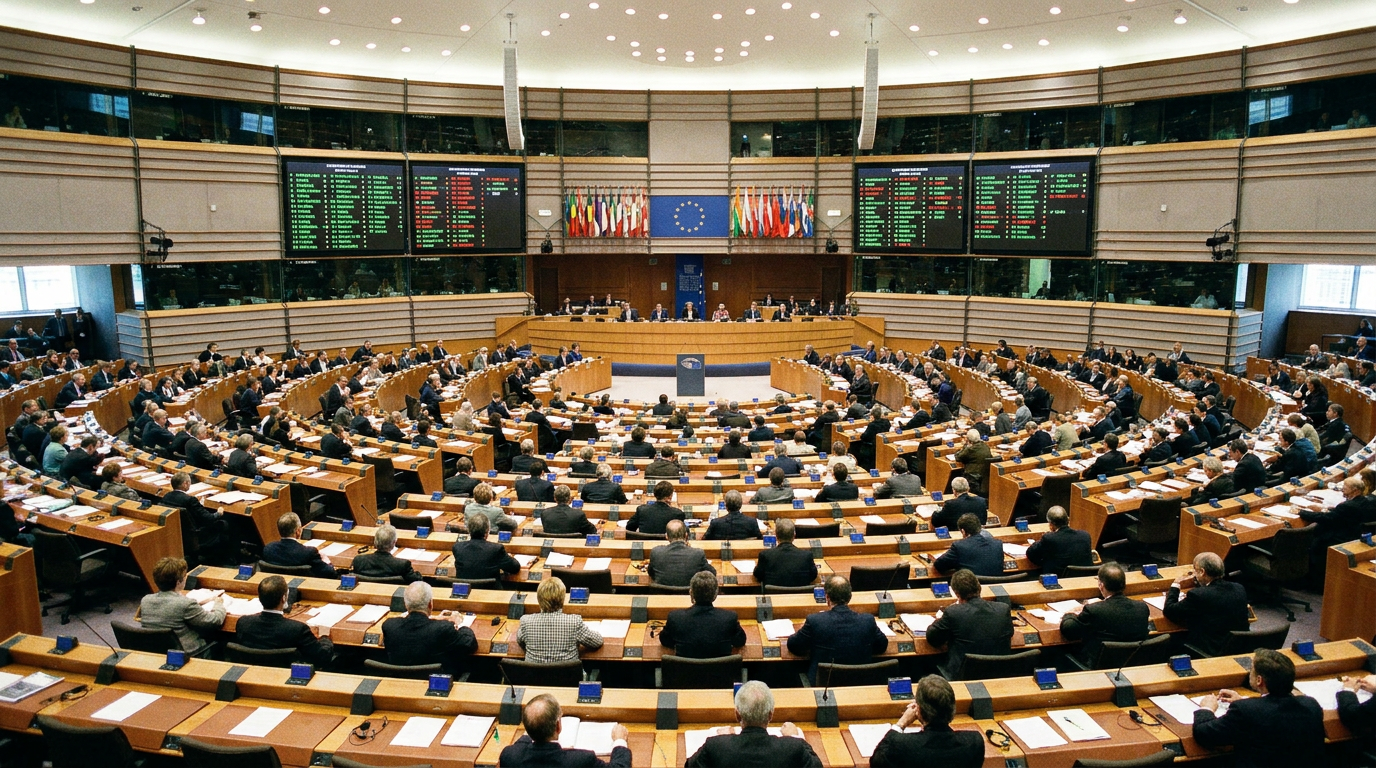
EU Parliament Approves Migration Law Allowing Offshore Detention Centers
6 sources
Surveillance Law
FISA Section 702 Expires After Congress Deadlocks Over Intelligence Appointments and Election Bills
8 sources
Election Integrity
Evidence Pack: The Real Impact of AI Deepfakes on Recent Global Elections
6 sources

Second Amendment
Supreme Court Unanimously Narrows Federal Gun Ban for Drug Users
8 sources
Every angle. Every day.
Get news politics stories with full source coverage and perspective breakdowns delivered to your inbox.