
U.S. and Iran Sign Peace Framework to End 110-Day War, Reopen Strait of Hormuz
President Trump and Iranian President Pezeshkian have signed a 14-point memorandum of understanding that lifts the U.S. naval blockade and pauses hostilities, though the deal faces fierce bipartisan backlash in Washington.
By Factlen Editorial Team
- Bipartisan U.S. Skeptics
- Argues the U.S. surrendered its military and economic leverage for temporary concessions, rewarding Iran's aggression.
- The U.S. Administration & European Allies
- Argues the deal was necessary to avert a global economic depression and that the U.S. retains the leverage to snap back sanctions if 60-day talks fail.
- The Iranian Government
- Views the outcome as a strategic victory, having broken the U.S. naval blockade and achieved sanctions relief through diplomacy.
- Geopolitical Analysts
- Notes that the deal essentially restores the pre-war status quo but leaves Iran in a stronger regional position.
What's not represented
- · Lebanese civilians caught in the crossfire
- · Global shipping companies navigating the mined strait
- · Iranian citizens facing domestic economic hardship
Why this matters
The 110-day conflict severely disrupted global energy markets and spiked inflation. While this preliminary deal immediately lowers oil prices and resumes shipping, its fragile 60-day window leaves the threat of a wider, nuclear-armed Middle East conflict unresolved.
Key points
- The U.S. and Iran signed a 14-point memorandum of understanding to end their 110-day war.
- The deal immediately lifts the U.S. naval blockade and reopens the Strait of Hormuz.
- A 60-day window was established to negotiate a final treaty regarding Iran's nuclear program.
- Bipartisan lawmakers heavily criticized the deal as a capitulation that rewards Iranian aggression.
- Israel indicated it will keep forces in southern Lebanon despite the deal's mandate to end operations there.
The United States and Iran have signed a 14-point memorandum of understanding to end their 110-day war, halting military operations across the Middle East and immediately reopening the Strait of Hormuz. The preliminary agreement, mediated by Pakistan and dubbed the "Islamabad MoU," lifts the U.S. naval blockade on Iranian ports and grants Tehran immediate waivers to resume crude oil exports.[5][6]
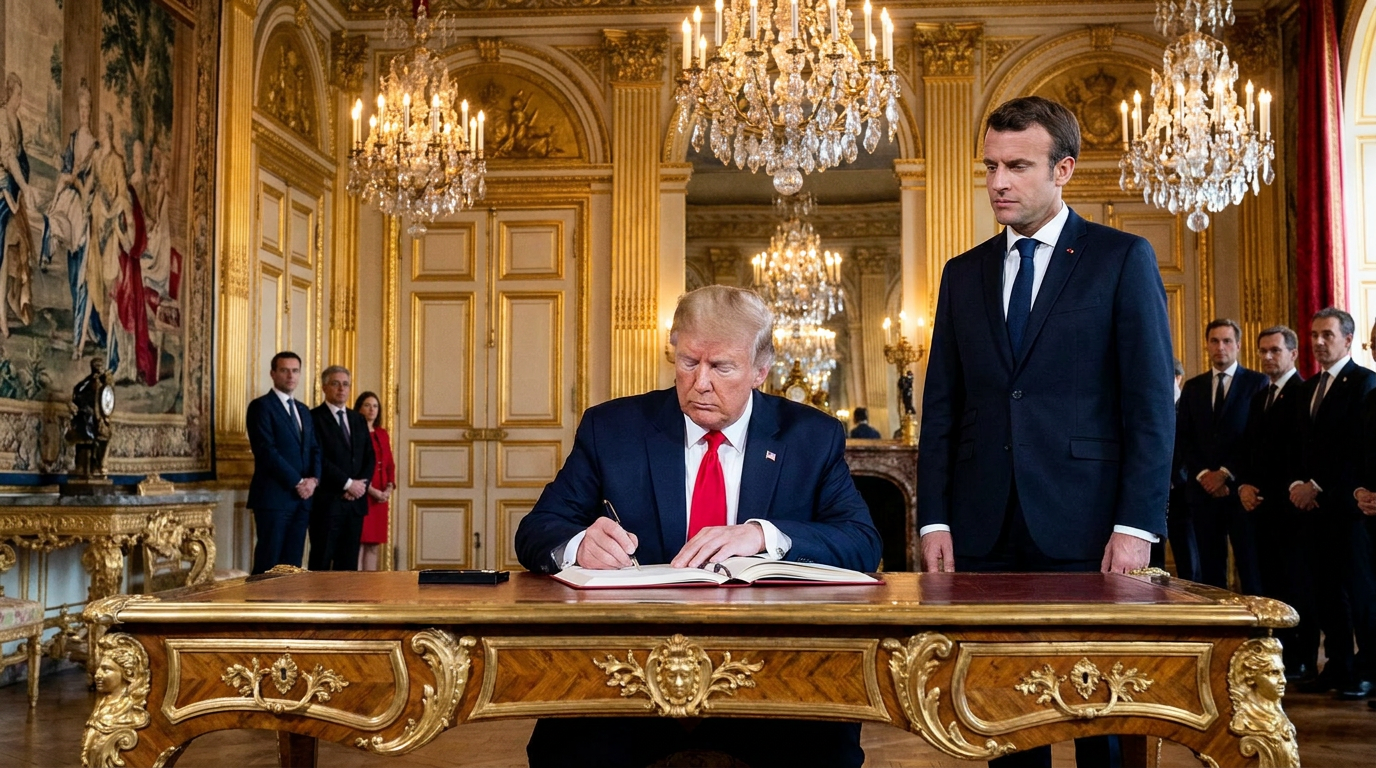
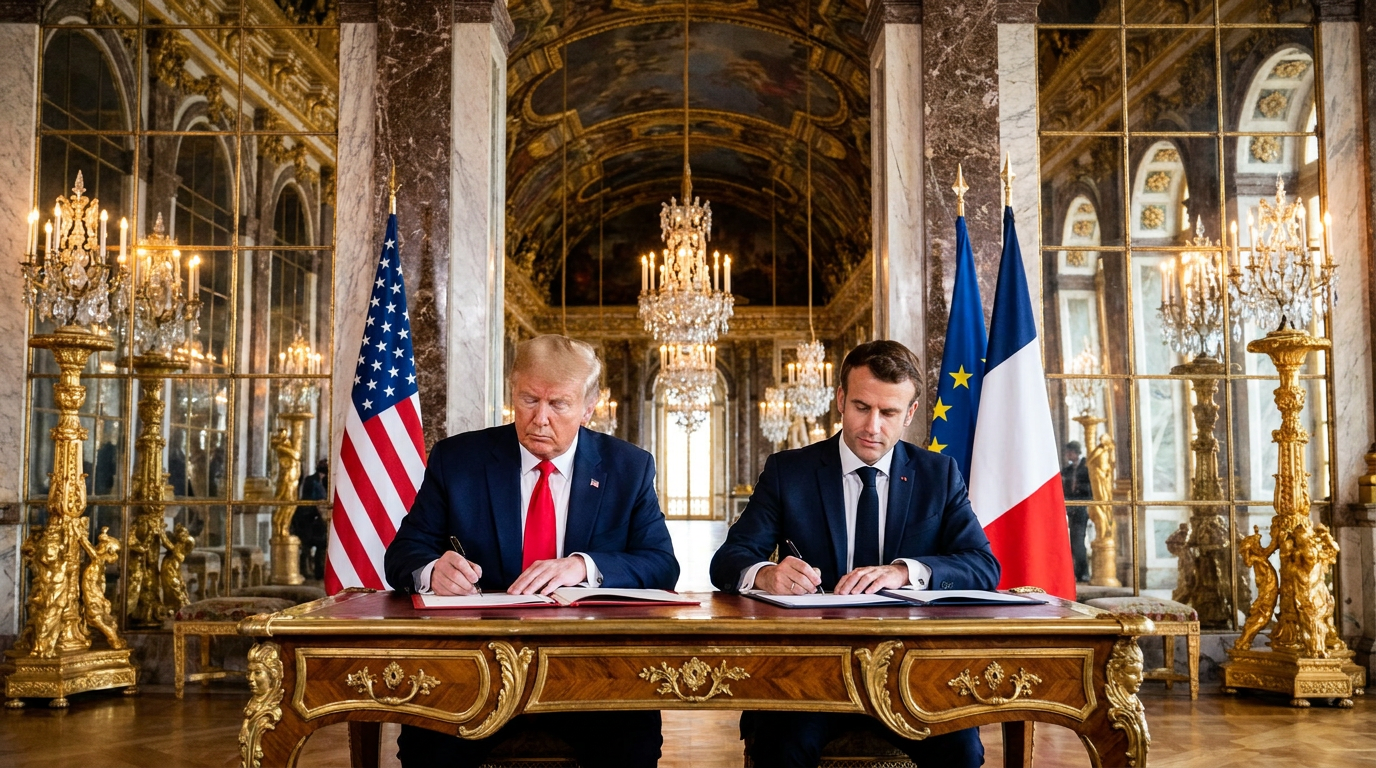
President Donald Trump signed the document on Wednesday evening during a dinner with French President Emmanuel Macron at the Palace of Versailles, following the G7 summit. Iranian President Masoud Pezeshkian signed the agreement concurrently in Tehran. Trump heralded the deal as a "major win" that averted a "worldwide depression," pointing to tumbling oil prices as immediate proof of success.[2][4][5]
The framework establishes a fragile 60-day window for the two nations to negotiate a permanent treaty. During this period, Iran has agreed to allow toll-free commercial shipping through the Strait of Hormuz—a critical chokepoint for 20 percent of the world's oil—and to begin diluting its stockpile of highly enriched uranium under international supervision.[6][7]

In exchange, the U.S. will progressively unfreeze billions of dollars in Iranian assets and waive energy sanctions. The agreement also outlines a potential $300 billion reconstruction fund for Iran, financed by Gulf regional partners, contingent on Tehran's compliance.[4][7]
Despite the economic relief celebrated by European leaders, the deal has ignited a firestorm of bipartisan outrage in Washington. Critics argue the administration traded its maximum leverage for temporary concessions, effectively returning to the pre-war status quo but with an emboldened Iran.[1][4]
Republican Senator Ted Cruz, a staunch supporter of the initial military campaign, warned that the president was receiving "very poor advice," cautioning against handing billions in sanctions relief to "theocratic lunatics." Senator Bill Cassidy echoed the sentiment, arguing that Tehran learned that threatening the global economy via the Strait of Hormuz yields massive diplomatic rewards.[1][4]

Condemnation was equally fierce from Democrats. Representative Adam Schiff called the agreement "hard to imagine a more thorough capitulation," while Susan Rice, a former national security adviser, labeled it the "biggest national security blunder in decades." They point out that Iran secured the ability to export oil and access frozen funds while only offering a vague reiteration that it will not develop a nuclear weapon.[1][4]
In Tehran, the mood is triumphant. Iranian Parliament Speaker Mohammad Bagher Ghalibaf described the agreement as a "record of US failure," boasting on state television that Iran achieved through negotiation what it could never have won militarily. Analysts note that the regime survived a direct conflict with the U.S. and Israel, broke a crippling naval blockade, and emerged with its infrastructure largely intact.[3][4][7]
Analysts note that the regime survived a direct conflict with the U.S.
A major flashpoint in the agreement is its mandate to end military operations "on all fronts, including in Lebanon." This provision effectively demands a halt to Israel's ongoing campaign against Hezbollah, granting the Iranian proxy a critical reprieve.[5][7]

Israel, which was not a party to the negotiations, has signaled deep unease. The Israel Defense Forces stated Thursday that their troops would remain in southern Lebanon to secure their northern border, setting up an immediate test of the MoU's durability. Iranian officials have already warned that an ongoing Israeli presence in Lebanon would constitute a violation of the deal.[5]
The symbolism of the signing location has not been lost on historians or critics. Trump inked the deal at the Palace of Versailles, the site of the 1919 treaty that ended World War I but famously sowed the seeds for future conflict. European leaders, however, sidelined historical parallels in favor of immediate economic relief, with Macron praising the end of a "situation of great instability."[4]
On the water, the effects are already visible. At least 10 commercial vessels transited the Strait of Hormuz on Thursday morning, though maritime experts warn that clearing the waterway of Iranian mines could take weeks.[5]

The ultimate success of the Islamabad MoU hinges entirely on the next 60 days. Either side can walk away if negotiations over Iran's ballistic missiles and permanent nuclear infrastructure collapse. Furthermore, Ghalibaf has already stated that Iran intends to charge tolls for ships passing through the Strait of Hormuz once the 60-day fee-free period expires, a demand the U.S. and Gulf states are highly unlikely to accept.[4][7]
How we got here
Feb 28, 2026
The U.S. and Israel launch strikes on Iran, sparking a 110-day regional war and a U.S. naval blockade.
March 2026
Iran mines the Strait of Hormuz, severely disrupting global oil traffic and spiking energy prices.
June 16, 2026
U.S. and Iranian officials finalize the 14-point peace framework mediated by Pakistan.
June 17, 2026
President Trump signs the memorandum of understanding at the Palace of Versailles following the G7 summit.
August 2026
The 60-day deadline for the U.S. and Iran to negotiate a final, comprehensive treaty.
Viewpoints in depth
The U.S. Administration's View
Argues the deal was necessary to stop a global economic meltdown and retains the threat of snapback sanctions.
The Trump administration and its European allies maintain that the naval blockade and military strikes successfully brought Iran to the table. By securing the reopening of the Strait of Hormuz and a commitment to down-blend enriched uranium, they argue the deal averts a worldwide depression. Officials emphasize that the U.S. retains the leverage to snap back sanctions if the 60-day talks fail to produce a permanent treaty.
Bipartisan Skeptics' View
Argues the U.S. surrendered its leverage by unfreezing funds and lifting the blockade before securing a permanent nuclear end.
Hawks and doves alike in Washington argue the U.S. rewarded Iran's strategy of holding the global economy hostage. By lifting the blockade and waiving oil sanctions before securing a permanent dismantling of Iran's nuclear program or its proxy networks, critics argue the administration traded maximum leverage for temporary, 60-day concessions. Israel shares this concern, fearing the deal protects Hezbollah from further military pressure.
The Iranian Government's View
Views the outcome as a strategic victory that broke the U.S. naval blockade through diplomatic resilience.
Tehran views the agreement as a historic triumph. Having survived direct U.S. and Israeli strikes, the regime successfully used the disruption of the Strait of Hormuz to force the U.S. to lift its naval blockade and grant immediate sanctions relief. Iranian leadership maintains they achieved their goals through diplomacy after proving their military and economic resilience, emerging from the 110-day conflict empowered.
What we don't know
- Whether Iran and the U.S. can successfully negotiate a permanent nuclear treaty within the 60-day window.
- How Israel's refusal to withdraw from southern Lebanon will impact the fragility of the peace framework.
- Whether Iran will actually attempt to charge tolls for ships passing through the Strait of Hormuz after 60 days.
Key terms
- Islamabad MoU
- The 14-point preliminary peace framework mediated by Pakistan, signed by the U.S. and Iran to end the 2026 conflict.
- Strait of Hormuz
- A critical maritime chokepoint between the Persian Gulf and the Gulf of Oman, through which roughly 20% of the world's oil supply passes.
- Naval Blockade
- The U.S. military operation that prevented commercial vessels from entering or leaving Iranian ports during the 110-day war.
- Sanctions Waiver
- An executive exception allowing foreign entities to purchase Iranian oil without facing penalties from the U.S. Treasury.
Frequently asked
What does the U.S.-Iran memorandum of understanding actually do?
It immediately halts military operations, lifts the U.S. naval blockade, reopens the Strait of Hormuz, and sets a 60-day window for further negotiations on nuclear and sanctions issues.
Will Iran get a nuclear weapon under this deal?
The preliminary deal requires Iran to dilute its highly enriched uranium, but critics argue it leaves the infrastructure intact. A final resolution is deferred to the 60-day negotiation period.
How does this affect Israel and Lebanon?
The deal calls for an immediate end to military operations in Lebanon, effectively offering Hezbollah a reprieve. Israel, not a party to the deal, has indicated its forces will remain in southern Lebanon.
Why are U.S. politicians criticizing the deal?
Bipartisan critics argue the U.S. gave up its military and economic leverage—unfreezing funds and lifting sanctions—without securing the permanent dismantling of Iran's nuclear or proxy capabilities.
Sources
Source coverage
7 outlets
4 viewpoints surfaced







[1]Fox NewsBipartisan U.S. Skeptics
Cruz sounds alarm on Trump Iran deal, warns against handing billions to 'theocratic lunatics'
Read on Fox News →[2]The New York TimesBipartisan U.S. Skeptics
Iran and the U.S. Have an Understanding. Will It Lead to a Deal?
Read on The New York Times →[3]BBC NewsThe Iranian Government
Bowen: US-Iran deal raises inescapable question of what the war was for
Read on BBC News →[4]The GuardianThe Iranian Government
US releases text of Iran peace plan as Trump says deal averts 'worldwide depression'
Read on The Guardian →[5]CBS NewsThe U.S. Administration & European Allies
What to know about the U.S.-Iran peace deal and the Strait of Hormuz
Read on CBS News →[6]CBC NewsThe U.S. Administration & European Allies
U.S., Iran sign agreement to end hostilities, reopen Strait of Hormuz
Read on CBC News →[7]Council on Foreign RelationsGeopolitical Analysts
Where the U.S.-Iran Deal Lands on Core Issues
Read on Council on Foreign Relations →
Every angle. Every day.
Get news politics stories with full source coverage and perspective breakdowns delivered to your inbox.