
World Cup 2026 Rosters: Breakout Teenagers and Late Call-Ups Define the Opening Week
As the 2026 World Cup gets underway, the focus has shifted from finalized 26-man rosters to the breakout teenagers seizing the global stage and the late injury replacements stepping into the spotlight.
By Factlen Editorial Team
- National Team Management
- Focuses on the necessity of deep 26-man squads to manage tactical continuity and late injuries.
- Global Scouts & Analysts
- Views the World Cup as the ultimate proving ground for breakout teenagers and future transfer targets.
- Tournament Organizers & Broadcasters
- Highlights the sheer scale of the 48-team event and the unprecedented diversity of the 1,248 registered players.
What's not represented
- · Players cut from the preliminary 55-man squads
- · Club managers dealing with the physical toll on their returning players
Why this matters
The expanded 26-man rosters and late injury call-ups are directly shaping the on-field product of the 2026 World Cup, dictating which nations have the depth to survive the grueling tournament and introducing fans to the next generation of global superstars.
Key points
- A record 1,248 players are participating in the expanded 48-team 2026 World Cup.
- The 26-man rosters have allowed managers to select breakout teenagers like Morocco's 18-year-old Ayoub Bouaddi.
- FIFA rules permit injury replacements up to 24 hours before a team's opening match.
- England called up Trevoh Chalobah to replace the injured Tino Livramento just days before their opener.
- Argentina replaced Leonardo Balerdi with Marcos Senesi to maintain tactical continuity.
The 2026 FIFA World Cup is officially underway across the United States, Canada, and Mexico, bringing an unprecedented scale to the sport's biggest stage. With the tournament expanding to 48 teams, a record-breaking 1,248 players were registered across the final squads. As the opening week's fixtures play out, the theoretical debates over 26-man rosters have quickly given way to the reality of on-pitch performance. The early narrative has been defined by two distinct groups: the fearless teenagers seizing their breakout moments, and the late injury replacements thrust into the spotlight at the eleventh hour.[1][6]
The shift to 26-man squads—a permanent fixture after being introduced as a temporary measure in 2022—has fundamentally altered how managers construct their teams. The extra three slots have provided coaches with the tactical luxury to gamble on youth without sacrificing essential depth. Rather than relying exclusively on battle-tested veterans, national teams have brought a wave of teenage prodigies to North America, many of whom are already dictating the tempo of high-stakes group stage matches.[3][6]
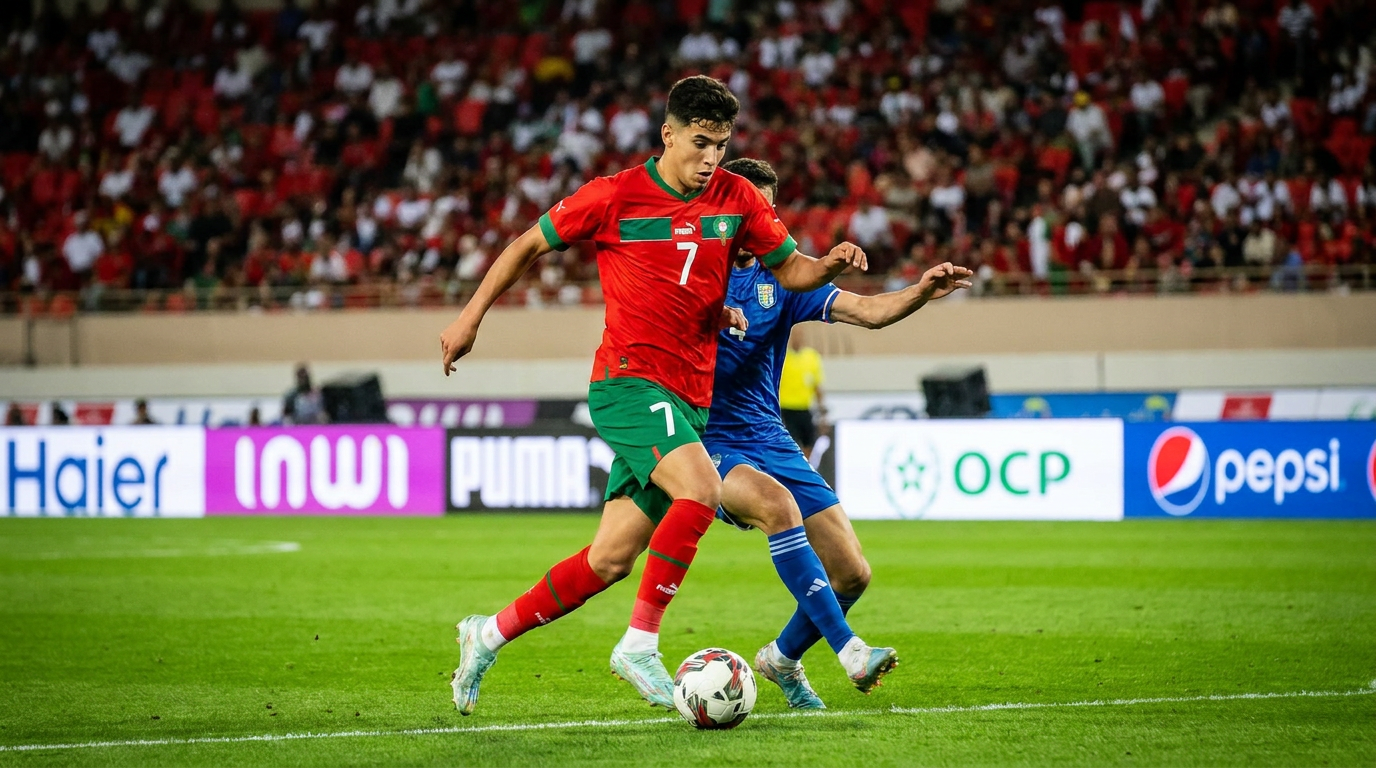
The most striking example of this youth movement has been Morocco's 18-year-old midfielder Ayoub Bouaddi. Thrust into a demanding opening-round clash against tournament favorites Brazil, Bouaddi delivered a masterful, composed performance that immediately elevated his international profile. Operating in the heart of the pitch, the teenager dictated play and broke up Brazilian attacks with a maturity that belied his age, instantly becoming one of the most talked-about players of the opening week.[2]

Bouaddi's standout display drew immediate and lofty comparisons from his peers, with French veteran Olivier Giroud likening his spatial awareness and passing range to legendary midfielders Sergio Busquets and Patrick Vieira. The performance has reportedly accelerated interest from Europe's elite clubs, with Paris Saint-Germain and Real Madrid closely monitoring his availability. When asked about the transfer speculation, Bouaddi maintained his focus, stating his only priority was securing the best possible result for Morocco in the tournament.[2]
Bouaddi is far from the only young player validating his manager's roster selection. Turkiye's Kenan Yildiz, carrying the immense expectations of a nation returning to the World Cup after a 24-year absence, has brought a dynamic attacking edge to his squad. Meanwhile, Mexico's Gilberto Mora—who made his senior international debut at just 16 years old—has demonstrated that the expanded format rewards bold, forward-looking selections that excite the fanbase and terrify opposing defenses.[3][7]
Established young stars are also using the North American stage to cement their status as the future of the sport. Brazil's dynamic forward Endrick and France's midfield engine Warren Zaïre-Emery arrived at the tournament with immense hype and heavy expectations. Both players were named to their respective final rosters not as developmental projects, but as core components of their nations' strategies to lift the trophy in New Jersey on July 19.[1][6]
Established young stars are also using the North American stage to cement their status as the future of the sport.
However, the final days before kickoff also highlighted the brutal, unpredictable reality of tournament football. FIFA regulations allow participating nations to replace an injured player up to 24 hours before their opening fixture, provided the injury is officially verified by medical staff. It is a rule that several major contenders were forced to utilize in the frantic days leading up to the opening ceremonies, shattering dreams for some while creating unexpected opportunities for others.[1][6]
England manager Thomas Tuchel had to make a painful last-minute adjustment at the team's preparation camp. Newcastle United defender Tino Livramento sustained a severe calf injury during a Sunday training session. A subsequent scan and medical assessment on Monday confirmed the worst: Livramento would play no part in the tournament, forcing Tuchel to scramble for a replacement just days before the Three Lions' opening group fixture against Croatia in Dallas.[4]

In Livramento's place, Tuchel called up Chelsea center-back Trevoh Chalobah. Arrangements were swiftly made to fly the 26-year-old defender to the team's basecamp in Kansas City. While Chalobah was not expected to feature immediately against Croatia, his addition provides crucial defensive depth and versatility as England navigates a grueling group stage schedule that includes upcoming matches against Ghana and Panama.[4]
Defending champions Argentina faced a similarly disruptive hurdle on the eve of their title defense. Manager Lionel Scaloni was forced to alter his meticulously planned final roster after defender Leonardo Balerdi suffered an injury. This opened a narrow, high-pressure window for the Argentine coaching staff to evaluate their preliminary 55-man list and select a replacement who could seamlessly integrate into a squad burdened with massive expectations.[5]
Scaloni ultimately opted for Marcos Senesi, valuing the defender's prior experience with the national team's specific tactical system. The ability to arrive in camp and immediately understand the defensive shape without disrupting the squad's preparation was cited as the primary reason for his selection over other preliminary candidates like Lucas Martinez Quarta and German Pezzella.[5]

The heartbreak of late withdrawals extended to other European heavyweights as well. The Netherlands lost Arsenal defender Jurriën Timber to a persistent groin issue just hours before the tournament began, prompting Ronald Koeman to call up Lutsharel Geertruida. Germany also had to adjust their plans earlier in the year when goalkeeper Marc-André ter Stegen was ruled out following a severe hamstring tear, leaving Oliver Baumann to claim the starting role.[6]
These late adjustments underscore the absolute necessity of the 26-man squad depth. With a demanding travel schedule across three massive countries and the physical toll of summer football, teams will inevitably rely on the furthest reaches of their rosters to survive the expanded knockout rounds. The teams that adapt best to these sudden changes are often the ones still standing in the final weeks.[1][6]
As the group stage continues to unfold, the roster narrative will inevitably shift from who made the plane to who is making a difference. The legendary veterans playing in their final World Cup will share the global spotlight with the late call-ups eager to prove their worth, and the fearless teenagers who are already writing the first thrilling chapters of their international legacies.[3][6]
How we got here
May 2026
National teams submit their preliminary release lists of up to 55 players to FIFA.
June 2, 2026
The final 26-man squad lists are officially confirmed and published by FIFA.
June 11, 2026
The 2026 FIFA World Cup officially kicks off across North America.
June 16, 2026
England confirms Trevoh Chalobah will replace the injured Tino Livramento just days before their opener.
Viewpoints in depth
National Team Managers
Focuses on the necessity of the 26-man squad and the stress of late injury replacements.
For international managers, the expansion to 26-man rosters is no longer a luxury, but a baseline necessity. The physical demands of a summer tournament spread across three massive countries require deep benches. When injuries strike in the final hours of preparation—as seen with England's Tino Livramento and Argentina's Leonardo Balerdi—managers prioritize tactical familiarity over raw talent, opting for late replacements who can immediately understand the team's defensive shape without requiring extensive training ground integration.
Club Scouts & Directors
Focuses on the World Cup as a premier shopping window for breakout teenagers.
From a club perspective, the World Cup group stage serves as the ultimate high-pressure scouting environment. When an 18-year-old like Morocco's Ayoub Bouaddi dictates the midfield against a powerhouse like Brazil, his valuation skyrockets overnight. Scouts and sporting directors closely monitor how these teenagers handle the immense psychological weight of the tournament, using their performances to justify massive summer transfer bids from Europe's elite clubs.
Supporters & Analysts
Focuses on the excitement of seeing new tactical setups and unknown players making a name for themselves.
For the viewing public, the joy of the World Cup lies in discovery. While established superstars draw the initial viewership, it is the emergence of unexpected heroes that defines the tournament's legacy. Fans and tactical analysts celebrate the managers who are bold enough to start 16- and 18-year-olds in high-stakes matches, viewing the influx of youth as a refreshing departure from the conservative, veteran-heavy lineups that often dominate international football.
What we don't know
- Whether the breakout teenagers will maintain their form through the high-pressure knockout rounds.
- How the late injury replacements will perform if called upon to start crucial matches.
Key terms
- 26-man squad
- The expanded roster size permitted by FIFA, increased from the traditional 23 players to help teams manage fatigue and injuries.
- Injury replacement window
- The period up to 24 hours before a team's first match during which they can legally swap an injured player for a preliminary squad member.
- Breakout star
- A relatively unknown or young player who uses a major tournament to establish themselves on the global stage.
Frequently asked
How many players are on a World Cup 2026 roster?
Each of the 48 participating nations is allowed a maximum of 26 players on their final roster, including three goalkeepers.
Can teams replace injured players after the rosters are finalized?
Yes, FIFA regulations allow teams to replace a seriously injured player up to 24 hours before their opening match, provided the injury is medically verified.
Who replaced Tino Livramento for England?
Chelsea defender Trevoh Chalobah was called up to the England squad after Livramento suffered a severe calf injury in training.
Sources
Source coverage
7 outlets
3 viewpoints surfaced







[1]FIFATournament Organizers & Broadcasters
FIFA World Cup 2026™ squads confirmed: 1,248 dreams and a truly global cast of players
Read on FIFA →[2]ASGlobal Scouts & Analysts
The 'complete' World Cup breakout star told he'll play for Real Madrid
Read on AS →[3]Al JazeeraGlobal Scouts & Analysts
Who are the best young players to watch at FIFA World Cup 2026?
Read on Al Jazeera →[4]England FootballNational Team Management
Trevoh Chalobah replaces Tino Livramento in England squad
Read on England Football →[5]World Soccer TalkNational Team Management
Lionel Scaloni forced to make change to Argentina's World Cup list
Read on World Soccer Talk →[6]Sky SportsTournament Organizers & Broadcasters
World Cup 2026 squad lists: England, Brazil, USA, Spain, France, Germany and more
Read on Sky Sports →[7]GoalGlobal Scouts & Analysts
Yan Diomande, Gilberto Mora and 10 potential breakout stars of the 2026 World Cup
Read on Goal →

More in sports
See all 10 stories →Injury
Reds Star Elly De La Cruz to Begin Rehab Assignment Following Hamstring Injury
6 sources
Standings
From 121 Losses to Contenders: White Sox Turnaround Highlights June MLB Standings
6 sources
US Pro Volleyball
How Two Rival Leagues Finally Brought Professional Women's Volleyball to the US
6 sources
Injury
Leeds United Midfielder Ilia Gruev Nears Pre-Season Return Following Knee Injury
6 sources
Every angle. Every day.
Get sports stories with full source coverage and perspective breakdowns delivered to your inbox.