
U.S. and Iran Sign Peace Framework, Triggering Sanctions Relief and 60-Day Negotiation Window
The Trump administration and Tehran have signed a memorandum of understanding to end hostilities, offering immediate oil sanctions waivers in exchange for regional de-escalation. The framework has sparked fierce debate over its estimated $300 billion value and Iran's plans to toll the Strait of Hormuz.
By Factlen Editorial Team
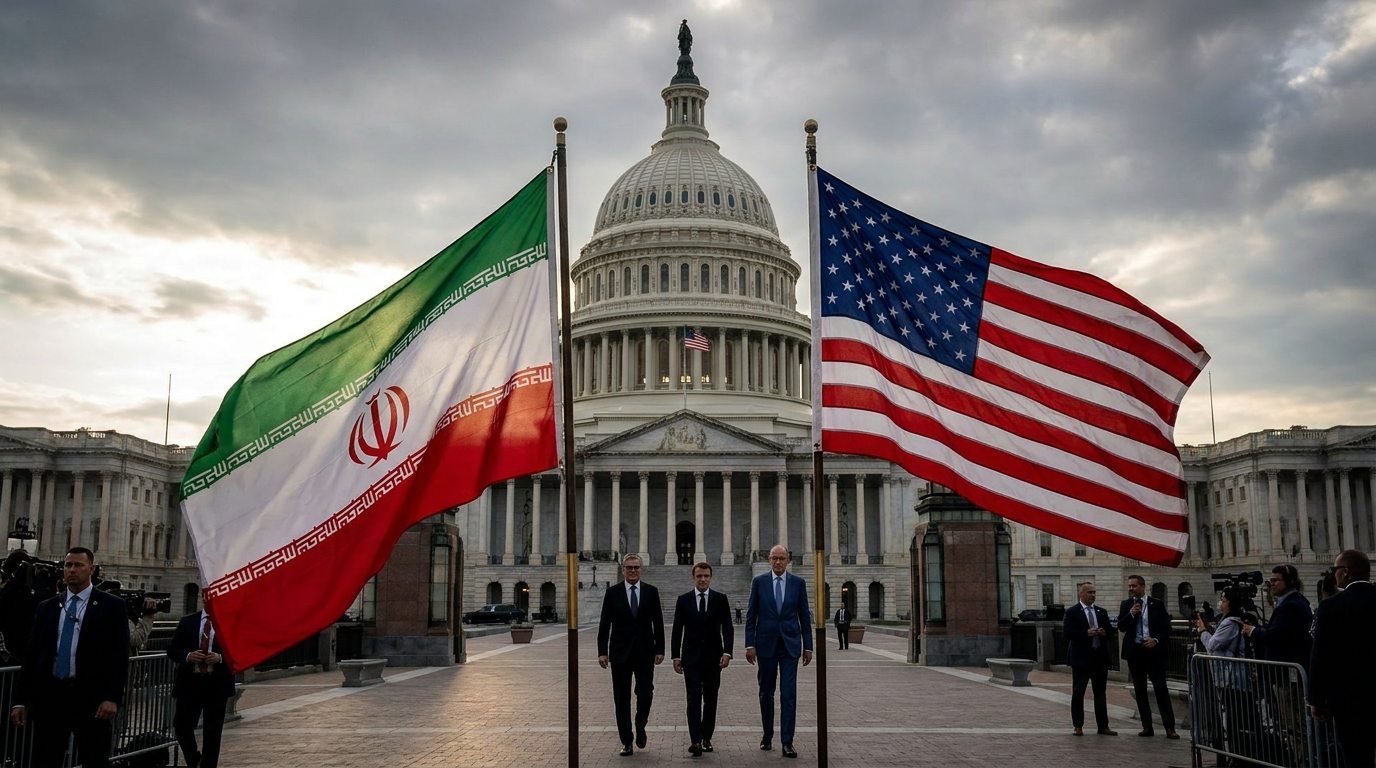
- Security Hawks
- Argue the deal surrenders vital U.S. leverage, enriching a hostile state without securing permanent concessions on its nuclear program.
- Regional Skeptics
- Doubt the bilateral framework will rein in proxy militias or provide true on-the-ground security for neighboring countries and global shipping.
- Diplomatic Pragmatists
- Argue that ending active hostilities is a definitive victory and that military solutions in the region have reached their limits.
What's not represented
- · International Shipping Conglomerates
- · European Union Diplomats
- · Iranian Civilian Opposition Groups
Why this matters
This framework represents the most significant shift in Middle East geopolitics in decades, potentially ending a major regional conflict while unfreezing billions in Iranian assets. Its success or failure will directly impact global oil prices, shipping security, and the broader balance of power in the Middle East.
Key points
- The U.S. and Iran signed a memorandum of understanding to end hostilities, triggering a 60-day negotiation window.
- The framework provides immediate oil sanctions waivers, which critics estimate could be worth $300 billion over a decade.
- The agreement deliberately postpones key questions regarding Iran's nuclear enrichment program.
- Iran announced plans to implement maritime transit fees in the Strait of Hormuz after the 60-day period.
- Vice President JD Vance defended the deal, warning regional allies that military solutions have reached their limits.
The United States and Iran have officially signed a memorandum of understanding (MoU) aimed at ending direct hostilities and reshaping the security architecture of the Middle East. Brokered by the Trump administration, the framework establishes a fragile ceasefire and initiates a highly anticipated 60-day negotiation window to finalize a comprehensive peace treaty.[1][2]
The core mechanism of the agreement trades immediate economic relief for regional de-escalation. Under the terms of the MoU, Washington has agreed to issue immediate waivers on Iranian oil exports, effectively unfreezing massive streams of revenue that had been blocked under previous "maximum pressure" campaigns.[1]
The scale of this economic relief is staggering. According to preliminary estimates debated in Washington, the total value of the unthawed assets and new oil revenues could reach $300 billion over the next decade. This figure has immediately become the focal point of the framework's critics, who argue it provides Tehran with an unprecedented financial windfall without securing permanent concessions on its nuclear program.[3][8]

Indeed, the framework deliberately postpones the most intractable issue between the two nations: uranium enrichment. By deferring key nuclear questions to a later date, the administration is gambling that immediate economic integration will create enough goodwill to prevent Tehran from pursuing weapons-grade enrichment.[1][2]
Vice President JD Vance has vigorously defended this sequenced approach, framing the cessation of active hostilities as a definitive victory for Washington regardless of the final nuclear negotiations. In a stark message to regional allies, Vance publicly cautioned Israel that "you can't kill your way out" of long-term security problems, signaling a definitive shift in U.S. policy toward diplomatic containment rather than military confrontation.[4]
However, the framework is already facing fierce blowback on Capitol Hill. Top Senate Republicans, including Armed Services Chair Roger Wicker, have excoriated the deal. Wicker warned that the $300 billion economic lifeline negotiates away hard-won U.S. leverage, arguing that the sheer volume of the relief makes the Obama administration's 2015 Joint Comprehensive Plan of Action (JCPOA) look like "a pittance" by comparison.[3][8]
However, the framework is already facing fierce blowback on Capitol Hill.
Beyond Washington, the immediate geopolitical shockwaves are being felt in the world's most critical maritime chokepoint. Triggered by the signing of the MoU, Tehran has announced controversial plans to introduce a system of maritime fees for vessels transiting the Strait of Hormuz.[5][7]
The Strait of Hormuz—a narrow waterway between the Persian Gulf and the Gulf of Oman—facilitates the passage of roughly 20 percent of the world's total oil consumption. Iran claims the new tolls, which are slated to take effect at the end of the 60-day negotiation period, are necessary to cover the administrative and environmental costs of managing the waterway.[5]

International shipping monitors and Western defense officials view the proposed toll system with deep suspicion. If implemented, it would effectively grant Tehran a mechanism to tax global energy markets, testing the limits of the new U.S.-Iran diplomatic framework before the ink is even dry.[5][7]
On the ground in the Middle East, the diplomatic breakthrough has been met with profound skepticism. In southern Lebanon, a region devastated by the cascading proxy conflicts that preceded this agreement, residents and local leaders have expressed severe doubts that a bilateral pact between Washington and Tehran will translate into lasting calm.[6]
For decades, Iran has projected power through an "Axis of Resistance"—a network of allied militias including Hezbollah in Lebanon, Hamas in Gaza, and the Houthis in Yemen. The current MoU focuses heavily on state-to-state de-escalation, leaving the operational status and funding of these proxy networks dangerously ambiguous.[6]

The next 60 days will serve as a high-stakes stress test for the Trump administration's diplomatic gamble. Negotiators must now translate the broad strokes of the MoU into binding, verifiable commitments regarding maritime security, proxy funding, and eventually, nuclear oversight.[1][2]
If the framework holds, it could represent the most significant realignment of Middle Eastern geopolitics since the Camp David Accords, pivoting the region away from the brink of a wider war. If it collapses, the resulting diplomatic vacuum—combined with a newly enriched Tehran—could trigger an even more volatile cycle of escalation.[3][4][8]
How we got here
2015
The Obama administration and international partners sign the JCPOA nuclear deal with Iran.
2018
The U.S. withdraws from the JCPOA and institutes a "maximum pressure" sanctions campaign.
2023–2025
Regional proxy conflicts and direct military exchanges escalate across the Middle East.
June 2026
The U.S. and Iran sign a Memorandum of Understanding to end hostilities and begin a 60-day negotiation window.
Viewpoints in depth
The U.S. Administration's View
The administration views the cessation of active hostilities as a definitive victory that proves the limits of military force.
Proponents of the framework, including Vice President JD Vance, argue that decades of military intervention and maximum pressure campaigns have failed to stabilize the Middle East. By offering immediate economic relief, the administration believes it can buy the necessary goodwill to negotiate a lasting peace. They view the 60-day window as a pragmatic first step, prioritizing the end of active warfare over immediate, likely unattainable, nuclear concessions.
Congressional Critics' View
Hawks argue the deal surrenders vital leverage and enriches a hostile state without securing nuclear guarantees.
Senate Republicans and defense hawks view the estimated $300 billion in sanctions relief as a catastrophic unforced error. Lawmakers like Senator Roger Wicker argue that unfreezing these assets before securing binding commitments on uranium enrichment effectively funds Tehran's regional ambitions. They fear the administration has traded permanent financial leverage for a temporary, non-binding ceasefire.
Tehran's View
Iran frames the agreement as an economic victory and an assertion of its regional sovereignty.
For Tehran, the immediate lifting of oil sanctions represents a massive economic lifeline after years of crippling financial isolation. Furthermore, Iran is using the diplomatic opening to assert its sovereignty over regional waterways, framing the proposed Strait of Hormuz tolls as a legitimate administrative right rather than a provocation. The government views the MoU as validation that its strategy of regional endurance has outlasted U.S. economic pressure.
What we don't know
- Whether the U.S. Congress will attempt to block the sanctions waivers or the final treaty.
- How international shipping companies and foreign navies will respond to Iran's proposed maritime fees in the Strait of Hormuz.
- What specific concessions, if any, Iran has made regarding its funding of regional proxy militias.
Key terms
- Memorandum of Understanding (MoU)
- A formal agreement between two or more parties that establishes a framework for future negotiations, though it is often not legally binding on its own.
- Sanctions Waivers
- Executive exemptions that allow certain countries or companies to purchase Iranian oil without facing U.S. financial penalties.
- Strait of Hormuz
- A critical maritime chokepoint between the Persian Gulf and the Gulf of Oman where roughly a fifth of global oil passes.
- Uranium Enrichment
- The process of increasing the concentration of the U-235 isotope, which can be used for civilian nuclear power or, at higher levels, nuclear weapons.
Frequently asked
Does this deal stop Iran from getting a nuclear weapon?
Not immediately. The current framework deliberately postpones key questions regarding uranium enrichment to focus on immediate regional de-escalation.
How much money is Iran getting from this agreement?
Critics and preliminary estimates suggest the total value of the immediate sanctions waivers and unfrozen assets could reach $300 billion over the next decade.
Will ships have to pay to use the Strait of Hormuz?
Iran has announced plans to implement maritime transit fees after the 60-day negotiation period, though international compliance and enforcement remain highly uncertain.
Sources
Source coverage
8 outlets
3 viewpoints surfaced






[1]Fox NewsSecurity Hawks
Trump Iran framework gambles on diplomacy despite warning Tehran will 'lie and cheat'
Read on Fox News →[2]ReutersDiplomatic Pragmatists
U.S. and Iran sign memorandum of understanding to halt regional hostilities
Read on Reuters →Top Senate Republican rips into Trump's Iran deal, says $300 billion makes Obama deal look like 'a pittance'
Read on Fox News →[4]Al JazeeraDiplomatic Pragmatists
JD Vance tells Israel 'you can't kill your way out' of security problems
Read on Al Jazeera →[5]The GuardianRegional Skeptics
Iran announces plans to bring in maritime fees for strait of Hormuz
Read on The Guardian →Southern Lebanon residents doubt US-Iran agreement will bring lasting calm
Read on Al Jazeera →[7]BloombergRegional Skeptics
Oil Markets Brace for Impact as Iran Plans Hormuz Transit Fees
Read on Bloomberg →[8]The Washington PostSecurity Hawks
Senate Republicans blast $300 billion Iran sanctions relief as diplomatic gamble
Read on The Washington Post →
Every angle. Every day.
Get news politics stories with full source coverage and perspective breakdowns delivered to your inbox.