
US and Iran Sign Preliminary Agreement to End War and Reopen Strait of Hormuz
President Donald Trump and Iranian President Masoud Pezeshkian have signed a 14-point memorandum of understanding to halt military operations and initiate a 60-day window for nuclear negotiations.
By Factlen Editorial Team
- The Trump Administration
- Argues the deal ends a costly war, reopens global shipping lanes, and secures peace without US taxpayer money.
- Israeli Leadership
- Views the deal as a dangerous concession that leaves Iran's nuclear infrastructure intact and emboldens Hezbollah.
- Republican Hawks
- Criticizes the massive financial incentives and sanctions relief, arguing it squanders US military leverage.
- Global Markets
- Focuses on the immediate economic relief, specifically the reopening of the Strait of Hormuz and falling oil prices.
What's not represented
- · Iranian domestic opposition groups
- · European Union diplomatic leadership
Why this matters
The preliminary agreement halts a major geopolitical conflict and reopens the Strait of Hormuz, immediately lowering global energy prices, but its concessions have sparked fierce backlash from Israel and US lawmakers.
Key points
- President Trump and Iranian President Pezeshkian signed a 14-point memorandum to end military hostilities.
- The agreement reopens the Strait of Hormuz and lifts the US naval blockade.
- Global oil prices dropped sharply following the announcement of the ceasefire.
- Israeli officials heavily criticized the deal for leaving Iran's nuclear program intact.
- VP JD Vance defended the agreement, telling Israel they cannot 'kill their way out' of security problems.
- Republican lawmakers expressed skepticism over a proposed $300 billion reconstruction fund for Iran.
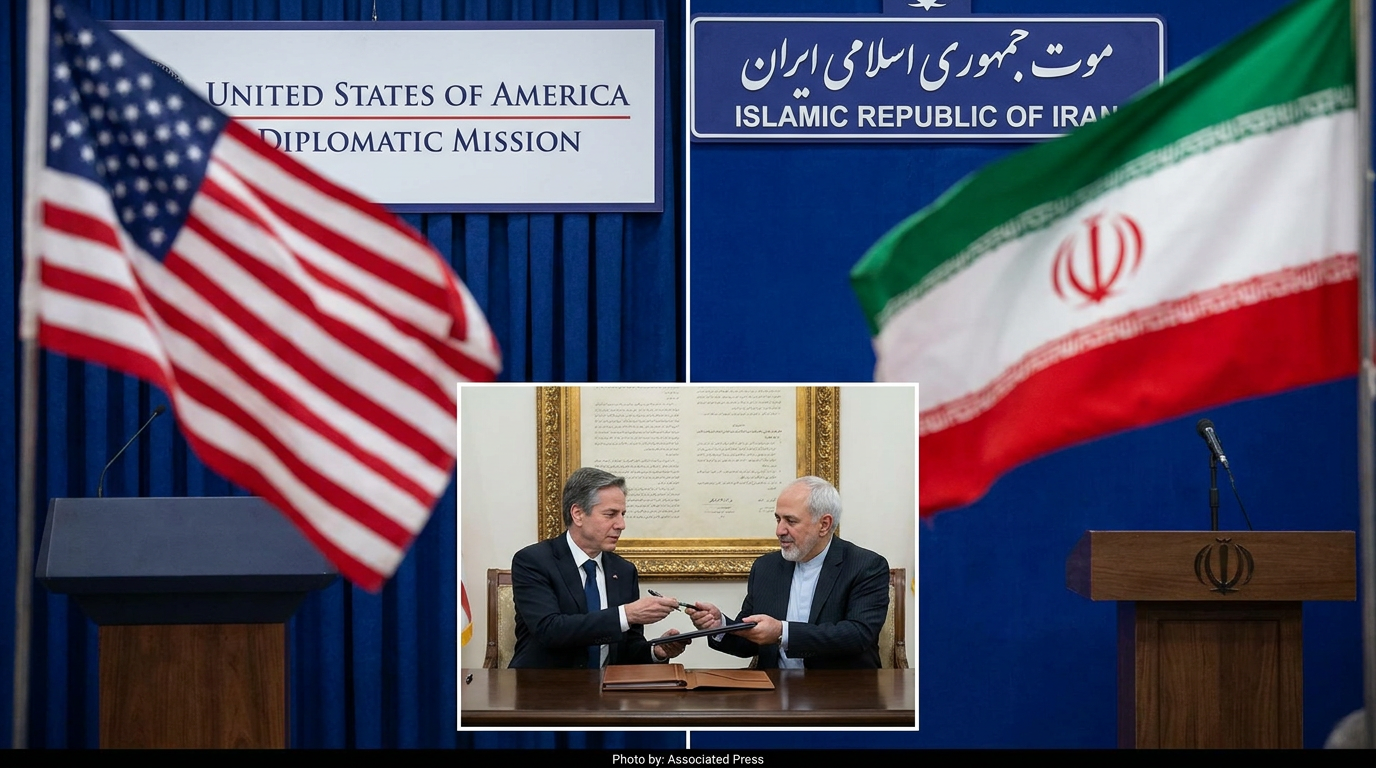
US President Donald Trump and Iranian President Masoud Pezeshkian have formally signed a 14-point memorandum of understanding aimed at ending the months-long war between the two nations. The digital signing, finalized Wednesday while Trump attended a reception at the Palace of Versailles following the G7 summit, initiates an immediate ceasefire and establishes a 60-day window to negotiate a permanent pact regarding Iran's nuclear program. The document had been digitally signed days earlier by US Vice President JD Vance and Iranian Parliament Speaker Mohammad Bagher Ghalibaf, setting the stage for the presidential endorsements.[3][4]
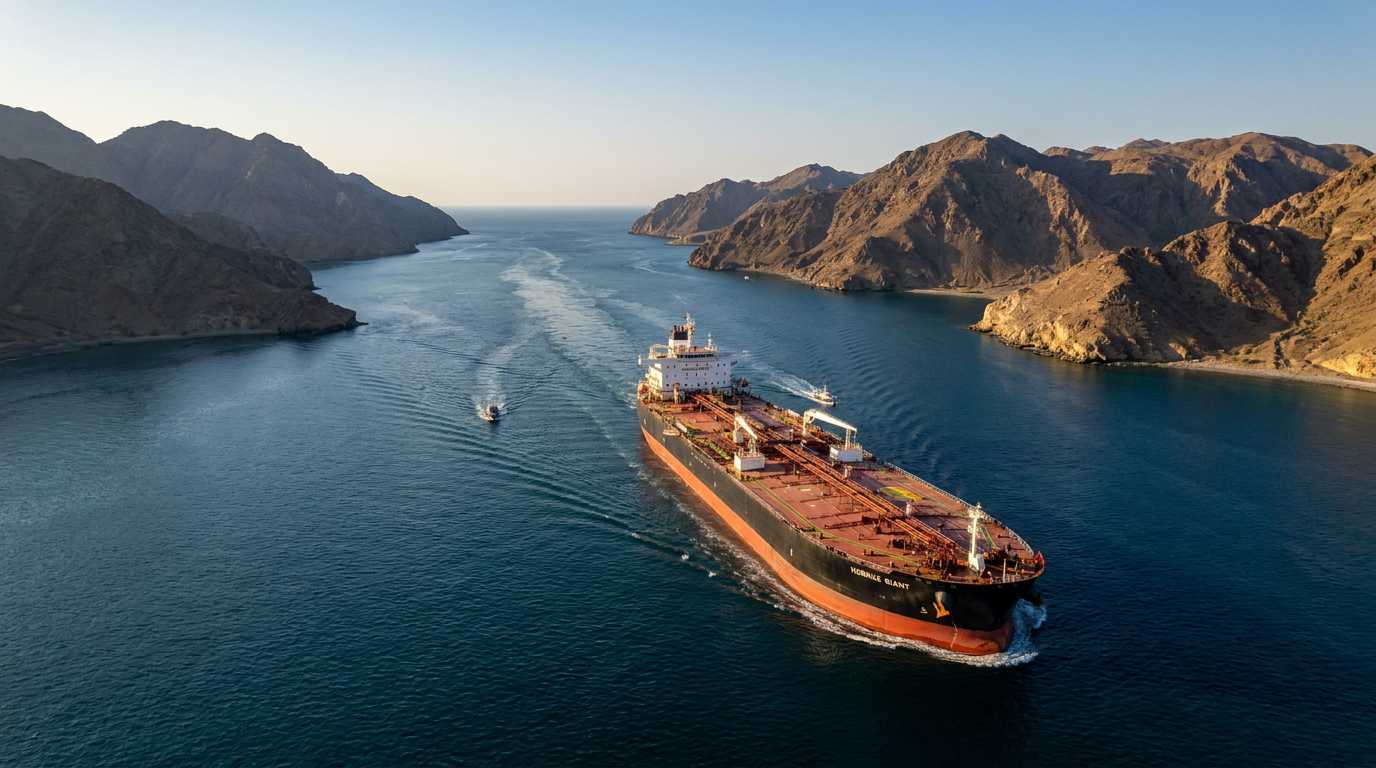
The preliminary agreement mandates the immediate and permanent cessation of military operations on all fronts, explicitly including the ongoing conflict in Lebanon. In exchange for the United States lifting its naval blockade and issuing immediate sanctions waivers for Iranian crude oil and petroleum exports, Tehran has committed to reopening the Strait of Hormuz. Under the terms of the memorandum, Iran will allow the passage of commercial vessels without tolls or service fees for at least 60 days, reversing a major chokepoint that had paralyzed global shipping.[3][6]
The diplomatic breakthrough immediately rippled through global energy markets, which had been battered by supply shocks and price volatility. With the prospect of commercial vessels resuming pre-war transit levels through the critical Middle East waterway within 30 days, oil prices dropped in early Asian trading. The front-month August Brent crude contract fell 1.6 percent to $78.29 per barrel, signaling market optimism that the immediate threat to the global energy supply chain had been neutralized.[6]

Despite the economic relief, the agreement has ignited fierce pushback from key US allies in the Middle East. Israeli officials across the political spectrum have condemned the memorandum, arguing it fails to dismantle Iran's nuclear and ballistic missile programs while severely restricting Israel's ability to combat the Iran-backed Hezbollah militia in Lebanon. The text of the memorandum allows Iran to maintain the "status quo" of its nuclear program during the 60-day negotiation period, a concession that has alarmed Israeli leadership.[4][5]
US Vice President JD Vance forcefully dismissed Israel's concerns, characterizing the reaction from Israeli cabinet ministers as a "weird panic" fueled by mistrust and misinformation. In a blunt defense of the administration's diplomacy, Vance argued that the United States has earned the region's trust and that military force has limits. "What is your exact proposal?" Vance asked of Israeli critics. "You're a country of nine million people. You can't just kill your way out of solving every single national security problem that you have."[2][5]
In a blunt defense of the administration's diplomacy, Vance argued that the United States has earned the region's trust and that military force has limits.
Vance further cautioned Israeli officials against attacking their strongest ally, emphasizing that American taxpayers and weapons have heavily defended Israel's homeland in recent months. He reiterated that Washington would not release sanctions if Iran continued funding terrorist organizations like Hezbollah, insisting that the financial relief is strictly tied to Tehran changing its behavior and adhering to the agreement's benchmarks.[2][5]

Domestically, the agreement faces intense skepticism from Republican lawmakers who have traditionally aligned with Trump's "maximum pressure" approach to Tehran. Much of the conservative ire centers on a proposed $300 billion "rehabilitation and economic development" fund designed to help rebuild Iran if it meets the deal's conditions.[1][7]
Senator Roger Wicker, the top Republican on the Senate Armed Services Committee, warned that the massive financial package makes the Obama-era 2015 nuclear deal look like a "pittance" by comparison. Wicker argued that the memorandum negotiates away the tactical victories achieved by recent US military strikes and prematurely forces Israel to stand down on its northern border against an Iranian-backed adversary.[1][7]

The Trump administration has pushed back on the financial criticisms, clarifying that the $300 billion reconstruction fund would be financed by private investors and Gulf states, such as the United Arab Emirates, rather than American taxpayers. The funds, alongside the potential unfreezing of billions in Iranian assets, are reportedly contingent on Tehran meeting strict performance metrics regarding its nuclear infrastructure and regional stability initiatives.[7]
The coming weeks will test the fragility of the ceasefire and the viability of the 60-day negotiation window. While Pakistani Prime Minister Shehbaz Sharif, who helped mediate the talks, celebrated the immediate implementation of the naval terms, residents in southern Lebanon remain deeply skeptical that the broader regional hostilities will permanently end, bracing for the possibility that the diplomatic framework could collapse.[6][8]
How we got here
June 16, 2026
Vice President JD Vance and Iranian Parliament Speaker Mohammad Bagher Ghalibaf digitally sign the preliminary memorandum.
June 17, 2026
President Trump and Iranian President Masoud Pezeshkian formally sign the agreement, initiating the ceasefire.
Mid-August 2026
The 60-day window to negotiate a permanent pact regarding Iran's nuclear program is set to expire.
Viewpoints in depth
The Trump Administration
Argues the deal ends a costly war, reopens global shipping lanes, and secures peace without US taxpayer money.
Administration officials, led by Vice President JD Vance, maintain that the agreement is a pragmatic victory that neutralizes the immediate threat to global commerce and forces Iran to the negotiating table. They emphasize that the $300 billion reconstruction fund relies on private and Gulf state investment, not US taxpayers, and that sanctions relief is strictly conditional on Iran's verifiable behavior.
Israeli Leadership
Views the deal as a dangerous concession that leaves Iran's nuclear infrastructure intact and emboldens Hezbollah.
Israeli officials across the political spectrum have expressed deep alarm over the memorandum. They argue that allowing Iran to maintain the 'status quo' of its nuclear program for 60 days provides Tehran with dangerous cover, while the ceasefire provisions tie Israel's hands against Hezbollah in Lebanon. Critics in the Israeli cabinet view the US approach as naive to Iran's long-term regional ambitions.
Republican Hawks
Criticizes the massive financial incentives and sanctions relief, arguing it squanders US military leverage.
Conservative lawmakers, typically aligned with Trump, have voiced strong opposition to the deal's financial mechanisms. Figures like Senator Roger Wicker argue that dangling a $300 billion fund and unfreezing assets rewards Tehran for its aggression. They contend that the agreement abandons the tactical advantages gained through recent US military operations and repeats the mistakes of the 2015 Obama-era nuclear pact.
What we don't know
- It remains unclear how the United States and Iran will resolve the ultimate status of Tehran's highly enriched uranium stockpile during the 60-day negotiation window.
- It is unknown whether Israeli forces will fully comply with the ceasefire mandate in Lebanon, given the fierce opposition from Israeli cabinet ministers.
Key terms
- Memorandum of Understanding (MoU)
- A formal agreement between two or more parties that outlines the terms and details of a mutual understanding, often serving as the foundation for a legally binding contract.
- Strait of Hormuz
- A critical shipping chokepoint between the Persian Gulf and the Gulf of Oman, through which a significant portion of the world's oil supply passes.
- Sanctions Waivers
- Official exemptions granted by a government that allow certain prohibited transactions—such as the export of Iranian oil—to occur without penalty.
Frequently asked
Does the agreement permanently end the war?
The memorandum establishes an immediate ceasefire and a 60-day window to negotiate a permanent peace deal, but it is not yet a finalized treaty.
Are US taxpayers funding the $300 billion reconstruction plan?
No. The Trump administration has clarified that the proposed fund would be financed by private investors and Gulf states, not American taxpayers.
How does the deal affect the conflict in Lebanon?
The agreement mandates an immediate end to military operations on all fronts, explicitly including the ongoing conflict between Israel and Hezbollah in Lebanon.
Sources
Source coverage
8 outlets
4 viewpoints surfaced







[1]Fox NewsRepublican Hawks
Top Senate Republican rips into Trump's Iran deal, says $300 billion makes Obama deal look like 'a pittance'
Read on Fox News →[2]Al JazeeraIsraeli Leadership
JD Vance tells Israel ‘you can’t kill your way out’ of security problems
Read on Al Jazeera →[3]NPRThe Trump Administration
Read the full text of Trump's preliminary U.S.-Iran agreement to end the war
Read on NPR →[4]CBS NewsThe Trump Administration
Trump formally signs U.S.-Iran deal as questions linger about nuclear program, missiles
Read on CBS News →[5]The Times of IsraelIsraeli Leadership
Vance slams Israeli 'freakout' over Iran deal: 'You can't just kill your way out of solving' problems
Read on The Times of Israel →[6]Argus MediaGlobal Markets
US, Iran confirm signing of peace deal | Latest Market News
Read on Argus Media →[7]SemaforRepublican Hawks
Trump faces Republican skepticism of his Iran deal
Read on Semafor →Southern Lebanon residents doubt US-Iran agreement will bring lasting calm
Read on Al Jazeera →
Every angle. Every day.
Get news politics stories with full source coverage and perspective breakdowns delivered to your inbox.