
How Sodium-Ion Batteries Moved From the Lab to the Road in 2026
A breakthrough in sodium-ion chemistry has allowed automakers to mass-produce electric vehicles that are cheaper, longer-lasting, and highly resilient to extreme cold.
By Factlen Editorial Team
- Mass-Market Automakers
- Advocating for sodium to drastically lower the entry price of electric vehicles.
- Grid & Infrastructure Providers
- Viewing sodium as the ultimate low-cost, high-durability solution for stationary storage.
- Battery Chemists & Analysts
- Focusing on the physical trade-offs between energy density, atomic weight, and cold-weather performance.
What's not represented
- · Lithium Mining Industry
- · Environmental NGOs
Why this matters
By replacing expensive lithium with universally abundant sodium, this breakthrough slashes the cost of entry-level electric vehicles and effectively eliminates the severe range loss EVs typically suffer in freezing winter temperatures.
Key points
- Sodium-ion batteries have officially entered mass production for passenger EVs in 2026.
- The chemistry swaps expensive lithium for sodium, which is 1,000 times more abundant.
- New cells achieve 175 Wh/kg energy density, enough to power a city car for 400 kilometers.
- Sodium batteries retain 90% of their capacity at -40°C, solving winter range anxiety.
- The technology reduces battery production costs by 20% to 40%.
- Lithium will still be required for premium, long-range vehicles due to its lighter weight.
For more than a decade, the electric vehicle revolution has been entirely dependent on a single chemical workhorse: the lithium-ion battery.[1]
But lithium carries inherent bottlenecks. It is expensive to mine, its supply chains are geopolitically concentrated, and the batteries famously lose significant range in freezing temperatures.[1][7]
In 2026, the automotive industry has officially embraced a mass-market alternative. Sodium-ion batteries have crossed the threshold from laboratory prototypes to commercial production, promising to democratize entry-level EVs.[4][6]
The mechanism behind the new technology is conceptually simple. In a standard battery, lithium ions shuttle back and forth between an anode and a cathode to store and release energy. A sodium-ion battery simply swaps the lithium for sodium.[1][7]

However, that swap requires a complete architectural redesign. A sodium ion is roughly three times heavier and significantly larger than a lithium ion.[7]
Because of their larger size, sodium ions cannot easily intercalate—or slip into—the standard graphite anodes used in lithium batteries. Instead, engineers had to develop specialized "hard carbon" anodes and layered oxide cathodes to accommodate them.[1]
Historically, this heavier mass meant sodium batteries suffered from low energy density, making them too heavy to power a passenger car effectively.[1][7]
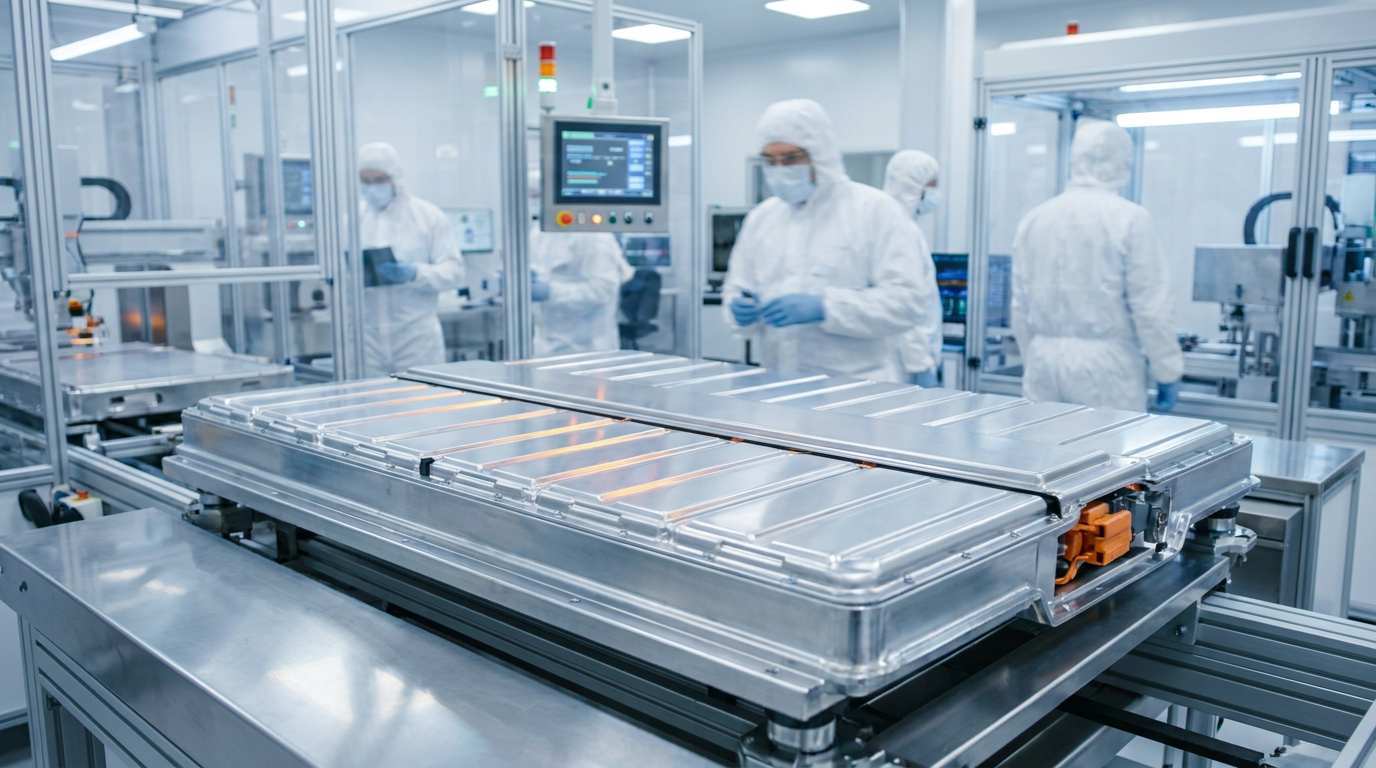
That barrier was broken in early 2026. Contemporary Amperex Technology Co. Limited (CATL), the world's largest battery manufacturer, achieved an energy density of 175 watt-hours per kilogram (Wh/kg) with its new Naxtra cells.[1][4]

This milestone puts sodium-ion on par with the lower end of Lithium Iron Phosphate (LFP) batteries, delivering enough density to provide over 400 kilometers (249 miles) of range in a compact vehicle.[2][4]
The primary appeal of the new chemistry is cost. Sodium is roughly 1,000 times more abundant in the Earth's crust than lithium and can be refined from common salt deposits.[1][7]
Sodium is roughly 1,000 times more abundant in the Earth's crust than lithium and can be refined from common salt deposits.
By utilizing abundant sodium and eliminating the need for expensive, controversial metals like cobalt and nickel, manufacturers are reducing battery production costs by 20% to 40%.[7]
Beyond affordability, sodium-ion solves one of the EV industry's most persistent headaches: winter range anxiety.[2][5]
Lithium-ion cells become sluggish as temperatures drop, severely limiting power output. Sodium-ion chemistry, by contrast, is remarkably resilient to extreme cold, retaining up to 90% of its usable capacity at -40 degrees Celsius.[5]

The new cells also boast an unprecedented lifespan. Manufacturers are currently targeting between 10,000 and 15,000 charge cycles for their commercial packs.[5]
A 15,000-cycle durability rating translates to roughly 20 years of daily use, meaning the battery pack will likely outlast the physical chassis of the vehicle it powers.[5]
The technology is already on the road. In early 2026, the Changan Nevo A06 debuted as the world's first mass-produced passenger EV powered entirely by a sodium-ion pack.[2][4]

The chemistry is also transforming the power grid. BYD has launched massive sodium-ion Battery Energy Storage Systems (BESS), utilizing the cheaper cells to stabilize renewable energy networks where physical weight is not a constraint.[3][6]
Despite the breakthroughs, sodium will not replace lithium entirely. Premium, long-range EVs still require the 250+ Wh/kg energy density that only high-end nickel-manganese-cobalt (NMC) lithium cells can provide.[1][7]
Furthermore, the supply chain for hard carbon anodes remains fragmented, meaning the absolute lowest cost parity for sodium cells may not be fully realized until production scales further in 2027.[5]
How we got here
2016
CATL begins dedicated research and development into sodium-ion battery chemistry.
2021
Early prototypes prove the viability of sodium-ion, but energy density remains too low for automotive use.
2024
BYD breaks ground on a massive 30 GWh sodium-ion battery plant in Xuzhou, China.
Early 2026
CATL achieves 175 Wh/kg energy density, matching lower-end lithium cells.
Mid 2026
The Changan Nevo A06 launches as the world's first mass-produced passenger EV powered by sodium.
Viewpoints in depth
Battery Manufacturers
Focusing on supply chain independence and massive scale.
Giants like CATL and BYD view sodium-ion as an essential hedge against volatile lithium prices. By utilizing a material that is universally abundant, they can stabilize their manufacturing costs and protect their margins. For these companies, sodium isn't just a new product line; it is a strategic maneuver to ensure they can profitably produce millions of entry-level vehicles without being bottlenecked by global mining constraints.
Grid Storage Operators
Prioritizing cost, safety, and longevity over physical weight.
For utility companies managing Battery Energy Storage Systems (BESS), the physical weight of a battery is irrelevant since the packs sit stationary in a field. Their primary metrics are cost per kilowatt-hour, fire safety, and cycle life. Sodium-ion excels in all three categories, offering a highly stable chemistry that can cycle 15,000 times. Operators see sodium as the key to affordably storing intermittent renewable energy on a massive scale.
Premium Automakers
Maintaining reliance on lithium for high-performance applications.
Manufacturers of luxury and long-range vehicles acknowledge sodium's cost benefits but argue it cannot meet the demands of their customer base. Because sodium cells are inherently heavier, using them to achieve a 600-mile range would require a battery pack too massive for a standard chassis. These automakers remain committed to high-nickel lithium chemistries and emerging solid-state technologies to push the boundaries of energy density and performance.
What we don't know
- How quickly the global supply chain for hard carbon anodes can scale to meet the sudden demand from battery manufacturers.
- Whether Western automakers will adopt sodium-ion technology as rapidly as their Chinese counterparts.
- The exact timeline for when sodium-ion production will reach full cost parity with established lithium manufacturing lines.
Key terms
- Intercalation
- The process by which ions slip into the molecular structure of an electrode while the battery charges or discharges.
- Hard Carbon
- A specialized type of carbon used for the anode in sodium batteries, featuring larger molecular gaps to accommodate the bulkier sodium ions.
- Energy Density
- The amount of energy a battery can store relative to its weight or size, typically measured in watt-hours per kilogram (Wh/kg).
- LFP (Lithium Iron Phosphate)
- A popular, durable, and cobalt-free lithium battery chemistry commonly used in standard-range EVs.
- BESS (Battery Energy Storage System)
- Large-scale battery installations used to store electricity for the power grid, often paired with solar or wind farms.
Frequently asked
Will sodium-ion batteries replace lithium-ion?
No. Sodium-ion is heavier and less energy-dense, making it ideal for city cars and grid storage. Lithium-ion will remain the standard for long-range, premium EVs.
Why are sodium batteries cheaper?
Sodium is 1,000 times more abundant than lithium and can be sourced from common salt. The chemistry also eliminates the need for expensive metals like cobalt and nickel.
Can I buy a sodium-powered EV today?
Yes, the first mass-produced models, such as the Changan Nevo A06, hit the market in early 2026, with more entry-level models slated for release throughout the year.
Do sodium batteries work in the winter?
Yes, this is one of their biggest advantages. Sodium-ion cells retain up to 90% of their capacity at -40°C, virtually eliminating winter range anxiety.
Sources
Source coverage
7 outlets
3 viewpoints surfaced







[1]EleportBattery Chemists & Analysts
Sodium Ion Vs Lithium Ion EV Batteries Differences Explained
Read on Eleport →[2]InsideEVsMass-Market Automakers
The World's First Sodium-Ion Battery EV Is A Winter Range Monster
Read on InsideEVs →[3]Energy-Storage.NewsGrid & Infrastructure Providers
BYD launches sodium-ion grid-scale BESS product
Read on Energy-Storage.News →[4]Latam MobilityMass-Market Automakers
BAIC and CATL Lead the Sodium Era with a Breakthrough that will Revolutionize Electric Vehicles
Read on Latam Mobility →[5]Bitcoin NewsBattery Chemists & Analysts
China's New Sodium-Ion Battery Targets a 20-Year Lifespan and Stronger Cold-Weather Range
Read on Bitcoin News →[6]Driven Car GuideGrid & Infrastructure Providers
BYD breaks ground on world's largest sodium-ion battery plant
Read on Driven Car Guide →[7]Computers CraftBattery Chemists & Analysts
Sodium-Ion vs Lithium-Ion: The 2026 EV Battery Revolution
Read on Computers Craft →
Every angle. Every day.
Get automotive stories with full source coverage and perspective breakdowns delivered to your inbox.