
How Small Language Models Are Bringing AI Offline and Onto Your Phone
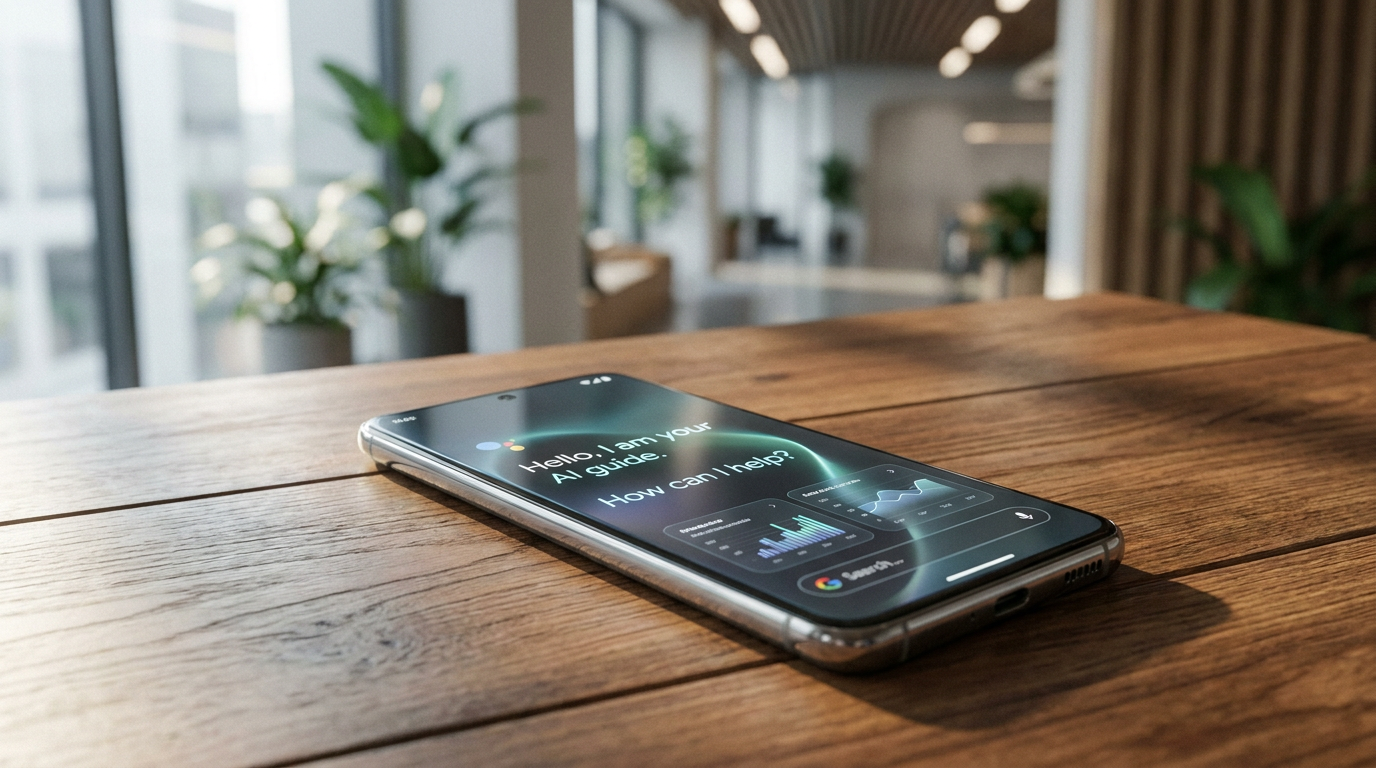
A new generation of highly efficient 'Small Language Models' is moving artificial intelligence out of massive cloud data centers and directly onto consumer devices. The shift promises zero-latency processing, eliminated cloud costs, and absolute data privacy.
By Factlen Editorial Team
- Privacy Advocates
- Value SLMs because they process sensitive user data locally, ensuring personal information never leaves the device.
- Enterprise Developers
- Focus on the dramatic reduction in cloud API costs and the ability to deliver zero-latency experiences to users.
- Hardware Manufacturers
- View the shift to on-device AI as a critical driver for consumers to upgrade to newer, NPU-equipped smartphones and laptops.
What's not represented
- · Cloud Infrastructure Providers
- · Open-Source AI Researchers
Why this matters
By running AI locally on your device rather than in the cloud, Small Language Models ensure your private data never leaves your phone. This shift also enables real-time translation and drafting without an internet connection, fundamentally changing how we interact with mobile technology.
Key points
- Small Language Models (SLMs) shrink AI networks to run locally on smartphones and laptops.
- On-device processing ensures user data never leaves the device, guaranteeing privacy.
- SLMs eliminate cloud API costs and operate with near-zero latency.
- Hardware NPUs and software quantization make mobile AI highly efficient.
- The future of consumer tech relies on a hybrid of local SLMs and cloud LLMs.
For the past several years, the artificial intelligence industry has been locked in a race to build the biggest brain possible. Frontier models like GPT-4 and Claude operate on hundreds of billions—or even trillions—of parameters, requiring massive, energy-hungry data centers to function. But a quiet revolution has been brewing at the opposite end of the spectrum. The industry is rapidly pivoting toward Small Language Models (SLMs), moving AI out of the cloud and directly into the smartphone in your pocket.[4][6]
The problem with massive Large Language Models (LLMs) is their inherent friction. Because they are too large to fit on consumer hardware, every prompt you type must be sent over the internet to a remote server, processed, and beamed back. This introduces latency, requires a constant internet connection, incurs expensive per-token API fees, and forces users to hand over their private data to third-party tech giants.[1][4]
Small Language Models solve this by drastically shrinking the footprint of the neural network. While an LLM might boast over 100 billion parameters, an SLM typically operates in the range of 1 billion to 14 billion parameters. This parameter count acts as the model's internal 'knowledge' capacity. By focusing the training data and refining the architecture, developers have proven that a model doesn't need to be the size of a supercomputer to be highly capable.[5]

The "so what" of this architectural shift is profound: SLMs do not require a cloud API to function. They can run entirely offline, meaning your personal emails, health queries, and private messages never leave your device. For highly regulated industries like healthcare and finance, this solves the data residency problem overnight, allowing protected health information to be processed locally without violating strict compliance rules.[2][4]
This on-device revolution is being driven by a critical hardware breakthrough. Modern mobile chipsets—such as those powering the latest Samsung Galaxy and Apple iPhone devices—now feature dedicated Neural Processing Units (NPUs). These specialized chips are designed specifically to handle the complex mathematical matrix multiplications required by AI, allowing the device to run inference locally without instantly draining the battery or overheating the phone.[4]

Software optimization has evolved alongside the hardware. A technique known as "quantization" is the secret ingredient making mobile AI possible. Quantization compresses the mathematical precision of the model's weights—often down to 4-bit or 8-bit integer formats (INT4/INT8). This aggressive compression shrinks a massive neural network down so that it can fit comfortably inside less than 4 gigabytes of mobile RAM.[4][5]
A technique known as "quantization" is the secret ingredient making mobile AI possible.
Despite their reduced size, modern SLMs are remarkably capable. Benchmarks show that models in the 3-billion to 8-billion parameter range can achieve 80% to 95% of the performance of their massive cloud counterparts on everyday tasks. They excel at summarizing long documents, drafting emails, translating languages in real-time, and organizing unstructured data.[2]
Speed is another massive advantage. Because there is no round-trip data transmission to a cloud server, SLMs deliver sub-100 millisecond latency. This near-instantaneous response time is what enables seamless real-time voice translation, live captioning, and instant text completion as you type, creating a user experience that feels fluid and native to the device.[1][2]

For enterprise developers, the shift to SLMs is largely an economic one. Routing routine AI tasks to local models or cheap edge servers cuts operational costs by up to 85% compared to paying per-token API fees to cloud providers. This dramatic cost reduction makes it financially viable to embed AI into free apps, background processes, and low-margin software tools.[1]
The landscape of SLMs in 2026 is highly competitive. Microsoft's Phi-4 and Phi-3.5 Mini have set industry benchmarks for deep reasoning within a tiny footprint. Meanwhile, Google's Gemma 3 family brings multimodal capabilities—the ability to process text, audio, and images simultaneously—directly to mobile devices, allowing a phone to "see" and "hear" its environment without an internet connection.[2][3]
Meta has also been a major catalyst in this space. Their open-weight Llama 3.2 models, specifically the 1B and 3B variants, were explicitly optimized for edge devices and mobile hardware. By making these models freely available to developers, Meta has accelerated the adoption of offline AI across the broader software ecosystem.[1][3]
Of course, Small Language Models are not artificial general intelligence. They lack the vast, encyclopedic trivia knowledge of a 1-trillion-parameter model, and they can struggle with highly complex, multi-step logical reasoning or advanced coding tasks. They are specialized tools, not omniscient oracles.[5][6]
Because of these limitations, the consensus architecture for the future of consumer tech is "hybrid AI." In this model, your phone's local SLM acts as the first line of defense, handling 80% of your daily tasks instantly, privately, and for free. The device only wakes up the cellular radio to ping a massive cloud LLM for the 20% of queries that genuinely require supercomputer-level reasoning.[4][6]

Ultimately, the rise of Small Language Models represents a democratization of artificial intelligence. By untethering AI from the cloud, the technology becomes more resilient, more private, and universally accessible—transforming our devices from passive portals to the internet into genuinely intelligent, self-contained assistants.[1][6]
How we got here
2020
The release of GPT-3 proves that scaling up parameters to massive sizes unlocks unprecedented AI capabilities.
Early 2023
Meta releases the original LLaMA model, sparking a wave of open-weight research into running models locally.
Dec 2023
Microsoft introduces the Phi-2 model, proving that highly curated training data allows small models to punch far above their weight class.
Mid 2024
Models like Llama 3 (8B) and Phi-3 Mini bring highly capable AI to standard laptops and edge devices.
2026
Advanced models like Gemma 3 and Phi-4 optimize multimodal capabilities specifically for smartphone NPUs.
Viewpoints in depth
Privacy Advocates
Value SLMs because they process sensitive user data locally, ensuring personal information never leaves the device.
For privacy advocates and cybersecurity professionals, the cloud-based AI era introduced an unacceptable risk: sending highly personal queries, proprietary code, and sensitive health data to third-party servers. Small Language Models fundamentally solve this by keeping the compute on the edge. Because the model lives entirely on the user's local hard drive or smartphone storage, the data never traverses the internet. This localized approach not only protects consumers from data breaches but also allows highly regulated industries, such as finance and healthcare, to adopt generative AI without violating strict data residency and compliance laws.
Enterprise Developers
Focus on the dramatic reduction in cloud API costs and the ability to deliver zero-latency experiences to users.
From a software engineering perspective, relying exclusively on massive cloud LLMs is both expensive and slow. Every time an application pings a cloud API, the developer pays a per-token fee, and the user waits for the network round-trip. Enterprise developers view SLMs as a vital cost-control measure. By routing 80% of routine tasks—like basic text summarization, sentiment analysis, and UI navigation—to a free, local SLM, companies can slash their operational AI costs by up to 85%. Furthermore, the sub-100 millisecond latency achieved by local processing allows developers to build real-time features, like live voice translation, that would be impossible over a standard cellular connection.
Hardware Manufacturers
View the shift to on-device AI as a critical driver for consumers to upgrade to newer, NPU-equipped smartphones and laptops.
For companies that build physical devices—like Apple, Samsung, and PC manufacturers—the rise of Small Language Models is a massive commercial opportunity. Smartphone innovation had largely plateaued, leading consumers to hold onto their devices for longer periods. The demand for on-device AI requires specialized hardware, specifically Neural Processing Units (NPUs) and increased unified memory. Hardware manufacturers are heavily promoting SLM capabilities as the primary reason consumers need to upgrade to the latest generation of 'AI PCs' and flagship smartphones, positioning local AI as the next major supercycle in consumer electronics.
What we don't know
- Whether SLMs will eventually hit a hard performance ceiling due to their limited parameter count.
- How quickly battery technology will evolve to keep up with the increased power demands of constant on-device AI processing.
- Which open-source framework will become the definitive standard for deploying SLMs across fragmented mobile operating systems.
Key terms
- Small Language Model (SLM)
- A compact AI model designed to perform natural language tasks using significantly fewer computational resources than massive cloud models.
- Parameters
- The internal numeric weights a neural network learns during training, which dictate its capacity to understand language and store knowledge.
- Neural Processing Unit (NPU)
- A specialized hardware chip built into modern devices specifically designed to accelerate artificial intelligence calculations efficiently.
- Quantization
- A software compression technique that reduces the precision of an AI model's math, shrinking its file size so it can fit into mobile memory.
- Edge Computing
- The practice of processing data locally on the device where it is generated (like a smartphone), rather than sending it to a centralized cloud server.
Frequently asked
What exactly is a Small Language Model?
It is a compact artificial intelligence network, typically containing between 1 billion and 14 billion parameters, designed to understand and generate text while running efficiently on consumer hardware.
Do I need an internet connection to use an SLM?
No. Because the model's 'brain' is downloaded directly to your device's storage, it can process prompts, translate languages, and draft text entirely offline.
Will running AI locally drain my phone's battery?
Modern smartphones use dedicated Neural Processing Units (NPUs) and a software compression technique called quantization to run these models highly efficiently, minimizing battery drain.
Can an SLM replace a massive model like ChatGPT?
For routine tasks like summarizing text or drafting emails, yes. However, SLMs lack the vast encyclopedic knowledge and complex reasoning capabilities of massive cloud-based models.
Sources
Source coverage
6 outlets
3 viewpoints surfaced






[1]Ruh AIEnterprise Developers
Small Language Models (SLMs): The Efficient Future of AI in 2026
Read on Ruh AI →[2]Knolli AIPrivacy Advocates
Top SLMs 2026: Benchmarks Across Languages + Edge
Read on Knolli AI →[3]BentoMLEnterprise Developers
The Best Open-Source Small Language Models (SLMs) in 2026
Read on BentoML →[4]MediumHardware Manufacturers
Why Small Language Models Are the Future of Mobile AI
Read on Medium →[5]CogitxHardware Manufacturers
What Are Small Language Models?
Read on Cogitx →[6]Factlen Editorial Team
Synthesis by Factlen editorial team
Read on Factlen Editorial Team →


Every angle. Every day.
Get ai stories with full source coverage and perspective breakdowns delivered to your inbox.