
The 2026 Tipping Point for Post-Quantum Cryptography
As the threat of 'Harvest Now, Decrypt Later' attacks accelerates, the cybersecurity industry is racing to implement new quantum-resistant encryption standards across global infrastructure.

In short
- The cybersecurity industry is actively transitioning to Post-Quantum Cryptography (PQC) to defend against future quantum computers.
- Adversaries are currently executing 'Harvest Now, Decrypt Later' attacks, stealing encrypted data today to decrypt it years from now.
- NIST has finalized the first PQC standards and is now drafting integration guidelines for federal identity systems.
For decades, the foundation of digital trust has rested on a mathematical assumption: that factoring massive prime numbers is too difficult for any computer to solve in a practical timeframe. That assumption is now approaching its expiration date. The cybersecurity industry is currently crossing a critical threshold, moving post-quantum cryptography (PQC) from the realm of academic theory into mandatory, global infrastructure.[3][4]
The catalyst for this massive overhaul is not the sudden, secret invention of a fully functional quantum computer. Instead, it is a temporal vulnerability known as "Harvest Now, Decrypt Later" (HNDL).
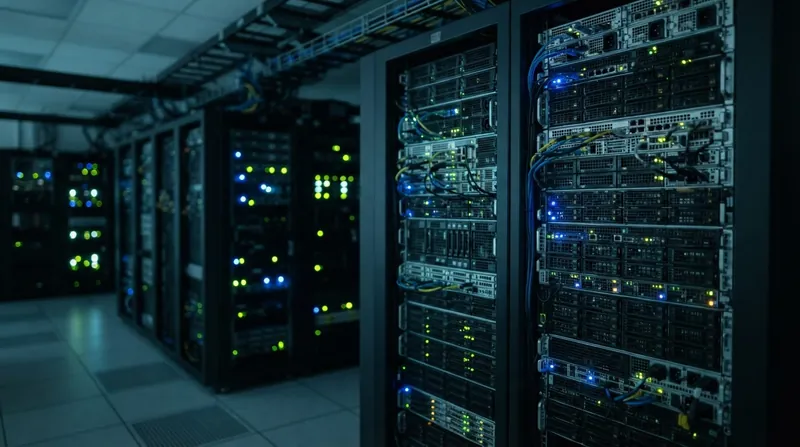
In an HNDL attack, adversaries—often well-funded nation-states—systematically intercept and archive encrypted data today. They store this data in massive facilities, holding it in reserve for the day when a cryptographically relevant quantum computer (CRQC) comes online and can break the encryption retroactively.[5]
The speed and scale of this data harvesting are accelerating. Recent incident response data indicates that the average time it takes for an attacker to exfiltrate data after breaching a network plummeted to just 72 minutes in 2025, down from 285 minutes the year prior.
This acceleration fundamentally changes the threat model. For organizations building artificial intelligence infrastructure, managing healthcare records, or protecting intellectual property, the breach of 2030 is effectively happening right now. Once sensitive encrypted data is siphoned off a network, its future exposure cannot be retroactively mitigated.
In response to this invisible hemorrhage of data, the regulatory landscape has rapidly crystallized. Following the finalization of the first three post-quantum cryptographic standards—FIPS 203, 204, and 205—the National Institute of Standards and Technology (NIST) has shifted its focus to active implementation.[1][3]
In June 2026, NIST released working drafts to update the Personal Identity Verification (PIV) standards used across federal systems. These drafts outline the integration of the new ML-DSA digital signature algorithm and the ML-KEM key-encapsulation mechanism into smart cards and identity credentials.[1]
To prevent widespread system failures during the transition, NIST is advocating for a "dual-stack" model. This approach preserves existing classical cryptographic keys while adding new containers for PQC credentials, allowing systems to support backward compatibility and incremental deployment.[1]
However, the engineering reality of deploying these new algorithms is daunting. Post-quantum cryptography relies on entirely different mathematical foundations, such as lattice-based cryptography, which require significantly larger key sizes to maintain security.[4][5]
For example, an ML-KEM-768 public key is roughly 1,184 bytes in size. By comparison, a classical elliptic curve (ECC) key providing equivalent security is a mere 32 bytes.[4]
This massive bloat in key size introduces severe operational friction. When devices attempt to establish secure connections, the larger PQC keys can cause packet fragmentation, increase latency in standard internet handshakes, and strain the processing power of smaller Internet of Things (IoT) devices.[2][4]
To mitigate these performance hits, industry leaders are advocating for a strategic shift in how encryption is deployed. Rather than relying solely on software patches applied to aging systems, experts argue that quantum-safe encryption must be built directly into the network layer.[2]
Treating post-quantum encryption as critical infrastructure means embedding it into the physical fiber optics and hardware routers that move global data. This foundational approach ensures that data in transit—the most vulnerable target for HNDL harvesting—is protected without crippling application performance.[2]
The timeline for this migration is aggressive and unforgiving. The U.S. government's Commercial National Security Algorithm Suite 2.0 (CNSA 2.0) mandates that new acquisitions for national security systems must support post-quantum algorithms by January 2027.[3]
For the broader enterprise market, 2026 and 2027 are widely considered the "tipping point" years. Organizations are currently bogged down in cryptographic discovery—the painstaking, often manual process of finding where legacy encryption is hardcoded into their networks, applications, and third-party dependencies.[3]
The danger lies in the "migration gap." Studies estimate that achieving full quantum resilience will take large enterprises anywhere from 5 to 15 years. If Q-Day—the arrival of a capable quantum computer—occurs by 2030, organizations that delay their PQC rollout will face a multi-year window where their traffic is entirely vulnerable to retroactive decryption.
Ultimately, the transition to post-quantum cryptography is about establishing "crypto-agility." Systems must be designed so that algorithms can be swapped out seamlessly, ensuring that if a newly standardized mathematical approach is ever compromised, the infrastructure can adapt without requiring a decade-long overhaul.[3][5]
The shift to quantum-safe security is undeniably expensive and complex. Yet, it represents a rare and uplifting moment in the history of cybersecurity: the global scientific community is actively solving a catastrophic vulnerability before the weapon designed to exploit it has even been built.[4]
Key terms
- Post-Quantum Cryptography (PQC)
- Cryptographic algorithms designed to run on classical computers but remain secure against attacks from future quantum computers.
- Harvest Now, Decrypt Later (HNDL)
- A cyberattack strategy where adversaries steal and store encrypted data today to decrypt it years later when quantum computers mature.
- Crypto-Agility
- The ability of a system to rapidly switch out cryptographic algorithms without breaking applications or infrastructure.
- Q-Day
- The theoretical future date when a cryptographically relevant quantum computer (CRQC) becomes capable of breaking current public-key encryption.
- Lattice-based Cryptography
- A mathematical approach used in new PQC standards that relies on the extreme difficulty of finding the shortest vector in a complex, multi-dimensional grid.
Reader questions
Will quantum computers break all encryption today?
No. Current quantum computers are not yet powerful enough to break modern encryption, but experts predict 'cryptographically relevant' machines could arrive by 2030.
What is a 'Harvest Now, Decrypt Later' attack?
It is a strategy where adversaries steal and stockpile encrypted data today, waiting for future quantum computers to decrypt it.
Do organizations need quantum computers to use PQC?
No. Post-Quantum Cryptography consists of mathematical algorithms designed to run on standard, classical computers while resisting quantum attacks.
Why is the transition to PQC so difficult?
PQC algorithms require significantly larger key sizes, which can slow down network traffic, and finding every instance of legacy encryption hidden in old software is a massive engineering challenge.
Where opinion splits
Infrastructure Providers
Focused on deploying quantum-safe encryption at the physical network layer.
For the companies building the backbone of the internet, the PQC transition is a physics and bandwidth problem. Because post-quantum keys are exponentially larger than classical keys, simply patching software endpoints can lead to packet fragmentation and severe latency. These providers argue that the only sustainable solution is to build quantum-resistant encryption directly into the network hardware and fiber optics, ensuring that data in transit is protected without crippling system performance.
National Security & Regulators
Prioritizing aggressive timelines to counter nation-state data harvesting.
Intelligence agencies and standards bodies view the quantum threat as an active, ongoing crisis rather than a future hypothetical. Driven by evidence of 'Harvest Now, Decrypt Later' campaigns, regulators are enforcing strict mandates, such as the NSA's CNSA 2.0, which requires national security systems to adopt PQC by 2027. Their primary concern is that any delay in migration permanently compromises data intercepted today, making aggressive compliance deadlines a matter of national defense.
Enterprise Security Leaders
Navigating the operational friction of 'crypto-discovery' and legacy system upgrades.
Chief Information Security Officers (CISOs) are grappling with the practical reality of overhauling decades of digital infrastructure. Their immediate hurdle is 'cryptographic inventory'—the painstaking process of finding where vulnerable encryption is hardcoded into legacy applications, third-party APIs, and industrial control systems. They advocate for 'crypto-agility' and phased, dual-stack deployments that allow classical and quantum algorithms to run simultaneously, preventing catastrophic system failures during the transition.
- National Security & Regulators
- Prioritizing aggressive timelines to counter nation-state data harvesting.
- Enterprise Security Leaders
- Navigating the operational friction of 'crypto-discovery' and legacy system upgrades.
- Infrastructure Providers
- Focused on deploying quantum-safe encryption at the physical network layer.
Perspectives this story doesn't cover
- Hardware Manufacturers
- Open-Source Maintainers
Sources
Source coverage
5 outlets
3 viewpoints surfaced





- [1]NISTNational Security & Regulators
Working Drafts: Post-Quantum Cryptography Updates to the PIV Standards
Read on NIST → - [2]World Economic ForumInfrastructure Providers
Why post-quantum encryption should be treated as critical infrastructure
Read on World Economic Forum → - [3]CarahsoftNational Security & Regulators
The Post-Quantum Shift Has Begun: Why 2026–2027 Will Redefine Cybersecurity Modernization
Read on Carahsoft → - [4]Factlen Editorial TeamEnterprise Security Leaders
Synthesis by Factlen editorial team
Read on Factlen Editorial Team → - [5]EC-Council UniversityEnterprise Security Leaders
Post-Quantum Cryptography (PQC): The Future of Cybersecurity in the Quantum Era
Read on EC-Council University →
More in Technology
See all →Data Privacy
Denmark Investigates Central Population Registry Breach Exposing 8.8 Million Citizen Records
5 sources

Enterprise Security
Citrix Confirms Two Unpatched Zero-Day Vulnerabilities in NetScaler Under Active Exploitation
5 sources

OAuth 2.0
The Six Steps of the OAuth 2.0 Authorization Code Flow with PKCE
4 sources

Core Vulnerability
WordPress Patches Critical Core Vulnerability as Attackers Exploit Flaw Within Hours
5 sources

Comments
Every angle. Every day.
Get Technology stories with full source coverage and perspective breakdowns, free every day.