
NWSL's 2026 Season Reaches Historic Heights Amid Record Attendance and Expansion Boom
The National Women's Soccer League is experiencing unprecedented growth in its 2026 season, fueled by record-shattering crowds, successful expansion franchises in Denver and Boston, and landmark broadcast partnerships.
By Factlen Editorial Team
- League Executives & Owners
- Focuses on franchise valuations, broadcast rights, and the return on investment from playing in major stadiums.
- Players & Sporting Directors
- Emphasizes the rising standard of play, the importance of the high-impact player rule, and global competitiveness.
- Supporters & Culture Analysts
- Highlights the community-building aspect, the inclusive culture of the league, and the demographic shift in sports viewership.
What's not represented
- · European Club Executives
- · Lower-Tier Domestic Players
Why this matters
The NWSL's explosion from a struggling startup league to a mainstream commercial juggernaut proves that women's professional sports are a highly profitable, premier entertainment product. This financial and cultural shift ensures that top-tier athletic talent will increasingly stay in the United States, elevating the standard of the game for fans nationwide.
Key points
- The NWSL set an all-time opening weekend attendance record in 2026, drawing 129,202 fans across eight matches.
- The expansion Denver Summit shattered the single-match attendance record, welcoming 63,004 fans to Empower Field at Mile High.
- San Diego Wave utilized a new financial rule to sign USWNT star Catarina Macario to a record-breaking $8 million contract.
- A new multi-year broadcast partnership with The Women's Sports Network is expanding the league's media footprint and athlete storytelling.
As the National Women's Soccer League heads into the crucial summer stretch of its 2026 season, the narrative surrounding the league has fundamentally shifted from one of steady survival to explosive, unprecedented growth. For years, advocates of women's sports have pointed to the underlying potential of professional soccer in the United States, arguing that with the right investment, marketing, and infrastructure, the domestic league could rival the world's top sporting properties. This year, those theoretical projections have materialized into concrete, record-shattering reality. Across the country, from the Pacific coast to the Eastern seaboard, the NWSL is drawing crowds that not only break previous league benchmarks but challenge the attendance figures of established men's professional leagues. The momentum is palpable, driven by a confluence of aggressive expansion, landmark broadcasting deals, and a new financial framework that is keeping top-tier talent on American soil. As the 2026 campaign unfolds, the league is no longer just a destination for die-hard soccer purists; it has become a mainstream cultural phenomenon, capturing the attention of a broader, younger demographic that views these matches as premier entertainment events.[2][4]
The sheer scale of the league's attendance boom became immediately apparent during the 2026 opening weekend, which set a new high-water mark for the sport. Over the course of eight matches, an astonishing 129,202 fans poured into stadiums across the United States, yielding an average attendance of 16,150 per game. Both figures represent all-time NWSL opening weekend records, obliterating the previous standards set in 2023 and 2025. Seven of the eight matches drew crowds exceeding 10,000 spectators, a testament to the deep, widespread demand that now exists across multiple regional markets. Sellout crowds in Washington, D.C., and Kansas City demonstrated the fierce loyalty of established fanbases, while massive turnouts in San Diego, Orlando, and Los Angeles underscored the league's formidable presence in major media markets. This was not an isolated spike driven by a single marquee matchup, but rather a comprehensive, league-wide surge that signals a new baseline for what a successful NWSL matchday looks like.[2][5]
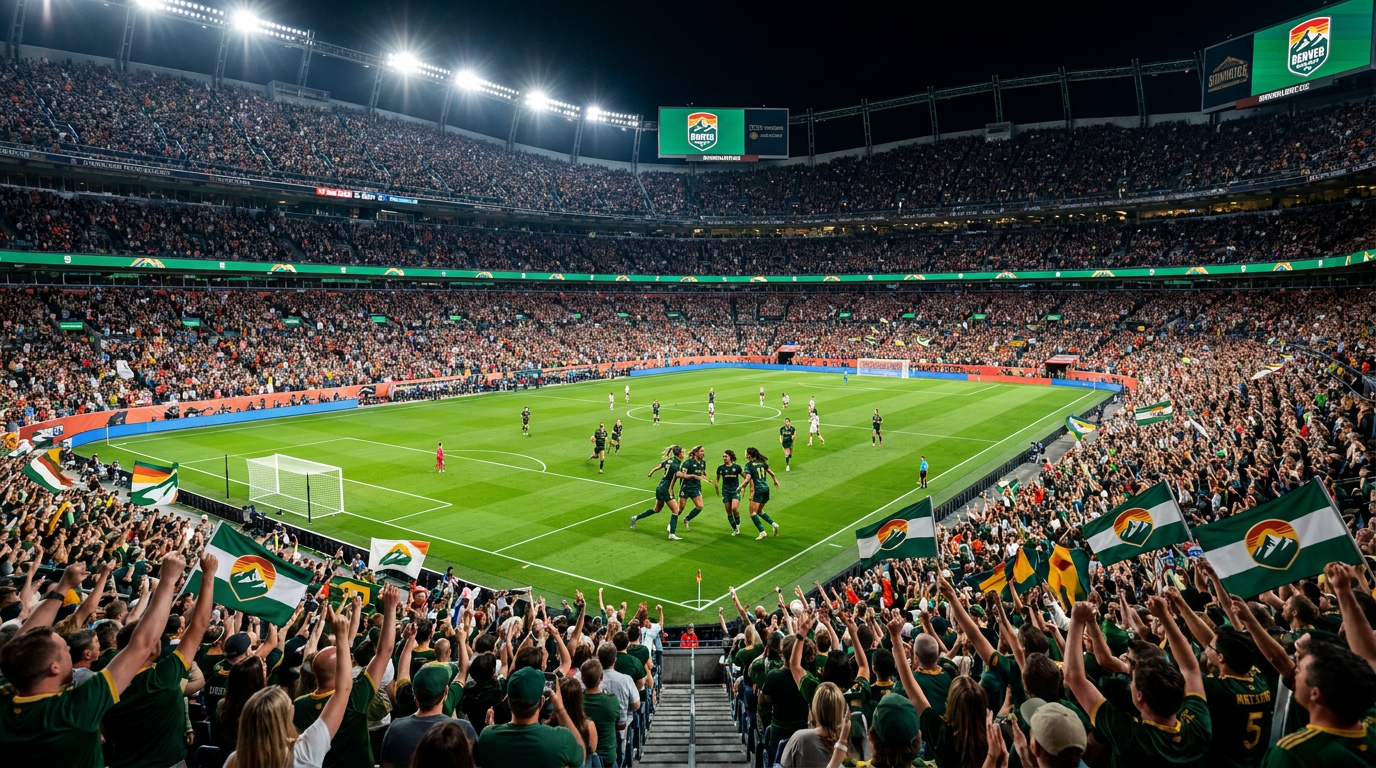
Nowhere was this explosive growth more evident than in Colorado, where the expansion Denver Summit completely rewrote the NWSL record books in their inaugural home match. Taking the pitch at Empower Field at Mile High—the cavernous home of the NFL's Denver Broncos—the Summit drew an announced crowd of 63,004 fans for their clash against the Washington Spirit. The staggering figure shattered the previous NWSL single-match attendance record of 40,091, which was set just last season by Bay FC at Oracle Park in San Francisco. The atmosphere in Denver was electric, transforming a regular-season soccer match into a massive civic event that dominated the local sports landscape. For a franchise that was awarded just over a year prior for a reported $110 million expansion fee, the debut was a resounding validation of the ownership group's ambitious vision. It proved that in the right market, with the right promotional muscle, women's club soccer can fill the largest venues in the country.[1][5]

Denver's triumph was not the only expansion success story of the 2026 season. On the East Coast, Boston Legacy FC made their own historic debut, drawing 30,207 fans for their inaugural match. That figure stands as the largest crowd ever for a club's first game in NWSL history, further proving that the league's strategic expansion into major metropolitan areas is paying massive dividends. The dual successes of Denver and Boston highlight a sophisticated evolution in how new franchises are launched. Gone are the days of quiet rollouts in suburban college stadiums; today's expansion teams are debuting in top-tier venues with aggressive, multi-million-dollar marketing campaigns that position them as major civic assets from day one. This approach not only guarantees massive initial gate receipts but also establishes a premium brand identity that helps secure lucrative local sponsorships and premium seating sales, ensuring long-term financial viability.[1][2][7]
This shift in venue strategy is perhaps the most visible indicator of the NWSL's maturation. Historically, many women's soccer teams were relegated to secondary facilities—often college campuses or minor-league baseball parks—that lacked the amenities, capacity, and professional atmosphere required to elevate the product. Today, the landscape is radically different. Clubs are increasingly flexing their muscles by booking matches in NFL and MLB stadiums to accommodate surging ticket demand, as seen with the Chicago Stars drawing over 35,000 fans to Wrigley Field in 2024, and now Denver's massive turnout at Mile High. Simultaneously, a wave of purpose-built infrastructure is sweeping the league. Following the trailblazing success of the Kansas City Current's CPKC Stadium—the first stadium in the world built specifically for a women's professional sports team—other clubs are following suit. The Denver Summit have already closed on land for a dedicated downtown stadium projected to open in 2028, ensuring that the team will eventually have a state-of-the-art, right-sized home that maximizes revenue and fan experience.[1][6]
This shift in venue strategy is perhaps the most visible indicator of the NWSL's maturation.
The league's growth is not confined to the stands; it is also fundamentally reshaping the financial realities for the athletes on the pitch. In a landmark move that sent shockwaves through the global soccer community, the San Diego Wave secured the signature of United States Women's National Team star Catarina Macario on a contract believed to be the most lucrative in women's soccer history. Valued at approximately $8 million through the 2030 season, the deal represents a paradigm shift in player compensation. To facilitate the historic transfer, the Wave utilized the NWSL's newly implemented "high impact player" rule, a mechanism designed specifically to allow American clubs to compete financially with the deep-pocketed, state-backed superclubs of Europe. Macario's signing is a powerful statement of intent, signaling that the NWSL is willing and able to pay a premium to keep the world's most marketable and talented players competing in the United States.[2][3]

The introduction of the high impact player rule addresses one of the most pressing existential threats the NWSL has faced in recent years: the aggressive rise of the English Women's Super League (WSL) and the UEFA Women's Champions League powerhouses. As European men's clubs like Barcelona, Chelsea, and Arsenal began funneling significant resources into their women's sides, the NWSL risked suffering a talent drain. The new financial regulations provide NWSL sporting directors with the flexibility to offer globally competitive wages outside the standard salary cap, ensuring that the league remains a premier destination for both domestic stars and international game-changers. This financial arms race is elevating the standard of play across the board, resulting in a faster, more technical, and more tactically sophisticated product on the field. The ability to attract and retain players of Macario's caliber is essential for maintaining the league's status as the most competitive top-to-bottom division in the world.[3][6][7]
To amplify this elevated on-field product, the NWSL has aggressively expanded its media footprint, ensuring that the 2026 season is the most accessible in league history. In March, the league announced a multi-year partnership with The Women's Sports Network to expand content distribution and athlete storytelling across both linear and digital platforms. This deal supplements the league's existing, highly lucrative broadcast agreements with major networks, creating a ubiquitous media presence that reaches fans wherever they consume content. The partnership includes a new weekly highlights show and extensive integration with athlete-driven formats, offering players a platform to share their perspectives and build their personal brands beyond the 90 minutes of match play. As demand for premium women's sports content accelerates among advertisers, these broadcast partnerships provide the NWSL with a brand-safe, high-engagement environment that is highly attractive to corporate sponsors.[4]
The demographic profile of the NWSL's rapidly expanding fanbase is a crucial component of its commercial appeal. Unlike some legacy sports leagues that are struggling with aging viewerships, the NWSL has successfully cultivated a vibrant, highly engaged audience composed largely of Gen Z and millennial fans. This demographic is drawn to the league not just for the athletic competition, but for the progressive, inclusive culture that the NWSL and its players actively promote. The league has become a cultural touchstone, where supporting a local club is intertwined with broader values of gender equity, LGBTQ+ rights, and community activism. This deep emotional connection translates into fierce brand loyalty, driving merchandise sales, social media engagement, and repeat ticket purchases. For corporate partners, aligning with the NWSL offers a rare, authentic pathway to connect with a socially conscious, digitally native consumer base that is notoriously difficult to reach through traditional advertising.[1][4][7]

When viewed against the turbulent history of women's professional soccer in the United States, the stability and prosperity of the 2026 NWSL season is nothing short of miraculous. Previous iterations, such as the Women's United Soccer Association (WUSA) in the early 2000s and Women's Professional Soccer (WPS) a decade later, collapsed under the weight of unsustainable financial models and a lack of institutional support. The NWSL, which launched in 2013, spent its early years in a delicate state of survival, relying heavily on subsidies from the U.S. Soccer Federation and playing in front of sparse crowds. Today, the league operates with robust independence, backed by billionaire ownership groups, massive institutional investment, and a proven, scalable commercial model. The ghosts of past failures have been definitively exorcised, replaced by a confident, forward-looking enterprise that is setting the global standard for the commercialization of women's sports.[5][6]
As the 2026 season progresses toward the playoffs, the primary challenge facing the NWSL is no longer survival, but rather the strategic management of its own success. League executives must navigate the complexities of rapid expansion, ensuring that the influx of new teams does not dilute the talent pool or destabilize the competitive balance that makes the league so compelling. Furthermore, clubs must work to sustain the massive attendance figures generated during the opening weeks, converting first-time attendees drawn by the novelty of a stadium event into dedicated, season-long supporters. However, given the current trajectory, the league is operating from a position of unprecedented strength. With record-breaking crowds, historic player contracts, and a booming media presence, the NWSL has definitively proven that women's soccer is not a niche market or a charitable endeavor, but a premier, highly profitable pillar of the modern sports entertainment industry.[1][2][4]

Looking ahead to the culmination of the season, the 2026 NWSL Championship is already tracking to be a monumental event. Scheduled to be staged at Audi Field in Washington, D.C., the final will serve as the ultimate showcase of the league's transformative year. With the competitive parity tighter than ever, and expansion sides proving they can immediately challenge established legacy clubs, the race for the title is driving sustained fan interest through the summer months. The global soccer community is watching closely; the commercial triumphs of the NWSL are providing a blueprint for women's leagues worldwide, proving that heavy investment in marketing, player welfare, and stadium infrastructure yields massive returns. As the 2026 season continues to unfold, the National Women's Soccer League stands not just as a domestic triumph, but as the vanguard of a global revolution in women's sports, forever altering the landscape of professional athletics.[2][4][6]
How we got here
2013
The National Women's Soccer League plays its inaugural season, focusing heavily on financial survival and modest, sustainable growth.
2024
The league surpasses 2 million total spectators for the first time in a single season, signaling a massive shift in mainstream popularity.
January 2025
Denver is awarded the 16th NWSL franchise for a reported record expansion fee of $110 million.
March 16, 2026
The NWSL sets an opening weekend attendance record, drawing 129,202 fans across eight matches.
March 28, 2026
The expansion Denver Summit shatter the all-time single-match attendance record, drawing 63,004 fans at Empower Field at Mile High.
Viewpoints in depth
League Executives & Owners
Focuses on franchise valuations, broadcast rights, and the return on investment from playing in major stadiums.
For the ownership groups and league executives, the 2026 season is the ultimate vindication of their aggressive investment strategy. By paying record expansion fees—such as Denver's reported $110 million—and committing to massive marketing budgets, these stakeholders treated the NWSL as a premium product rather than a charitable endeavor. They argue that the shift to NFL and MLB stadiums is not just about accommodating current demand, but about fundamentally repositioning the brand to attract blue-chip corporate sponsors and secure lucrative linear television rights. Their primary focus moving forward is ensuring these massive valuations translate into sustainable, long-term profitability.
Players & Sporting Directors
Emphasizes the rising standard of play, the importance of the high-impact player rule, and global competitiveness.
From the perspective of the sporting departments, the financial boom is entirely about keeping the NWSL competitive on the global stage. Sporting directors point to the aggressive spending by European superclubs as an existential threat that required a bold response. The introduction of the high-impact player rule, which facilitated Catarina Macario's record $8 million contract, is viewed as a necessary tool to retain world-class talent. Players and their representatives celebrate this era as a long-overdue correction in compensation, arguing that the elevated wages and improved stadium infrastructure are finally matching the world-class product they have been delivering on the pitch for years.
Supporters & Culture Analysts
Highlights the community-building aspect, the inclusive culture of the league, and the demographic shift in sports viewership.
Cultural analysts and supporters' groups view the NWSL's rise as a broader societal shift rather than just a business success story. They argue that the league has brilliantly tapped into a younger, progressive demographic that traditional men's leagues often struggle to reach. For these fans, attending an NWSL match is an expression of community values, championing inclusivity, LGBTQ+ rights, and gender equity. Supporters emphasize that while the massive crowds at Mile High and Wrigley Field are thrilling, the league must be careful not to price out the grassroots fans who sustained the clubs during their leaner, formative years.
What we don't know
- Whether the massive attendance figures generated by inaugural expansion matches will stabilize into consistent, sell-out crowds throughout the grueling summer months.
- How the influx of 'high impact player' money will affect the internal locker room dynamics and collective bargaining for minimum-salary players across the league.
Key terms
- High Impact Player Rule
- A financial mechanism in the NWSL that allows clubs to pay a premium salary to select marquee players without it counting entirely against the team's standard salary cap.
- Expansion Franchise
- A newly created team that pays a fee to join a professional sports league, expanding the league's total number of clubs.
- Women's Super League (WSL)
- The highest league of women's professional soccer in England, which has become a major global competitor to the NWSL for top international talent.
- Linear and Digital Platforms
- Traditional television broadcasting (linear) combined with internet-based streaming services and social media (digital).
Frequently asked
What is the all-time attendance record for an NWSL match?
The Denver Summit set the all-time record on March 28, 2026, drawing 63,004 fans to Empower Field at Mile High for their inaugural home match against the Washington Spirit.
How is the NWSL competing with European clubs for top talent?
The league introduced a "high impact player" rule, which allows teams to spend outside the standard salary cap to offer globally competitive wages, as seen with Catarina Macario's record $8 million contract.
Where are the new 2026 expansion teams located?
The 2026 season welcomed two new expansion franchises: the Denver Summit and Boston Legacy FC, both of which set attendance records in their opening matches.
Where will the 2026 NWSL Championship be held?
The 2026 NWSL Championship will be staged at Audi Field in Washington, D.C.
Sources
Source coverage
7 outlets
3 viewpoints surfaced







[1]The GuardianSupporters & Culture Analysts
Denver Summit smash NWSL attendance record with 63,004 fans at Mile High Stadium
Read on The Guardian →[2]Sports Business JournalLeague Executives & Owners
NWSL sets opening weekend attendance records to kick off 2026 season
Read on Sports Business Journal →[3]ESPNPlayers & Sporting Directors
Catarina Macario signs record $8M contract with San Diego Wave
Read on ESPN →[4]NWSL OfficialLeague Executives & Owners
NWSL Announces Multi-Year Partnership with The Women's Sports Network
Read on NWSL Official →[5]WikipediaSupporters & Culture Analysts
National Women's Soccer League attendance
Read on Wikipedia →[6]BBC SportSupporters & Culture Analysts
NWSL preview: record signings, a historic stadium – and a new winner?
Read on BBC Sport →[7]The AthleticPlayers & Sporting Directors
How Denver Summit and Boston Legacy are redefining NWSL expansion
Read on The Athletic →
More in sports
See all 8 stories →AL East Matchup
Blue Jays Seek Sweep Over Struggling Red Sox at Fenway Park: Pre-Game Preview
6 sources

VNL 2026
Türkiye Aims to Extend Winning Streak Against France in VNL Ankara Clash
6 sources

VNL 2026
Canada Rallies Past Netherlands 3-1 in Volleyball Nations League Week 2 Opener
6 sources
Players Championship
Rob Cross Defeats Stephen Bunting 7-3 in High-Scoring Players Championship Semi-Final
6 sources
Every angle. Every day.
Get sports stories with full source coverage and perspective breakdowns delivered to your inbox.