
How Solarpunk is Rewriting the Future of Climate Fiction
Born as a rejection of dystopian doom, the solarpunk movement is using science fiction to blueprint a sustainable, equitable, and renewable-powered future.
By Factlen Editorial Team
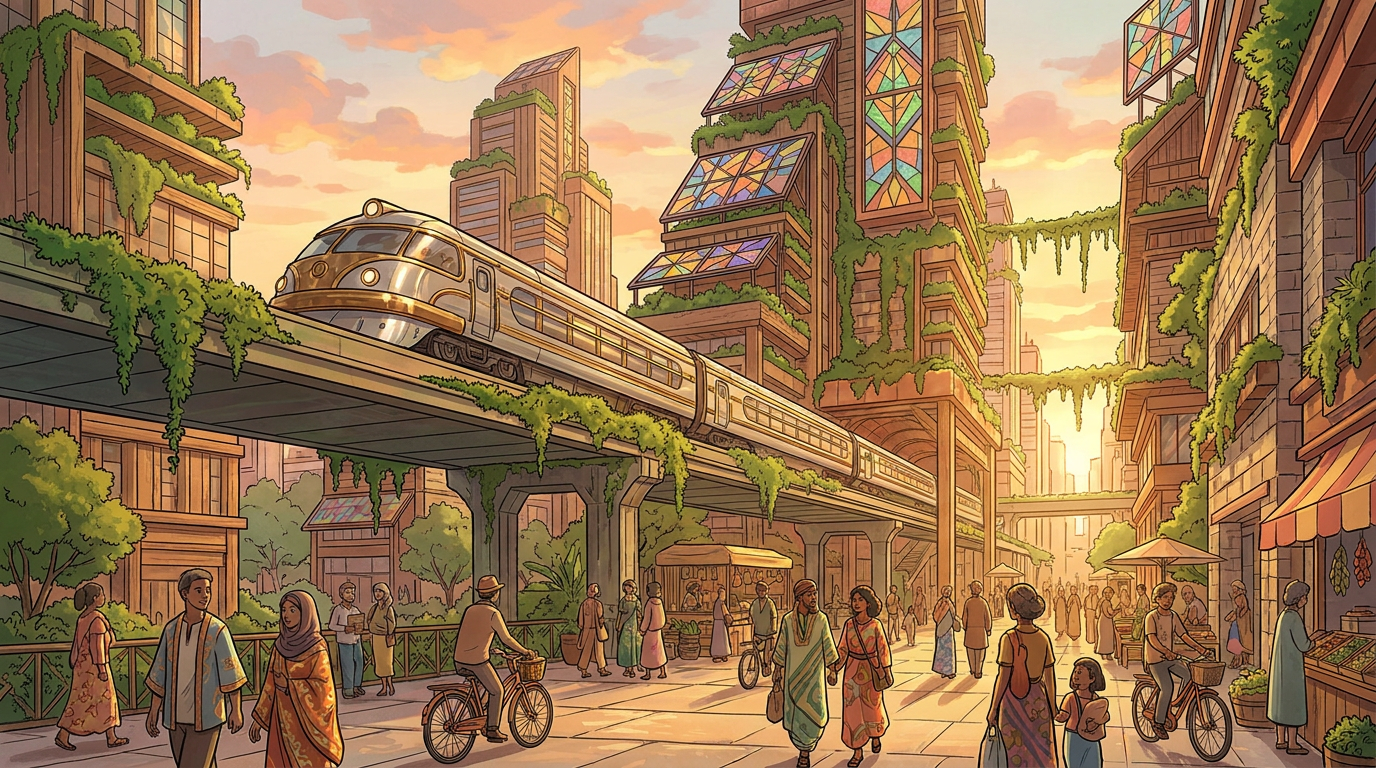
- Literary Optimists
- Writers and critics who view solarpunk as a necessary narrative antidote to climate doomerism.
- Speculative Designers & Activists
- Urban planners, architects, and organizers using solarpunk as a practical blueprint.
- Skeptics & Critical Analysts
- Observers who warn against the aestheticization and co-optation of the movement.
What's not represented
- · Fossil fuel industry advocates
- · Traditional dystopian sci-fi authors
Why this matters
As climate anxiety reaches all-time highs, solarpunk offers a psychological and practical roadmap out of despair. By visualizing a world where humanity successfully transitions to renewable energy and equitable communities, this literary movement is helping architects, policymakers, and everyday readers imagine—and build—a survivable future.
Key points
- Solarpunk is a literary and artistic movement that envisions a sustainable, equitable future powered by renewable energy.
- The genre serves as an optimistic counter-narrative to the bleak, corporate-dominated dystopias of cyberpunk.
- Originating with a 2008 blog post and a 2012 Brazilian anthology, the movement has grown to influence real-world urban planning.
- Core themes include anti-speciesism, decentralized governance, and 'jugaad-style' upcycling of existing infrastructure.
- Critics warn that the movement's striking green aesthetic risks being co-opted by corporate greenwashing if its anti-capitalist roots are ignored.
For decades, the dominant vision of the future in popular culture has been overwhelmingly bleak. From the neon-lit, corporate-owned dystopias of cyberpunk to the ash-choked wastelands of post-apocalyptic fiction, audiences have been conditioned to expect environmental collapse and societal ruin. This relentless barrage of doomerism has fostered a sense of inevitability about the climate crisis, leaving many feeling paralyzed. But in recent years, a vibrant counter-narrative has taken root in the literary and artistic worlds, offering a radically different vision of tomorrow.[7]
Enter "solarpunk," a burgeoning literary, artistic, and social movement that dares to imagine a future where humanity has successfully navigated the climate crisis. Unlike its cynical predecessors, solarpunk envisions a world where technology and nature are deeply intertwined, and where communities have reorganized around renewable energy, sustainability, and social equity. It is a genre defined not by the absence of conflict, but by the presence of hope and actionable solutions.[1][2][7]
The "solar" in solarpunk represents both a literal commitment to renewable energy and a metaphorical brightness—an optimistic rejection of the dark, smog-filled skies that characterize traditional speculative fiction. The "punk" aspect is equally crucial; it signifies a countercultural rebellion against fossil-fuel capitalism, hyper-consumerism, and centralized corporate control. In the solarpunk ethos, building a community garden or installing a neighborhood solar microgrid is an act of profound political resistance.[1][2][6]
The movement's origins can be traced back to a 2008 blog post titled "From Steampunk to Solarpunk." The anonymous author was inspired by the maiden voyage of the Beluga Skysail, a hybrid cargo ship that utilized a massive towing kite to achieve a 20% reduction in fuel consumption. This real-world application of "older technology" like wind power, combined with modern engineering, sparked the initial conceptualization of a new, ecologically conscious genre.[1]

Solarpunk officially coalesced as a literary movement in 2012 with the publication of a groundbreaking Brazilian short story anthology, *Solarpunk: Histórias Ecológicas e Fantásticas em um Mundo Sustenavel*. This collection codified the genre's core themes, moving it beyond a mere aesthetic and establishing it as a serious framework for speculative fiction. By rooting the movement in the Global South, the anthology also ensured that solarpunk resisted the Eurocentric imaginaries that often dominate traditional science fiction.[3][6]
Throughout the 2010s, the movement exploded visually across platforms like Tumblr, where digital artists began rendering lush, Art Nouveau-inspired cities. These illustrations featured sprawling green architecture, stained-glass solar panels, and high-tech agricultural systems integrated directly into urban environments. This visual language provided a compelling, tangible alternative to the bleak aesthetics of cyberpunk, proving that sustainable futures could be beautiful rather than austere.[2][3][7]
A defining characteristic of solarpunk literature is its embrace of "protopia." Coined by futurist Kevin Kelly, a protopia is not a perfect, static utopia, but rather a society that is actively and incrementally improving. Solarpunk narratives acknowledge that the transition to a sustainable world will be messy and fraught with challenges, but they maintain a fundamental belief that collective human ingenuity can overcome these hurdles.[2][7]
Thematically, solarpunk literature frequently explores concepts like anti-speciesism, multicultural coexistence, and decentralized governance. Characters in these stories often rely on "jugaad-style" innovation—a flexible approach to problem-solving that involves repurposing existing infrastructure and making the best out of waste. This emphasis on repair and upcycling stands in stark contrast to the disposable culture of the present day.[1][7]

Thematically, solarpunk literature frequently explores concepts like anti-speciesism, multicultural coexistence, and decentralized governance.
The influence of solarpunk has rapidly expanded beyond the pages of science fiction novels. Speculative designers and urban planners are increasingly using the movement's framework to model real-world climate strategies. For example, the Berlin-based Ellery Studio launched the Solar Punk Festival in 2018, bringing together scientists, researchers, and artists to visualize the energy transition and prototype new forms of social organization.[3]
In the realm of architecture, solarpunk draws practical inspiration from existing sustainable models like Earthships—passive solar homes constructed from natural and upcycled materials. The movement advocates for an architectural paradigm where renewable energy infrastructure is not hidden away as an ugly utility, but rather celebrated and ornamented as a central feature of civic life.[2][5]
The literary establishment has begun to formally recognize the movement's significance. In 2024, solarpunk was officially added to *The Encyclopedia of Science Fiction*. The entry highlights the genre's role as a "rebellion against a rebellion," noting that it was born out of a deep-seated fatigue with the dystopian narratives that have dominated the cultural landscape for decades.[2][4]
Despite its optimistic core, the movement is not without its internal debates and external critics. As solarpunk's aesthetic popularity grows, activists warn of the dangers of co-optation and greenwashing. There is a persistent concern that corporations might adopt the visual language of green skyscrapers and solar panels to market luxury developments, completely stripping away the movement's anti-capitalist and community-focused ethos.[7]

To combat this, solarpunk authors and creators continually emphasize that the genre is fundamentally about social relations, not just technology. A city covered in plants is not solarpunk if it is still ruled by extreme wealth inequality and authoritarianism. The literature insists that true sustainability requires a radical reimagining of how humans relate to one another and to the ecosystems they inhabit.[2][6][7]
Ultimately, solarpunk serves as a vital tool for cognitive reframing. Psychologists and climate communicators have long noted that fear-based messaging often leads to apathy rather than action. By providing a vivid, desirable roadmap of what a post-carbon civilization could look like, solarpunk gives people something to fight for, rather than just something to fight against.[3][7]
As the realities of climate change become increasingly stark, the necessity of this literary movement becomes clearer. Solarpunk reminds us that the future is not yet written, and that human imagination is the first, crucial step in building a world that is not only survivable, but genuinely flourishing. It is a testament to the power of fiction to shape reality, proving that hope can be the most radical punk rock statement of all.[6][7]
How we got here
2008
An anonymous blog post titled 'From Steampunk to Solarpunk' coins the term after being inspired by a wind-assisted cargo ship.
2012
The Brazilian anthology 'Solarpunk: Histórias Ecológicas e Fantásticas em um Mundo Sustenavel' is published, codifying the genre.
2014
The Solarpunk Manifesto is drafted collaboratively online, outlining the movement's core political and aesthetic tenets.
2018
Ellery Studio launches the Solar Punk Festival in Berlin, bridging the literary genre with real-world speculative design and climate strategy.
2024
Solarpunk is officially added to The Encyclopedia of Science Fiction, cementing its status as a recognized literary subgenre.
Viewpoints in depth
Literary Optimists
Writers and critics who view solarpunk as a necessary narrative antidote to climate doomerism.
This camp argues that the relentless barrage of dystopian fiction has paralyzed public imagination. By presenting a 'protopia'—a world that is flawed but actively improving—solarpunk provides a psychological roadmap for survival. They emphasize that visualizing a sustainable, equitable future is the prerequisite to actually building one, making the genre an act of profound narrative rebellion against despair.
Speculative Designers & Activists
Urban planners, architects, and organizers using solarpunk as a practical blueprint.
For these practitioners, solarpunk is less about fiction and more about actionable design. They draw on the movement's aesthetics to model real-world energy transitions, advocating for decentralized solar grids, urban agriculture, and open-source technology. They view the 'punk' element as a mandate to bypass traditional corporate infrastructure and build community-owned, resilient systems from the ground up.
Skeptics & Critical Analysts
Observers who warn against the aestheticization and co-optation of the movement.
Critics caution that solarpunk's striking visual language—lush green skyscrapers and sleek solar panels—can be easily co-opted by corporate greenwashing. They argue that without its anti-capitalist and decolonial roots, the genre risks becoming merely a marketing aesthetic for luxury eco-developments. This camp insists that true solarpunk must remain focused on systemic social change, not just technological window-dressing.
What we don't know
- Whether solarpunk's decentralized, community-driven ethos can scale to manage global infrastructure without centralized state intervention.
- How effectively the movement can resist corporate co-optation as its 'green aesthetic' becomes more mainstream and profitable.
- Which specific technological innovations imagined in solarpunk literature will prove viable in real-world climate adaptation.
Key terms
- Protopia
- A society that is not perfect, but is actively and incrementally improving, serving as a realistic alternative to both utopia and dystopia.
- Jugaad
- A flexible approach to problem-solving that uses limited resources in an innovative way, often associated with repurposing waste in solarpunk narratives.
- Technological Determinism
- The theory that a society's technology drives the development of its social structure and cultural values, a concept solarpunk often resists in favor of human-led community choices.
- Earthship
- A type of passive solar earth shelter made of both natural and upcycled materials, frequently cited as a real-world architectural inspiration for solarpunk.
Frequently asked
What is the difference between solarpunk and cyberpunk?
Cyberpunk envisions a dystopian, hyper-capitalist future dominated by corporate control and urban decay. Solarpunk imagines a decentralized, ecologically harmonious future powered by renewable energy and community cooperation.
Where did the term solarpunk come from?
The term first appeared in a 2008 blog post inspired by a hybrid cargo ship, and was later codified as a literary genre by a 2012 Brazilian short story anthology.
Is solarpunk just about aesthetics?
No. While it has a strong visual component featuring Art Nouveau and green architecture, it is fundamentally a political and literary movement advocating for sustainable infrastructure, anti-consumerism, and social equity.
Sources
Source coverage
7 outlets
3 viewpoints surfaced







[1]The Indian ExpressLiterary Optimists
What to know about Solarpunk, the literary movement that seeks a sustainable way forward
Read on The Indian Express →[2]WikipediaLiterary Optimists
Solarpunk
Read on Wikipedia →[3]Ecología PolíticaSpeculative Designers & Activists
Putting the Brakes on Dystopia: Speculative Design, Solarpunk, and Visual Tools for Positing Positive Futures
Read on Ecología Política →[4]The Encyclopedia of Science FictionLiterary Optimists
Solarpunk
Read on The Encyclopedia of Science Fiction →[5]e-flux architectureSpeculative Designers & Activists
Is Ornamenting Solar Panels a Crime?
Read on e-flux architecture →[6]The ConversationSpeculative Designers & Activists
Explainer: 'solarpunk', or how to be an optimistic radical
Read on The Conversation →[7]Factlen Editorial TeamSkeptics & Critical Analysts
Synthesis by Factlen editorial team
Read on Factlen Editorial Team →


Every angle. Every day.
Get culture stories with full source coverage and perspective breakdowns delivered to your inbox.