
U.S. and Iran Sign 14-Point Memorandum to Halt War and Reopen Strait of Hormuz
President Donald Trump and Iranian President Masoud Pezeshkian have signed an interim agreement to end military operations and lift the U.S. naval blockade. The 60-day pact reopens the Strait of Hormuz to commercial traffic while deferring a final resolution on Iran's nuclear program.
By Factlen Editorial Team
- U.S. Administration
- Prioritizes global economic stability and views the deal as a pragmatic win that secures the Strait of Hormuz.
- Iranian Establishment
- Frames the agreement as a victory of endurance that secured massive financial relief without sacrificing sovereignty.
- Regional Security Advocates
- Fears the concessions leave Iran's nuclear and proxy infrastructure dangerously intact.
What's not represented
- · Lebanese civilians caught in the crossfire of the Hezbollah-Israel conflict.
- · Global shipping companies navigating the immediate logistical risks of the Strait's reopening.
Why this matters
The reopening of the Strait of Hormuz immediately eases the severe bottleneck that has paralyzed global energy markets and spiked oil prices. However, the agreement's massive financial concessions and deferred nuclear restrictions leave Middle Eastern allies anxious about the region's long-term stability.
Key points
- The U.S. and Iran signed a 14-point interim agreement to halt military operations and begin formal peace negotiations.
- The Strait of Hormuz will reopen toll-free for 60 days, easing severe pressure on global energy markets.
- The U.S. will lift its naval blockade within 30 days and waive key economic sanctions against Tehran.
- Iran agreed to down-blend its highly enriched uranium under IAEA supervision but retains civilian enrichment rights.
- A proposed $300 billion regional reconstruction fund will be established to rebuild Iran's post-war economy.
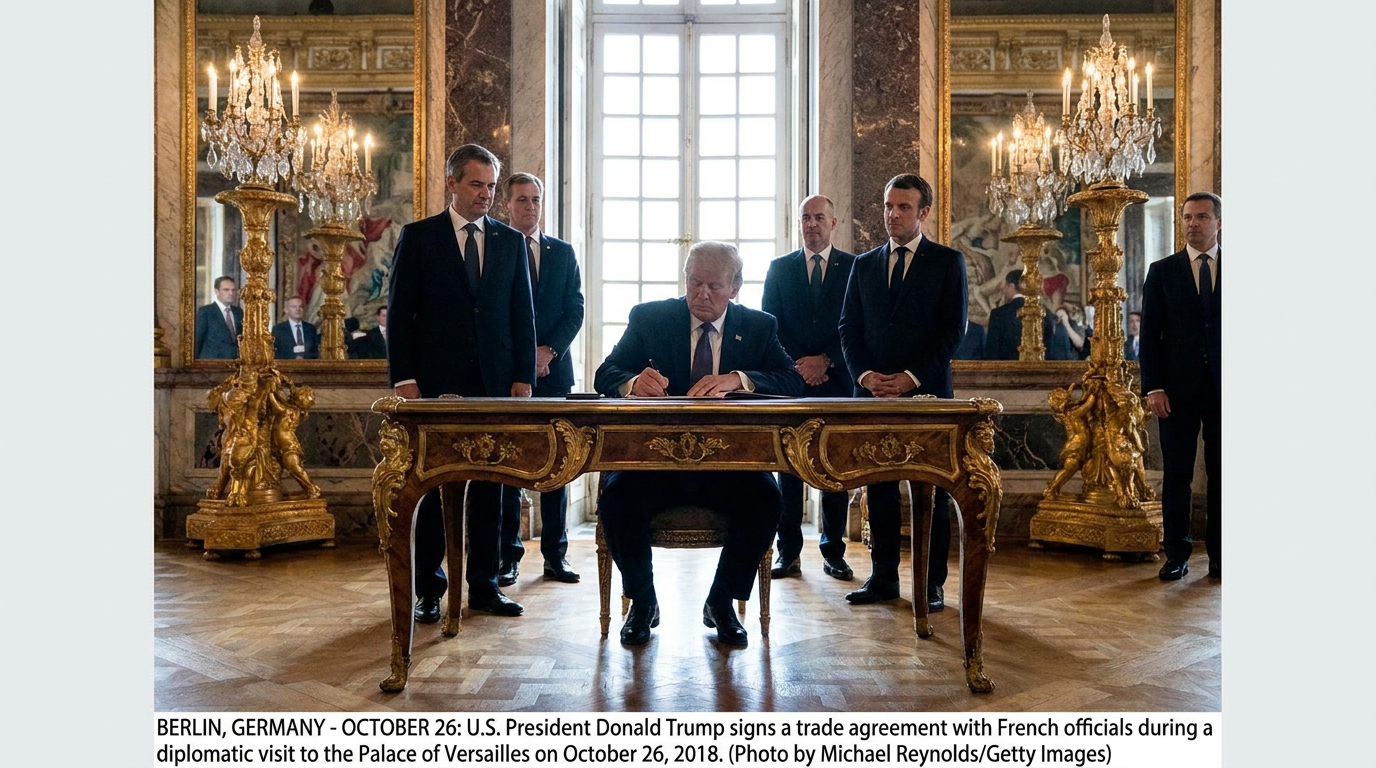
In a landmark diplomatic maneuver aimed at halting a devastating regional war, the United States and Iran have formally signed a 14-point memorandum of understanding. President Donald Trump signed the document during a dinner at the Palace of Versailles following the G7 summit in France, while Iranian President Masoud Pezeshkian signed remotely from Tehran. The interim agreement establishes a 60-day ceasefire and negotiation window, effectively pausing a conflict that has rattled the global economy and disrupted international shipping.[1][3][4][6]
The most immediate global consequence of the pact is the reopening of the Strait of Hormuz. Under the terms of the agreement, the critical waterway—through which a fifth of the world's traded oil passes—will resume toll-free commercial traffic for the next 60 days. In exchange, the United States has committed to lifting its naval blockade on Iranian ports within 30 days and will begin waiving wide-ranging economic sanctions that have crippled Tehran's economy.[2][5][7][8]
The memorandum defers a final resolution on Iran's nuclear ambitions but establishes a temporary framework. Iran has agreed to the on-site "down-blending" of its highly enriched uranium stockpile under the supervision of the International Atomic Energy Agency (IAEA). However, the agreement does not demand the complete dismantling of Iran's nuclear infrastructure or its ballistic missile program, marking a significant departure from the administration's initial wartime objectives.[2][5][7][8]

Financial concessions form the backbone of the truce. The United States has agreed to unfreeze billions of dollars in Iranian assets and pledged to work with regional partners to establish a $300 billion reconstruction fund for Iran's post-war development. The sheer scale of the economic relief has drawn sharp criticism from hardliners in Washington, though the administration insists the alternative was a catastrophic global recession.[2][5]
President Trump framed the agreement as a decisive victory that rescued the global market. Speaking to reporters in France, he argued that no previous administration had been as tough on Tehran, while simultaneously warning that the U.S. military would resume bombing if Iranian leadership failed to honor the terms. "There is nothing as smart as the market—and the market loves it," Trump remarked, defending the concessions as necessary to prevent a worldwide depression.[2][3][7]
President Trump framed the agreement as a decisive victory that rescued the global market.
In Tehran, the mood was equally triumphant. Iranian state media broadcast images of President Pezeshkian holding the signed Persian-language document, while chief negotiator Mohammad Bagher Ghalibaf characterized the deal as a "record of U.S. failure." Iranian officials boasted that their resilience had forced Washington to yield on core issues, securing massive financial relief without sacrificing their fundamental right to civilian nuclear enrichment.[2][8]

The geopolitical ripple effects extend deeply into the Levant. The memorandum explicitly calls for an "immediate and permanent termination of military operations on all fronts, including in Lebanon." This provision effectively requires Iran to rein in Hezbollah, whose leadership quickly praised the agreement as a "great victory." However, the text remains ambiguous regarding Israel's ongoing operations in southern Lebanon, leaving a dangerous gray area in the ceasefire's enforcement.[1][2][4][5]
Israeli officials have expressed profound anxiety over the framework. The agreement permits Iran to retain significant portions of its nuclear program and does not explicitly mandate an Israeli withdrawal from Lebanese territory. Security analysts warn that by leaving Iran's proxy networks and nuclear capabilities partially intact, the deal may simply delay rather than resolve the region's underlying structural conflicts.[4][5][8]

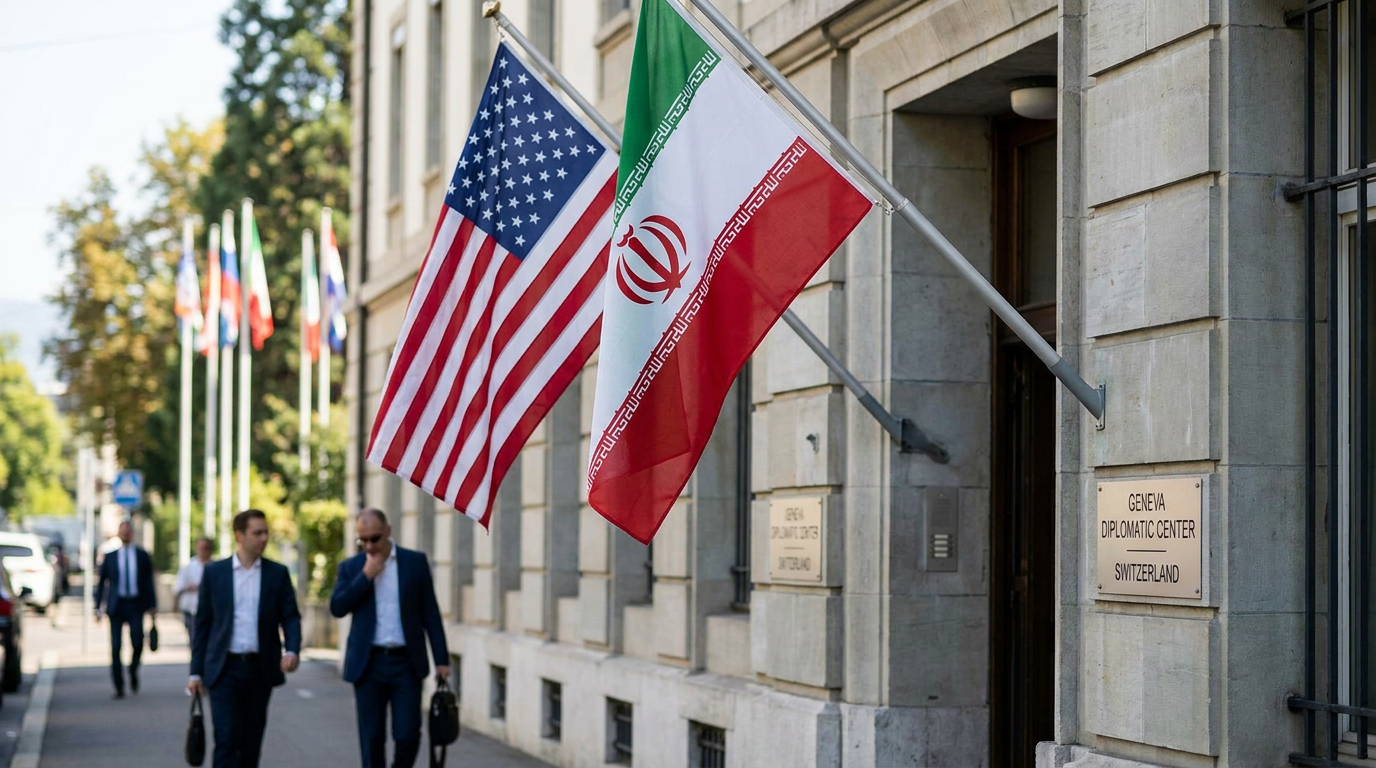
The signing initiates a precarious 60-day countdown. Negotiators from both nations are scheduled to convene in Switzerland to translate the 14-point memorandum into a comprehensive, binding treaty. With both sides retaining the right to walk away at any moment, the international community now watches to see if the temporary truce can evolve into a durable Middle Eastern peace.[1][2][5][6]
How we got here
March 2026
Hostilities escalate, leading to the militarization of the Strait of Hormuz and a U.S. naval blockade.
June 16, 2026
G7 leaders in France welcome the framework of a U.S.-Iran diplomatic breakthrough.
June 17, 2026
President Trump and President Pezeshkian sign the 14-point memorandum of understanding.
June 19, 2026
Formal 60-day negotiations are scheduled to begin at a resort in Switzerland.
Viewpoints in depth
U.S. Administration's view
The agreement is a pragmatic victory that averts a global economic crisis.
The White House argues that reopening the Strait of Hormuz was paramount to preventing a worldwide depression. By securing a 60-day window and IAEA oversight of Iran's uranium down-blending, the administration believes it has neutralized the immediate nuclear threat while stabilizing global energy markets.
Iranian Leadership's view
The deal represents a triumph of national resilience over American military pressure.
Tehran views the massive financial concessions—including sanctions relief, unfrozen assets, and a proposed $300 billion reconstruction fund—as proof that its strategy of endurance succeeded. Leaders emphasize that they retained their right to civilian nuclear enrichment and did not surrender their ballistic missile capabilities.
Israeli & Regional Security view
The framework leaves Iran's most dangerous capabilities intact.
Allies in the Middle East, particularly Israel, fear the agreement trades long-term security for short-term economic relief. They argue that allowing Iran to keep its nuclear infrastructure and failing to explicitly dismantle proxy networks like Hezbollah will only embolden Tehran once the reconstruction funds begin flowing.
What we don't know
- Whether the 60-day negotiation window will successfully yield a permanent, binding treaty.
- How Israel will respond to the ceasefire's terms regarding its ongoing military operations in southern Lebanon.
- The exact logistical mechanisms for down-blending Iran's uranium and verifying compliance.
Key terms
- Memorandum of Understanding (MoU)
- A formal agreement between two or more parties that establishes a framework for future negotiations, though often lacking the binding power of a finalized treaty.
- Strait of Hormuz
- A narrow, strategically vital waterway between the Persian Gulf and the Gulf of Oman, through which roughly 20% of the world's traded oil passes.
- Down-blending
- The process of mixing highly enriched uranium with natural or depleted uranium to reduce its concentration, making it unsuitable for nuclear weapons.
- IAEA
- The International Atomic Energy Agency, the United Nations' nuclear watchdog responsible for monitoring and verifying nuclear programs.
Frequently asked
Is the war officially over?
Military operations have been suspended under a 60-day ceasefire, but a permanent end to the war depends on the success of upcoming negotiations in Switzerland.
Will gas prices go down?
The reopening of the Strait of Hormuz is expected to significantly lower global oil prices by restoring the flow of commercial energy shipments.
Did Iran agree to give up its nuclear program?
No. Iran agreed to dilute its highly enriched uranium under international supervision, but the deal allows Tehran to maintain civilian nuclear enrichment capabilities.
Sources
Source coverage
8 outlets
3 viewpoints surfaced








[1]CBS NewsU.S. Administration
U.S., Iran remotely sign memorandum of understanding, White House official says
Read on CBS News →[2]The GuardianIranian Establishment
US releases text of Iran peace plan as Trump says deal averts 'worldwide depression'
Read on The Guardian →[3]Fox NewsU.S. Administration
Trump personally signs Iran deal at Versailles in major diplomatic breakthrough
Read on Fox News →[4]TimeRegional Security Advocates
U.S. and Iran Sign Preliminary Agreement to End War
Read on Time →[5]Council on Foreign RelationsRegional Security Advocates
Trump's Iran Deal Reopens the Strait. Much Remains to Be Done.
Read on Council on Foreign Relations →[6]AxiosRegional Security Advocates
What's in the Iran deal Trump says he's ready to sign
Read on Axios →[7]The Business TimesRegional Security Advocates
Focus turns to Strait of Hormuz after US and Iran presidents sign ceasefire agreement
Read on The Business Times →[8]ITV NewsIranian Establishment
US and Iran sign initial deal to end war and reopen Strait of Hormuz
Read on ITV News →
More in news politics
See all 5 stories →NATO Posture
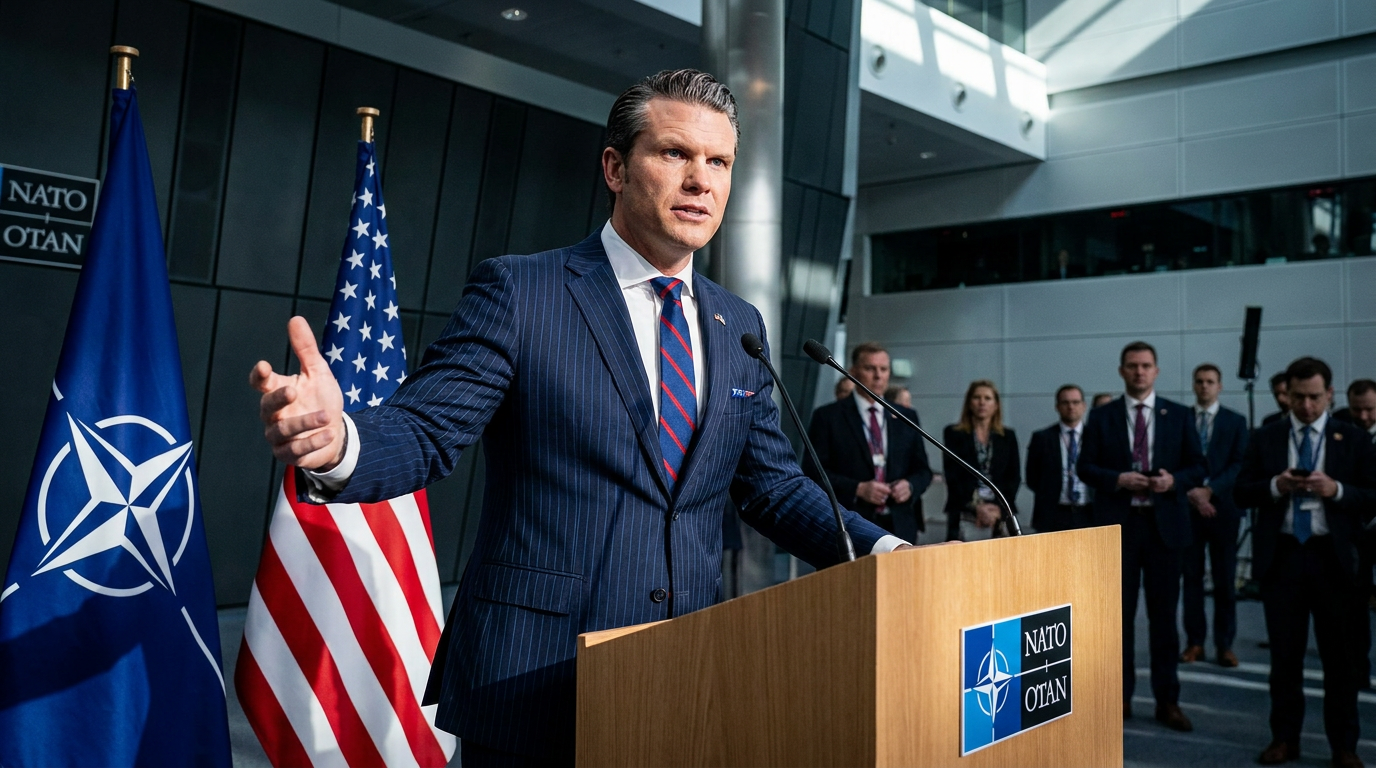
Defense Secretary Hegseth Announces Review of U.S. Forces in Europe, Cuts Crisis Commitments
7 sources
Nuclear Diplomacy
Full Text of U.S.-Iran Memorandum of Understanding Released, Outlining Ceasefire and Nuclear Framework
7 sources
Ranked-Choice Voting
Evidence Pack: Does Ranked-Choice Voting Actually Reduce Political Polarization?
7 sources
Every angle. Every day.
Get news politics stories with full source coverage and perspective breakdowns delivered to your inbox.