
The $1,000 Library Card: How Public Libraries Became the Ultimate Digital and Physical Resource Hubs
Modern public libraries have transformed into high-tech community hubs, offering free streaming, premium online courses, and physical tool lending that can save households thousands of dollars a year.

In short
- Modern public libraries have evolved far beyond physical books, offering vast digital media and physical tool collections.
- Apps like Libby, Kanopy, and Hoopla allow patrons to stream audiobooks, movies, and music for free, often replacing paid subscriptions.
- The 'Library of Things' movement lets users borrow expensive or rarely used items like sewing machines, power tools, and camping gear.
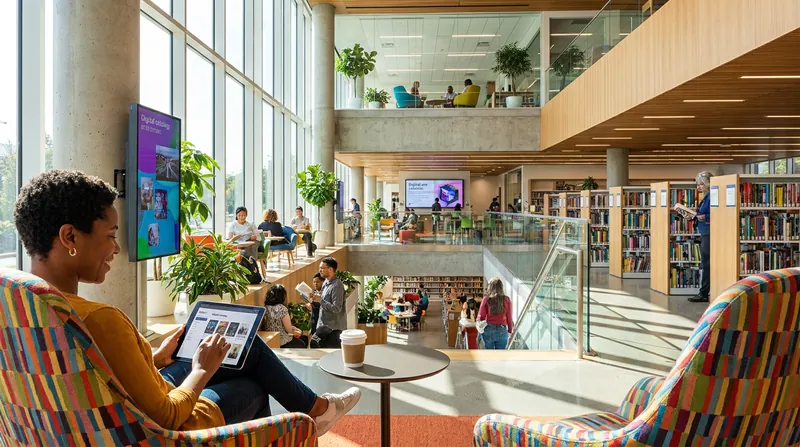
The image of the public library as a quiet warehouse for dusty books is fundamentally obsolete. In 2026, the modern library operates as a high-tech community hub, a digital media powerhouse, and a shared-economy lending center.[1]
Driven by a philosophy of "access over ownership," library systems across the United States have quietly transformed their offerings. They have recognized that in an era of subscription fatigue and rising living costs, the public needs more than just physical novels—they need access to technology, professional development, and expensive household tools.[1]
The financial implications for the average household are staggering. Frugal living advocates and financial planners increasingly point to the library card as the single most valuable piece of plastic in a consumer's wallet, capable of replacing thousands of dollars in annual subscription fees.
The most immediate digital upgrade for new library patrons is the replacement of paid audiobook and e-book subscriptions. Through apps like Libby (created by OverDrive), users can instantly borrow digital titles directly to their smartphones, tablets, or e-readers.
Because the files are digital, the borrowing mechanism is frictionless. Titles automatically return themselves at the end of the lending period, entirely eliminating the concept of late fees. For a reader who consumes a few books a month, switching from a service like Audible or Kindle Unlimited to Libby can easily save over $150 a year.
Beyond reading, libraries have aggressively entered the streaming wars. Platforms like Kanopy and Hoopla are now standard offerings at most municipal libraries. Kanopy focuses on high-quality cinema, offering ad-free access to documentaries, indie films, and the Criterion Collection.
Hoopla operates as a digital all-in-one platform, providing instant, no-waitlist access to movies, television shows, music albums, and a massive repository of graphic novels and comics. By utilizing these free platforms, households can comfortably cancel secondary streaming services, saving an estimated $100 to $200 annually.
But the most radical shift in modern library science is the rapid expansion of the "Library of Things." This initiative allows cardholders to borrow physical items that are typically expensive, bulky, or only needed for occasional use.[2]
The catalogs of these non-traditional collections are remarkably diverse. Patrons at various branches can check out sewing machines, power washers, cordless drills, and even car diagnostic readers.[2][3]
For families and hobbyists, the offerings extend into recreation. Libraries now lend out camping gear, telescopes, ukuleles, board games, and baking pans. This shared-economy model lowers the barrier to entry for new hobbies and prevents households from buying equipment that will simply gather dust in a garage after a single use.[2][3]
Digital equity and connectivity also play a major role in the Library of Things. To bridge the digital divide, many branches offer Wi-Fi hotspots and Chromebooks for checkout, ensuring that internet access is available to those who cannot afford traditional broadband.[3]
Furthermore, libraries have become vital centers for professional development and upskilling. A standard library card now frequently unlocks premium educational platforms that normally cost hundreds of dollars a year.[1]
For example, many state and local library systems provide full, unrestricted access to LinkedIn Learning (formerly Lynda.com) and Coursera. Patrons can take thousands of courses on coding, graphic design, data analytics, and management, often earning certificates they can attach directly to their professional profiles.[5]
Language learning is another major educational perk. Subscriptions to software like Mango Languages or Rosetta Stone are routinely provided for free via library portals, allowing users to learn dozens of new languages at their own pace.[5]
How is all of this funded? The modern library is supported by a combination of local municipal taxes, community bonds, and state-level grants. For instance, access to platforms like Coursera in some regions is subsidized by state libraries using federal funds, pooling taxpayer resources to negotiate massive institutional licenses that are far cheaper per capita than individual consumer subscriptions.[1][5]
To quantify this collective investment, the American Library Association and various local branches promote "Library Value Calculators." These tools allow patrons to input their monthly borrowing habits—from digital movies to museum passes—to see their exact financial return.[4]
The results are often shocking. One avid reader in Arizona recently calculated that she and her son had saved over $23,000 in five years simply by utilizing their local branch's resources.[4]
Ultimately, the modern public library stands as one of the last truly free public spaces in society—a place where individuals are treated as citizens rather than consumers. By evolving to meet the digital and practical needs of 2026, libraries are proving that their most valuable asset isn't just the books on their shelves, but the empowerment they offer their communities.[1]
Jargon, explained
- Library of Things
- A growing movement in public libraries to lend out non-traditional physical items, such as tools, electronics, and hobby equipment.
- Libby
- A popular app created by OverDrive that allows library patrons to borrow and read e-books and digital audiobooks.
- Kanopy
- A digital streaming service offered through libraries that focuses on ad-free documentaries, independent films, and educational content.
- Hoopla
- A digital media service that allows library users to instantly borrow movies, music, audiobooks, and comics with no waitlists.
- Digital Equity
- The goal of ensuring all individuals and communities have the information technology capacity needed for full participation in society, often supported by library Wi-Fi hotspot lending.
Common questions
Do I need to visit a library in person to get a card?
Many library systems now offer digital-only e-cards that you can apply for online, granting immediate access to digital resources without visiting a physical branch.
Can I use Libby on my Kindle?
Yes, in the United States, the Libby app allows you to send borrowed e-books directly to your Kindle device or the Kindle app.
Are there late fees for digital items?
No. Digital items like e-books, audiobooks, and streaming movies automatically return themselves at the end of the lending period, making late fees impossible.
What is a 'Library of Things'?
It is a collection of non-traditional items available for checkout, such as tools, electronics, musical instruments, and camping gear, designed to save patrons money on items they only need occasionally.
Competing readings
Public Librarians
Libraries are essential community infrastructure that bridge the digital and economic divide.
For library professionals, the expansion into digital streaming and physical tools is a natural evolution of their core mission: providing free access to information and resources. They argue that in an increasingly privatized and paywalled world, the library is one of the few remaining spaces where individuals are welcomed without the expectation of spending money. By offering Wi-Fi hotspots, Chromebooks, and professional development courses, librarians see themselves as frontline workers in the fight for digital equity and economic mobility.
Frugal Living Advocates
The library is the ultimate tool for combating subscription fatigue and lowering household expenses.
Financial planners and budget-conscious consumers view the modern library primarily through the lens of return on investment. They point out that the average household spends hundreds of dollars annually on redundant streaming services, audiobooks, and one-time-use tools. By aggressively utilizing apps like Libby and Kanopy, and borrowing rather than buying equipment, these advocates argue that a family can easily reclaim $500 to $1,000 a year, redirecting those funds toward savings or debt reduction.
Sustainability Proponents
The 'Library of Things' is a crucial model for reducing waste and promoting a shared economy.
Environmental advocates champion the library's shift toward lending physical objects as a highly effective sustainability measure. They argue that the traditional consumer model—where every household purchases its own power washer, sewing machine, or camping tent only to use it once a year—is ecologically disastrous. By centralizing these items for community use, libraries drastically reduce the manufacturing demand, packaging waste, and carbon footprint associated with consumer goods, proving that 'access over ownership' is viable at scale.
- Public Librarians
- Libraries are essential community infrastructure that bridge the digital and economic divide.
- Frugal Living Advocates
- The library is the ultimate tool for combating subscription fatigue and lowering household expenses.
- Sustainability Proponents
- The 'Library of Things' is a crucial model for reducing waste and promoting a shared economy.
Perspectives this story doesn't cover
- Commercial Streaming Services
- Publishers and Authors
Sources
Source coverage
5 outlets
3 viewpoints surfaced



- [1]Factlen Editorial TeamSustainability Proponents
Synthesis by Factlen editorial team
Read on Factlen Editorial Team → - [2]Glen Ellyn Public LibraryPublic Librarians
More Than Books: Discover Glen Ellyn Public Library's Library of Things
Read on Glen Ellyn Public Library → - [3]Baltimore County Public LibraryPublic Librarians
Library of Things: Find items to borrow that aren't traditionally thought of as library materials
Read on Baltimore County Public Library → - [4]I Love LibrariesFrugal Living Advocates
Save Big Money with Your Library Card!
Read on I Love Libraries → - [5]Escondido Public LibraryPublic Librarians
Learn New Skills: Coursera, LinkedIn Learning, and More
Read on Escondido Public Library →
More in Guides
See all →Corporate Tax
The Global 15% Minimum Tax: A Guide to OECD Pillar Two and US CAMT Compliance
3 sources

Open Science
How to Access Free Academic Research: A Guide to Open Access, Preprints, and Unpaywall
5 sources
Digital Libraries
The Ultimate Subscription Hack: How the Modern Library Card Unlocks Thousands in Free Digital Resources
6 sources
Digital Preservation
The Complete Guide to Future-Proofing Your Personal Digital Archive
3 sources
Comments
Every angle. Every day.
Get Guides stories with full source coverage and perspective breakdowns, free every day.