
How Solid-State Batteries Work: The Technology Reshaping Electric Vehicles in 2026
By replacing flammable liquid electrolytes with stable solid materials, solid-state batteries promise to double EV range and cut charging times to under 20 minutes. After decades in the lab, the technology is finally entering real-world road testing.
By Factlen Editorial Team
- Battery Innovators & Automakers
- Focused on the transformative potential for vehicle range, charging speed, and consumer adoption.
- Manufacturing Realists
- Emphasizing the massive scaling challenges and high costs of bringing lab breakthroughs to mass production.
- Materials Scientists
- Focused on the fundamental chemistry, dendrite suppression, and the physics of solid electrolytes.
What's not represented
- · Lithium Mining Communities
- · Legacy Auto Mechanics
Why this matters
Solid-state batteries solve the two biggest hurdles to mass EV adoption: range anxiety and fire risk. If successfully scaled, they will make electric vehicles lighter, safer, and capable of traveling over 600 miles on a single 15-minute charge.
Key points
- Solid-state batteries replace flammable liquid electrolytes with stable solid materials like ceramics or polymers.
- The technology allows for pure lithium metal anodes, drastically increasing energy density and reducing weight.
- Automakers like Stellantis and Mercedes-Benz have begun real-world road testing of solid-state cells in 2026.
- The batteries promise to deliver over 600 miles of range and charge from 15% to 90% in under 20 minutes.
- Widespread commercialization still faces significant manufacturing and cost-scaling challenges.
The electric vehicle revolution has a persistent bottleneck: the lithium-ion battery. For three decades, this chemistry has powered everything from smartphones to grid storage, but it is approaching its physical limits. Consumers still cite range anxiety, charging times, and occasional safety concerns as primary barriers to mass EV adoption.[2]
In 2026, the automotive industry is crossing a major threshold to solve these issues. Solid-state batteries (SSBs)—long considered the "holy grail" of energy storage—are finally moving out of laboratory environments and onto public roads.[1][4]
This summer, automakers like Stellantis and Mercedes-Benz began real-world road testing of vehicles equipped with advanced solid-state cells in North America and Europe. These early tests are demonstrating capabilities that fundamentally alter the math of electric mobility, including ranges exceeding 600 miles and ultra-fast charging times.[4]
To understand why solid-state batteries are such a breakthrough, it helps to look at how conventional batteries work. In a standard lithium-ion cell, energy is generated and stored as lithium ions move between two electrodes: the positive cathode and the negative anode.[2][3]

These ions travel through a liquid or gel electrolyte, which acts as the conductive highway inside the battery. While effective, this liquid electrolyte is highly flammable. Under extreme stress—such as a physical crash, overcharging, or severe heat—the liquid can ignite, triggering a dangerous chain reaction known as thermal runaway.[3][6][7]
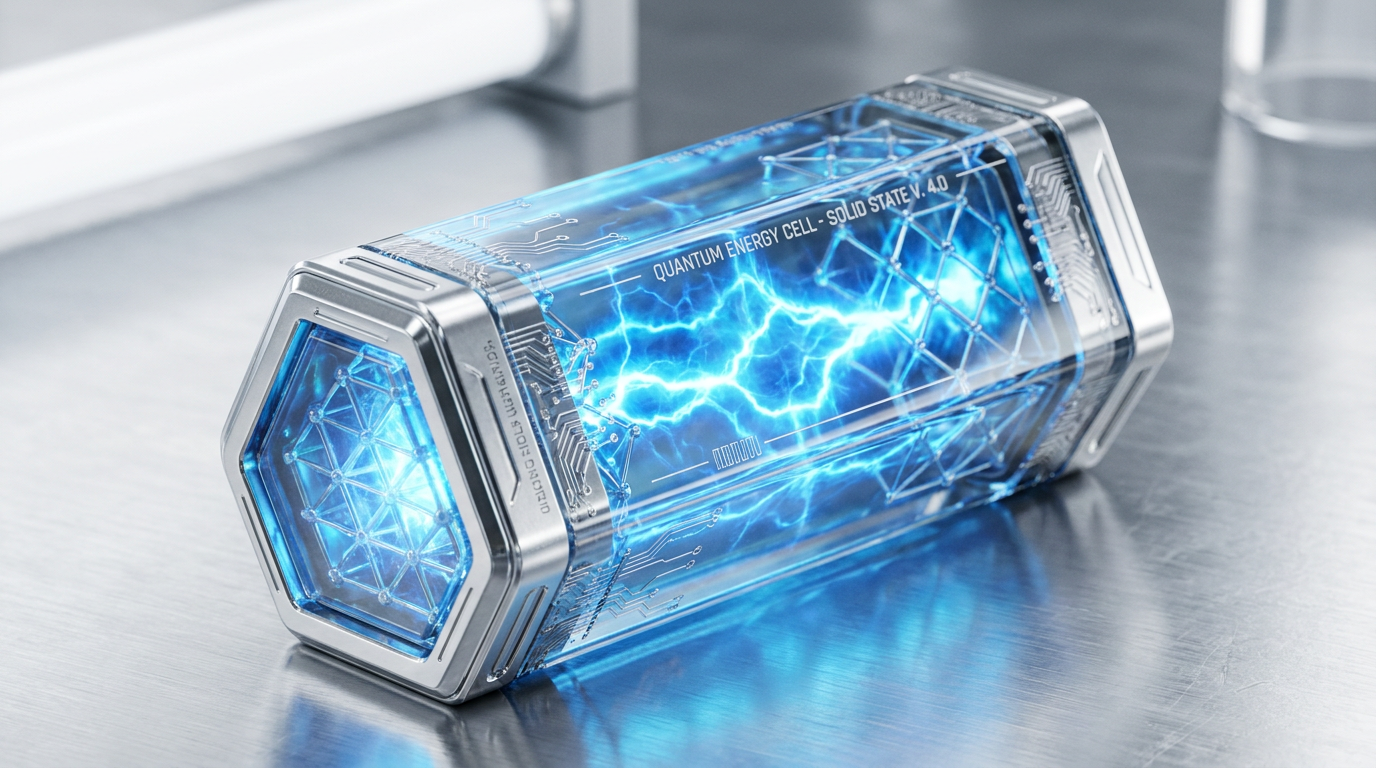
A solid-state battery fundamentally changes this architecture by replacing the liquid electrolyte with a solid material, typically made of advanced ceramics, polymers, or glass. This solid separator still allows lithium ions to pass through, but it completely eliminates the flammable liquid from the equation.[2][7]
The safety implications are profound. Comparative testing shows that thermal events in solid-state systems do not begin until temperatures reach roughly 247°C (476°F), compared to just 90°C (194°F) for conventional lithium-ion batteries. If a solid-state battery is punctured or damaged, it simply stops working rather than catching fire.[1][6][7]
If a solid-state battery is punctured or damaged, it simply stops working rather than catching fire.
But safety is only half the story; the other half is energy density. Because the solid electrolyte is physically rigid, it suppresses the formation of "dendrites." Dendrites are microscopic, needle-like metallic whiskers that can grow inside liquid batteries, eventually piercing the separator and causing short circuits.[6][7]
By preventing dendrite growth, solid-state batteries allow engineers to replace the traditional graphite anode with one made of pure lithium metal. Graphite is bulky and heavy, serving only as a host structure for the ions. Removing it drastically reduces the battery's weight and size.[1][6][7]
The result is a massive leap in energy density—the amount of energy stored per kilogram of weight (Wh/kg). Today's best lithium-ion batteries deliver between 200 and 300 Wh/kg. In contrast, the solid-state cells currently being tested by companies like Factorial Energy are achieving 375 Wh/kg, with next-generation targets aiming for 500 Wh/kg.[4][6]

For consumers, this translates directly to convenience. A vehicle equipped with solid-state cells can travel significantly further on a single charge, or it can offer the same range with a battery pack that is half the size and weight. Furthermore, the efficient ion transport allows these batteries to charge from 15% to 90% in just 18 minutes.[1][4]
Despite these breakthroughs, widespread commercialization still faces formidable hurdles. Manufacturing solid-state batteries is notoriously difficult. The solid components must maintain perfect physical contact even as the battery "breathes"—expanding and contracting during charge and discharge cycles.[1][5]
Currently, the production costs for solid-state cells remain substantially higher than those for mature lithium-ion technology. The industry must invent entirely new manufacturing processes and supply chains to produce these advanced ceramics and polymers at a global scale.[5]

How we got here
19th Century
Michael Faraday discovers the first solid electrolytes, though practical applications remain decades away.
1991
Sony commercializes the first lithium-ion battery, which becomes the global standard for portable electronics.
2010s
Researchers renew focus on solid-state technology as electric vehicles begin demanding higher energy densities.
2022
Major automakers invest billions into solid-state battery startups to accelerate lab-to-market development.
April 2026
Factorial Energy and Stellantis validate advanced solid-state cells achieving 375 Wh/kg energy density.
June 2026
The first solid-state battery-powered electric vehicles begin real-world road testing in North America.
Viewpoints in depth
Battery Innovators & Automakers
Focused on the transformative potential for vehicle range, charging speed, and consumer adoption.
For automotive manufacturers, solid-state batteries represent the ultimate competitive advantage. By doubling energy density and slashing charge times to under 20 minutes, automakers believe they can finally eliminate 'range anxiety' and achieve full parity with internal combustion engines. Companies like Stellantis, Mercedes-Benz, and Toyota view this technology as the key to unlocking the next massive wave of EV adoption, allowing them to build lighter, more efficient vehicles without compromising on safety.
Manufacturing Realists
Emphasizing the massive scaling challenges and high costs of bringing lab breakthroughs to mass production.
Industry analysts and manufacturing experts caution that building a prototype cell is vastly different from producing millions of batteries at a commercial scale. They point out that solid-state batteries currently cost significantly more than mature lithium-ion cells. Furthermore, maintaining the delicate solid-to-solid contact within the battery as it expands and contracts requires entirely new, highly precise manufacturing techniques. This camp argues that while the technology works, widespread affordability and mass-market availability may still be years away.
Materials Scientists
Focused on the fundamental chemistry, dendrite suppression, and the physics of solid electrolytes.
For the scientific community, the excitement lies in solving decades-old chemical bottlenecks. Researchers emphasize that replacing the liquid electrolyte with a solid ceramic or polymer fundamentally changes battery physics, finally allowing the safe use of pure lithium metal anodes. By physically blocking the growth of microscopic dendrites that cause short circuits, materials scientists have unlocked a new paradigm in energy storage stability, paving the way for applications far beyond just passenger vehicles.
What we don't know
- Exactly when solid-state batteries will reach price parity with traditional lithium-ion cells.
- Which specific solid electrolyte material (sulfide, oxide, or polymer) will become the dominant industry standard.
- How quickly global supply chains can pivot to source the specialized ceramics and pure lithium metal required at scale.
Key terms
- Electrolyte
- The medium inside a battery that allows ions to flow between the positive and negative ends.
- Anode
- The negative electrode of a battery, where ions are stored when the battery is fully charged.
- Cathode
- The positive electrode of a battery, where ions travel to release their stored energy.
- Dendrite
- Microscopic, needle-like metallic growths that can pierce a battery's internal separator and cause short circuits.
- Energy Density
- A measure of how much energy a battery can store relative to its weight, typically expressed in watt-hours per kilogram (Wh/kg).
- Thermal Runaway
- A dangerous chain reaction where a battery overheats uncontrollably, often leading to a fire.
Frequently asked
Are solid-state batteries safer than lithium-ion?
Yes. Because they replace flammable liquid electrolytes with stable solid materials, they are highly resistant to catching fire, even if punctured or exposed to extreme heat.
How fast can a solid-state battery charge?
Current real-world tests show that advanced solid-state cells can charge from 15% to 90% capacity in approximately 18 minutes.
When will I be able to buy a car with one?
While early road testing began in 2026, mass-market availability is expected to scale up gradually between 2028 and 2030 as manufacturing costs decrease.
Why are they so expensive right now?
The technology requires entirely new, highly precise manufacturing processes to maintain perfect contact between the solid internal components, which is currently difficult to do at a massive scale.
Sources
Source coverage
7 outlets
3 viewpoints surfaced







[1]Factlen Editorial TeamBattery Innovators & Automakers
Synthesis by Factlen editorial team
Read on Factlen Editorial Team →[2]Built InMaterials Scientists
What Is a Solid-State Battery?
Read on Built In →[3]BritannicaMaterials Scientists
Solid-state battery | Definition & Facts
Read on Britannica →[4]ElectrekBattery Innovators & Automakers
Solid-state batteries are now powering EVs in the real world
Read on Electrek →[5]IDTechExManufacturing Realists
Solid-State and Polymer Batteries 2026-2036
Read on IDTechEx →[6]TO7 MotorBattery Innovators & Automakers
Solid-State Batteries 2026: The Complete Guide
Read on TO7 Motor →[7]WikipediaMaterials Scientists
Solid-state battery
Read on Wikipedia →

Every angle. Every day.
Get guides stories with full source coverage and perspective breakdowns delivered to your inbox.