
US and Iran Sign 60-Day Ceasefire Deal to Reopen Strait of Hormuz
A 14-point interim agreement pauses the 110-day conflict, lifts the US naval blockade, and initiates a 60-day window for nuclear negotiations.
By Factlen Editorial Team

- US Administration
- Views the deal as a necessary diplomatic intervention to avert a global economic depression and safely dismantle Iran's nuclear stockpile.
- Iranian Leadership
- Views the agreement as a strategic victory that secures regime survival, immediate economic relief, and a return to global energy markets.
- Israeli & Security Hawks
- Deeply skeptical of the 60-day window, arguing the deal provides billions in sanctions relief without permanently destroying Iran's nuclear facilities.
- Global Economic Markets
- Focused primarily on the reopening of the Strait of Hormuz and the stabilization of energy prices to prevent further inflation.
What's not represented
- · Lebanese Civilians
- · Gulf State Partners
Why this matters
The reopening of the Strait of Hormuz is critical to stabilizing global energy markets and preventing a worldwide recession. For consumers, this deal is the first step toward lowering fuel costs and easing the inflationary pressures that have kept central bank interest rates high.
Key points
- The US and Iran signed a 14-point memorandum extending a ceasefire for 60 days.
- The agreement reopens the Strait of Hormuz and lifts the US naval blockade.
- Iran will down-blend its highly enriched uranium under IAEA supervision.
- The US will issue immediate waivers for Iranian crude oil exports.
- Israel is not a party to the deal and may continue operations in Lebanon.
- A proposed $300 billion reconstruction fund for Iran is contingent on a final treaty.
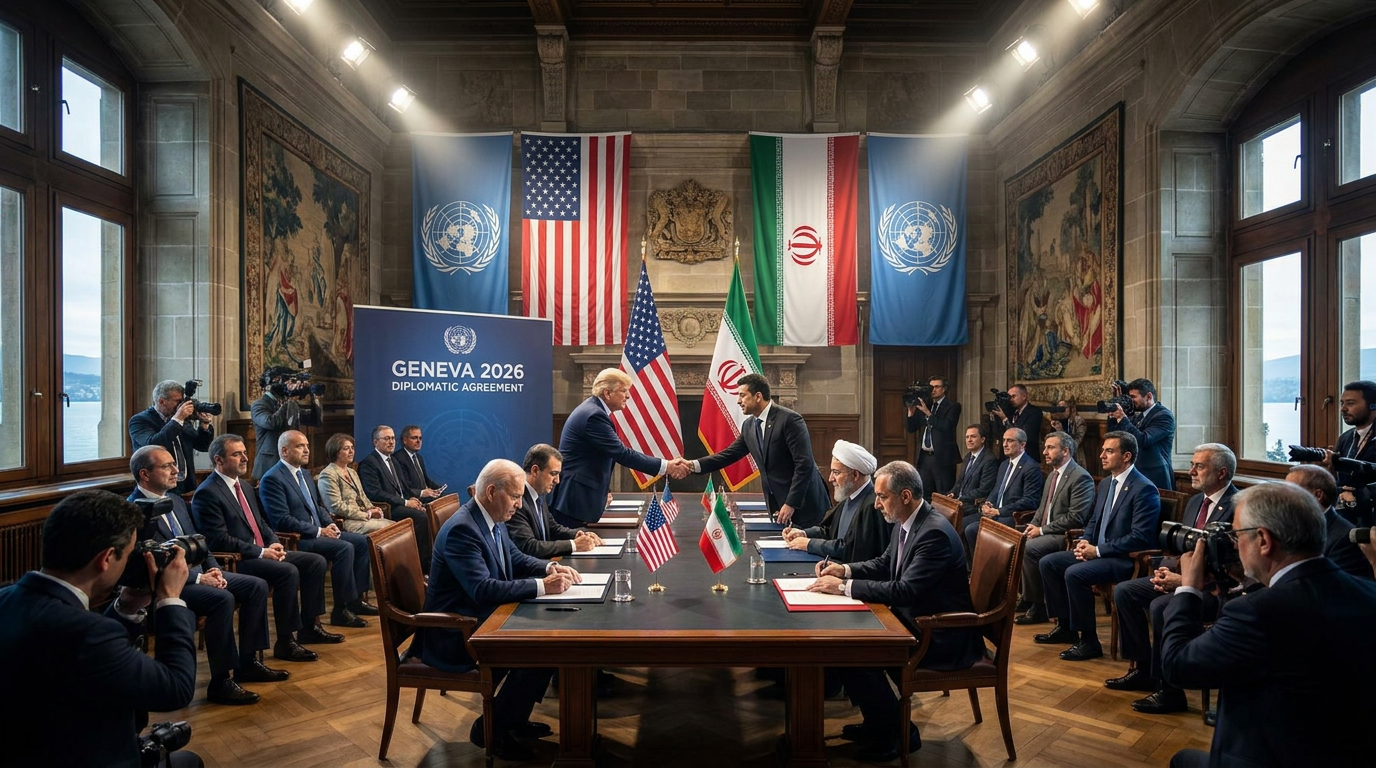
The 110-day conflict that choked the global energy supply has reached a fragile pause. US President Donald Trump and Iranian President Masoud Pezeshkian have digitally signed a 14-point memorandum of understanding, effectively extending a temporary ceasefire and initiating a 60-day window for comprehensive peace negotiations.[1][5]
The agreement, signed by Trump during a dinner with French President Emmanuel Macron at the Palace of Versailles, marks a dramatic diplomatic pivot. After months of military exchanges that began in late February, the US administration has shifted from a posture of maximum pressure to one of negotiated de-escalation, driven largely by the mounting toll on the global economy.[2][6]
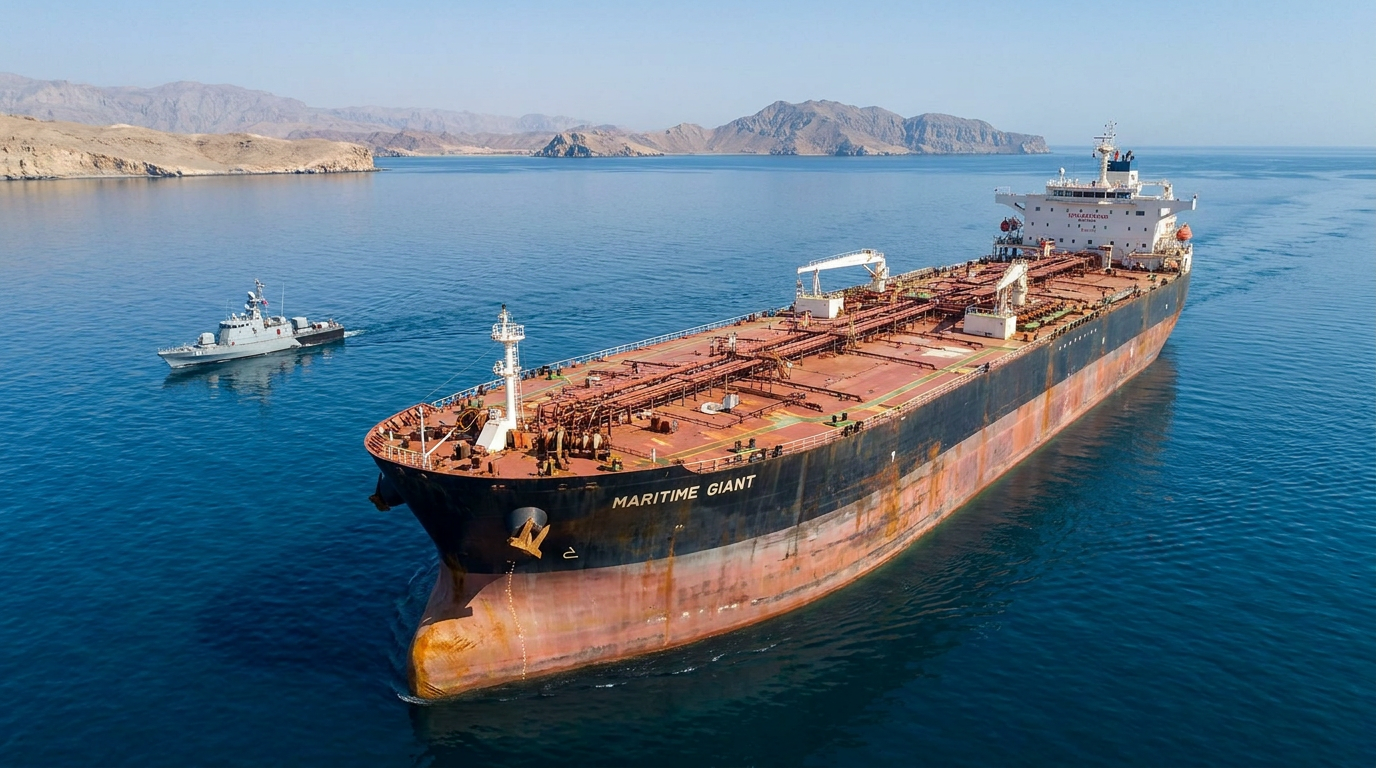
At the center of the memorandum is the immediate reopening of the Strait of Hormuz. The waterway, which previously handled a fifth of the world's oil and natural gas, had been effectively closed by Iranian mining and a retaliatory US naval blockade, paralyzing international shipping.[3][8]
Under the terms of the agreement, the US will lift its naval blockade, and Iran will clear the strait of mines, allowing toll-free commercial passage for the next 60 days. In exchange, the US Treasury Department will issue immediate waivers for Iranian crude oil exports and associated banking services.[5][8]
The economic mechanism of the deal is designed to act as a pressure release valve for global markets. The conflict had sent Brent crude prices soaring, renewing inflationary pressures worldwide and threatening to push vulnerable economies into a recession.[6]
The immediate market reaction has been one of cautious relief. Oil prices dropped sharply following the announcement, though energy experts warn that it will take months for shipping logistics to fully normalize and for energy companies to meet global demand.[6]

Central banks have been closely monitoring the geopolitical fallout. The Bank of England, for instance, opted to hold its benchmark interest rate at 3.75%, explicitly citing the inflationary risks posed by the Iran conflict and the closure of the Strait of Hormuz as primary factors in their decision.[4]
Central banks have been closely monitoring the geopolitical fallout.
Beyond the economic relief, the memorandum outlines a complex framework for addressing Iran's nuclear program. Iran has agreed to halt its military operations and "maintain the status quo" of its nuclear infrastructure during the 60-day negotiation period.[8]
Crucially, the deal requires Iran to begin "down-blending" its estimated 440-kilogram stockpile of highly enriched uranium. This process dilutes weapons-grade material into a lower-enriched form suitable only for civilian energy production, neutralizing the immediate threat of a nuclear breakout.[8]

The International Atomic Energy Agency (IAEA) will oversee this technical process on-site. IAEA Director General Rafael Grossi welcomed the agreement, noting that the agency's indispensable role is recognized in the text. "It is good that the memorandum is there," Grossi stated. "Now the technical work starts."[3][7]
Despite the diplomatic breakthrough, the agreement faces intense skepticism and structural vulnerabilities. The most immediate wildcard is the ongoing conflict in Lebanon, which threatens to drag the region back into war.[8]
While the US-Iran memorandum calls for a permanent end to military operations on all fronts, including by Iranian allies like Hezbollah, Israel is not a signatory to the pact. Israeli officials have signaled they will not withdraw from land seized in Lebanon and will continue their offensive against Hezbollah, a stance that could easily unravel the broader ceasefire.[8]
In Washington, the deal has provoked fierce blowback from security hawks and Republican allies of the administration. Critics argue that the agreement rewards Iranian aggression by unfreezing billions in assets and providing sanctions relief without permanently dismantling Tehran's nuclear infrastructure.[6][8]
The memorandum also floats the creation of a $300 billion reconstruction fund for Iran, financed by regional partners in the Gulf, contingent on a final peace settlement. This provision has fueled further domestic criticism that the US is facilitating a massive financial windfall for a hostile state.[2][8]

For the US administration, the calculus ultimately came down to global economic stability. Trump explicitly noted that continued military escalation "could have caused an international depression," framing the concessions as a necessary trade-off to restore the flow of energy and prevent a worldwide financial crisis.[6]
The clock is now ticking on the 60-day window. Mediators from Pakistan and Qatar are preparing to facilitate technical talks in Geneva, aiming to translate the 14-point memorandum into a binding, long-term treaty. Whether this pause leads to a lasting peace or merely serves as a tactical delay remains the central uncertainty of the crisis.[3][5]
How we got here
Feb 28, 2026
The US and Israel launch military operations against Iran, sparking a 110-day regional war.
April 2026
An initial, fragile ceasefire is announced but the Strait of Hormuz remains closed.
June 14, 2026
Mediators from Pakistan and Qatar finalize the text of a 14-point memorandum of understanding.
June 17, 2026
US President Donald Trump and Iranian President Masoud Pezeshkian digitally sign the interim agreement.
August 2026
The 60-day negotiation window established by the memorandum is set to expire.
Viewpoints in depth
US Administration's view
Focuses on the economic necessity of the deal to prevent a global recession.
The US administration views the agreement as a necessary intervention to stabilize global energy markets. President Trump argued that continuing the war would cause an international depression, framing the concessions as a pragmatic trade-off. Officials also point to the agreement to down-blend Iran's uranium stockpile as a concrete win for non-proliferation, neutralizing the immediate threat of a nuclear breakout without requiring a prolonged ground war.
Iranian Leadership's view
Views the deal as a strategic victory that secures regime survival and immediate economic relief.
For Tehran, the memorandum represents a lifeline. The lifting of the US naval blockade and the issuance of oil waivers allow Iran to rapidly reintegrate into global energy markets, generating desperately needed revenue. Iranian officials frame the agreement as a successful defense of their sovereignty, noting that the deal provides sanctions relief and unfreezes billions in assets while only requiring a temporary pause in their nuclear development.
Israeli & Security Hawks' view
Deeply skeptical of the 60-day window, fearing it rewards aggression without solving the nuclear issue.
Security hawks in the US and officials in Israel argue the deal is a dangerous capitulation. They contend that providing Iran with billions in sanctions relief and a $300 billion reconstruction fund rewards hostile behavior while leaving the core of Iran's nuclear infrastructure intact. Furthermore, Israeli leaders have signaled they will not abide by the ceasefire's provisions regarding Lebanon, viewing the ongoing presence of Hezbollah as an unacceptable security threat that must be addressed militarily.
What we don't know
- Whether Israel will escalate its offensive in Lebanon, potentially unraveling the broader ceasefire.
- If the 60-day negotiation window will be enough time to reach a permanent, binding nuclear treaty.
- How quickly energy companies can safely clear mines from the Strait of Hormuz and restore normal shipping volumes.
Key terms
- Down-blending
- The process of diluting highly enriched uranium with natural or depleted uranium, rendering it unusable for nuclear weapons but viable for civilian reactors.
- Memorandum of Understanding (MOU)
- A formal agreement between two or more parties that outlines the terms and details of a mutual understanding, often serving as the foundation for a legally binding contract.
- Strait of Hormuz
- A vital shipping chokepoint between the Persian Gulf and the Gulf of Oman, through which approximately 20% of the world's global oil consumption passes.
- Naval Blockade
- A military operation in which ships are used to prevent vessels from entering or leaving a nation's ports, effectively cutting off its maritime trade.
Frequently asked
Does this agreement permanently end the war?
No. The memorandum is an interim agreement that establishes a 60-day ceasefire to allow for negotiations on a final, permanent peace treaty.
Will oil prices go back to normal immediately?
While prices dropped on the news of the deal, energy experts warn it will take months to clear mines from the Strait of Hormuz and fully restore global shipping logistics.
Is Israel part of this peace deal?
No. Israel is not a signatory to the US-Iran memorandum, and Israeli officials have indicated they will continue their military operations against Hezbollah in Lebanon.
What happens to Iran's nuclear weapons program?
Under the interim deal, Iran has agreed to halt nuclear expansion and begin down-blending its highly enriched uranium under the supervision of the International Atomic Energy Agency.
Sources
Source coverage
8 outlets
4 viewpoints surfaced








[1]Fox NewsUS Administration
Trump personally signs Iran deal in major diplomatic breakthrough
Read on Fox News →[2]NPRIsraeli & Security Hawks
Trump signs agreement with Iran. And, the president's approval hits record lows
Read on NPR →[3]Al JazeeraIranian Leadership
World reacts to US-Iran deal to extend ceasefire, reopen Strait of Hormuz
Read on Al Jazeera →[4]The GuardianGlobal Economic Markets
Bank of England keeps interest rates at 3.75% as Iran conflict weighs on economy
Read on The Guardian →[5]AxiosUS Administration
U.S. and Iran sign deal ahead of schedule
Read on Axios →[6]BloombergUS Administration
Trump Signs Interim Iran Deal as Focus Shifts to Hormuz
Read on Bloomberg →[7]ReutersGlobal Economic Markets
UN nuclear watchdog chief welcomes Iran-US peace deal, says technical work starts now
Read on Reuters →[8]Council on Foreign RelationsIsraeli & Security Hawks
Where the U.S.-Iran Deal Lands on Core Issues
Read on Council on Foreign Relations →
More in news politics
See all 7 stories →Labor Law
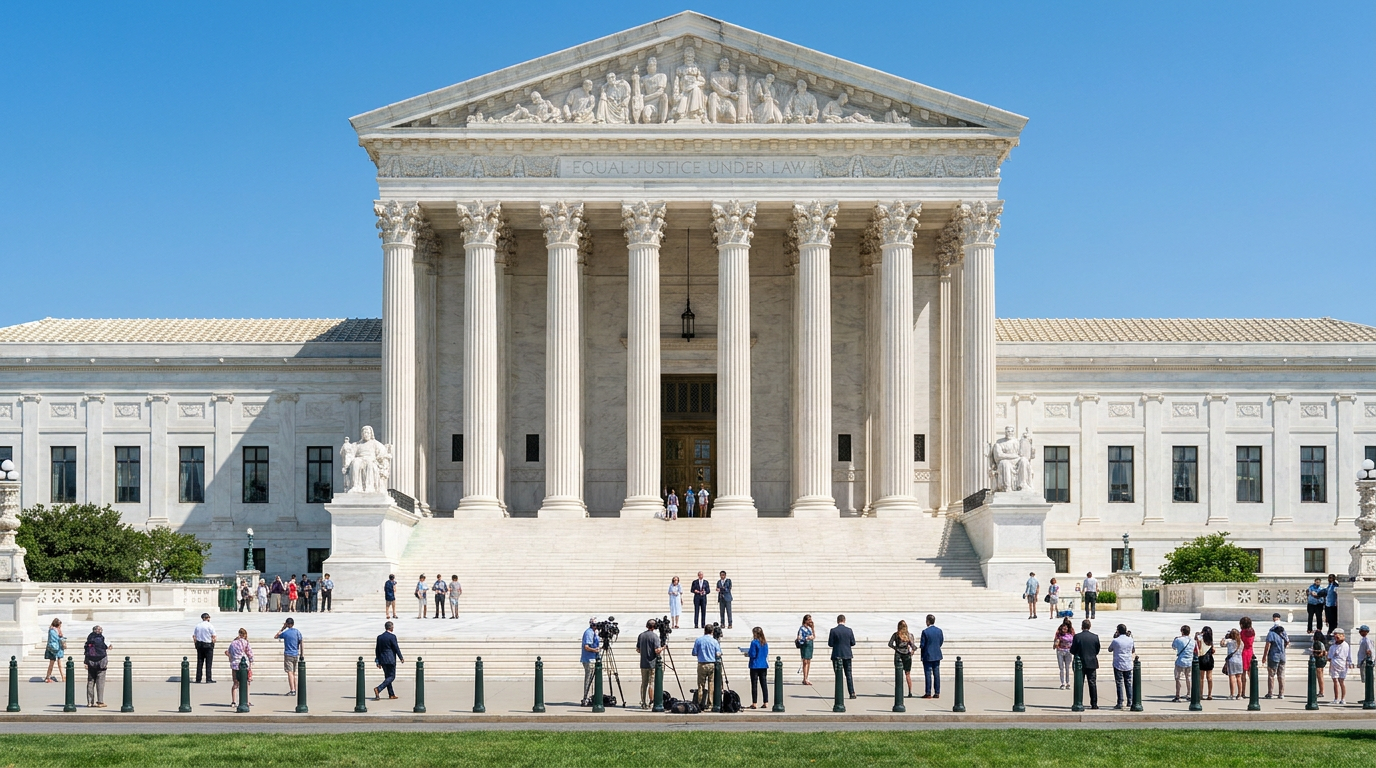
Supreme Court Rules Last-Mile Delivery Drivers Cannot Be Forced Into Arbitration
9 sources
Pentagon Rebranding
Congress Advances Trump's Push to Rename Pentagon the 'Department of War'
6 sources
Labour Party
UK Voters Head to Polls in Makerfield By-Election That Could Topple Prime Minister Keir Starmer
7 sources

US-Iran Deal
U.S. and Iran Sign 14-Point Memorandum to End Conflict and Reopen Strait of Hormuz
8 sources
Every angle. Every day.
Get news politics stories with full source coverage and perspective breakdowns delivered to your inbox.