
Japanese Biotech Firm Secures Funding for Phase II Trials of Tooth Regrowth Drug
Toregem BioPharma has raised $5.3 million to advance clinical trials for an experimental drug designed to regrow natural teeth. The therapy, which targets dormant tooth buds, will next be tested in children born with congenital tooth loss.
By Factlen Editorial Team
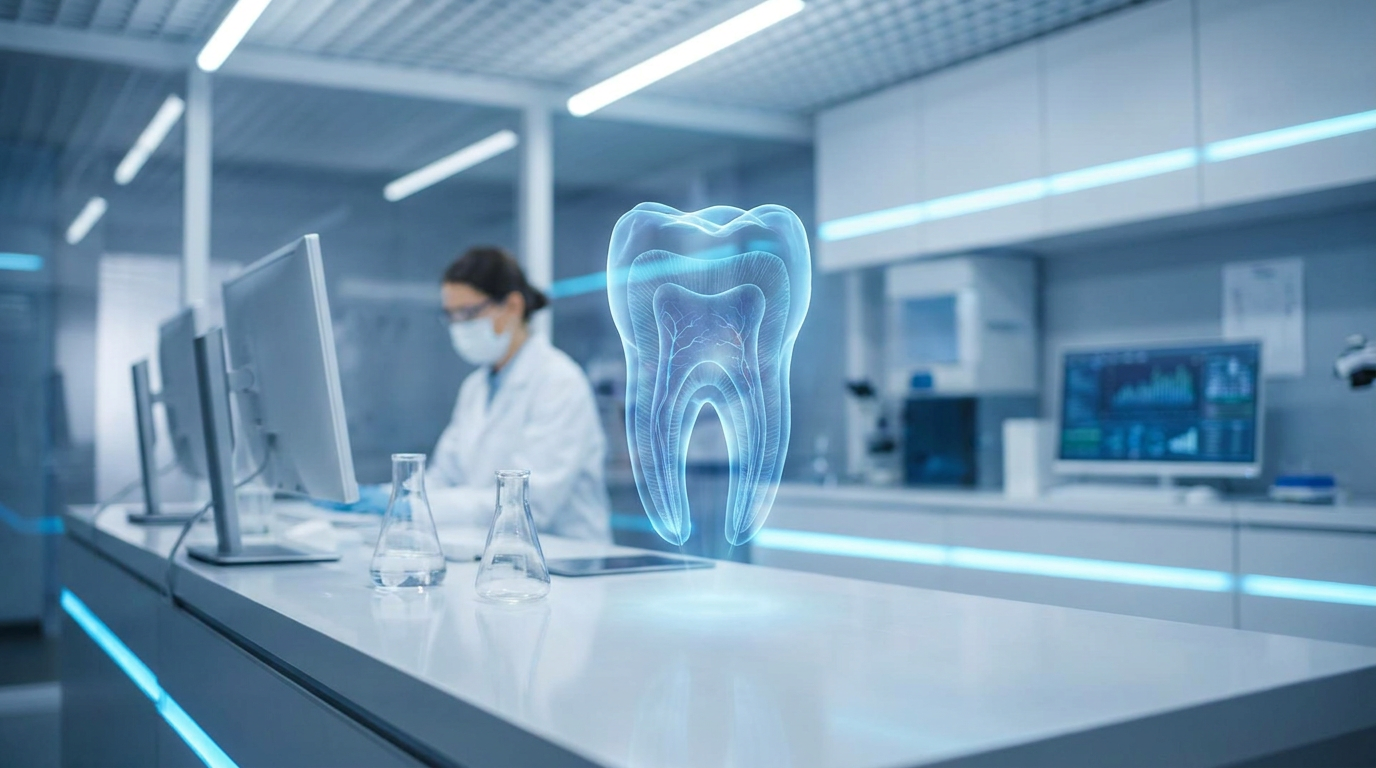
- Regenerative Medicine Researchers
- Scientists focused on unlocking the body's natural ability to regenerate teeth.
- Clinical Skeptics
- Independent dental experts urging caution about the drug's efficacy in older adults.
- Congenital Dental Patients
- Advocates for children born without teeth who view this as a vital medical intervention.
What's not represented
- · Dental Implant Manufacturers
- · Health Insurance Providers
Why this matters
If successful, this drug would fundamentally transform dentistry by replacing artificial implants and dentures with biological tooth regeneration. It offers immediate hope for children born without teeth and could eventually provide a permanent solution for adults suffering from age-related tooth loss.
Key points
- Toregem BioPharma raised $5.3 million to advance its experimental tooth-regrowth drug, TRG035, into Phase II clinical trials.
- The monoclonal antibody works by neutralizing the USAG-1 protein, which naturally suppresses the growth of dormant tooth buds.
- Phase I safety trials involving 30 healthy adult men concluded without serious adverse events.
- The upcoming Phase II trials will focus on children aged 2 to 7 who suffer from severe congenital tooth agenesis.
- If clinical trials succeed, the company aims to launch the therapy commercially by 2030, eventually targeting age-related tooth loss.
- Independent experts caution that regrowing teeth in older adults may be difficult due to a lack of foundational dental stem cells.
Modern dentistry relies entirely on artificial replacements—titanium implants, porcelain crowns, and acrylic dentures. Once an adult tooth is lost, the human body cannot replace it. But a pioneering clinical trial currently underway in Japan is attempting to rewrite that fundamental biological rule.[1][2]
Kyoto University spin-off Toregem BioPharma has developed an experimental monoclonal antibody, known as TRG035, designed to stimulate the body to grow a natural "third set" of teeth.[2][3]
In mid-2026, the company announced it had raised approximately $5.3 million in a Pre-Series C financing round to advance the drug into Phase II clinical trials. This milestone follows a Phase I safety trial, launched in late 2024, which tested the drug on 30 healthy adult men missing at least one molar.[1][3]
The mechanism behind TRG035 sounds like science fiction, but it relies on dormant biological pathways that already exist. Humans naturally grow two sets of teeth: baby teeth and adult teeth. However, researchers discovered that humans also possess tiny, residual "tooth buds" embedded in the jaw that theoretically have the potential to form a third set.[2][5]
These dormant buds are kept permanently inactive by a specific protein called USAG-1, which acts as a molecular off-switch for tooth development. By neutralizing this protein, TRG035 removes the biological barrier, signaling the dormant buds to wake up and begin growing into fully functional teeth.[1][4]

The foundational research, led by Dr. Katsu Takahashi, began nearly two decades ago. Initial animal trials demonstrated that a single injection of the antibody successfully promoted the growth of "third generation" teeth in mice and ferrets without notable side effects.[1][2]
While the ultimate dream is to replace teeth lost to decay or injury in adults, the immediate clinical focus is on a rare genetic condition. The upcoming Phase II trials will target children aged 2 to 7 who suffer from congenital tooth agenesis.[2][3]
While the ultimate dream is to replace teeth lost to decay or injury in adults, the immediate clinical focus is on a rare genetic condition.
Congenital agenesis, or hypodontia, affects roughly one in a thousand people, causing them to be born missing six or more teeth. The condition leads to severe chewing difficulties, nutritional challenges, and significant social stigma, often requiring young children to wear dentures or face masks.[2][5]
For these children, a successful regenerative therapy would be life-changing. It would eliminate the need for a lifetime of invasive dental prosthetics that must be constantly resized and surgically adjusted as their jaws grow.[3][5]
If the pediatric trials prove successful, Toregem BioPharma aims to make the treatment commercially available by 2030. Eventually, the company hopes to expand the drug's application to the broader adult population.[2][4]

The implications for aging societies are profound. In Japan alone, government data indicates that over 90% of adults over the age of 75 are missing at least one tooth. Restoring natural dentition could drastically improve systemic health, nutrition, and overall quality of life for seniors worldwide.[2][5]
Despite the optimism and recent funding, independent dental experts caution that significant hurdles remain. While the Phase I safety data appears favorable, actual tooth regeneration in humans has not yet been officially confirmed in peer-reviewed literature.[3][4]
Dr. Mary MacDougall, dean of the faculty of dentistry at the University of British Columbia, has pointed out that the therapy relies heavily on the presence of dental epithelial cells. While children with congenital conditions still possess these foundational cells, older adults who lost teeth decades ago may lack the necessary cellular architecture to grow a new tooth.[4][6]
Another major clinical challenge is targeting. Researchers must ensure that the systemic antibody only triggers tooth growth in the specific empty socket, rather than causing unwanted extra teeth to erupt randomly across the jaw.[4][6]

A recent study on cellular self-organization offered some hope on this front, showing that tooth growth cells taken from different parts of the mouth naturally reorganize themselves to form the correct tissue structures when stimulated.[1]
For now, TRG035 remains strictly investigational. Dentists emphasize that while biological tooth regeneration is closer to reality than ever before, patients should continue prioritizing traditional oral hygiene and preventive care, as commercial availability for the general public is still years away.[2][5]
How we got here
2005
Initial research begins into the genetic mechanisms of tooth development and the role of the USAG-1 protein.
July 2023
Researchers at Kitano Hospital announce the development of TRG035, an antibody designed to regrow teeth.
October 2024
Phase I clinical trials begin at Kyoto University Hospital to test the drug's safety in 30 healthy adult men.
May 2026
Toregem BioPharma raises $5.3 million to fund Phase II trials targeting children with congenital tooth agenesis.
2030
Targeted commercial launch date for the first approved tooth regeneration therapy.
Viewpoints in depth
Regenerative Medicine Researchers
Scientists focused on unlocking the body's natural ability to heal and regenerate tissue.
This camp, led by the researchers at Toregem BioPharma and Kyoto University, views the human body as having untapped regenerative potential. They point to the successful regrowth of functional teeth in mice and ferrets as proof that the biological pathways for a 'third set' of teeth exist in mammals. Their focus is on safely neutralizing the molecular barriers that keep these pathways dormant, believing that biological regeneration is vastly superior to artificial implants.
Clinical Skeptics
Independent dental experts who urge caution regarding the drug's application in older adults.
While acknowledging the breakthrough for congenital conditions, these experts highlight the biological realities of aging. They argue that adults who lost teeth decades ago to decay or trauma likely lack the foundational dental epithelial cells required to form a new tooth. Furthermore, they raise concerns about the difficulty of targeting a systemic drug to regrow a single missing tooth without inadvertently triggering unwanted dental growth in other parts of the jaw.
Congenital Dental Patients
Advocates and families affected by severe tooth agenesis who are desperate for biological solutions.
For individuals born missing six or more teeth, current treatments involve a grueling childhood of wearing adult-style dentures or undergoing multiple invasive surgeries as their jaws grow. This camp views the TRG035 trials not as a cosmetic luxury, but as a vital, life-changing medical intervention that could eliminate severe chewing difficulties, nutritional deficits, and the profound social stigma associated with the condition.
What we don't know
- Whether the drug can successfully stimulate tooth growth in older adults who lost their teeth decades ago.
- How precisely the systemic antibody can be targeted to grow a single missing tooth without causing unwanted dental growth elsewhere.
- The long-term cost and accessibility of the monoclonal antibody treatment once it reaches the commercial market.
Key terms
- Tooth agenesis
- A congenital condition where one or more teeth fail to develop from birth.
- USAG-1
- A specific protein in the body that acts as a molecular off-switch, preventing dormant tooth buds from growing.
- Monoclonal antibody
- A lab-made protein designed to bind to a specific target in the body—in this case, neutralizing the USAG-1 protein.
- Tooth bud
- A small mass of tissue in the jaw that has the cellular potential to develop into a fully formed tooth.
- Dental epithelial cells
- Foundational cells required for the development and formation of tooth enamel and structure.
Frequently asked
When will the tooth regrowth drug be available to the public?
If clinical trials are successful, Toregem BioPharma aims to make the drug commercially available by 2030, initially for congenital conditions.
How does the TRG035 drug actually work?
The drug is an antibody that blocks USAG-1, a protein that normally stops teeth from growing. By neutralizing it, the drug signals dormant tooth buds in the jaw to begin developing.
Will this treatment work for adults who lost teeth to cavities?
That is the ultimate goal, but experts caution it may be difficult. Older adults may lack the necessary dental stem cells that are still present in children.
What are the current alternatives to this drug?
Currently, lost teeth can only be replaced with artificial prosthetics, such as titanium dental implants, bridges, or removable dentures.
Sources
Source coverage
6 outlets
3 viewpoints surfaced






[1]Dentistry.co.ukCongenital Dental Patients
Whole tooth regrowth with anti-USAG-1 antibody therapy
Read on Dentistry.co.uk →[2]Futura SciencesRegenerative Medicine Researchers
Pioneering clinical trial in Japan tests tooth regrowth medicine
Read on Futura Sciences →[3]The Economic TimesRegenerative Medicine Researchers
Toregem BioPharma secures $5.3 million to advance tooth-regeneration drug
Read on The Economic Times →[4]FuturismClinical Skeptics
Plans Accelerated for Human Trials of Tooth Regeneration
Read on Futurism →[5]Cinik DentalRegenerative Medicine Researchers
Tooth Regeneration Therapy: A Future Full of Smiles
Read on Cinik Dental →[6]New ScientistClinical Skeptics
Will we ever be able to regrow human teeth?
Read on New Scientist →

More in health
See all 5 stories →Longevity Science
The Science of 'Zombie Cells': How Senolytics Are Reshaping the Future of Aging
7 sources
Cancer Prevention
Cervical Cancer Deaths Fall to Zero Among Vaccinated Young Women in England
6 sources

Cervical Cancer
HPV Vaccine Eliminates Cervical Cancer Deaths in Young English Women, Landmark Study Finds
6 sources
Every angle. Every day.
Get health stories with full source coverage and perspective breakdowns delivered to your inbox.