
How Next-Generation Geothermal is Unlocking 24/7 Clean Power Anywhere on Earth
Breakthroughs in horizontal drilling and millimeter-wave technology are freeing geothermal energy from its geographic constraints, promising a massive expansion of firm, carbon-free baseload power.
By Factlen Editorial Team
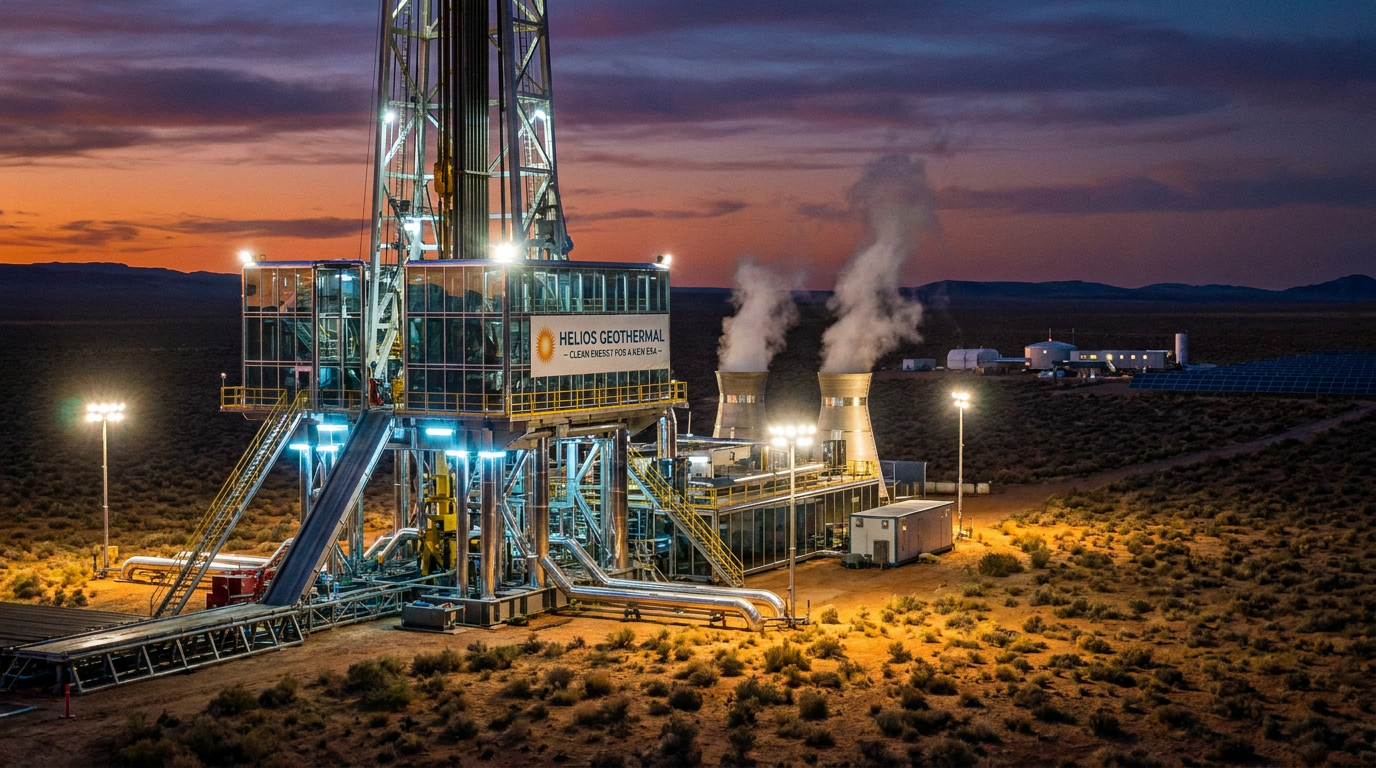
- Geothermal Developers
- Focus on rapid commercialization, leveraging oil and gas technology to scale baseload power quickly.
- Subsurface Researchers
- Prioritize rigorous data validation, seismic safety monitoring, and proving the fundamental physics of deep rock.
- Energy Policy Analysts
- Evaluate the macroeconomic potential, grid reliability impacts, and regulatory hurdles facing the technology.
What's not represented
- · Fossil Fuel Workforce
- · Local Communities Near Drilling Sites
Why this matters
Unlike wind and solar, geothermal provides continuous, reliable power regardless of the weather. By tapping into the Earth's near-limitless subsurface heat, next-generation systems could replace fossil-fuel baseload plants and solve the grid's biggest reliability challenges.
Key points
- Next-generation geothermal uses oil and gas drilling techniques to tap heat from dry rock, bypassing the need for natural hot springs.
- Fervo Energy's Project Red has operated continuously for over 600 days, proving the commercial viability of Enhanced Geothermal Systems (EGS).
- Quaise Energy is pioneering millimeter-wave drilling to vaporize rock, aiming to reach superhot depths of up to 20 kilometers.
- The U.S. DOE estimates geothermal capacity could grow from 4 GW today to 90 GW by 2050, providing crucial 24/7 baseload power.
The global energy transition has long faced a structural dilemma: how to maintain a reliable power grid when the cheapest clean energy sources—wind and solar—are inherently intermittent. While battery storage can bridge short gaps, the grid requires "firm" baseload power that runs 24 hours a day, 365 days a year. Nuclear energy provides this, but often faces steep capital costs and regulatory friction. For decades, energy planners have looked beneath their feet at the Earth's molten core, recognizing that the planet itself is a massive, continuously regenerating thermal battery.[8]
Historically, tapping into that subterranean battery has been severely constrained by geography. Conventional geothermal energy relies on a rare geological trifecta: high subsurface heat, naturally occurring water, and highly permeable rock. Because these conditions only naturally align in volcanically active regions like Iceland, Kenya, or parts of the American West, geothermal power has remained a niche player, supplying less than one percent of global electricity. But a new paradigm, known as next-generation geothermal, is systematically stripping away those geographic limits.[5][8]
The most mature of these new approaches is Enhanced Geothermal Systems (EGS). Rather than hunting for naturally occurring underground aquifers, EGS engineers create their own. The technology borrows heavily from the tools pioneered by the oil and gas industry during the shale revolution—specifically, horizontal directional drilling and hydraulic fracturing. By applying these techniques to hot, dry, crystalline rock deep underground, developers can manufacture the permeability that nature failed to provide.[6][7]
The mechanics of an EGS facility are elegant in their closed-loop simplicity. Developers drill an injection well several kilometers down into the hot bedrock, then steer the drill bit horizontally. They use high-pressure fluid to create a network of millimeter-thin fractures in the rock, known as hydro-shearing. A second well—the production well—is drilled to intersect this newly created fracture network. Cold water is pumped down the injection well, absorbs the ambient heat as it permeates through the fractured rock, and is forced up the production well to drive a steam turbine on the surface.[1][6]

For years, EGS was viewed as a promising but unproven theory. That changed definitively with Fervo Energy's Project Red in Nevada. Designed as a rigorous, field-scale testing platform, Project Red has now operated continuously for more than 600 days. The system has required zero downhole remediations or chemical treatments, proving that engineered fracture networks in hard rock can sustain long-term fluid circulation without degrading. It consistently delivered an average gross power output of 2.1 megawatts at a production temperature of 347 degrees Fahrenheit.[1]
Armed with that validation, the industry is now moving rapidly toward commercial scale. Fervo is currently constructing Cape Station, a massive 400-megawatt EGS facility in Beaver County, Utah. The company expects to deliver its first 100 megawatts of continuous power to the grid by 2026. Crucially, the economics are improving alongside the engineering. Thanks to iterative learning and the use of advanced polycrystalline diamond compact (PDC) drill bits, drilling speeds in the sector have improved by 500 percent over the past three years, driving down the capital costs that have historically plagued geothermal projects.[1][3]
Much of this rapid acceleration can be traced back to the U.S. Department of Energy's Utah FORGE project. Located just miles from Fervo's Cape Station, FORGE operates as a dedicated, open-source field laboratory for EGS technology. In late 2024, FORGE completed a milestone 28-day circulation test that continuously produced 15 megawatts of thermal power. By publicly sharing its drilling data, seismic monitoring results, and reservoir modeling, FORGE has significantly de-risked the sector for private capital, acting as an incubator for the entire next-generation geothermal ecosystem.[3]

As EGS scales, developers must navigate the primary environmental concern associated with fracturing subsurface rock: induced seismicity. Creating artificial fracture networks inherently involves breaking rock, which generates microseismic events. While these events are typically too small to be felt on the surface, the history of wastewater injection in the oil and gas industry has made regulators and local communities understandably cautious about any technology that alters subsurface pressures.[4]
As EGS scales, developers must navigate the primary environmental concern associated with fracturing subsurface rock: induced seismicity.
To address these concerns, researchers are deploying unprecedented monitoring arrays. Between July 2025 and February 2026, geophysicists from Lawrence Berkeley National Laboratory continuously monitored microseismic activity nearly 7,000 feet underground at Fervo's Cape Station. Using custom-built seismometers capable of surviving 338-degree Fahrenheit temperatures for months on end, the team proved that EGS reservoirs can be safely and continuously monitored in real-time. This high-fidelity data allows operators to adjust injection pressures dynamically, mitigating the risk of larger seismic events before they occur.[4]
While EGS is unlocking hot rock at depths of three to five kilometers, a second frontier of next-generation geothermal is aiming even deeper. Known as Superhot Rock Geothermal (SHR), this approach seeks to reach depths of 10 to 20 kilometers, where temperatures routinely exceed 400 degrees Celsius (752 degrees Fahrenheit). At these extreme temperatures, water enters a "supercritical" state—a phase of matter that is neither fully liquid nor fully gas, but possesses the density of a liquid and the flow properties of a gas.[6][7]
The energy density of supercritical water is staggering. A single well tapping into superhot rock could theoretically produce five to ten times more electricity than a conventional geothermal well. However, reaching these depths presents a formidable engineering challenge. Traditional mechanical drilling relies on physical contact, and at 400 degrees Celsius, the tungsten-carbide drill bits used by the oil and gas industry simply melt, while the drilling mud used to clear rock cuttings bakes into solid clay.[2][7]
To bypass the limits of mechanical friction, a company called Quaise Energy is pioneering a radically different approach: millimeter-wave drilling. Born out of nuclear fusion research at the Massachusetts Institute of Technology, the technology uses a device called a gyrotron to generate tightly focused, high-frequency electromagnetic waves. Instead of grinding through the rock, the millimeter waves ablate, melt, and vaporize the granite without any physical equipment ever touching the bottom of the hole.[2]

In July 2025, Quaise achieved a major milestone by successfully drilling a 100-meter test hole using its proprietary millimeter-wave technology at a site in Central Texas. The company's strategy is a hybrid one: use cheap, conventional rotary drilling to get through the softer sedimentary layers near the surface, and then switch to the gyrotron to vaporize a path through the ultra-hard, ultra-hot basement rock. Quaise is currently developing Project Obsidian, a pilot plant targeted for commercial operation by 2030.[2]
If superhot rock geothermal can be commercialized, it offers a unique logistical advantage: it can be deployed almost anywhere on the planet. Because the Earth's core is universally hot, drilling deep enough guarantees access to baseload energy regardless of the surface geography. This universal access opens the door to a massive infrastructure recycling program, allowing energy companies to drill superhot wells directly adjacent to existing, soon-to-be-retired coal and natural gas plants.[2][7]
By co-locating geothermal wells at legacy fossil fuel sites, developers can bypass one of the most significant bottlenecks in the energy transition: grid interconnection. The superhot geothermal steam can be plugged directly into the existing steam turbines, utilizing the legacy plant's transmission lines, substations, and cooling towers. This "drop-in" replacement strategy preserves local tax bases and offers a direct transition pathway for the existing fossil fuel workforce.[2][5]
The macroeconomic potential of these combined technologies is vast. The U.S. Department of Energy estimates that with continued technological refinement, domestic geothermal capacity could cost-effectively grow from just 4 gigawatts today to 90 gigawatts by 2050—and potentially up to 300 gigawatts under aggressive deployment scenarios. Globally, the International Energy Agency projects that next-generation geothermal could meet 15 percent of the total growth in worldwide electricity demand over the next two and a half decades.[5]

Despite the profound momentum, the industry still faces steep hurdles. The upfront capital expenditure required to drill multi-kilometer wells remains high, and the sector currently relies on clean energy mandates and federal subsidies to compete with cheap natural gas. Furthermore, because many of the best near-surface geothermal resources in the U.S. are located on federal land in the West, developers face a sluggish, multi-year environmental permitting process that was designed for oil and gas exploration, not clean energy.[5][6]
Yet, the trajectory is unmistakable. By merging the subsurface mastery of the oil and gas industry with the high-tech innovations of fusion research, next-generation geothermal is solving its own geographic limitations. It is evolving from a localized geological anomaly into a scalable, manufactured technology. As the grid grows increasingly hungry for firm, carbon-free power to support electrification and artificial intelligence, the heat beneath our feet is finally ready to be unleashed.[5][8]
How we got here
1960
The Geysers geothermal field begins generating electricity at scale in California, relying on natural steam reservoirs.
2015
The U.S. Department of Energy selects the Utah FORGE site to serve as a dedicated field laboratory for EGS research.
2023
Fervo Energy's Project Red successfully demonstrates commercial-scale EGS physics, achieving continuous power generation.
Sept 2024
Utah FORGE completes a 28-day circulation test, producing 15 megawatts of thermal power and validating reservoir connectivity.
July 2025
Quaise Energy successfully drills 100 meters using millimeter-wave technology, a major milestone for superhot rock access.
2026
Fervo Energy targets the delivery of the first 100 megawatts of continuous power from its Cape Station facility in Utah.
Viewpoints in depth
Geothermal Developers' view
Focuses on rapid commercialization and leveraging existing oil and gas technology to scale baseload power.
Companies like Fervo Energy and Quaise Energy argue that the technology to unlock the Earth's heat already exists or is rapidly maturing. By repurposing the horizontal drilling and hydraulic fracturing techniques perfected during the shale revolution, developers believe they can manufacture geothermal reservoirs anywhere. They emphasize that the primary goal now is scaling up operations to drive down capital costs, proving to utilities that engineered geothermal can serve as a reliable, drop-in replacement for retiring coal and natural gas plants.
Subsurface Researchers' view
Prioritizes rigorous data validation, seismic safety monitoring, and proving the fundamental physics of deep rock.
Scientists at institutions like Lawrence Berkeley National Laboratory and the Utah FORGE project focus on the complex mechanics of the subsurface. They argue that while the commercial momentum is promising, long-term success requires a deep understanding of how engineered fracture networks behave over decades. This camp heavily emphasizes the need for continuous, high-fidelity seismic monitoring to ensure that hydro-shearing does not trigger damaging induced earthquakes, and they advocate for open-source data sharing to de-risk the technology for the entire industry.
Energy Policy Analysts' view
Evaluates the macroeconomic potential, grid reliability impacts, and regulatory hurdles facing the technology.
Policy analysts from organizations like the World Resources Institute and the Information Technology and Innovation Foundation view next-generation geothermal as the missing puzzle piece for a fully decarbonized grid. Because wind and solar are intermittent, analysts argue that a firm, clean baseload source is non-negotiable. However, they caution that the sector's growth is currently bottlenecked by outdated regulatory frameworks. They advocate for streamlining the federal permitting process for geothermal exploration on public lands, which currently faces the same multi-year delays as oil and gas drilling.
What we don't know
- Whether millimeter-wave drilling can successfully and economically scale to the extreme 20-kilometer depths required for superhot rock geothermal.
- How engineered fracture networks in EGS facilities will perform and degrade over a 20-to-30-year commercial lifespan.
- If the federal permitting process for geothermal exploration on public lands will be reformed quickly enough to meet 2030 and 2050 deployment targets.
Key terms
- Enhanced Geothermal Systems (EGS)
- A technology that creates artificial underground reservoirs by injecting fluid into hot, dry rock to induce fractures, allowing water to circulate and extract heat.
- Superhot Rock Geothermal
- An advanced concept targeting extreme depths (10-20 kilometers) where rock temperatures exceed 400°C, yielding exponentially more energy per well.
- Gyrotron
- A device originally developed for nuclear fusion research that generates high-power, high-frequency electromagnetic waves, now being adapted to vaporize rock for deep drilling.
- Baseload Power
- The minimum amount of electric power needed to be supplied to the electrical grid at any given time, requiring energy sources that can run continuously 24/7.
- Supercritical Fluid
- A state of matter achieved at extreme temperatures and pressures where a substance exhibits properties of both a liquid (density) and a gas (flow), making it highly efficient at transferring heat.
Frequently asked
What is the difference between conventional and next-generation geothermal?
Conventional geothermal requires naturally occurring underground hot water reservoirs, which are rare. Next-generation geothermal engineers its own reservoirs by drilling into hot dry rock and fracturing it, or by using closed-loop systems, allowing it to be deployed almost anywhere.
Does Enhanced Geothermal Systems (EGS) cause earthquakes?
EGS involves fracturing rock, which creates microseismic events. While these are typically too small to be felt on the surface, researchers use advanced real-time monitoring to manage fluid pressures and mitigate the risk of larger induced earthquakes.
What is millimeter-wave drilling?
It is a novel drilling technique that uses high-frequency electromagnetic waves (generated by a gyrotron) to melt and vaporize rock without physical contact. This allows drilling into ultra-hot environments where traditional metal drill bits would melt.
How much of the grid could geothermal power eventually supply?
The U.S. Department of Energy estimates that domestic geothermal capacity could grow from 4 gigawatts today to 90 gigawatts by 2050, while the International Energy Agency projects it could meet 15 percent of global electricity demand growth.
Sources
Source coverage
8 outlets
3 viewpoints surfaced








[1]Fervo EnergyGeothermal Developers
Project Red Operational Data and EGS 3.0 Design
Read on Fervo Energy →[2]Quaise EnergyGeothermal Developers
Quaise Energy Achieves Drilling Milestone with Millimeter Wave Technology
Read on Quaise Energy →[3]Utah FORGESubsurface Researchers
Utah FORGE: A Field-Scale Geothermal Laboratory
Read on Utah FORGE →[4]Lawrence Berkeley National LaboratorySubsurface Researchers
Scientists Develop New Technology to Continuously Monitor Geothermal Energy Operations
Read on Lawrence Berkeley National Laboratory →[5]World Resources InstituteEnergy Policy Analysts
The Promise of Next-Generation Geothermal
Read on World Resources Institute →[6]Information Technology and Innovation FoundationEnergy Policy Analysts
Accelerating Advanced Geothermal Systems
Read on Information Technology and Innovation Foundation →[7]Massachusetts Institute of TechnologySubsurface Researchers
Next-generation geothermal baseload power
Read on Massachusetts Institute of Technology →[8]Factlen Editorial TeamEnergy Policy Analysts
Synthesis by Factlen editorial team
Read on Factlen Editorial Team →
Every angle. Every day.
Get energy stories with full source coverage and perspective breakdowns delivered to your inbox.