
HPV Vaccine Eliminates Cervical Cancer Deaths in Young English Women, Landmark Study Finds
A comprehensive analysis published in The Lancet reveals that no women aged 20 to 24 in England died from cervical cancer between 2020 and 2024, proving the extraordinary efficacy of the 2008 HPV vaccination rollout.
By Factlen Editorial Team
- Epidemiologists & Researchers
- Focusing on the unprecedented success of the 2008 cohort data as proof of prophylactic efficacy.
- Public Health Campaigners
- Warning that recent drops in vaccine uptake threaten to reverse the milestone.
- Clinical Practitioners
- Focusing on the day-to-day reality of administering the vaccine and managing cervical screenings.
What's not represented
- · Parents who opted their children out of the 2008 rollout
- · Women over 30 who were not eligible for the initial school-based program
Why this matters
For decades, cervical cancer has been one of the most common and devastating cancers affecting young women. This data provides the first definitive proof that a prophylactic vaccine can functionally eliminate mortality from a specific cancer in an entire generational cohort, offering a blueprint for global eradication.
Key points
- Zero cervical cancer deaths were recorded among English women aged 20 to 24 between 2020 and 2024.
- The milestone is attributed to the 2008 rollout of the HPV vaccine to 12- and 13-year-old girls.
- Researchers estimate the vaccine has already prevented around 200 deaths in England.
- HPV causes 99% of cervical cancer cases; the vaccine blocks the virus before it can cause cellular damage.
- Public health officials warn that recent drops in vaccine uptake to 75% could reverse this progress.
- The NHS aims to entirely eliminate cervical cancer by 2040 through vaccination and routine screening.
For the first time in recorded medical history, an entire demographic cohort in England has experienced zero deaths from cervical cancer over a five-year period. Between 2020 and 2024, not a single woman aged 20 to 24 died from the disease, a milestone that oncologists are hailing as a triumph of modern public health.[1][2]
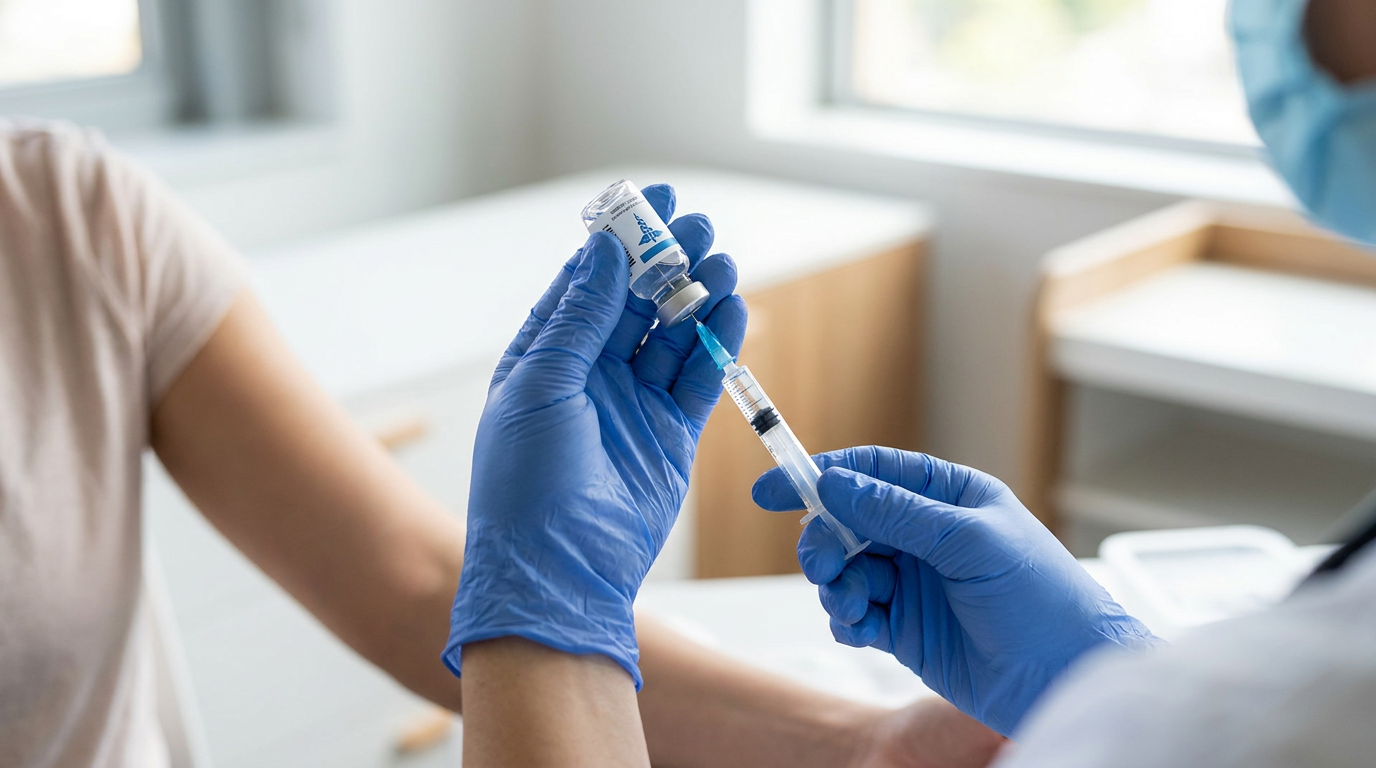
The achievement is the direct result of the UK’s national human papillomavirus (HPV) vaccination program, which was introduced in 2008. At the time, the initiative targeted girls aged 12 and 13, offering them a prophylactic jab before they were likely to be exposed to the virus.[1][4]
Sixteen years later, the girls who received those first injections are now in their twenties, allowing researchers to finally measure the vaccine's impact on mortality. A landmark study led by Queen Mary University of London (QMUL) and published in The Lancet has quantified that impact, revealing a complete cessation of cervical cancer deaths in the fully vaccinated 20-24 age group.[3][4]
"It’s incredible to think that a single jab can almost eliminate a particular type of cancer," said Professor Peter Sasieni, the lead author of the study. The researchers estimate that the vaccine has already prevented approximately 200 deaths in England, a number that will compound as the vaccinated generation ages into their thirties and forties, when cervical cancer incidence typically peaks.[1][4]

To understand the magnitude of this drop, it is necessary to look at the historical baseline. Cervical cancer is the fourth most common cancer in women globally. In England alone, roughly 3,300 women are diagnosed annually. Without the vaccine, statistical models indicate that around 23 women in the 20-24 age bracket would have died between 2020 and 2024.[2][5]
The mechanism behind the vaccine's success lies in the nature of the disease itself. Unlike many cancers that arise from spontaneous genetic mutations, 99% of cervical cancer cases are caused by persistent infections with high-risk strains of HPV, a ubiquitous virus transmitted through sexual contact.[2][3]
Most HPV infections are cleared naturally by the immune system within two years. However, when high-risk strains—particularly HPV 16 and 18—persist in the cervical tissue, they can cause cellular changes that slowly progress into precancerous lesions and, eventually, invasive carcinoma.[3][6]
Most HPV infections are cleared naturally by the immune system within two years.
By introducing a harmless, synthetic virus-like particle to the immune system, the HPV vaccine prompts the body to generate robust, long-lasting antibodies. When the actual virus is encountered later in life, these antibodies neutralize it before it can establish an infection in the cervical cells, cutting off the cancer pathway at its source.[3][6]
The QMUL study provides a clear chronological map of this mechanism working at a population level. Among women aged 20 to 24 between 2015 and 2019—a cohort with partial vaccine coverage—cervical cancer deaths fell by 80%. In the subsequent 2020-2024 window, when coverage in that age group approached 90%, the mortality rate dropped to absolute zero.[1][4]
The researchers concluded that women who received the HPV vaccine in early adolescence now face a "close to zero" risk of dying from cervical cancer before the age of 30. This extraordinary efficacy has bolstered the National Health Service's (NHS) ambition to entirely eliminate the disease by 2040.[2][4]
However, public health officials warn that this hard-won progress is currently under threat. Following the disruptions of the COVID-19 pandemic, HPV vaccine uptake in England has slipped. National coverage now sits at roughly 75%, and in some urban centers like London, it has fallen to 60%.[2][5]

"The falling HPV vaccine uptake means that without swift and concerted efforts... we could see a reversal of these trends," warned Professor Sasieni. Epidemiologists project that failing to return to pre-pandemic vaccination levels could result in 15 to 25 avoidable deaths annually among young women in the coming years.[2][4]
Cancer Research UK, which funded the study, is urgently calling for targeted interventions to reach communities with low uptake. Michelle Mitchell, the charity's chief executive, emphasized that while a future without cervical cancer is "firmly in sight," it requires sustained political and financial commitment to public health infrastructure.[2][5]
The strategy for elimination also relies on a two-pronged approach: vaccination combined with routine cervical screening. Because the earliest vaccines did not protect against every oncogenic strain of HPV, and because no vaccine is 100% effective in every individual, regular smear tests remain critical for detecting abnormal cells before they turn malignant.[1][6]

The UK has also expanded its defensive perimeter. In 2019, the HPV vaccination program was extended to include 12- and 13-year-old boys. This not only protects men against HPV-driven anal, penile, and oropharyngeal cancers, but it also drastically reduces the overall circulation of the virus, providing herd immunity to unvaccinated women.[1][6]
As the data from England reverberates through the global medical community, it serves as both a triumph and a stark reminder of global inequities. While young women in the UK are aging into a world virtually free of cervical cancer mortality, the disease continues to claim hundreds of thousands of lives annually in low- and middle-income countries where vaccine access remains severely limited.[3][6]
How we got here
2008
The UK introduces the national HPV vaccination program for girls aged 12 and 13.
2015–2019
Cervical cancer deaths among women aged 20-24 fall by 80% as the first partially vaccinated cohorts reach adulthood.
2019
The UK extends the HPV vaccine rollout to include 12- and 13-year-old boys.
2020–2024
Zero cervical cancer deaths are recorded in England among women aged 20-24, the first time in recorded history.
June 2026
The Lancet publishes the QMUL study, officially quantifying the vaccine's near-100% efficacy against mortality in young women.
Viewpoints in depth
Epidemiologists & Researchers
Focusing on the unprecedented success of the 2008 cohort data as proof of prophylactic efficacy.
For medical researchers, the QMUL data represents the holy grail of prophylactic medicine. By tracking a specific cohort over 16 years, epidemiologists have proven that intercepting an oncogenic virus before exposure can functionally eradicate the resulting cancer. They point to the step-down effect—an 80% mortality drop when coverage was partial, followed by a 100% drop when coverage hit 90%—as textbook evidence of herd immunity compounding individual protection.
Public Health Campaigners
Warning that recent drops in vaccine uptake threaten to reverse the milestone.
Advocacy groups and charities like Cancer Research UK view the zero-death milestone as a fragile victory. They are deeply concerned by post-pandemic data showing national vaccine uptake has slid to 75%, with some regions dropping to 60%. These campaigners argue that without urgent, targeted outreach to hesitant or underserved communities, the UK will see a resurgence of avoidable cervical cancer deaths in the 2030s.
Global Health Advocates
Highlighting the stark disparity between the UK's success and the ongoing crisis in developing nations.
While celebrating the UK's achievement, international health organizations emphasize that cervical cancer remains a leading cause of death for women in low- and middle-income countries. They argue that the English data should serve as a mandate to aggressively expand global vaccine access, noting that the technology to prevent hundreds of thousands of annual deaths exists but is failing to reach the populations most at risk.
What we don't know
- Whether the zero-death rate will hold as the vaccinated cohort ages into their thirties and forties, when cervical cancer incidence typically peaks.
- Exactly how much the recent drop in vaccine uptake to 75% will impact mortality rates in the coming decade.
Key terms
- Human Papillomavirus (HPV)
- A very common group of viruses transmitted through sexual contact, certain high-risk strains of which can cause cellular changes leading to cancer.
- Prophylactic Vaccine
- A vaccine administered to prevent an infection before it occurs, rather than treating an existing disease.
- Cervical Screening
- A routine test (often called a smear test) that checks the health of the cervix and detects abnormal cells before they can develop into cancer.
- Herd Immunity
- Indirect protection from an infectious disease that occurs when a large percentage of a population becomes immune, reducing the spread of the virus to those who are not vaccinated.
Frequently asked
Does the HPV vaccine treat existing cervical cancer?
No. The vaccine is prophylactic, meaning it is designed to prevent the initial HPV infection that causes the cancer. It cannot clear an existing infection or treat active cancer.
Why are boys now given the HPV vaccine?
Vaccinating boys protects them against HPV-driven cancers of the anus, penis, and throat. It also drastically reduces the overall transmission of the virus, providing herd immunity that protects unvaccinated women.
If I had the HPV vaccine, do I still need cervical screening?
Yes. While the vaccine protects against the most common high-risk strains of HPV, it does not cover every single strain that can cause cancer. Routine screenings are still necessary to detect any abnormal cells.
Sources
Source coverage
6 outlets
3 viewpoints surfaced






[1]BBCClinical Practitioners
Cervical cancer deaths fall to zero in young women given vaccine
Read on BBC →[2]The GuardianPublic Health Campaigners
Cervical cancer deaths fall to zero in young women given HPV vaccine
Read on The Guardian →[3]The LancetEpidemiologists & Researchers
Impact of the HPV vaccination programme on cervical cancer mortality in England
Read on The Lancet →[4]Queen Mary University of LondonEpidemiologists & Researchers
Cervical cancer deaths plummet to record low thanks to HPV vaccine
Read on Queen Mary University of London →[5]Cancer Research UKPublic Health Campaigners
HPV vaccine reducing cervical cancer deaths in England
Read on Cancer Research UK →[6]Factlen Editorial TeamEpidemiologists & Researchers
Synthesis by Factlen editorial team
Read on Factlen Editorial Team →


Every angle. Every day.
Get health stories with full source coverage and perspective breakdowns delivered to your inbox.