
How FIFA's New 5-Second Rules Are Speeding Up the 2026 World Cup
After the marathon stoppage times of Qatar 2022, FIFA has introduced strict new countdowns for throw-ins, goal kicks, and substitutions to keep the ball in play.
By Factlen Editorial Team
- FIFA Officiating Committee
- Prioritizes maximum active playing time and eliminating cynical gamesmanship.
- Broadcasters & Fans
- Values continuous entertainment and predictable match lengths for television scheduling.
- Tactical Traditionalists
- Views game management and tempo control as legitimate, traditional football strategies.
What's not represented
- · Club Managers
- · Sports Psychologists
Why this matters
Fans are getting more actual football and less cynical time-wasting, fundamentally changing the rhythm and strategy of the world's biggest tournament. The new rules eliminate the 'dark arts' of game management, forcing teams to defend their leads through actual play rather than running down the clock.
Key points
- FIFA has introduced a strict five-second countdown for throw-ins and goal kicks to maintain match tempo.
- Delaying a goal kick now results in the opposing team being awarded a corner kick.
- Substituted players must exit the pitch within 10 seconds, or their team will play short-handed for one minute.
- Outfield players receiving medical treatment must remain on the sidelines for a mandatory 60 seconds.
- Covering the mouth during a confrontational exchange is now an automatic red-card offense.
The 2026 World Cup has introduced a radically different rhythm to the beautiful game. Gone are the days of players slowly ambling off the pitch during substitutions or goalkeepers meticulously adjusting their socks before a goal kick. In a sweeping bid to eradicate cynical time-wasting, FIFA has armed its referees with a strict new set of countdowns and immediate penalties. The result is a tournament that feels noticeably faster, more breathless, and fundamentally less tolerant of gamesmanship.[1]
To understand the 2026 crackdown, one must look back to the marathon matches of Qatar 2022. Four years ago, FIFA's strategy to maximize active playing time was purely compensatory. Referees were instructed to meticulously track every second lost to goal celebrations, injuries, and VAR checks, adding it all to the end of the half. This led to routine 100-minute and 110-minute matches, exhausting players and wreaking havoc on broadcast schedules.[2]
While the 2022 approach successfully increased the amount of time the ball was in play, it did not actually stop players from trying to waste time; it merely punished them with exhausting stoppage periods. For 2026, Pierluigi Collina, the chairman of the FIFA Referees Committee, spearheaded a philosophical pivot. Instead of adding time at the end, the new rules are designed to prevent the stoppages from happening in the first place, forcing a continuous, high-tempo spectacle.[3][7]

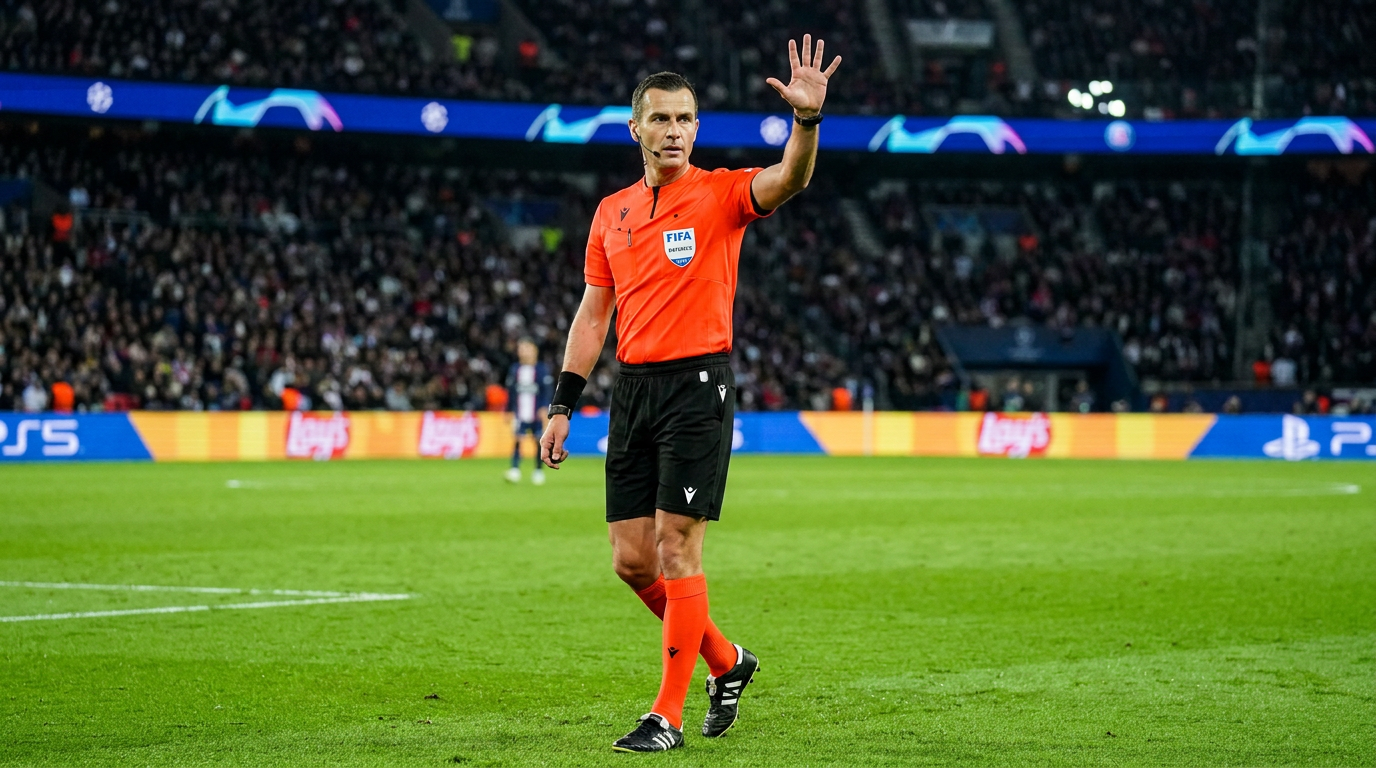
The most visible manifestation of this new philosophy is the five-second visual countdown. Whenever a team is awarded a throw-in or a goal kick, the referee will raise their hand and visibly count down five seconds. Players are now forced to restart play immediately, stripping away the traditional dark arts of game management where a team nursing a 1-0 lead might bleed thirty seconds off the clock retrieving a ball.[4][6]
The penalties for violating this five-second rule are severe and immediate. If a player fails to execute a throw-in before the countdown expires, possession is instantly awarded to the opposition. Even more drastically, if a goalkeeper deliberately delays a goal kick past the five-second mark, the referee will award a corner kick to the attacking team. This threat of conceding a high-danger set piece has virtually eliminated goal-kick stalling overnight.[3][8]
Substitutions have also been transformed from a tactical delay tactic into a frantic sprint. Under the new IFAB-approved regulations, any player being substituted must leave the field of play within exactly 10 seconds. They are required to exit at the nearest boundary line, rather than jogging all the way across the pitch to the technical area to high-five their manager and acknowledge the crowd.[4][5]

Substitutions have also been transformed from a tactical delay tactic into a frantic sprint.
If a departing player fails to cross the touchline within that 10-second window, the consequences are dire for their team. The incoming substitute is barred from entering the pitch until the first stoppage in play that occurs at least one full minute after the restart. This effectively forces the offending team to play with 10 men for a crucial 60-second window, a risk no manager is willing to take.[5][8]
FIFA has also closed the infamous "tactical timeout" loophole. In previous tournaments, if a goalkeeper went down with a minor injury, players from both teams would sprint to their respective benches to rehydrate and receive tactical instructions from their coaches. Now, referees strictly prohibit this. If a goalkeeper requires treatment, all outfield players must remain in their positions or gather in the center circle, completely isolated from their coaching staff.[4][5]
Outfield players seeking medical attention face their own new restrictions. Any player who requires the team physiotherapist to enter the field of play must now remain on the sidelines for a mandatory 60 seconds after play restarts. While exceptions exist for severe injuries, goalkeepers, or fouls resulting in a card, the rule is designed to deter players from feigning cramps to break the opposition's momentum.[3][5]

Beyond time-wasting, the 2026 rulebook includes a strict behavioral crackdown aimed at improving the sport's image. Referees have been instructed to issue straight red cards to any player who covers their mouth with their hand or shirt during a confrontational exchange with an opponent. Friendly conversations between club teammates are exempt, but masking speech during an argument is now treated as a severe offense.[3][4]
This specific anti-discrimination measure stems from a high-profile Champions League incident involving Benfica's Gianluca Prestianni and Real Madrid's Vinícius Jr., where mouth-covering was used to allegedly mask discriminatory slurs. By making the act of covering the mouth during a dispute a red-card offense in itself, FIFA aims to eliminate the ambiguity that often plagues investigations into on-pitch abuse.[4][5]

On the ground in North America, the implementation of these rules has required an adjustment period, but officials are holding firm. Referees are utilizing eye-level video headsets to review incidents, and VAR has been expanded to check incorrectly awarded corner kicks and second yellow cards. The technological support ensures that the rapid pace of the game does not come at the expense of accuracy.[6][8]
Ultimately, the 2026 World Cup is serving as a grand experiment in modernizing football's flow. By replacing the grueling 15-minute stoppage times of Qatar with sharp, immediate countdowns, FIFA has successfully engineered a product that delivers on its promise: 59 minutes of active, uninterrupted playing time, fundamentally shifting the tactical landscape of the world's most popular sport.[1][7]
How we got here
July 2018
FIFA begins asking referees to calculate stoppage time more accurately at the Russia World Cup.
Nov 2022
The Qatar World Cup sees record-breaking match lengths as officials add all wasted time to the end of halves.
June 2026
FIFA introduces strict countdowns and immediate penalties to prevent time-wasting before it occurs.
Viewpoints in depth
FIFA Officiating Committee
Prioritizes maximum active playing time and eliminating cynical gamesmanship.
For FIFA's rule-makers, led by Pierluigi Collina, the primary objective is protecting the entertainment value of the sport. They argue that fans pay to watch football, not players standing around or feigning injuries. By shifting from a compensatory model (adding time at the end) to a preventative model (punishing delays immediately), they believe they are forcing teams to play the game in the spirit it was intended.
Broadcasters & Fans
Values continuous entertainment and predictable match lengths for television scheduling.
Broadcasters and neutral fans have largely welcomed the changes. The marathon 110-minute matches of 2022 wreaked havoc on television schedules and exhausted viewers. The new rules not only ensure a more continuous, high-tempo viewing experience but also return the sport to a more predictable broadcast window, making it easier for global audiences to tune in.
Tactical Traditionalists
Views game management and tempo control as legitimate, traditional football strategies.
Some coaches and traditionalists argue that "game management" is a legitimate tactical skill. Slowing down the tempo when under severe pressure or nursing a narrow lead has long been considered a valid defensive strategy. Critics of the new rules suggest that the strict countdowns disproportionately favor attacking teams with deep benches, stripping underdogs of the tools they traditionally use to survive against superior opposition.
What we don't know
- Whether these strict countdown rules will be permanently adopted by domestic leagues like the Premier League and La Liga after the tournament.
- How the rules will impact the physical toll on players who are no longer afforded micro-rests during stoppages.
- If the threat of a corner kick will completely eradicate goal-kick stalling in high-stakes knockout matches.
Key terms
- Active Playing Time
- The actual number of minutes the ball is in play during a match, excluding all stoppages for fouls, injuries, and out-of-bounds.
- IFAB
- The International Football Association Board, the independent body that determines the official Laws of the Game for association football.
- Tactical Timeout
- An unofficial break in play, often triggered by a goalkeeper feigning injury, allowing outfield players to receive coaching instructions.
Frequently asked
What happens if a goalkeeper takes too long on a goal kick?
If the goalkeeper delays past the referee's five-second countdown, the opposing team is awarded a corner kick.
Can players still cover their mouths to talk to teammates?
Yes, friendly conversations between teammates can still be masked. The red card rule only applies to confrontational exchanges with opponents.
Why did matches last so long in the 2022 World Cup?
In 2022, referees were instructed to meticulously add all wasted time to the end of the half, resulting in routine 10-to-15 minute stoppage periods.
What is the penalty for a slow substitution?
If a departing player takes longer than 10 seconds to leave the pitch, the substitute cannot enter for at least one minute, forcing the team to play with 10 men.
Sources
Source coverage
8 outlets
3 viewpoints surfaced








[1]BBC SportBroadcasters & Fans
What's going on with stoppage time at the World Cup?
Read on BBC Sport →[2]The GuardianTactical Traditionalists
Fifa Time: why World Cup matches are lasting more than 100 minutes
Read on The Guardian →[3]OneFootballFIFA Officiating Committee
Pierluigi Collina outlines World Cup refereeing changes to curb time-wasting and discrimination
Read on OneFootball →[4]Football365Tactical Traditionalists
World Cup 2026 rule changes: Red cards for covering mouths, 10-second subs...
Read on Football365 →[5]JKNewsMediaTactical Traditionalists
FIFA introduces strict time wasting rules for 2026 World Cup
Read on JKNewsMedia →[6]Daily JournalFIFA Officiating Committee
FIFA to crack down on time-wasting at World Cup
Read on Daily Journal →[7]El BotolaFIFA Officiating Committee
FIFA implements strict new rules for 2026 World Cup
Read on El Botola →[8]NPRBroadcasters & Fans
World Cup referees have new tools to speed up games
Read on NPR →
Every angle. Every day.
Get sports stories with full source coverage and perspective breakdowns delivered to your inbox.