
2026 EV Showdown: Rivian R2 vs. Tesla Model Y Juniper
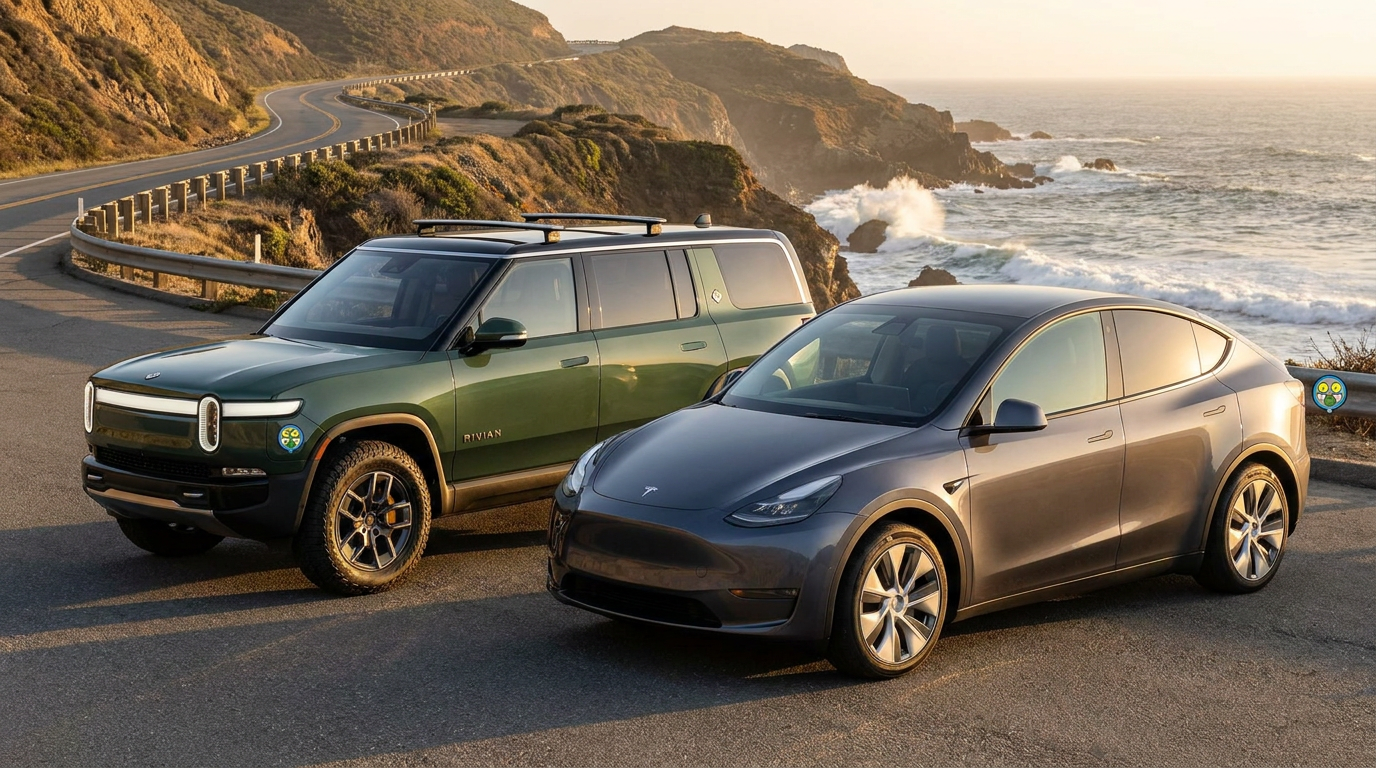
The highly anticipated Rivian R2 challenges the heavily refreshed Tesla Model Y in a battle of rugged versatility versus aerodynamic efficiency.
By Factlen Editorial Team
- Efficiency & Commuter Advocates
- Prioritizes aerodynamic range, proven charging speeds, and on-road handling.
- Adventure & Utility Seekers
- Values off-road capability, maximum cargo volume, and distinctive styling.
- Value-Conscious Buyers
- Focuses on the entry-level price point and long-term manufacturing stability.
What's not represented
- · Traditional legacy automakers losing market share to these two EV leaders
Why this matters
The midsize electric SUV is the new family car standard. Choosing between the Model Y and the R2 dictates whether buyers prioritize highway efficiency and immediate affordability, or rugged utility and maximum cargo space.
Key points
- The 2026 Tesla Model Y 'Juniper' update brings a Cybertruck-inspired redesign, improved suspension, and a quieter cabin.
- Rivian's new R2 launches as a rugged, boxy alternative with superior ground clearance and off-road capability.
- The Model Y holds a massive price advantage in 2026, starting at $39,990, while the R2 launches only in its $57,990 Performance trim.
- The Rivian R2 offers 19% more total cargo space than the Model Y, making it the better choice for hauling gear.
- Both vehicles feature native NACS charging ports, granting them equal access to the Tesla Supercharger network.
The midsize electric SUV segment in 2026 is currently defined by a high-stakes battle between two titans of the industry. On one side sits the Tesla Model Y, a vehicle that recently held the title of the world's best-selling car and has just received a comprehensive mid-cycle refresh known as the 'Juniper' update. On the other side is the highly anticipated Rivian R2, a smaller, more accessible sibling to the flagship R1S that aims to bring the brand's signature outdoor lifestyle appeal to the mass market. As these two vehicles finally meet on dealership lots and suburban driveways, they represent entirely different philosophies on what a modern family vehicle should be.[1][5]
The stakes for this comparison are incredibly high. For years, the Model Y has been the default, almost automatic choice for families transitioning from internal combustion engines to electric power. It built a reputation on seamless software, unmatched charging infrastructure, and aerodynamic efficiency. Now, the R2 arrives not as a direct clone attempting to beat Tesla at its own game, but as a philosophical opposite. Rivian has built a boxy, rugged adventurer that challenges the sleek, aerodynamic commuter, forcing buyers to decide exactly what kind of lifestyle they want their vehicle to project and support.[1][3]
When evaluating design and aerodynamics, Tesla's Juniper update refines the Model Y's teardrop shape to an impressive degree. The refresh introduces a Cybertruck-inspired front light bar, reprofiled bumpers, and a lower nose that drops the vehicle's drag coefficient to an incredibly slippery 0.22. This relentless aerodynamic focus is the foundation of the Model Y's identity, allowing it to slice through the air on the highway with minimal energy loss. It is a design built entirely around the physics of maximizing range.[5]
Against this aerodynamic focus, the Rivian R2 presents a blunt, upright fascia and a distinctly boxy greenhouse. It intentionally sacrifices aerodynamic slipperiness for a rugged aesthetic that immediately signals its off-road intentions. Where the Tesla blends smoothly into urban traffic and suburban parking lots, the Rivian stands out with its signature stadium-shaped headlights and tall roofline. It is a vehicle designed to look just as comfortable covered in trail dust as it does waiting in a school drop-off line.[2][4]

For buyers shopping in 2026, the price and availability comparison heavily favors the Model Y at the entry level. The updated Model Y starts at an incredibly competitive $39,990 for the Standard rear-wheel-drive trim. This aggressive pricing strategy makes the Tesla immediately accessible to a broad market of first-time electric vehicle buyers who simply want a reliable, long-range family hauler without breaking the bank.[1][5]
Rivian, conversely, is launching the R2 exclusively in its top-tier Performance trim, which carries a starting price of $57,990. While the company has promised a sub-$45,000 Standard model to compete directly with Tesla's base offerings, those more affordable variants are not scheduled to arrive until 2027. This staggered rollout leaves budget-conscious 2026 buyers with only one real option if they need a vehicle immediately.[1]
However, when comparing the top trims directly, the price gap completely vanishes. The Rivian R2 Performance at $57,990 lines up almost exactly with the Tesla Model Y Performance, which sits at roughly $57,490. At this premium price point, the comparison ceases to be about budget and becomes a pure test of priorities, forcing buyers to weigh the value of raw speed against the value of off-road utility.[1]
Tesla's aerodynamic advantage pays massive dividends when it comes to highway range and efficiency. The Model Y Premium RWD achieves up to 357 miles of range on a single charge, edging out the R2's best projected estimate of 345 miles. For long-distance road trippers who spend hours cruising at interstate speeds, the Tesla remains the undisputed efficiency king, requiring fewer stops and less energy to cover the same distance.[1][5]

Yet, the Rivian R2 pulls off a surprising engineering feat in its Performance trim. Despite being roughly 370 pounds heavier than the Tesla and pushing a flat, blunt nose through the air, the R2 Performance achieves a 109 MPGe combined rating from the EPA, actually beating the Model Y Performance's 104 MPGe. This remarkable metric proves that Rivian's new powertrain platform and battery management software are operating at an incredibly high level of efficiency.[2][3]
Yet, the Rivian R2 pulls off a surprising engineering feat in its Performance trim.
Inside the cabin, the two vehicles take diverging paths to minimalism and interior technology. The Model Y Juniper update directly addresses past criticisms by adding ventilated front seats, vastly improved sound deadening, and a new 8-inch rear entertainment screen for passengers. However, it stubbornly retains its stark, screen-centric layout, lacking a digital driver display and forcing the driver to look at the central 15.4-inch touchscreen for critical information like speed and remaining range.[5][6]
The Rivian R2 offers a more layered, luxurious cabin that feels significantly warmer. Featuring open-pore wood accents and a dedicated 12.3-inch digital gauge cluster directly behind the steering wheel, the R2 provides a more traditional driving interface wrapped in modern design. Reviewers consistently note that the Rivian feels more like a premium, thoughtfully designed living space compared to the Tesla's somewhat clinical, bachelor-pad aesthetic.[2][4]
The Rivian's boxy shape translates into a massive, quantifiable advantage in utility and cargo capacity. Thanks to its taller roofline and upright rear hatch, the R2 offers 90.1 cubic feet of total storage with the seats folded. This represents a full 19% more cargo volume than the Model Y's 76 cubic feet, making the Rivian the clear choice for families who regularly haul bulky items, camping gear, or large dogs.[2]

The R2 also features a larger front trunk, measuring 5.2 cubic feet compared to the Tesla's 4.1 cubic feet. Furthermore, Rivian has engineered a power-down rear window into the tailgate, allowing owners to easily accommodate exceptionally long items like surfboards or lumber while driving. For pure hauling capability and thoughtful utility, the Rivian is the undisputed winner of the segment.[2][3]
On the pavement, the driving dynamics of the lighter Model Y feel much more akin to a sports sedan than a traditional SUV. It sits lower to the ground, features incredibly sharp steering, and its Performance trim can rocket to 60 mph in a blistering 3.3 seconds. The Juniper update also finally delivers a comfortable, absorbent suspension setup, resolving years of complaints about the Model Y's overly harsh ride quality.[1][4]
The Rivian R2, while packing a massive 656 horsepower in its top trim, is tuned for a more relaxed highway ride and genuine off-road capability. With 9.6 inches of ground clearance—a staggering 60% more than the Model Y's 6.0 inches—alongside 32-inch all-terrain tires and a dedicated torque-vectoring system, the R2 can comfortably tackle dirt trails, rocky paths, and deep snow that would leave the Tesla stranded.[1][2]

Historically, Tesla held a monopoly on seamless charging infrastructure, which was often the deciding factor for buyers. In 2026, that competitive moat has completely evaporated. Both vehicles feature native NACS (North American Charging Standard) ports, meaning the Rivian R2 can plug directly into compatible Tesla Superchargers without the need for a cumbersome adapter. While the Model Y still charges slightly faster at peak speeds, the real-world difference during a road trip is negligible.[1][2]
Ultimately, the 2026 Tesla Model Y fits well when you prioritize maximum highway range, sporty on-road handling, and immediate availability at a sub-$45,000 price point. It remains the sensible, highly proven choice for urban commuters and road-tripping families who value aerodynamic efficiency and rarely, if ever, leave the pavement.[1][5]

Conversely, the Model Y does not fit when you need genuine off-road ground clearance, prefer a traditional digital gauge cluster behind the steering wheel, or require maximum cargo volume for bulky outdoor gear. Its sloping roofline inherently limits its utility compared to more traditionally shaped SUVs.[2][4]
On the other side of the showroom, the 2026 Rivian R2 fits well when you want a rugged, versatile SUV capable of real trail driving, desire a more premium and distinctive interior, and need the absolute maximum cargo space available in a midsize footprint. It is a vehicle built for weekend adventures as much as daily commutes.[2][4]
However, the Rivian R2 does not fit when you are shopping on a strict budget in 2026, as the cheaper trims have been delayed, or if you prioritize the absolute highest aerodynamic efficiency for high-speed interstate commuting. It is a heavier, blunter instrument that trades some on-road sharpness for off-road prowess.[1][2]
How we got here
2020
Tesla launches the original Model Y, which quickly becomes the world's best-selling electric vehicle.
March 2024
Rivian officially unveils the R2, promising a smaller, more affordable alternative to its flagship R1S.
Early 2026
Tesla rolls out the comprehensive 'Juniper' update for the Model Y, featuring revised styling and upgraded suspension.
Spring 2026
Rivian begins customer deliveries of the top-tier R2 Performance launch editions.
2027
Rivian plans to release the lower-priced Standard trims of the R2, bringing the starting price under $45,000.
Viewpoints in depth
Efficiency & Commuter Advocates
Prioritizes aerodynamic range, proven charging speeds, and on-road handling.
This camp, heavily represented by traditional EV analysts and urban drivers, views the Tesla Model Y as the undisputed logical choice. They argue that 99% of SUV owners never go off-road, making the Rivian's boxy shape and 9.6 inches of ground clearance an unnecessary aerodynamic penalty. For these buyers, the Model Y's 357-mile maximum range, lower starting price, and sports-sedan handling make it the ultimate daily driver.
Adventure & Utility Seekers
Values off-road capability, maximum cargo volume, and distinctive styling.
Outdoor enthusiasts and lifestyle buyers argue that an SUV should actually be capable of utility. They champion the Rivian R2 for its 90.1 cubic feet of cargo space, dedicated torque-vectoring off-road modes, and thoughtful touches like the power-down rear window. To this camp, the Model Y is simply a lifted hatchback, whereas the R2 is a genuine tool for adventure that justifies its premium launch price.
Value-Conscious Buyers
Focuses on the entry-level price point and long-term manufacturing stability.
Pragmatic buyers point out that while the top-tier trims are priced similarly, Tesla's ability to deliver a $39,990 base model in 2026 makes it the only real option for the masses. They also cite Tesla's mature manufacturing process and the iterative improvements of the Juniper update as a safer bet compared to Rivian's newer R2 platform, which is just beginning its production ramp-up.
What we don't know
- Whether Rivian will hit its exact 2027 delivery targets for the cheaper Standard RWD trims.
- How the long-term reliability of the new R2 platform will compare to the mature Model Y architecture.
Key terms
- NACS (North American Charging Standard)
- The charging plug design originally developed by Tesla, which has now been adopted by most major automakers, including Rivian, for seamless access to the Supercharger network.
- MPGe (Miles Per Gallon Equivalent)
- A metric used by the EPA to compare the energy efficiency of electric vehicles to traditional gas-powered cars.
- Torque Vectoring
- A system that independently controls the power sent to each wheel, drastically improving traction and handling during off-road driving or slippery conditions.
- Drag Coefficient
- A measurement of how easily a vehicle moves through the air; a lower number means less wind resistance and better highway range.
Frequently asked
Can the Rivian R2 use Tesla Superchargers?
Yes. The 2026 Rivian R2 comes equipped with a native NACS port, allowing it to plug directly into compatible Tesla Superchargers without needing an adapter.
Which SUV has more cargo space?
The Rivian R2 offers significantly more room, with 90.1 cubic feet of total storage compared to the Model Y's 76 cubic feet.
Is the Tesla Model Y faster than the Rivian R2?
Yes, slightly. The Model Y Performance reaches 60 mph in 3.3 seconds, while the heavier Rivian R2 Performance takes 3.6 seconds.
When will the cheaper Rivian R2 models be available?
While the $57,990 Performance trim launches in 2026, Rivian's more affordable Standard trims are not expected to arrive until 2027.
Sources
Source coverage
7 outlets
3 viewpoints surfaced







[1]Road EthosValue-Conscious Buyers
Rivian R2 Vs. Tesla Model Y: An Honest Comparison For 2026 Buyers
Read on Road Ethos →[2]ElectrekAdventure & Utility Seekers
Rivian R2 vs Tesla Model Y spotted side-by-side: Detailed size comparison
Read on Electrek →[3]CarBuzzAdventure & Utility Seekers
Here's every way the new SUV is ready to beat the Model Y at its own game
Read on CarBuzz →[4]CarwowValue-Conscious Buyers
Rivian R2 vs Tesla Model Y: which electric SUV is better?
Read on Carwow →[5]AutoblogEfficiency & Commuter Advocates
2026 Tesla Model Y Review: The Juniper update arrives
Read on Autoblog →[6]EdmundsEfficiency & Commuter Advocates
2026 Tesla Model Y Review
Read on Edmunds →[7]CarsalesValue-Conscious Buyers
2026 Tesla Model Y Juniper Performance Review
Read on Carsales →
Every angle. Every day.
Get automotive stories with full source coverage and perspective breakdowns delivered to your inbox.