
Electric Air Taxis Prepare for 2026 Commercial Launch as FAA Clears Testing Pathway
Electric vertical takeoff and landing (eVTOL) aircraft are transitioning from prototypes to passenger reality, with commercial flights launching in Dubai this year and widespread testing beginning across the US.
By Factlen Editorial Team
- eVTOL Manufacturers
- Companies argue that electric air taxis will democratize fast, emissions-free urban travel.
- Aviation Regulators
- Agencies prioritize strict safety and airspace integration over rapid commercial deployment.
- Urban Planners & Transit Advocates
- Planners see potential in reducing ground traffic but worry about infrastructure bottlenecks and equitable access.
What's not represented
- · Environmental groups focused on the power grid impact of rapid-charging aviation batteries
- · Commercial airline pilots evaluating the transition to flying eVTOLs
Why this matters
The commercialization of eVTOLs represents the biggest shift in urban transit in decades, promising to turn grueling 90-minute commutes into 7-minute zero-emission flights while bypassing ground gridlock entirely.
Key points
- Electric air taxis (eVTOLs) are transitioning from prototypes to commercial reality, with the first passenger flights launching in Dubai in late 2026.
- The aircraft can carry four passengers at 200 mph, producing zero emissions and minimal noise (45 decibels).
- The FAA has launched a pilot program across 26 states to test pre-certified aircraft starting in summer 2026.
- Joby Aviation and Archer Aviation are leading the US market, targeting full FAA certification by 2027.
- A typical 90-minute drive from JFK Airport to Manhattan will be reduced to a 7-minute flight.
For decades, the "flying car" has been the ultimate symbol of a future that never quite arrived. But in 2026, the aviation industry is crossing a historic threshold. Electric vertical takeoff and landing (eVTOL) aircraft are transitioning from experimental prototypes to commercial passenger services, marking the most significant shift in civil aviation since the dawn of the jet age. [5][6] The breakthrough is happening first in the United Arab Emirates. By the end of 2026, passengers in Dubai will be able to book an electric air taxi directly through the Uber app. [1] Joby Aviation, a California-based eVTOL manufacturer, has secured a six-year exclusive agreement with Dubai's Roads and Transport Authority to operate the city's first aerial ridesharing network, bypassing the regulatory bottlenecks that have slowed deployment in Western markets. [2][1][2][5][6]
The user experience is designed to be entirely seamless, bridging the gap between ground and air transit. A rider will open the Uber app and request a flight. An Uber Black car will pick them up and drive them to a dedicated "vertiport." From there, they will board a quiet, battery-powered aircraft for a flight across the city, where another car will be waiting at the destination. [1][7] A journey that typically takes 45 minutes in brutal Dubai ground traffic will be reduced to a 10-minute flight, fundamentally altering how residents navigate the sprawling metropolis. [2][1][2][7]
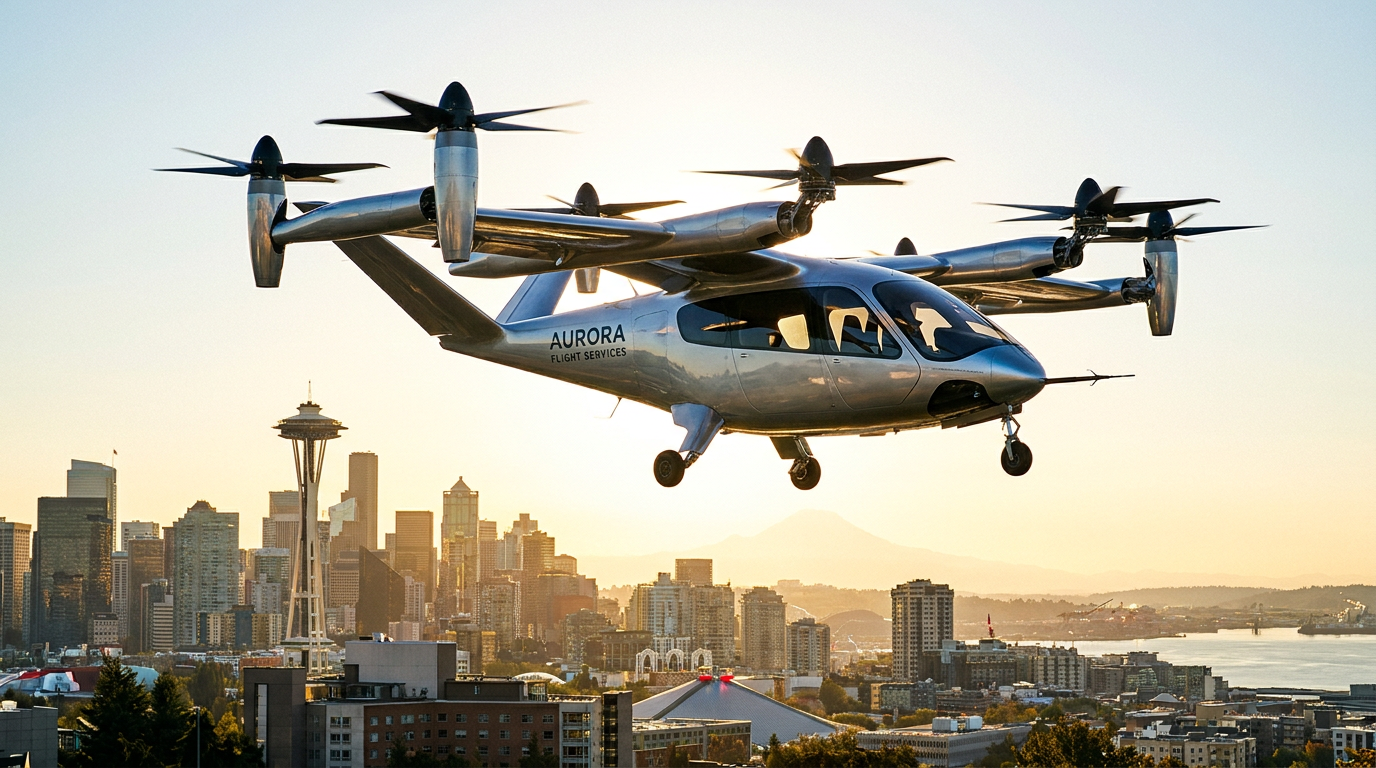
To understand why this is suddenly possible, one must look at the mechanism behind the aircraft. The key technological unlock has been rapid advancements in lithium-ion battery density, which finally allows aircraft to carry meaningful payloads over urban distances. eVTOLs are not simply electric helicopters. Joby's S4 model, for instance, utilizes six electrically powered tilting rotors. [5] During takeoff and landing, the rotors point upward, providing vertical lift. Once in the air, they pivot forward, allowing the aircraft to cruise on its wings like a traditional airplane. [7] This concept, known as distributed electric propulsion, eliminates the need for heavy, complex mechanical linkages found in traditional helicopters, replacing them with lightweight digital software systems.[5][7]

This hybrid architecture unlocks a combination of speed and efficiency that traditional rotorcraft simply cannot match. The aircraft can carry a pilot and four passengers at top speeds of 200 miles per hour, with a range of up to 100 miles on a single charge. [2][7] Because they are entirely battery-powered, the flights produce zero operating emissions, aligning with global pushes for sustainable urban transit. [6] By cruising on wings rather than relying purely on downward thrust, the aircraft conserves massive amounts of energy, allowing it to complete multiple back-to-back urban trips before requiring a rapid recharge at a vertiport.[2][6][7]
But the most transformative feature of the eVTOL is its acoustic profile. Traditional helicopters are notoriously loud, which severely limits where and when they can fly in dense residential cities due to strict noise ordinances. Joby's aircraft produces just 45 decibels of noise during cruise flight—roughly the volume of a humming refrigerator. [7] Observers at recent test flights note that the aircraft is quieter than a standard washing machine, allowing it to blend seamlessly into the ambient noise of a city street without disturbing the neighborhoods below. [2] This acoustic stealth is the critical factor that will allow vertiports to be placed in downtown cores rather than relegated to distant industrial zones.[2][7]
But the most transformative feature of the eVTOL is its acoustic profile.
While Dubai is serving as the global launchpad, the United States is rapidly preparing its own airspace for the eVTOL revolution. The primary hurdle has not been the technology itself, but rather the rigorous safety standards of the Federal Aviation Administration (FAA). Convincing regulators that a radically new aircraft architecture is as safe as a commercial airliner takes years of exhaustive testing. [5] The FAA requires manufacturers to prove that their digital flight controls, battery thermal management systems, and structural integrity can withstand the unpredictable variables of daily passenger service.[5]
However, the regulatory ice is finally breaking. The FAA recently launched the Advanced Air Mobility and eVTOL Integration Pilot Program (eIPP), a three-year initiative that clears the way for widespread testing across 26 states starting in the summer of 2026. [3] This program allows pre-certified aircraft to begin operating in real-world conditions, gathering the massive datasets required for final approval. [3] By partnering with local departments of transportation, the eIPP helps municipalities understand how to integrate these vehicles into the national airspace, testing everything from air traffic control communication to emergency response protocols.[3]

The race for full FAA type certification has narrowed to two primary American contenders: Joby Aviation and Archer Aviation. [5] Joby recently entered Stage 4 of the FAA's five-stage certification process, known as Type Inspection Authorization, placing it at the final regulatory step before commercial operations. [5][6] Archer, meanwhile, became the first manufacturer to receive 100 percent FAA acceptance of its Means of Compliance, heavily backed by investments from United Airlines and Stellantis. [5] Both companies have logged hundreds of test flights, proving that the hardware works; the current challenge is certifying the production lines to build them at scale.[5][6]
The ultimate prize for these companies is the American commuter market, particularly in notoriously congested corridors like New York City. In April 2026, Joby completed a landmark point-to-point test flight, flying its electric aircraft directly from John F. Kennedy International Airport to the Downtown Manhattan Heliport, proving that the hardware is ready for the world's busiest airspaces. [4] The implications for urban transit are staggering. A typical drive from JFK to Manhattan can take anywhere from 60 to 90 minutes—or up to two hours if there is an accident on the Van Wyck Expressway. The eVTOL completed the exact same journey in just seven minutes. [4][4]
To make this a reality at scale, cities must build the physical infrastructure. eVTOLs require 'vertiports'—specialized landing pads equipped with high-capacity rapid chargers capable of turning an aircraft around in minutes. [2] In Dubai, construction is already underway on four initial vertiports, including a flagship location at Dubai International Airport. [1][2] In the US, companies are partnering with existing heliport operators, such as Blade, to retrofit current infrastructure for electric aviation. [7] These facilities will serve as the physical nodes of the new aerial ridesharing network, complete with passenger lounges and seamless ground transportation links.[1][2][7]

The initial economics of air taxis will likely mirror premium services. Early flights will be priced similarly to existing helicopter transfers, catering primarily to business travelers and luxury consumers willing to pay a premium to bypass gridlock. [4] However, manufacturers insist that as production scales and pilotless autonomous flights eventually become viable, the cost per mile will drop to rival a standard Uber Black ride. [6][7] The global context adds urgency to the US and UAE timelines. In China, manufacturer EHang has already obtained certification for its autonomous EH216-S aircraft and has begun flying paying passengers on sightseeing routes, spurring Western regulators to accelerate their frameworks. [2][3][6][2][3][4][6][7]
As 2026 unfolds, the eVTOL industry is shifting its focus from proving that the aircraft can fly to proving that the business model can scale. [1] The transition from prototype to production line is notoriously difficult, requiring massive capital and flawless execution. Yet, with billions of dollars in backing from major airlines and automakers, the momentum is undeniable. With the Los Angeles 2028 Summer Olympics serving as a massive target for a mainstream public showcase, the era of the electric air taxi has officially arrived. [6] For the first time in history, the three-dimensional commute is no longer a science fiction concept, but a tangible service being loaded onto smartphones.[1][6]
How we got here
2009
Joby Aviation is founded to develop electric aircraft.
2016
Uber launches 'Uber Elevate' to explore aerial ridesharing.
2020
Joby acquires Uber Elevate, accelerating its commercial software integration.
April 2026
Joby completes a landmark test flight from JFK Airport to Manhattan in 7 minutes.
Summer 2026
The FAA launches the eIPP, allowing widespread eVTOL testing across 26 states.
Late 2026
Joby and Uber are scheduled to launch the first commercial passenger flights in Dubai.
Viewpoints in depth
eVTOL Manufacturers
Companies like Joby and Archer argue that electric air taxis will democratize fast, emissions-free urban travel.
Manufacturers view eVTOLs as the ultimate solution to urban gridlock and transportation emissions. By replacing complex helicopter mechanics with distributed electric propulsion, they argue they can drive down maintenance costs and eventually offer flights at the price of an Uber Black. They emphasize that the technology is ready today, and the focus must now shift to scaling manufacturing and finalizing regulatory approvals to maintain Western competitiveness in aerospace.
Aviation Regulators
Agencies like the FAA prioritize strict safety and airspace integration over rapid commercial deployment.
Regulators are tasked with integrating a completely new category of aircraft into the world's busiest airspaces without compromising a decades-long safety record. The FAA's meticulous, multi-stage certification process requires manufacturers to prove that their battery systems won't catch fire, their software won't fail, and their pilots can safely navigate congested urban corridors. While they are accelerating pilot programs like the eIPP, regulators maintain that safety cannot be rushed for the sake of technological novelty.
Urban Planners
City planners see potential in reducing ground traffic but worry about infrastructure bottlenecks and equitable access.
Transit advocates and urban planners acknowledge the appeal of turning a 90-minute drive into a 7-minute flight, but they caution that eVTOLs require significant physical infrastructure. Building vertiports in dense cities involves navigating zoning laws, community noise concerns, and grid capacity for rapid charging. Furthermore, some planners worry that air taxis will initially serve only the wealthiest commuters, creating a two-tiered transit system where the rich fly over the gridlock while the majority remain stuck on the ground.
What we don't know
- Exactly how much the initial per-mile cost will be for everyday consumers once the service launches.
- How quickly local municipalities will approve the zoning and construction of new vertiports in dense downtown areas.
- Whether the FAA will encounter any unexpected safety data during the eIPP testing that could delay final type certification.
Key terms
- eVTOL
- Electric Vertical Takeoff and Landing. An aircraft that uses electric power to hover, take off, and land vertically like a helicopter.
- Vertiport
- A dedicated landing pad and charging station designed specifically for electric air taxis, often located on building rooftops or at airports.
- Distributed Electric Propulsion
- An aircraft design that uses multiple small electric motors and propellers spread across the airframe, rather than a single large engine.
- Type Certification
- The rigorous regulatory approval process by the FAA confirming that a new aircraft design meets all safety standards for commercial flight.
- eIPP
- The eVTOL Integration Pilot Program, an FAA initiative allowing pre-certified electric aircraft to test operations across 26 US states.
Frequently asked
When will electric air taxis be available to the public?
Commercial flights are scheduled to begin in Dubai in late 2026. In the United States, pre-certified testing begins in summer 2026, with full commercial passenger service expected by 2027 or 2028.
How much will an air taxi flight cost?
Initially, prices will mirror premium helicopter services like Blade. However, manufacturers aim to eventually lower the cost to match a standard Uber Black ride as production scales.
Are electric air taxis loud?
No. They are significantly quieter than traditional helicopters. Joby's aircraft produces about 45 decibels of noise in cruise flight, which is comparable to the hum of a refrigerator.
Do these aircraft have pilots?
Yes. The initial fleets launching in the US and UAE will be flown by human pilots. Fully autonomous, pilotless flights are planned for the future but require further regulatory approval.
Sources
Source coverage
7 outlets
3 viewpoints surfaced







[1]Inc.eVTOL Manufacturers
Uber's flying cars are finally preparing for liftoff in Dubai
Read on Inc. →[2]CNBC TV18Urban Planners & Transit Advocates
Flying Taxis Are Here: Uber & Joby Aviation Unveil Electric Air Taxi In Dubai
Read on CNBC TV18 →[3]iHeartRadio NewsAviation Regulators
FAA Approves 8 Pilot Programs for Electric Flying Taxis
Read on iHeartRadio News →[4]Air Taxi CentralAviation Regulators
When Will Flying Taxis Actually Arrive in NYC?
Read on Air Taxi Central →[5]Drone IntelligenceeVTOL Manufacturers
Joby vs Archer: The two US eVTOL developers with credible 2026 commercial pathways
Read on Drone Intelligence →[6]eVTOL TraveleVTOL Manufacturers
When will eVTOL air taxis launch commercially?
Read on eVTOL Travel →[7]NDTA HQUrban Planners & Transit Advocates
How Uber Plans to Launch Electric Air Taxi Flights in 2026
Read on NDTA HQ →

More in technology
See all 5 stories →Creative AI
Adobe Integrates 'Agentic' AI Assistant Across Premiere, Photoshop, and Illustrator
8 sources

Creative AI
Adobe Integrates Context-Aware AI Assistants Across Entire Creative Cloud Suite
8 sources

AI Coding Agents
The End of Amnesia: How 'Persistent Context' is Transforming AI Coding Agents
8 sources

Every angle. Every day.
Get technology stories with full source coverage and perspective breakdowns delivered to your inbox.