
New Construction vs. Existing Homes: The 2026 Buyer's Guide
As the lock-in effect constrains resale inventory, buyers are weighing the upfront savings of existing homes against the warranties and builder incentives of new construction.
By Factlen Editorial Team
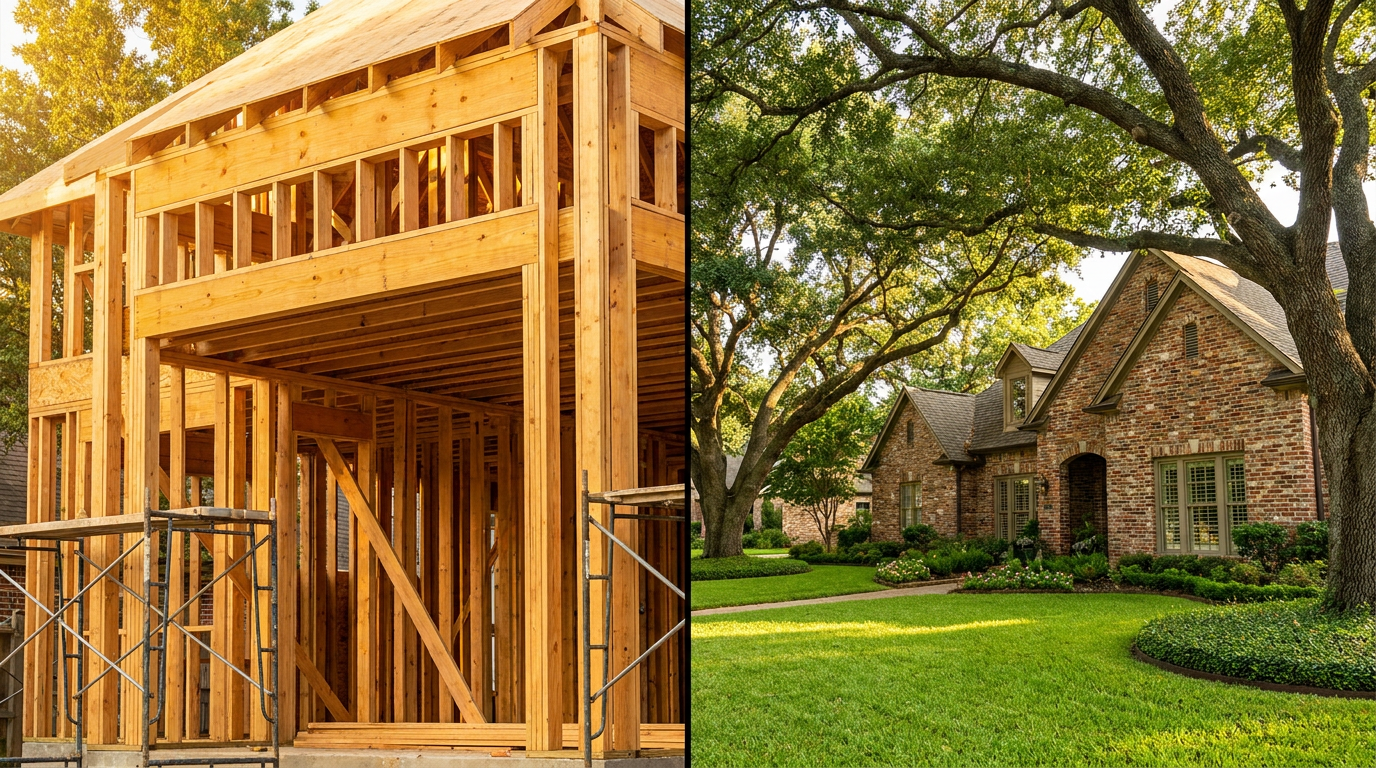
- New Construction Advocates
- Focus on long-term predictability, energy savings, and builder-financed incentives.
- Resale Value Proponents
- Emphasize the lower entry price, neighborhood maturity, and immediate availability of existing homes.
- Urban Housing Analysts
- Highlight the extreme geographical disparities and scarcity in the new construction market.
What's not represented
- · Renters waiting to buy
- · Local zoning board officials
Why this matters
Choosing between a new build and an existing home dictates not just your initial purchase price, but your long-term maintenance budget, energy costs, and daily commute. Understanding these trade-offs ensures you align your largest financial asset with your actual lifestyle and risk tolerance.
Key points
- The national median price for a new construction home in early 2026 is $449,373, carrying a 15.1% premium over existing homes.
- Over 60% of home builders are offering sales incentives, such as mortgage rate buy-downs, to attract buyers.
- Urban new builds are exceptionally rare and command a massive 78.4% price premium over existing urban properties.
- New homes typically feature a 1-2-10 warranty structure, drastically reducing unexpected maintenance costs in the first decade.
- Existing homes offer immediate occupancy, mature neighborhood landscaping, and the opportunity to build sweat equity through renovations.
The 2026 housing market presents a unique dilemma for buyers weighing new construction against existing homes. Historically, resale properties offered a steep and reliable discount, but the persistent lock-in effect—where current homeowners refuse to abandon pandemic-era low mortgage rates—has artificially constrained the supply of existing homes. This scarcity has fundamentally altered the traditional price hierarchy, forcing buyers to conduct a rigorous side-by-side trade-off analysis before committing to a purchase.[4]
The case for existing homes traditionally begins with upfront pricing, and national averages still support this baseline. In the first quarter of 2026, the median listing price for an existing home sat at $390,550, while the median for new construction remained flat at $449,373. This divergence has pushed the national new-construction premium to 15.1 percent. For buyers strictly optimizing for the lowest possible sticker price, the resale market continues to offer the most accessible entry point.[1][7]

However, the evidence complicating this pricing narrative is substantial. In certain localized data sets from early 2026, the median price of a newly built single-family home actually dipped slightly below the median price of an existing home. This anomaly is driven by builders actively managing their inventory, constructing homes with smaller footprints, and adjusting base prices downward to meet buyers who are stretched thin by elevated interest rates.[4]
The case for new construction heavily relies on the unprecedented financial incentives currently flooding the market. To move inventory, approximately 35 percent of home builders cut prices in June 2026, and a staggering 62 percent offered aggressive sales incentives. These concessions frequently take the form of mortgage rate buy-downs, where the builder pays to lower the buyer's interest rate for the first few years. Consequently, a new home with a higher purchase price can paradoxically result in a lower monthly payment than a cheaper existing home financed at standard market rates.[2][3]

Against new construction, the most significant trade-off is location and neighborhood maturity. New builds are overwhelmingly a suburban phenomenon, often situated on the periphery of metropolitan areas where land is cheaper and zoning is more permissive. Buyers opting for new construction frequently must accept longer commutes, ongoing construction noise as the community is built out, and the absence of mature trees or established neighborhood character.[6]
Against new construction, the most significant trade-off is location and neighborhood maturity.
The evidence regarding location premiums is stark for buyers who refuse to leave the city center. Urban new construction is exceptionally scarce and carries a massive 78.4 percent price premium over existing urban homes nationally. In highly desirable coastal and Sun Belt markets, this gap becomes astronomical; in Miami, for example, urban new builds command a 461 percent premium over comparable existing properties. For buyers committed to walkable, urban lifestyles, existing homes are often the only financially viable option.[1][6]

The case against existing homes centers on the hidden, long-term costs of deferred maintenance and aging systems. While the upfront price may be lower, older properties frequently harbor aging roofs, outdated plumbing, and HVAC systems nearing the end of their lifespans. Industry analyses indicate that maintaining an older home can cost roughly five percent of the property's value annually, compared to just three percent for homes built after 2010.[8]
The evidence supporting the lower maintenance burden of new construction is anchored by the standard 1-2-10 builder warranty structure. This coverage typically guarantees workmanship for one year, mechanical systems like plumbing and electrical for two years, and major structural defects for ten years. This warranty acts as a financial safety net, allowing buyers to accurately predict their housing costs during the critical early years of homeownership without fearing catastrophic repair bills.[5][8]

Furthermore, the case for new construction is bolstered by quantifiable energy savings. Modern building codes mandate rigorous energy efficiency standards, resulting in superior insulation, high-performance dual-pane windows, and advanced HVAC systems. These features translate directly into lower monthly utility bills, which steadily offset the initial new-construction premium over a five-to-ten-year ownership horizon, particularly in regions with extreme summer or winter climates.[5]
Conversely, the case for existing homes includes the immediate gratification of a move-in-ready property and the potential for sweat equity. Buyers of existing homes bypass the unpredictable delays of the construction process, which can stretch for months due to supply chain hiccups or labor shortages. Additionally, purchasing an older home at a discount allows buyers to selectively renovate over time, building equity through strategic improvements rather than paying a builder's premium upfront.[5]
Ultimately, the new construction path fits well when buyers prioritize predictable monthly costs, value energy efficiency, and require builder-financed rate buy-downs to afford a home in the current interest rate environment. It is the optimal choice for those who prefer a pristine, customized living space and are willing to compromise on proximity to urban centers or wait through construction timelines to achieve that peace of mind.[2][3]
The existing home path does not fit when buyers lack a robust emergency fund to handle sudden, expensive repairs like a failing furnace or a leaking roof. However, it fits perfectly when buyers prioritize immediate occupancy, demand the architectural character and mature landscaping of an established neighborhood, or are determined to live in densely populated urban zip codes where new construction is either nonexistent or prohibitively expensive.[1][6]
How we got here
Early 2022
Mortgage rates begin their rapid ascent, triggering the initial 'lock-in effect' as homeowners refuse to sell.
Mid 2024
The traditional price gap narrows significantly as existing home inventory plummets, driving up resale prices.
Late 2025
Builders pivot to constructing smaller floor plans to keep base prices affordable for stretched buyers.
June 2026
Over 60 percent of home builders offer aggressive sales incentives, including rate buy-downs, to move new inventory.
Viewpoints in depth
New Construction Advocates
Focus on long-term predictability, energy savings, and builder-financed incentives.
Proponents of new builds argue that the upfront premium is a mirage when factoring in total cost of ownership. By leveraging builder-subsidized mortgage rate buy-downs, buyers can often secure a lower monthly payment than they would on a cheaper existing home. Furthermore, the combination of modern energy-efficient systems and the standard 1-2-10 builder warranty virtually eliminates the risk of catastrophic repair bills during the first decade of ownership, providing unparalleled financial peace of mind.
Resale Value Proponents
Emphasize the lower entry price, neighborhood maturity, and immediate availability of existing homes.
Advocates for the existing home market point out that resale properties consistently offer a lower price per square foot and a faster path to closing. Beyond the financials, they highlight the intrinsic value of established communities—mature landscaping, functioning homeowner associations, and known school district dynamics. For these buyers, the potential need for future repairs is a worthwhile trade-off for avoiding the construction delays, noise, and barren landscapes often associated with brand-new subdivisions.
Urban Housing Analysts
Highlight the extreme geographical disparities in the new construction market.
Market analysts stress that the 'new versus existing' debate is entirely dependent on geography. While suburban new builds carry a modest premium, urban new construction is both exceedingly rare and prohibitively expensive, carrying a national premium of nearly 80 percent over existing city homes. In highly sought-after coastal markets, this premium can exceed 300 percent, leading analysts to conclude that buyers committed to dense, walkable urban living have almost no choice but to purchase existing properties.
What we don't know
- How long the 'lock-in effect' will artificially suppress the inventory of existing homes as interest rates fluctuate.
- Whether local zoning reforms will eventually ease the extreme scarcity and high cost of urban new construction.
- The long-term durability of some modern, rapidly deployed building materials compared to old-growth timber used in historic homes.
Key terms
- Lock-in Effect
- A market dynamic where current homeowners refuse to sell because they do not want to trade their low pandemic-era mortgage rates for today's higher rates.
- Rate Buy-Down
- A financing incentive where a builder or seller pays a lump sum upfront to lower the buyer's mortgage interest rate for the first few years of the loan.
- New-Construction Premium
- The percentage difference in price between a newly built home and an existing home in the same market.
- Sweat Equity
- The increase in a home's value created by the owner's direct labor in making renovations and improvements.
Frequently asked
Are new construction homes cheaper than existing homes in 2026?
Nationally, no. The median new home costs about $449,373, which is 15.1% more than the median existing home. However, builder incentives and rate buy-downs can sometimes make the monthly payment lower.
What is a 1-2-10 builder warranty?
It is the standard warranty structure for new homes, covering workmanship for one year, mechanical systems (plumbing, electrical) for two years, and major structural defects for ten years.
Why are urban new builds so expensive?
Urban areas have strict zoning laws, limited vacant land, and higher labor costs. This scarcity drives the premium for new urban homes to 78.4% above existing urban homes nationally.
Do older homes cost more to maintain?
Yes. Industry data suggests homeowners should budget roughly 5% of an older home's value annually for maintenance, compared to about 3% for homes built after 2010.
Sources
Source coverage
8 outlets
3 viewpoints surfaced








[1]Realtor.comUrban Housing Analysts
New-Construction Insights: Urban New Builds Are Scarce and Expensive
Read on Realtor.com →[2]ForbesNew Construction Advocates
Homebuyers Could Save Thousands As Builders Expand Discounts And Incentives
Read on Forbes →[3]National Association of Home BuildersNew Construction Advocates
The 2026 New-Home Market: A Rare Opportunity for Buyers?
Read on National Association of Home Builders →[4]Build RadicalsUrban Housing Analysts
NAR: Existing vs New Home Prices in Q1 2026
Read on Build Radicals →[5]ZillowResale Value Proponents
New Construction vs Existing Homes: The Pros and Cons of Both
Read on Zillow →[6]MorningstarUrban Housing Analysts
Urban New Construction Is Scarce, Expensive, and in High Demand
Read on Morningstar →[7]HousingWireResale Value Proponents
Builders discount more but keep prices flat while resale values slip
Read on HousingWire →[8]Brookfield ResidentialNew Construction Advocates
The Real Cost of Home Maintenance | New vs. Older Homes
Read on Brookfield Residential →
Every angle. Every day.
Get real estate stories with full source coverage and perspective breakdowns delivered to your inbox.