
How MMA Is Solving Its Dangerous Weight-Cutting Problem
Combat sports organizations and athletic commissions are implementing groundbreaking hydration tests and weight-regain limits to protect fighters from the severe risks of extreme dehydration.
By Factlen Editorial Team
- Regulatory Bodies & Commissions
- Prioritize athlete safety by implementing strict hydration tests and weight-regain limits to prevent life-threatening dehydration.
- Medical Professionals
- Advocate for the complete elimination of extreme dehydration due to the severe risks of acute kidney failure and increased vulnerability to brain trauma.
- Fighters & Coaches
- Balance the competitive desire for a size advantage with the physical toll of cutting weight, increasingly adapting to new rules via professional nutritionists.
What's not represented
- · Independent sports nutritionists
- · Fighters who have been forced to move up weight classes
Why this matters
For decades, extreme dehydration has been the most dangerous, hidden aspect of combat sports. New scientific testing and strict regulatory limits are finally prioritizing athlete brain health and long-term safety over artificial size advantages.
Key points
- Weight cutting via extreme dehydration has historically been a dangerous but accepted practice in mixed martial arts.
- Severe dehydration shrinks the brain and increases the risk of traumatic brain injuries and organ failure.
- ONE Championship revolutionized weigh-ins by mandating urine specific gravity tests to ensure athletes are hydrated.
- The California State Athletic Commission now cancels bouts if a fighter regains more than 15% of their weight on fight day.
- Fighters are increasingly turning to professional sports nutritionists for long-term weight management rather than crash diets.
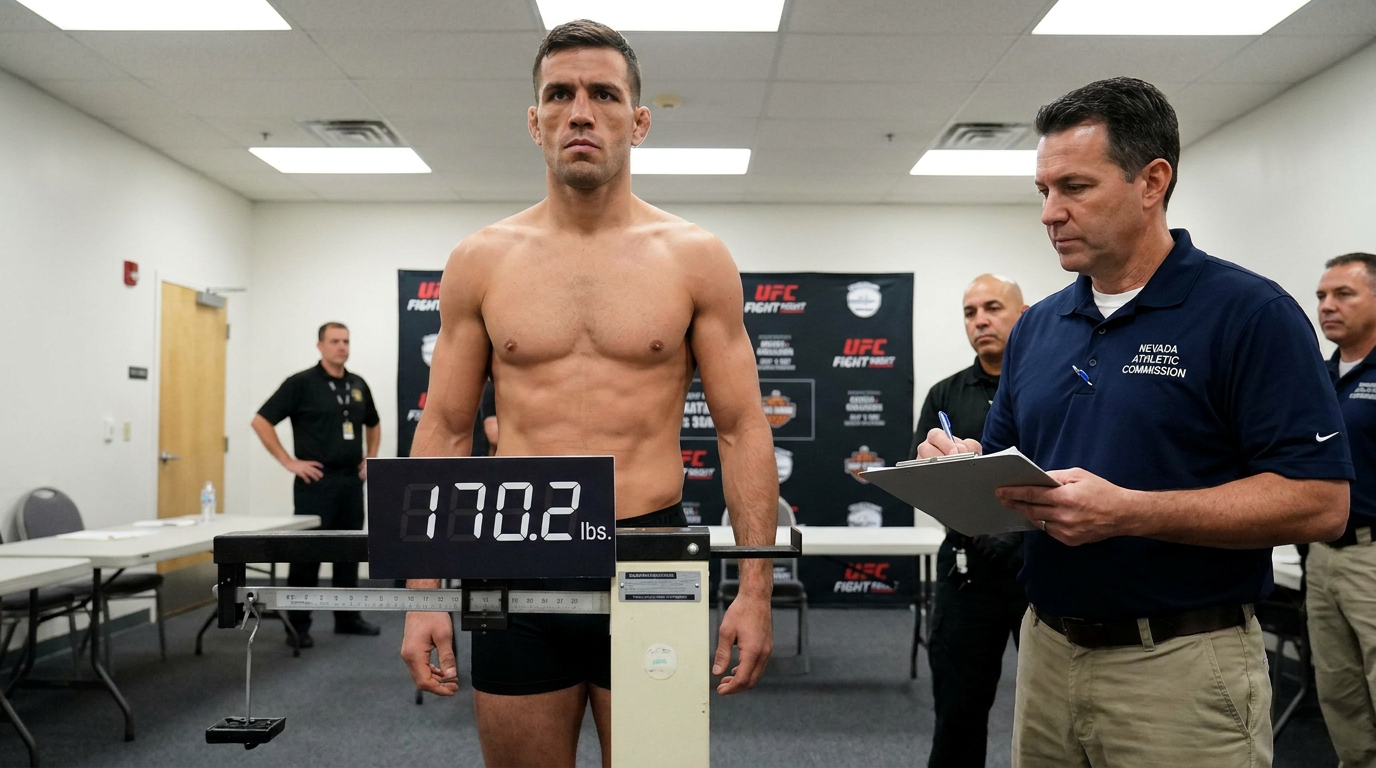
In the days leading up to a professional mixed martial arts bout, athletes engage in a grueling, hidden battle that takes place far from the lights of the cage. This ritual, known as weight cutting, involves rapidly shedding body mass to qualify for a specific weight class. For decades, the practice was accepted as a necessary evil, with fighters enduring severe dehydration to gain a perceived size advantage over their opponents.[2]
The traditional mechanism of weight cutting relies heavily on manipulating the body's water retention. Fighters often begin by "water loading"—consuming excessive amounts of fluids to trigger increased urine output—before abruptly cutting off water and sodium intake. In the final 24 to 48 hours, they utilize saunas, steam rooms, and sweat suits to force their bodies to expel remaining moisture.[2][4]
The physical toll of this extreme dehydration is profound. Medical professionals warn that depleting the body of fluids shrinks the brain, increasing the space between the brain and the skull and significantly elevating the risk of traumatic brain injuries and concussions. Furthermore, the practice places immense stress on the kidneys and cardiovascular system, occasionally leading to acute organ failure.[2][4]

Despite these severe health risks, the competitive incentive has historically outweighed the dangers. A fighter who successfully dehydrates to make a 155-pound limit can rehydrate immediately after the weigh-in, often stepping into the cage 24 hours later weighing 170 pounds or more. This rapid weight regain provides a tangible advantage in strength, leverage, and grappling power.[2][3]
However, the landscape of combat sports is undergoing a vital transformation. Following a series of high-profile medical emergencies and tragic fatalities linked to weight cutting, regulatory bodies and major promotions have begun implementing sweeping reforms designed to protect athletes from themselves.[5][7]
Leading this paradigm shift is ONE Championship, a major Asian combat sports organization that fundamentally altered its rulebook to ban weight cutting by dehydration. The promotion's revolutionary approach prioritizes "walking-weight" competition, ensuring that athletes compete at a natural, healthy size rather than an artificially depleted one.[1][5]
The cornerstone of ONE Championship's safety protocol is mandatory hydration testing. Before an athlete is even permitted to step onto the official scale, they must submit a urine sample under the supervision of a medical technician. This sample is analyzed using a refractometer to measure its specific gravity—the concentration of dissolved particles compared to pure water.[1][4]

The cornerstone of ONE Championship's safety protocol is mandatory hydration testing.
To pass the test, a fighter's urine specific gravity (USG) must register at 1.025 or lower. A higher reading indicates concentrated urine and dangerous dehydration, resulting in an immediate failure. If an athlete fails the hydration test, they are barred from weighing in until they can produce a hydrated sample, effectively neutralizing the strategy of last-minute water shedding.[1]
To prevent fighters from gaming the system by rapidly rehydrating just for the test and then dehydrating again, ONE Championship enforces a strict 105% rule for catchweight bouts. If a fighter misses weight but passes hydration, a bout can only proceed if both athletes are within 105% of each other's official hydrated weight, ensuring a level playing field.[1][4]
In the United States, the California State Athletic Commission (CSAC) has emerged as the most aggressive regulatory body tackling the weight-cutting epidemic. Recognizing that extreme rehydration is a symptom of dangerous dehydration, CSAC implemented a groundbreaking rule targeting fight-day weight regain.[3]
Under CSAC regulations, if a fighter weighs more than 15% above their contracted weight class on the day of the event, the bout is immediately canceled. This rule directly attacks the incentive to cut massive amounts of weight, as fighters know that ballooning back up will cost them their paycheck and their opportunity to compete.[3]

The data supporting CSAC's intervention is stark. In the months leading up to the rule's formal adoption, the commission tracked fight-day weights and found that nearly 10% of MMA bouts in the state featured an athlete who had regained more than 15% of their body weight. By establishing a hard ceiling, CSAC effectively outlawed what its executive director termed "sanctioned cheating."[3]
The Ultimate Fighting Championship (UFC) has also adapted its protocols to improve athlete safety. The promotion instituted early weigh-ins, moving the official scale time to the morning rather than the afternoon. This crucial adjustment provides fighters with an additional six to eight hours to safely rehydrate and recover before stepping into the octagon the following night.[2][6]
Furthermore, the cultural approach to weight management within the sport is evolving. An increasing number of fighters are employing full-time sports nutritionists to manage their body composition year-round, replacing crash diets and sauna sessions with periodized nutrition plans. Prominent voices in the sport, including commentators and analysts, are actively advocating for the creation of more weight classes to bridge the gaps between divisions, which would allow fighters to compete closer to their natural walking weight.[4][6]

While the complete eradication of weight cutting remains a complex challenge, the concerted efforts of organizations like ONE Championship and CSAC represent a monumental leap forward. By prioritizing hydration, implementing strict regain limits, and fostering a culture of long-term health, the MMA industry is proving that fighter safety and elite competition can successfully coexist.[7]
How we got here
December 2015
Following a tragic fatality, ONE Championship announces a ban on weight cutting by dehydration and institutes hydration testing.
June 2016
The UFC implements early morning weigh-ins to give fighters more time to safely rehydrate before competing.
October 2019
The California State Athletic Commission passes a rule to cancel bouts if a fighter regains more than 15% of their contracted weight.
Viewpoints in depth
Regulatory Commissions
Prioritize athlete safety and the necessity of strict rules to prevent tragedies.
Athletic commissions and progressive promotions argue that the traditional model of weight cutting is fundamentally broken and amounts to "sanctioned cheating." By implementing hard scientific boundaries—such as ONE Championship's 1.025 urine specific gravity limit and CSAC's 15% regain threshold—regulators aim to protect fighters from the life-threatening consequences of severe dehydration. They emphasize that the sport's integrity relies on athletes competing at their natural, healthy walking weights rather than engaging in a dangerous race to the bottom of the scale.
Fighters & Coaches
Balance the competitive desire for a size advantage with the physical toll of cutting weight.
For fighters and their coaching staffs, weight cutting has long been viewed as a necessary evil to avoid being undersized against opponents who are exploiting the system. While many welcome the shift toward safer regulations, adapting to these new rules requires a complete overhaul of training camp protocols. Instead of relying on last-minute sauna sessions, athletes are increasingly investing in year-round sports nutritionists to manage their body composition, ensuring they can pass hydration tests while still maximizing their physical performance.
Medical Professionals
Advocate for the complete elimination of extreme dehydration due to severe health risks.
Sports scientists and ringside physicians have been the loudest voices calling for reform, pointing to clinical data that shows how dehydration physically shrinks the brain and leaves it vulnerable to concussive trauma. Medical professionals stress that stepping into a cage with compromised kidney function and a depleted cardiovascular system is a recipe for disaster. They view the recent regulatory shifts as a vital first step, but many continue to advocate for the creation of more weight classes to further reduce the incentive for athletes to artificially manipulate their bodies.
What we don't know
- Whether other major North American athletic commissions will adopt California's strict 15% weight-regain rule.
- If the UFC will eventually implement mandatory hydration testing similar to ONE Championship's model.
- How the creation of additional weight classes might impact the competitive landscape of the sport.
Key terms
- Weight Cutting
- The practice of rapidly shedding body mass, primarily through dehydration, in the days before a fight to qualify for a lower weight class.
- Urine Specific Gravity (USG)
- A clinical test that measures the concentration of particles in urine compared to pure water, used to determine an athlete's hydration level.
- Catchweight
- A negotiated weight limit for a bout that does not strictly adhere to the standard, predefined weight class boundaries.
- Rehydration
- The process of restoring lost bodily fluids after an official weigh-in, often resulting in fighters gaining significant mass before stepping into the cage.
Frequently asked
Why do MMA fighters cut weight?
Fighters cut weight to qualify for a lower weight class, allowing them to rehydrate and gain a significant size and strength advantage over their opponent on fight night.
How does ONE Championship prevent extreme weight cutting?
ONE Championship requires athletes to pass a urine specific gravity test to prove they are safely hydrated before they are permitted to weigh in.
What is the California State Athletic Commission's 15% rule?
The CSAC will immediately cancel a bout if a fighter weighs more than 15% above their contracted weight class on the day of the event.
What are the health risks of severe dehydration?
Extreme dehydration shrinks the brain, increasing the risk of concussions, and places immense stress on the kidneys and cardiovascular system.
Sources
Source coverage
7 outlets
3 viewpoints surfaced







[1]ONE ChampionshipRegulatory Bodies & Commissions
Hydration & Weigh-In System
Read on ONE Championship →[2]The Times of IndiaMedical Professionals
Science behind UFC fighters' weight cuts: Health risks, strategies, and controversies
Read on The Times of India →[3]ESPNRegulatory Bodies & Commissions
CSAC passes rule to combat extreme weight cuts
Read on ESPN →[4]Phantom AthleticsMedical Professionals
Weight Cut — UFC vs. ONE Championship
Read on Phantom Athletics →[5]Combat Sports LawFighters & Coaches
Following Fighter Death ONE Championship Creates Strict Weight Cut Reforms
Read on Combat Sports Law →[6]Essentially SportsFighters & Coaches
Joe Rogan Mounts Pressure for Major UFC Rule Change to Protect Fighters From Extreme Weight Cutting
Read on Essentially Sports →[7]Factlen Editorial TeamMedical Professionals
Synthesis by Factlen editorial team
Read on Factlen Editorial Team →
More in sports
See all 6 stories →NWSL Expansion
NWSL Showcases Historic Expansion Boom as Columbus Prepares to Host Challenge Cup
8 sources
Tennis Legends
Serena and Venus Williams Reunite for Wimbledon Doubles Comeback
7 sources

Training Science
The Science of Blood Flow Restriction Training: How Lifting Lighter Builds Muscle Faster
6 sources
WNBA Season
Indiana Fever Find Defensive Identity During Four-Game Winning Streak as Caitlin Clark Sets New WNBA Pace
7 sources
Every angle. Every day.
Get sports stories with full source coverage and perspective breakdowns delivered to your inbox.