
How the US-Iran Interim Deal is Reshaping the Global Economy
The preliminary agreement to end the conflict in Iran has triggered an immediate drop in global energy prices, prompting central banks to rethink their inflation strategies.
By Factlen Editorial Team
- Central Bankers
- Focused on underlying core inflation and cautious about cutting interest rates prematurely despite the drop in energy costs.
- Global Markets & Importers
- Viewing the deal as a massive economic relief valve that lowers input costs and revitalizes international manufacturing.
- Geopolitical Analysts
- Emphasizing the fragility of the interim framework and the long, complex road to fully rebuilding the Iranian economy.
What's not represented
- · Iranian citizens facing economic rebuilding
- · US domestic political opposition to the deal
Why this matters
A sustained drop in global oil prices directly lowers the cost of gasoline, shipping, and manufacturing. This could finally break the cycle of high global inflation, eventually allowing central banks to lower the borrowing costs for consumer mortgages and auto loans.
Key points
- The US-Iran interim agreement has triggered an immediate slump in global crude oil prices.
- Qatar has resumed sending LNG tankers through the Strait of Hormuz, signaling normalized shipping.
- The Bank of England held rates at 3.75%, citing the encouraging drop in energy costs.
- Fed Chair Kevin Warsh maintained a hawkish stance, warning that core inflation remains a threat.
- Investors are rotating capital into European and Asian markets that benefit from cheaper energy imports.
The ink was barely dry on the preliminary agreement between the United States and Iran before global markets began to aggressively reprice the future of the world economy. The interim deal, which halts hostilities and establishes a framework to prevent nuclear proliferation in exchange for economic relief, has removed one of the largest geopolitical overhangs of the decade.[2][8]
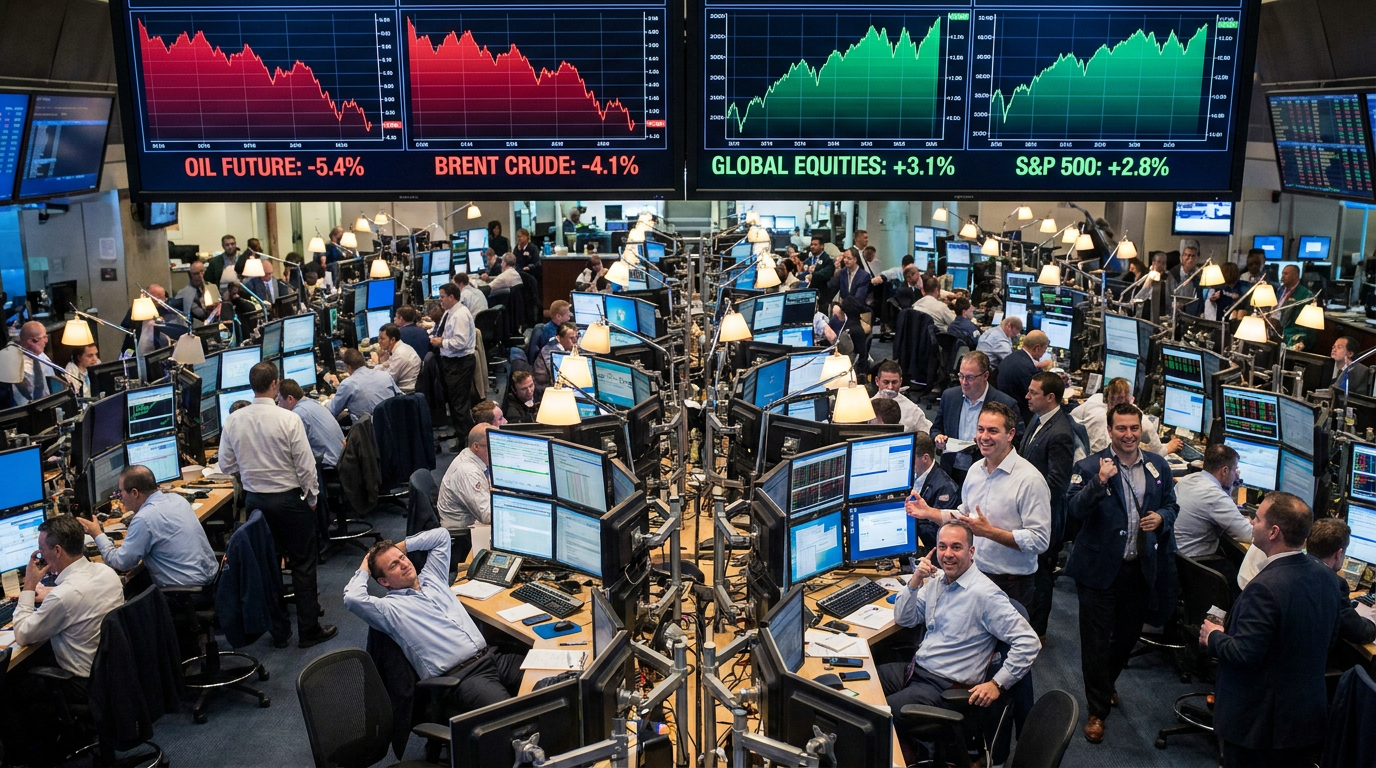
For the global economy, the immediate consequence is written in the price of crude oil. Energy markets slumped sharply within hours of the announcement, driven by the anticipated resumption of unimpeded maritime traffic through the Persian Gulf.[1][7]
The mechanism driving this relief is the physical reopening of the Strait of Hormuz, a narrow waterway between Oman and Iran that serves as the world's most critical energy chokepoint. Historically, roughly 20% of global oil consumption and a quarter of global liquefied natural gas (LNG) trade passes through this corridor.[7]
During the conflict, the perceived risk to shipping effectively placed a massive premium on global energy. Now, physical signs of normalization are already emerging. Qatar, a major energy producer, has brought an empty LNG tanker back into the Persian Gulf through the Strait for the first time since the war began, signaling a rapid preparation to ramp up exports.[5]

This sudden drop in energy costs is acting as an immediate, massive tax cut for the global economy. When oil prices fall, the cost of manufacturing, shipping, and agricultural production drops in tandem, easing the pressure on consumer prices across the board.[8]
The ripple effects have instantly altered the calculus for the world's major central banks, who have spent years battling sticky inflation. The Bank of England was the first to officially react, holding its benchmark interest rate steady at 3.75%.[3][4]
In its policy statement, the BOE explicitly cited the "encouraging" fall in oil prices stemming from the peace prospects as a primary reason for pausing rate hikes. However, the decision was not unanimous; two policymakers voted for an immediate quarter-point hike, underscoring lingering fears that underlying inflation remains entrenched in the UK economy.[4]

In its policy statement, the BOE explicitly cited the "encouraging" fall in oil prices stemming from the peace prospects as a primary reason for pausing rate hikes.
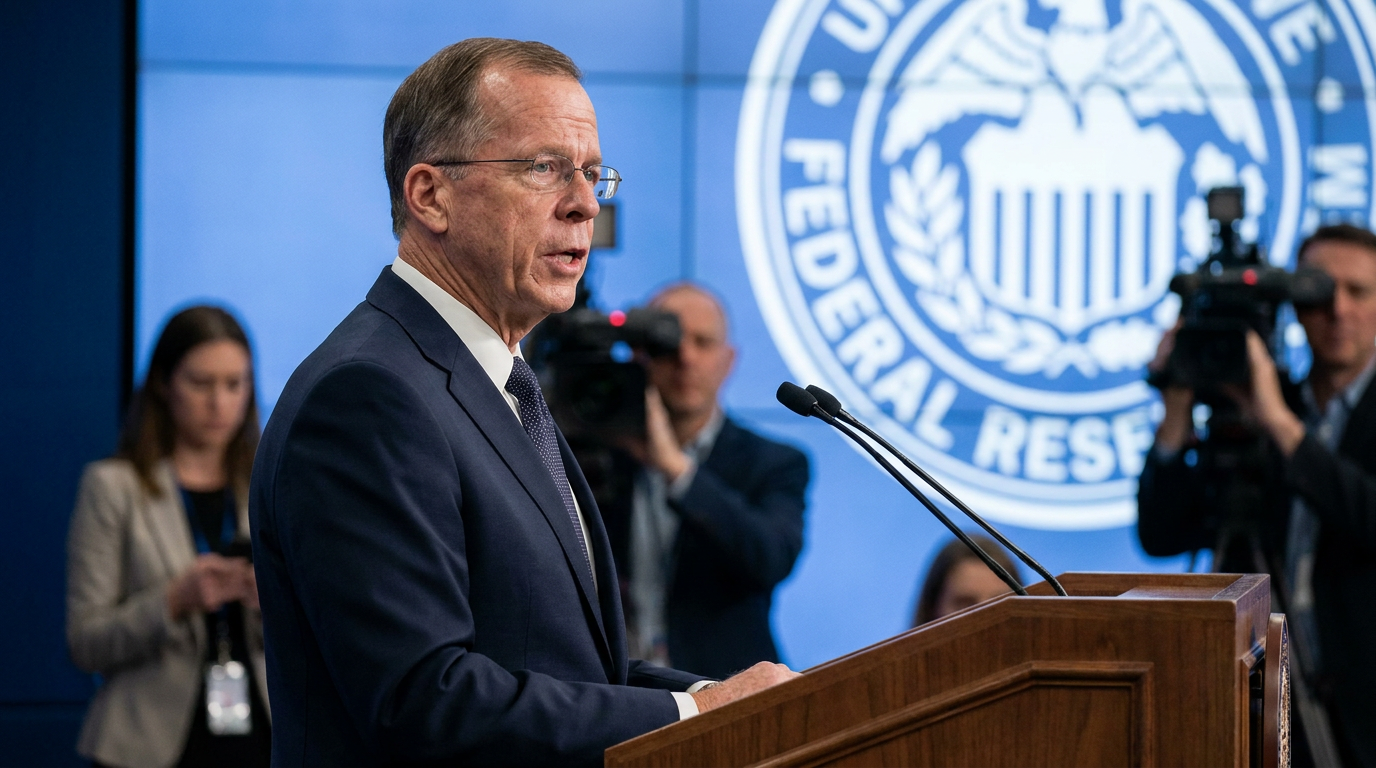
Across the Atlantic, the reaction from the US Federal Reserve has been notably more guarded. In his highly anticipated debut press conference, newly appointed Fed Chairman Kevin Warsh delivered a stark message to bond markets: the central bank will not tolerate high inflation, regardless of geopolitical windfalls.[1][6][9]
Warsh's hawkish tone initially stoked a selloff in US Treasuries, as traders realized the Fed would not immediately pivot to rate cuts just because oil prices had dropped. Treasuries later rebounded as markets digested his positioning as a credible, long-term inflation fighter.[6]
The divergence between the BOE's cautious optimism and the Fed's stern posturing highlights a critical economic concept: the difference between "headline" and "core" inflation. While falling oil prices rapidly drag down headline inflation, central bankers like Warsh are heavily focused on core inflation, which strips out volatile food and energy prices to measure underlying economic heat.[9]

If the US labor market remains tight and service-sector costs continue to rise, the Fed may keep borrowing costs elevated even as gasoline gets cheaper. This creates a complex environment for consumers, who will see relief at the pump but may still face high interest rates on mortgages, credit cards, and auto loans.[9]
For equity investors, the end of the conflict is triggering a massive "rotation trade." With the US dollar potentially stabilizing and energy shocks subsiding, capital is beginning to flow out of defensive US assets and into international markets that were previously battered by high energy import costs.[1]
European and Asian manufacturing hubs, which are heavily dependent on imported oil and gas, stand to be the biggest winners. Lower input costs could revitalize industrial production in countries like Germany and Japan, shifting the center of global growth away from purely US-led tech dominance.[8]
Yet, significant uncertainties remain. The US-Iran agreement is explicitly an "interim" framework, meaning the final, binding terms are still subject to intense diplomatic negotiation. If talks break down or localized skirmishes resume, the risk premium on oil could violently snap back.[2][7]
Furthermore, rebuilding Iran's shattered economy will require hundreds of billions of dollars in foreign investment and years of infrastructure repair. While the immediate threat to global shipping has receded, the long-term integration of Iranian energy back into the global grid will be a slow, heavily monitored process.[2][8]
How we got here
Pre-2026
Conflict disrupts commercial shipping through the critical Strait of Hormuz.
Early June 2026
Diplomatic backchannels accelerate between Washington and Tehran to halt hostilities.
June 18, 2026
The US and Iran sign a preliminary interim agreement, easing geopolitical tensions.
June 18, 2026
Global oil prices slump and the Bank of England holds interest rates steady in response.
Viewpoints in depth
Central Banks' View
Monetary policymakers are balancing relief over falling energy costs with fears of entrenched domestic inflation.
For central banks, the drop in oil prices is a double-edged sword. While it provides immediate relief to headline inflation figures, officials like Fed Chair Kevin Warsh are acutely aware that core inflation—driven by wages and services—remains stubborn. Their primary concern is that prematurely cutting interest rates could reignite demand, undoing years of painful monetary tightening. The Bank of England's split decision to hold rates at 3.75% perfectly encapsulates this tension.
Global Markets' View
Investors see the deal as a catalyst for a massive rotation into international equities and manufacturing sectors.
Traders are treating the interim deal as a structural shift in the global economy. By removing the massive risk premium on energy, the agreement acts as a stimulus for countries heavily reliant on imported oil and gas, particularly in Europe and Asia. This is driving a 'rotation trade' where capital flows out of defensive, US-centric assets and into international industrial and manufacturing stocks that stand to benefit most from cheaper input costs.
Geopolitical Analysts' View
Experts warn that the interim nature of the deal leaves the global economy vulnerable to sudden shocks.
While markets are pricing in a permanent peace, geopolitical experts emphasize that an 'interim' framework is inherently fragile. The final terms regarding nuclear non-proliferation and sanctions relief are still unresolved. Analysts caution that any breakdown in subsequent negotiations, or domestic political pushback in either Washington or Tehran, could cause the risk premium on global energy to violently snap back, catching overly optimistic markets off guard.
What we don't know
- Whether the interim framework will successfully transition into a permanent, binding treaty.
- How quickly Iran can repair its infrastructure and return to full energy production capacity.
- If the drop in headline inflation will be enough to force the Federal Reserve into cutting interest rates later this year.
Key terms
- Strait of Hormuz
- A narrow waterway between the Persian Gulf and the Gulf of Oman through which roughly 20% of the world's oil supply passes.
- Core Inflation
- A measure of inflation that excludes volatile items like food and energy, used by central banks to gauge the underlying trend of price increases.
- Liquefied Natural Gas (LNG)
- Natural gas that has been cooled to a liquid state for easier and safer non-pipeline transport, heavily exported by countries like Qatar.
- Rotation Trade
- An investment strategy where capital is moved out of one sector or region and into another, in this case from US assets to international markets.
Frequently asked
Will this deal lower gas prices for consumers?
Yes, the resumption of shipping through the Strait of Hormuz has already caused global crude oil prices to slump, which typically translates to lower prices at the pump within a few weeks.
Why didn't the Federal Reserve cut interest rates immediately?
The Fed is focused on 'core inflation,' which excludes volatile energy prices. If the cost of services and housing remains high, the Fed will keep rates elevated to cool the broader economy.
Is the conflict in Iran completely over?
No. The current pact is an 'interim' agreement that halts hostilities and sets a framework for a permanent deal, meaning diplomatic negotiations are still ongoing.
Sources
Source coverage
9 outlets
3 viewpoints surfaced






[1]BloombergCentral Bankers
Stock Futures Rise, Oil Falls on US-Iran Deal; Warsh Rocks Bond Market
Read on Bloomberg →[2]NPRGeopolitical Analysts
Trump signs preliminary agreement with Iran
Read on NPR →[3]CNBCCentral Bankers
Bank of England holds interest rates at 3.75% amid Iran war peace prospects
Read on CNBC →BOE Holds Rates, Citing 'Encouraging' Fall in Oil Price
Read on Bloomberg →Qatar Brings Empty LNG Ship Back for First Time Since War Began
Read on Bloomberg →US Treasuries Rebound After Warsh’s Debut at Fed Stoked Selloff
Read on Bloomberg →[7]ReutersGlobal Markets & Importers
Oil prices slump as Strait of Hormuz shipping resumes following US-Iran pact
Read on Reuters →[8]Financial TimesGlobal Markets & Importers
Global markets rally as energy shipments resume through Persian Gulf
Read on Financial Times →[9]Wall Street JournalCentral Bankers
Fed Chair Warsh signals caution on inflation despite energy relief
Read on Wall Street Journal →
Every angle. Every day.
Get business stories with full source coverage and perspective breakdowns delivered to your inbox.