
US and Iran Sign 14-Point Ceasefire Agreement, Reopening Strait of Hormuz
The United States and Iran have signed a preliminary memorandum of understanding to end their 110-day conflict, establishing a 60-day ceasefire and lifting the U.S. naval blockade.
By Factlen Editorial Team

- U.S. Administration
- Argues the deal averts a global economic crisis, secures the Strait of Hormuz, and forces Iran to halt its nuclear program in exchange for conditional relief.
- Iranian Leadership
- Views the agreement as a victory over U.S. pressure, emphasizing the end of the naval blockade and asserting long-term sovereignty over the Strait.
- Global Mediators and Markets
- Focuses on the immediate relief to global energy supply chains and the de-escalation of a conflict that threatened worldwide recession.
- Regional Skeptics and Hawks
- Warns that lifting economic pressure and unfreezing assets rewards Tehran without dismantling its proxy networks or permanently ending its nuclear ambitions.
What's not represented
- · Lebanese civilians affected by the halt or continuation of Hezbollah-Israel hostilities
- · Commercial shipping companies navigating the immediate logistics of the reopened Strait
Why this matters
This agreement halts a 110-day conflict that choked off one-fifth of the world's oil supply, offering immediate relief to global energy prices and averting a broader Middle East war. However, the next 60 days of negotiations will determine whether this temporary truce translates into a permanent resolution regarding Iran's nuclear program.
Key points
- The U.S. and Iran signed a 14-point preliminary agreement to end their 110-day conflict.
- The deal establishes a 60-day ceasefire and immediately lifts the U.S. naval blockade.
- Iran agreed to reopen the Strait of Hormuz toll-free for 60 days, easing global oil markets.
- Tehran committed to down-blending its enriched uranium under international supervision.
- Phased sanctions relief will be tied directly to Iran's compliance with nuclear restrictions.
- The agreement also calls for a halt to military operations involving Hezbollah in Lebanon.
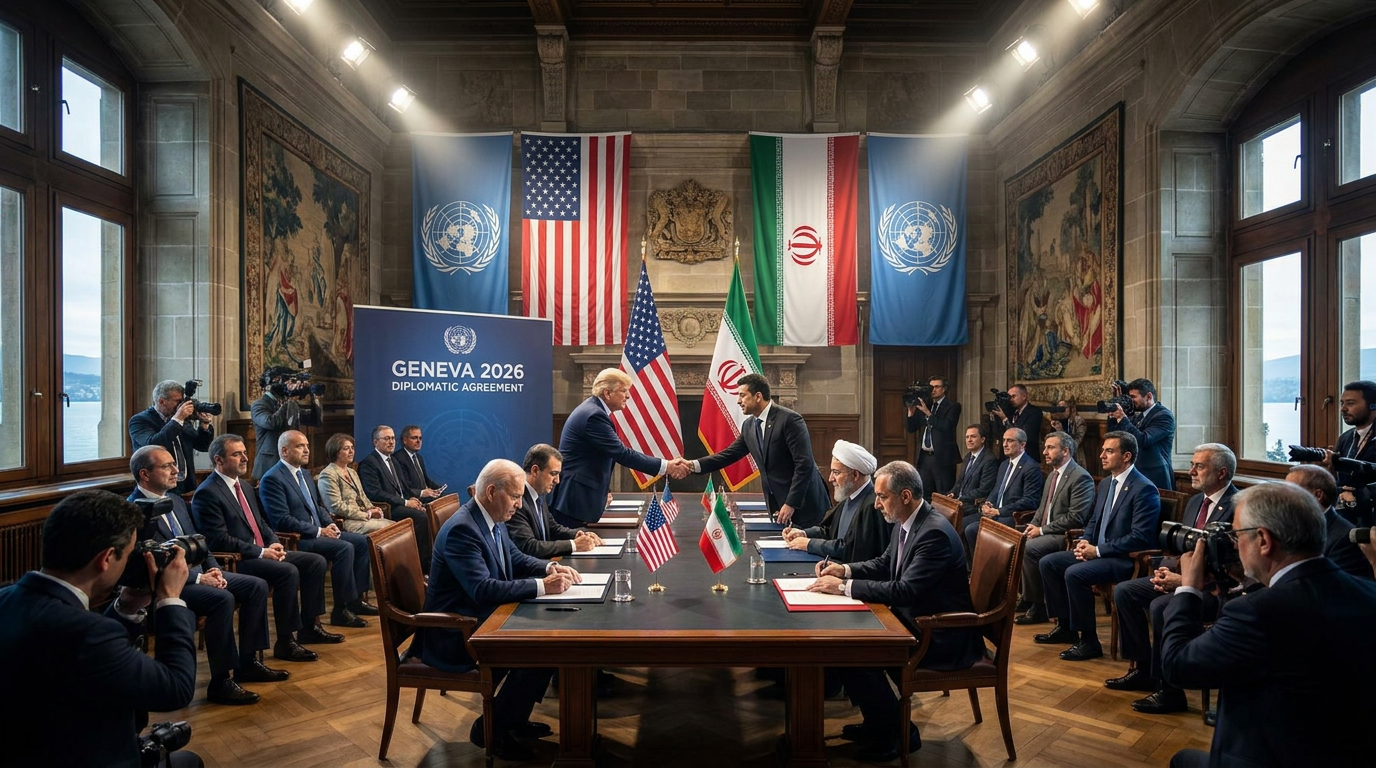
The United States and Iran have officially signed a 14-point Memorandum of Understanding designed to end a 110-day conflict that has paralyzed global energy markets and threatened a broader Middle East war. The preliminary agreement, brokered with the help of Pakistani mediators, establishes a 60-day ceasefire and sets the stage for comprehensive negotiations over Tehran's nuclear program and international sanctions.[2][4][7]
President Donald Trump signed the document remotely while attending the G7 summit at the Palace of Versailles in France, while Iranian President Masoud Pezeshkian signed from Tehran. The synchronized signing initiates an immediate halt to military operations across all fronts, including the ongoing hostilities involving Hezbollah in Lebanon.[1][2][3]
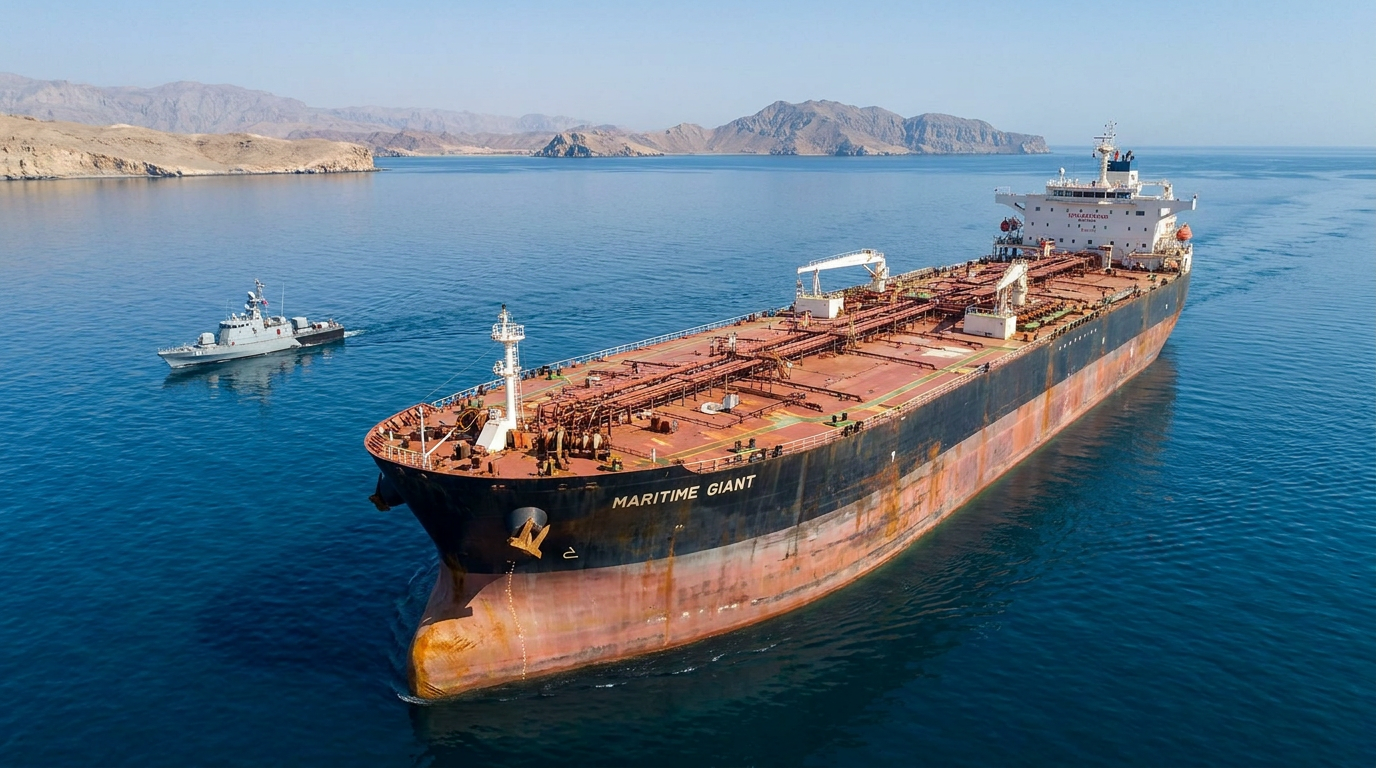
The most immediate global impact of the deal is the reopening of the Strait of Hormuz, a critical maritime chokepoint that handles roughly one-fifth of the world's oil supply. Under the terms of the agreement, the United States will lift its naval blockade of Iranian ports, and Iran has committed to allowing toll-free commercial shipping through the strait for the next 60 days.[5][7][8]

Global markets reacted swiftly to the diplomatic breakthrough. The price of Brent crude oil, which had spiked well above $100 a barrel during the height of the conflict, settled down to $78.31 following the announcement. President Trump celebrated the economic relief, declaring on social media that the deal averts a "worldwide depression" and urging the world to "Let the oil flow!"[2][4][6]
Global markets reacted swiftly to the diplomatic breakthrough.
Beyond maritime security, the memorandum outlines a framework for addressing Iran's nuclear ambitions. U.S. officials state that Iran has agreed to down-blend its stockpile of highly enriched uranium on Iranian soil under the supervision of the International Atomic Energy Agency. In exchange, the United States has agreed to a phased schedule of sanctions relief, explicitly tying economic benefits to nuclear compliance.[2][5]
Despite the mutual agreement, both Washington and Tehran are framing the memorandum as a decisive victory for their respective sides. The Trump administration has characterized the deal as a "major win" that defangs a dangerous adversary without committing U.S. forces to a protracted ground war. Vice President JD Vance emphasized that broad sanctions relief and the release of frozen assets will only occur if Iran fundamentally changes its behavior.[2][4]

Conversely, Iranian leadership has portrayed the agreement as a capitulation by the West. Iran's chief negotiator, Mohammad Bagher Ghalibaf, described the memorandum as a "record of US failure," asserting that Tehran achieved its strategic goals through negotiation rather than military force. Ghalibaf also signaled that Iran intends to assert its sovereignty over the Strait of Hormuz by charging transit fees once the 60-day toll-free window expires.[2][5]
The agreement has drawn praise from international allies but deep skepticism from regional partners and foreign policy hawks. G7 leaders issued a joint statement welcoming the deal as a "historic opportunity" to prevent Iran from acquiring a nuclear weapon. However, officials in Israel and several U.S. lawmakers have expressed concern that lifting the naval blockade and unfreezing assets will reward Tehran without forcing the dismantling of its proxy network, particularly Hezbollah.[2][4][6]

The fragility of the current framework remains a significant hurdle. The memorandum is not a binding treaty, and senior U.S. officials have acknowledged that either side can walk away at any time. The next 60 days will require intense technical negotiations to translate the 14-point outline into a durable, UN-backed resolution that addresses economic reconstruction, verification mechanisms, and long-term regional security.[2][8]
How we got here
March 2026
Conflict escalates, leading to the closure of the Strait of Hormuz and a spike in global energy prices.
April 2026
The U.S. military imposes a naval blockade on Iranian ports in retaliation for disruptions in the Strait.
May 2026
Pakistani mediators facilitate indirect talks between Washington and Tehran, drafting a preliminary framework.
June 14, 2026
U.S. and Iranian negotiators finalize the text of a 14-point Memorandum of Understanding.
June 17, 2026
President Trump and President Pezeshkian remotely sign the agreement, putting the 60-day ceasefire into effect.
Viewpoints in depth
The U.S. Administration's view
The deal is a strategic victory that stabilizes the global economy without committing to a ground war.
President Trump and his surrogates emphasize that the agreement immediately reopens the Strait of Hormuz, averting a catastrophic spike in energy prices. They argue that the phased approach to sanctions relief ensures the U.S. maintains leverage, as frozen assets and economic benefits will only be released if Iran verifiably down-blends its uranium and halts its nuclear program.
The Iranian Leadership's view
The agreement represents a successful resistance against Western military and economic pressure.
Iranian officials, including chief negotiator Mohammad Bagher Ghalibaf, frame the lifting of the U.S. naval blockade as a capitulation by Washington. They assert that Tehran achieved its primary objectives without sacrificing its fundamental right to civilian nuclear enrichment, and they maintain that Iran will eventually exercise its sovereignty by collecting tolls in the Strait of Hormuz.
The Skeptics' view
The framework provides Iran with immediate economic relief without neutralizing its long-term threats.
Israeli officials and hawkish U.S. lawmakers worry that the 60-day ceasefire simply gives Tehran time to regroup. By lifting the naval blockade and offering a pathway to unfreeze billions in assets, critics argue the deal enriches the regime without forcing it to dismantle proxy groups like Hezbollah, leaving the region vulnerable to future escalations.
What we don't know
- Whether Iran will actually begin charging transit fees for the Strait of Hormuz after the 60-day window expires.
- How Israel will respond to the ceasefire framework, given that it is not a formal signatory to the agreement.
- Whether the two sides can successfully negotiate a comprehensive, binding nuclear treaty within the 60-day timeframe.
Key terms
- Memorandum of Understanding (MOU)
- A formal agreement between two or more parties that outlines the terms and details of an understanding, serving as a starting point for a final binding treaty.
- Strait of Hormuz
- A narrow, strategically critical waterway between the Persian Gulf and the Gulf of Oman through which roughly one-fifth of the world's oil supply passes.
- Down-blending
- The process of diluting highly enriched uranium with lower-enriched or natural uranium to reduce its concentration, making it unsuitable for use in nuclear weapons.
- Naval blockade
- A military operation in which ships are used to cut off a country's ports, preventing the import or export of goods and supplies.
- Sanctions relief
- The reduction or removal of economic penalties imposed on a country, allowing it to resume international trade and access global financial systems.
Frequently asked
What exactly did the U.S. and Iran sign?
The two nations signed a 14-point Memorandum of Understanding (MOU) that establishes a 60-day ceasefire, lifts the U.S. naval blockade, and reopens the Strait of Hormuz to commercial shipping.
Does this mean Iran is giving up its nuclear program?
Not entirely. The preliminary agreement requires Iran to down-blend its highly enriched uranium under international supervision, but the final parameters of its nuclear program will be negotiated over the next 60 days.
How did the deal affect gas and oil prices?
Global oil markets reacted positively, with the price of Brent crude dropping from over $100 a barrel during the conflict to around $78 following the announcement of the agreement.
Is the war in Lebanon over?
The MOU calls for an immediate and permanent termination of military operations on all fronts, including the conflict involving Hezbollah in Lebanon, though Israel is not a formal party to the agreement.
Sources
Source coverage
8 outlets
4 viewpoints surfaced








[1]Fox NewsU.S. Administration
Trump personally signs Iran deal at Versailles in major diplomatic breakthrough
Read on Fox News →[2]The GuardianIranian Leadership
Donald Trump's Iran deal met with anger, relief and incredulity
Read on The Guardian →[3]AxiosGlobal Mediators and Markets
U.S. and Iran sign deal ahead of schedule
Read on Axios →[4]CBS NewsU.S. Administration
What to know about the Iran war: The Trump administration released the 14-point memorandum of understanding
Read on CBS News →[5]Council on Foreign RelationsRegional Skeptics and Hawks
Where the U.S.-Iran Deal Lands on Core Issues
Read on Council on Foreign Relations →[6]Atlantic CouncilRegional Skeptics and Hawks
Experts react: What the US-Iran agreement means for the Middle East and the world
Read on Atlantic Council →[7]PBSGlobal Mediators and Markets
Deal is reached to end Iran war and Trump orders stop to U.S. naval blockade
Read on PBS →[8]TIMEIranian Leadership
What the US-Iran Agreement Actually Commits Both Sides To
Read on TIME →
More in news politics
See all 7 stories →Labor Law
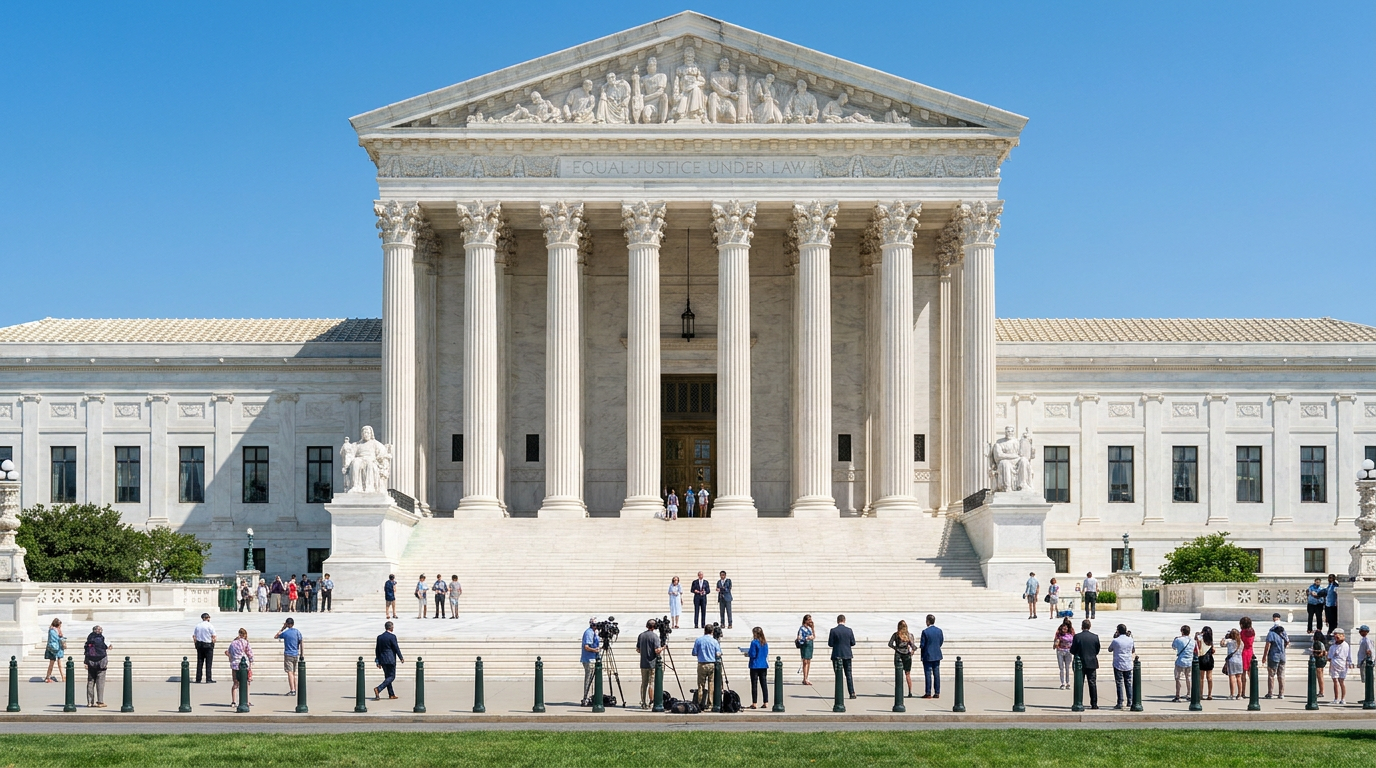
Supreme Court Rules Last-Mile Delivery Drivers Cannot Be Forced Into Arbitration
9 sources
Pentagon Rebranding
Congress Advances Trump's Push to Rename Pentagon the 'Department of War'
6 sources
Labour Party
UK Voters Head to Polls in Makerfield By-Election That Could Topple Prime Minister Keir Starmer
7 sources

US-Iran Deal
U.S. and Iran Sign 14-Point Memorandum to End Conflict and Reopen Strait of Hormuz
8 sources
Every angle. Every day.
Get news politics stories with full source coverage and perspective breakdowns delivered to your inbox.