
The Evolution of Leather Alternatives: Evaluating Mycelium, Plant-Based, and Traditional Materials
As bio-fabrication reaches commercial scale, consumers face a complex choice between the multi-decade durability of traditional hide, the resource efficiency of plant-based composites, and the zero-plastic promise of lab-grown mycelium. A side-by-side analysis reveals the distinct environmental and functional trade-offs of each material.
By Factlen Editorial Team
- Material Innovators
- Argue that bio-fabrication and agricultural waste repurposing are the only scalable solutions to fashion's climate impact.
- Traditional Craftsmanship Advocates
- Emphasize that animal leather's multi-decade durability and natural aging process make it the most sustainable long-term investment.
- Eco-Pragmatists
- Focus on the immediate plastic problem, warning that many plant-based leathers still rely heavily on non-biodegradable polyurethane coatings.
- Luxury Fashion Houses
- Prioritize aesthetic equivalence, hand-feel, and exclusivity, driving the funding for high-end mycelium alternatives.
What's not represented
- · Garment Workers
- · Cattle Farmers
Why this matters
The materials you choose for your shoes, bags, and jackets directly dictate their lifespan and environmental impact. Understanding the chemical realities behind 'vegan' marketing empowers you to invest in products that genuinely align with your values, rather than inadvertently paying a premium for hidden plastics.
Key points
- The fashion industry is rapidly shifting from plastic-based vegan leathers to bio-fabricated materials like mycelium and cactus.
- Traditional animal leather offers unmatched multi-decade durability but carries a massive carbon and water footprint.
- Plant-based leathers repurpose agricultural waste but currently rely on synthetic polyurethane coatings for structural integrity.
- Mycelium leather grows in just 7 to 14 days and uses up to 99% less water than bovine leather.
- Upcoming EU regulations will soon force brands to disclose the exact plastic content of their alternative leathers.
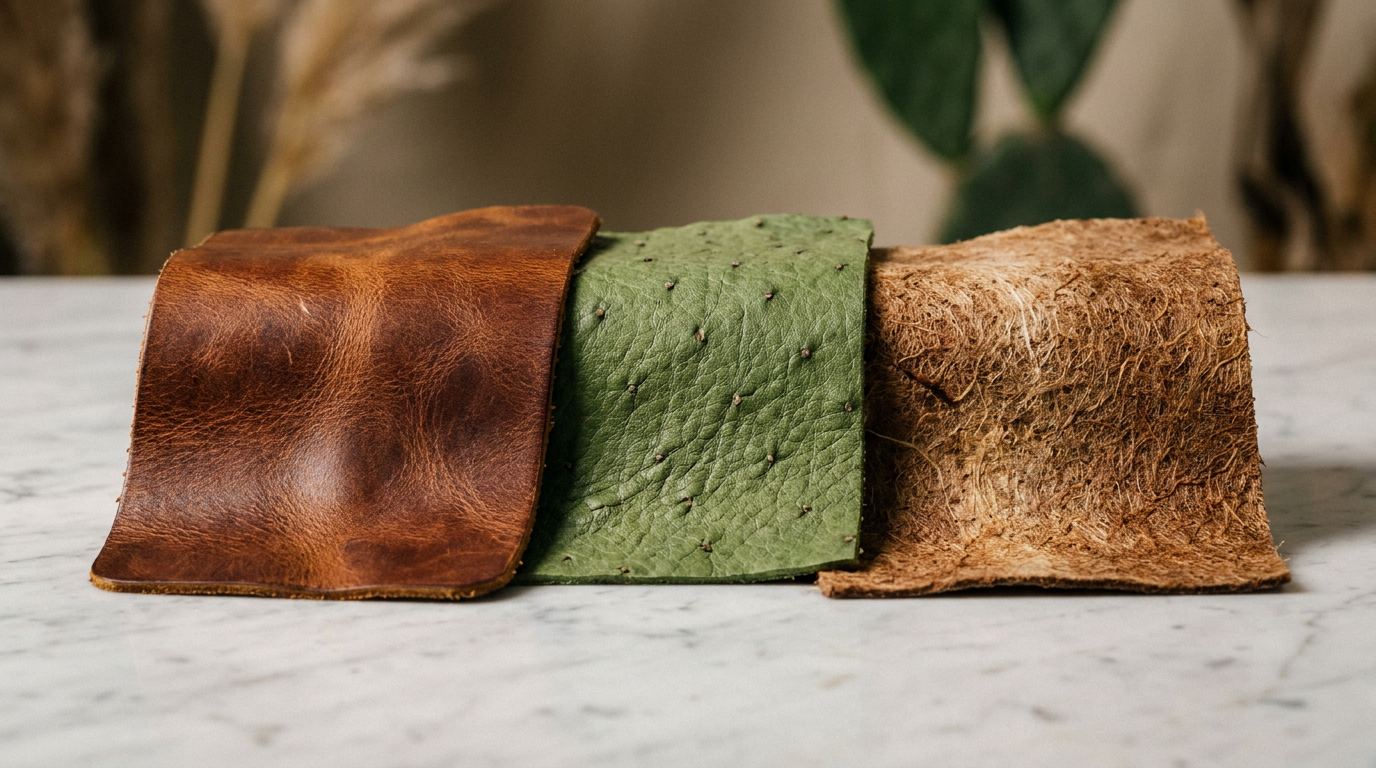
The era of equating "vegan leather" with cheap, peeling plastic is rapidly coming to a close. For decades, consumers seeking cruelty-free fashion were forced to compromise, settling for polyurethane or polyvinyl chloride—materials derived from fossil fuels that take centuries to decompose. Today, the landscape has fundamentally shifted. Driven by a combination of climate urgency, shifting consumer values, and massive investments in biotechnology, the fashion industry in 2026 is embracing a new frontier of bio-based materials. From the agricultural fields of Mexico to high-tech fermentation labs in California, innovators are harvesting cactus leaves, pineapple fibers, and fungal root systems to create textiles that rival the tactile richness of animal hide. This transition is not merely a niche sustainability trend; it is a wholesale reimagining of how luxury and everyday goods are manufactured. As major fashion houses and automotive giants alike integrate these next-generation materials into their flagship products, consumers are faced with an entirely new set of choices. Navigating this market requires looking past the marketing gloss to understand the distinct chemical compositions, environmental footprints, and physical limitations of each emerging textile.[2][3]
The stakes driving this material revolution are immense. The traditional fashion and textile industry remains one of the heaviest polluters on the planet, generating an estimated 92 million tonnes of waste annually. Within that ecosystem, conventional leather production carries a particularly heavy burden. Over a billion animals are processed each year, requiring vast expanses of land for grazing and feed production, which in turn drives deforestation and biodiversity loss. Recognizing these compounding crises, material scientists have spent the last five years racing to develop viable alternatives that do not simply replace an animal welfare problem with a plastic pollution problem. The result is a highly competitive market of bio-fabricated textiles, each claiming to be the ultimate sustainable solution. However, because the perfect, indestructible, zero-impact material does not yet exist, evaluating these options requires a rigorous side-by-side analysis.[1][6]
To understand the current state of the market, we must evaluate the three dominant categories competing for dominance in 2026: traditional animal leather, plant-based composites derived from agricultural waste, and lab-grown mycelium networks. Each category operates under a different production paradigm and offers a unique balance of durability, ecological impact, and aesthetic appeal. By examining the specific trade-offs of each material—quantifying their carbon footprints, water usage, and end-of-life biodegradability—we can establish clear guidelines for when each material is the most appropriate choice. This comparative approach strips away the greenwashing, allowing consumers to make purchasing decisions grounded in material science rather than aspirational branding.[1][7]
When evaluating traditional animal leather, the case for its continued use rests almost entirely on its unmatched longevity and structural integrity. For centuries, bovine hide has been the gold standard for durability, capable of withstanding extreme abrasion, heavy loads, and severe weather conditions. Unlike synthetic alternatives that degrade and peel over time, high-quality full-grain leather possesses a unique breathability and actually improves with age, developing a rich, natural patina that synthetic materials struggle to replicate. From a purely functional standpoint, a well-maintained leather jacket or pair of boots can easily last for several decades, effectively amortizing its environmental cost over a lifetime of use. This multi-generational lifespan is a core tenet of the traditional circular economy, where buying one durable item is viewed as superior to repeatedly purchasing disposable alternatives.[4][5]
The argument against traditional leather is rooted in its staggering environmental toll and the toxic realities of its manufacturing process. While the raw hide is often framed as a natural byproduct of the meat industry, the chemical transformation required to prevent that organic matter from rotting is intensely hazardous. The vast majority of global leather is treated using chromium sulfate, a heavy metal salt that frequently leaches into local waterways, devastating aquatic ecosystems and posing severe health risks to tannery workers. Furthermore, the sheer scale of the livestock industry required to supply these hides makes it a massive driver of global warming, land degradation, and water scarcity.[1][4]
The evidence quantifying this impact is sobering. Life-cycle analyses demonstrate that producing just one kilogram of animal leather can generate up to 910 kilograms of carbon dioxide equivalent, factoring in the methane emissions from cattle and the energy-intensive tanning process. Additionally, that same kilogram of leather requires an astonishing 14,000 liters of water to produce. Even when brands pivot to vegetable-tanned leather—which avoids chromium in favor of natural tannins derived from tree bark—the process remains incredibly water-intensive and does nothing to mitigate the massive carbon footprint of the agricultural supply chain.[1][4]

Given these parameters, traditional animal leather fits well when purchasing heirloom-quality, heavy-duty items that are expected to endure decades of harsh wear. It remains the optimal choice for motorcycle safety gear, heavy work boots, and heritage luggage where absolute tensile strength and tear resistance are non-negotiable safety or functional requirements. Conversely, it does not fit when the buyer prioritizes an immediate reduction in their carbon footprint, demands a cruelty-free supply chain, or is purchasing lightweight, trend-driven accessories that are unlikely to be kept for more than a few seasons.[5][7]
Given these parameters, traditional animal leather fits well when purchasing heirloom-quality, heavy-duty items that are expected to endure decades of harsh wear.
Moving to the next generation of materials, the case for plant-based leathers—such as those derived from cactus, pineapple leaves, or apple skins—centers on waste reduction and resource efficiency. Materials like Desserto and Piñatex have revolutionized the market by repurposing agricultural byproducts that would otherwise be burned or left to rot. By utilizing the fibrous waste from existing food harvests, these materials create an additional revenue stream for farmers while requiring virtually no extra land or water to cultivate. Cactus leather, in particular, is celebrated for its natural water repellency and the fact that the nopal cactus thrives in arid climates without the need for irrigation or chemical pesticides.[4][6]
The primary argument against these plant-derived materials is their hidden reliance on synthetic binders. While the marketing often highlights the organic fruit or plant source, the raw biomass alone lacks the structural integrity required to function as a textile. To achieve the necessary flexibility, tear resistance, and smooth finish of commercial leather, the pulverized plant matter is typically mixed with or coated in polyurethane (PU) resins. This plastic integration creates a composite material that, while significantly less toxic than PVC, is fundamentally unrecyclable. It cannot be melted down like pure plastic, nor can it fully compost like pure organic matter, leaving it destined for the landfill at the end of its lifecycle.[1][4]
The evidence highlights this inherent compromise. Environmental impact studies show that while cactus leather boasts a remarkably low carbon footprint of just 1.4 kilograms of CO2 equivalent per square meter, its typical bio-content hovers between 30 and 50 percent. The remaining 50 to 70 percent consists of petroleum-based polymers. While this represents a massive improvement over 100 percent virgin plastic synthetics, the presence of polyurethane remains a significant obstacle for brands striving for true circularity. Durability testing also indicates that while these composites perform well for light use, they are prone to fraying or cracking under constant friction, typically offering a lifespan of five to ten years rather than decades.[1][4]

Plant-based leather fits well when consumers want an affordable, cruelty-free alternative for everyday fashion accessories. It is highly suitable for items like crossbody bags, wallets, casual sneakers, and lightweight jackets where extreme mechanical stress is minimal and water resistance is beneficial. It does not fit when the consumer's primary goal is a 100 percent plastic-free, fully compostable product. It is also poorly suited for heavy-duty applications, such as equestrian gear or professional workwear, where the material will be subjected to high abrasion and requires the ability to be repeatedly conditioned and repaired.[4][5]
The most technologically advanced category is mycelium leather, grown from the underground root structure of fungi. The case for mycelium rests on its ability to mimic the biological growth of animal skin without the animal. In highly controlled vertical farming environments, mycelium cells are fed agricultural waste like sawdust or hemp hurds. Over the course of just seven to fourteen days, these cells knit themselves into a dense, fibrous mat that is remarkably similar to the collagen structure of bovine hide. Because it is grown to the exact size and shape required, the process generates virtually no offcuts or waste, representing a paradigm shift in textile manufacturing efficiency.[2][3]
The argument against mycelium leather currently revolves around its nascent scale, high cost, and ongoing technical refinements. While the material is bio-fabricated, achieving the exact tensile strength and water resistance of premium cowhide without resorting to synthetic coatings remains a complex engineering challenge. Furthermore, because the infrastructure required to grow mycelium at a commercial scale is still being built, the material is currently priced as a luxury commodity. It is largely restricted to high-end collaborations with luxury houses rather than being accessible to the mass market, limiting its immediate global impact.[2][5]

The evidence from 2026 materials testing strongly supports the ecological promise of fungi-based textiles. Data indicates that mycelium composites use 90 to 99 percent less water than bovine leather and produce up to 95 percent fewer carbon emissions. Crucially, leading innovators in this space have achieved these metrics while keeping plastic content to an absolute minimum. Premium versions of mycelium leather contain less than one percent synthetic material, allowing the finished product to be fully compostable at the end of its life. This achieves the holy grail of material science: a high-performance textile that safely returns to the earth.[1][2]

Mycelium leather fits well when the priority is cutting-edge sustainability, zero plastic content, and uncompromising luxury aesthetics. It is the ideal material for high-end handbags, premium automotive interiors, and designer footwear where consumers are willing to pay a premium for verifiable ecological purity and innovative craftsmanship. It does not fit when budget is a primary constraint, or for fast-fashion applications requiring massive, cheap volume. Until production facilities scale up sufficiently to drive down costs, mycelium will remain an aspirational material rather than a ubiquitous one.[2][3]
Looking ahead, the broader industry transition is being accelerated by impending regulatory pressures. As the European Union prepares to roll out its Digital Product Passport regulations between 2026 and 2027, fashion brands will be legally forced to disclose the exact material footprints and chemical compositions of their garments. This transparency mandate is expected to ruthlessly expose the greenwashing of heavily plasticized "vegan" leathers while simultaneously penalizing the massive carbon output of traditional tanneries. Consequently, the capital flowing into bio-fabrication is surging, driving rapid improvements in the durability and scalability of both plant-based and fungi-based alternatives.[2][7]
Ultimately, the choice of material in 2026 requires navigating distinct and quantifiable trade-offs. The perfect material—one that is infinitely durable, completely natural, entirely cruelty-free, and universally affordable—does not yet exist. However, the rapid commercialization of agricultural waste composites and fungal networks offers consumers unprecedented power to align their wardrobes with their specific ecological values. Whether opting for the multi-decade lifespan of heritage leather, the resource efficiency of cactus composites, or the compostable purity of mycelium, informed consumers can now push the fashion industry toward a more accountable and sustainable future.[1][7]

How we got here
2015
Piñatex (pineapple leather) is introduced, kickstarting the modern plant-based leather movement.
2019
Desserto debuts the world's first highly sustainable cactus leather at the Lineapelle exhibition in Milan.
2021
Hermès unveils a prototype of its classic Victoria bag made from Sylvania, a mycelium-based material.
2025
Mycelium leather reaches commercial scale, with major brands like Stella McCartney and Adidas launching consumer-ready products.
2026
The EU finalizes Digital Product Passport requirements, forcing brands to disclose the plastic content in 'vegan' leathers.
Viewpoints in depth
Material Innovators
Scientists and biotech startups focused on replacing animal agriculture with lab-grown and plant-based alternatives.
This camp views the traditional leather industry as an ecological dead end, citing the massive land, water, and carbon requirements of cattle farming. They argue that bio-fabrication—specifically growing mycelium in controlled environments—represents a paradigm shift because it decouples textile production from animal agriculture entirely. Their primary focus is scaling up these technologies to achieve price parity with traditional leather, believing that once the economic barrier falls, the environmental metrics will make animal leather obsolete.
Traditional Craftsmanship Advocates
Artisans and heritage brands who argue that true sustainability means buying one item that lasts a lifetime.
Proponents of traditional leather argue that the sustainability conversation too often ignores the concept of longevity. They point out that a well-crafted, full-grain leather jacket can last fifty years and be repaired multiple times, whereas a polyurethane-coated plant leather bag might crack and become unwearable in five. From their perspective, the carbon footprint of traditional leather is amortized over decades of use, making it a more responsible choice than repeatedly buying and discarding synthetic or semi-synthetic alternatives.
Eco-Pragmatists
Environmental analysts who warn against greenwashing and emphasize the hidden plastics in 'vegan' products.
This viewpoint is highly critical of the marketing surrounding plant-based leathers. While they applaud the use of agricultural waste like cactus and pineapple, they stress that these materials are currently composites that rely on 50 to 70 percent polyurethane to hold together. Eco-pragmatists argue that until these binders are replaced with 100 percent bio-based resins, plant leathers are simply a less-toxic form of plastic pollution that cannot be recycled or composted, complicating the industry's push toward a truly circular economy.
What we don't know
- Whether mycelium leather can eventually match the absolute tensile strength and tear resistance of heavy-duty bovine hide.
- How quickly biotech companies can scale production to make 100% plastic-free bio-leathers affordable for the mass market.
- The long-term real-world durability of the newest generation of plant-based composites over a 10-to-20-year timespan.
Key terms
- Mycelium
- The vegetative, root-like network of fungi that can be grown into dense, fibrous mats resembling animal hide.
- Polyurethane (PU)
- A synthetic plastic polymer commonly used as a coating or binder in plant-based leathers to provide flexibility and water resistance.
- Bio-fabrication
- The process of using living cells, such as fungi or bacteria, to grow materials and textiles in a controlled laboratory environment.
- Full-grain leather
- The highest quality of animal leather, made from the top layer of the hide, which retains its natural texture and maximum durability.
- Digital Product Passport
- An upcoming EU regulatory tool that will require fashion brands to digitally track and disclose the environmental impact and material composition of their products.
Frequently asked
Is vegan leather always better for the environment?
Not necessarily. While it avoids animal cruelty, many traditional 'vegan leathers' are made entirely from fossil-fuel-derived plastics like PVC or PU, which do not biodegrade and contribute to microplastic pollution.
Can plant-based leathers be composted?
Most cannot be fully composted. Because materials like cactus or apple leather typically contain 50 to 70 percent synthetic resin (PU) for durability, they will leave behind plastic residue.
How long does mycelium leather last?
Current commercial iterations of mycelium leather are designed to last five to ten years with proper care, though they do not yet match the multi-decade lifespan of heavy-duty animal hide.
Why is mushroom leather so expensive?
The infrastructure for bio-fabricating mycelium at a massive industrial scale is still being built. Until production volumes increase, it remains a premium material utilized primarily by luxury brands.
Sources
Source coverage
7 outlets
4 viewpoints surfaced






[1]MDPIMaterial Innovators
Vegan Leather and Environmental Impact: Alternatives, Innovations, and a Case Study
Read on MDPI →[2]California Fashion WeekMaterial Innovators
Mushroom Leather Is Having a Moment – And It Might Just Save Fashion
Read on California Fashion Week →[3]Immaculate VeganLuxury Fashion Houses
The Finer Things in Life: The Vegan Luxury Brands You Need To Know In 2026
Read on Immaculate Vegan →[4]InéEco-Pragmatists
Faux Leather vs. Animal Leather: Strength Face-Off
Read on Iné →[5]Solari MilanoTraditional Craftsmanship Advocates
Evaluating sustainability and lifecycle of cruelty-free alternatives
Read on Solari Milano →[6]Our Good BrandsEco-Pragmatists
Beyond Mushrooms: The Rise of Plant-Based Fashion Materials
Read on Our Good Brands →[7]Factlen Editorial TeamEco-Pragmatists
Synthesis by Factlen editorial team
Read on Factlen Editorial Team →
More in shopping
See all 6 stories →Home Electrification
The 2026 Heat Pump Buying Guide: Navigating SEER2, Cold-Climate Tech, and IRA Rebates
8 sources

AI Hardware
Copilot+ PCs and the Rise of the NPU: How to Buy an AI Laptop in 2026
8 sources

EV Tech
How Bidirectional Charging is Turning 2026 EVs into Massive Home Batteries
6 sources
Display Tech
OLED vs. Mini-LED TVs in 2026: Which Display Tech Wins Your Living Room?
6 sources

Every angle. Every day.
Get shopping stories with full source coverage and perspective breakdowns delivered to your inbox.