
Beyond Farm-to-Table: How 'Regenerative Food Tourism' is Rewiring Travel
Travelers are increasingly seeking out 'culinary conservation' experiences that actively restore local ecosystems and empower indigenous farmers, shifting the industry focus from simply minimizing harm to leaving destinations measurably better.
By Factlen Editorial Team
- Regenerative Operators
- Hospitality brands and tour guides who view travel as a financial engine for ecological restoration and community empowerment.
- Conservation Academics
- Researchers focused on establishing rigorous metrics to ensure tourism genuinely benefits ecosystems rather than just serving as marketing.
- Experiential Travelers
- Consumers driving the market shift by demanding transparent, educational, and deeply authentic local food experiences.
What's not represented
- · Industrial Agriculture Producers
- · Local Residents facing pricing pressure
Why this matters
As global tourism rebounds, the choices travelers make about where and how they eat dictate whether billions of dollars flow to multinational conglomerates or directly fund the restoration of local ecosystems and indigenous agricultural practices.
Key points
- Regenerative food tourism shifts the focus from minimizing environmental harm to actively restoring local ecosystems.
- "Culinary conservation" initiatives partner with indigenous farmers to grow native crops that improve soil health.
- Guided foraging tourism has surged 420% since 2019, teaching travelers sustainable harvesting techniques.
- Proper foraging practices, such as taking only 10-15% of a patch, can actually increase future yields by aiding spore dispersal.
- Destination Marketing Organizations are increasingly connecting local producers directly with resorts to prevent economic leakage.
The era of flying imported caviar to remote luxury resorts is quietly closing. In its place, a new culinary philosophy is taking root across the global travel industry: regenerative food tourism. For decades, the gold standard for eco-conscious travel was "sustainability"—the promise to minimize carbon footprints and do no harm. Today, a growing cohort of travelers and hospitality leaders argue that simply doing no harm is no longer enough. They are embracing a model designed to actively heal the environments and communities they visit.[7]
This shift represents a fundamental rethinking of how food, travel, and ecology intersect. Academic frameworks now define regenerative tourism as a system that goes beyond preservation, aiming to strengthen the cultural, ecological, and political networks on which destinations depend. It treats tourism not as an extractive industry, but as a living ecosystem capable of restoring biodiversity and revitalizing traditional agricultural knowledge.[5]
At the heart of this movement is a practice increasingly known as "culinary conservation." Rather than merely sourcing ingredients locally, chefs and hoteliers are partnering with indigenous communities and smallholder farmers to cultivate native crops that actively improve soil health. The goal is to create a reciprocal relationship where the act of dining funds the restoration of the very landscape that produced the meal.[2][7]
A striking example of this philosophy in action can be found in the wildlife corridors of northern Tanzania. Here, operators like Hatari Travel have abandoned conventional supply chains in favor of "Wondergardens"—multi-cropping agricultural plots managed alongside Maasai communities. These gardens eschew chemical fertilizers and monoculture farming, focusing instead on native plants that feed the local soil microbiome and support native pollinators.[2]

By integrating these hyper-local, regenerative gardens into their dining experiences, lodges ensure that every dish served has a verified, traceable human story. The revenue generated by tourism directly incentivizes the preservation of ancient farming techniques and protects vital ecological corridors between Mount Meru and Kilimanjaro from commercial overdevelopment.[2]
The regenerative approach extends far beyond terrestrial farming; it is also reshaping coastal and marine tourism. Major hospitality brands are increasingly tying their culinary offerings to ocean conservation initiatives. Iberostar’s "Wave of Change" program, for instance, mandates that all seafood served at its properties must be responsibly sourced from local fisheries that utilize non-destructive harvesting methods.[1]
This marine-focused culinary conservation ensures that the financial benefits of tourism flow directly to artisanal fishers who act as stewards of the reefs. By pairing these sourcing commitments with active coral restoration projects and mangrove nurseries, resorts are demonstrating that luxury dining and aggressive environmental protection can be mutually reinforcing.[1]
This marine-focused culinary conservation ensures that the financial benefits of tourism flow directly to artisanal fishers who act as stewards of the reefs.
Perhaps the most explosive growth within the regenerative food space is the rise of professional-guided foraging tourism. Since 2019, participation in expert-led wild food harvesting has skyrocketed by an estimated 420%. Travelers are trading traditional cooking classes for immersive experiences in untouched natural spaces, seeking to reconnect with ancestral food systems.[3]

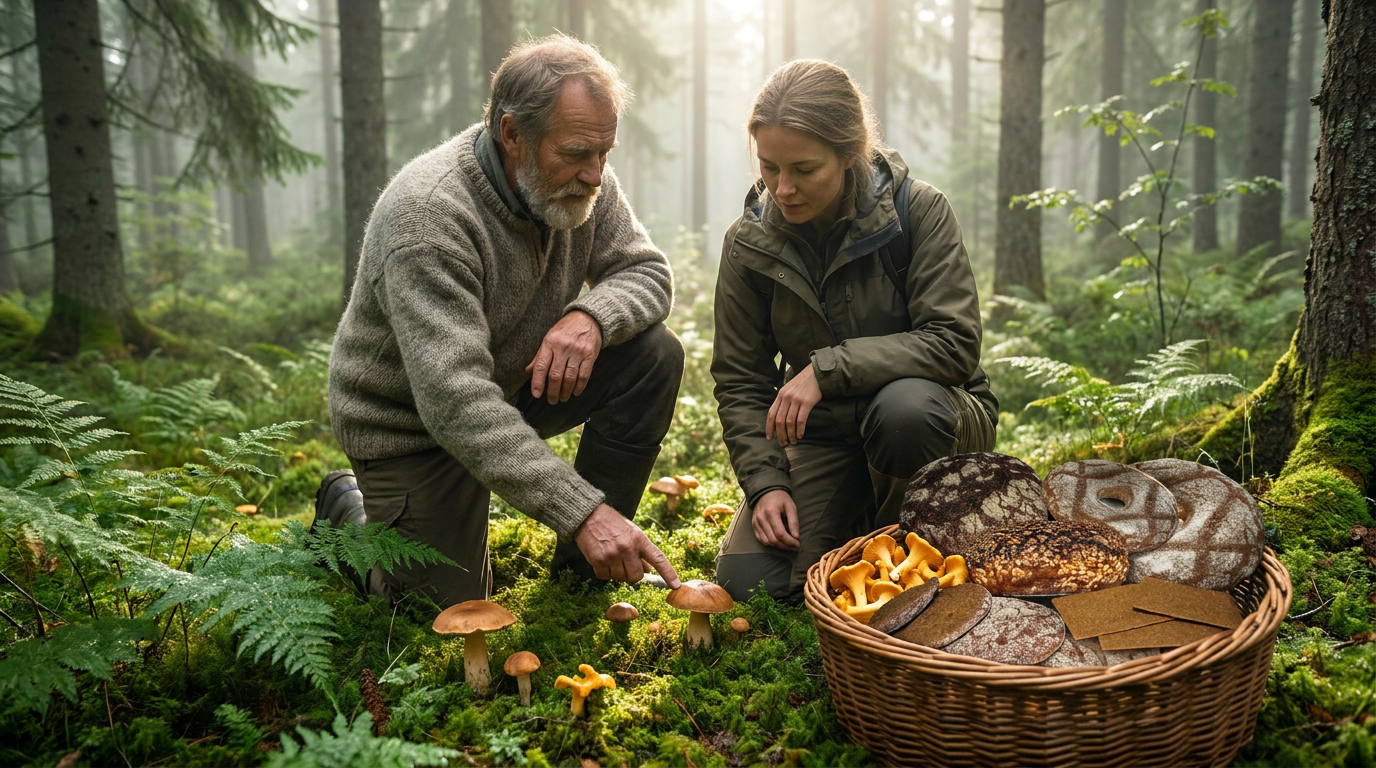
The Nordic countries have emerged as the epicenter of this trend, hosting tens of thousands of foraging tourists annually. These visitors venture into boreal forests to harvest golden chanterelles, porcini mushrooms, and cloudberries, generating hundreds of millions of euros for rural communities in the process.[3]
Crucially, modern foraging tourism is heavily regulated and scientifically grounded to ensure it remains a regenerative force. Expert mycologists and botanists lead these expeditions, teaching participants that sustainable harvesting actually improves ecosystem health. Studies have shown that properly managed foraging—which involves removing no more than 10 to 15 percent of a mushroom patch—can increase future yields by up to 25 percent through enhanced spore dispersal.[3]
These guided experiences also serve as vital educational platforms. Participants learn to identify indicator species that signal a healthy ecosystem, and they witness firsthand how climate change is shifting harvest seasons. Furthermore, the mandatory use of certified guides has dramatically improved safety, reducing amateur poisoning incidents by over 90 percent while funding the preservation of old-growth forests.[3]
The economic momentum behind regenerative food tourism is undeniable. The broader food tourism market is projected to generate over $1 trillion in global revenue by the end of the decade, with a rapidly growing segment of travelers prioritizing ethical and sustainable experiences. Industry data indicates that 55 percent of travelers aged 25 to 44 consider themselves food enthusiasts, and they are willing to spend significantly more on trips that offer authentic, culturally rooted dining.[6]

As consumer demand shifts, Destination Marketing Organizations (DMOs) are stepping in to facilitate these complex, hyper-local supply chains. By acting as matchmakers between rural producers and urban hotels, DMOs help prevent "tourism leakage"—the phenomenon where vacation spending flows out of the host country to multinational corporations.[4]
This localized economic loop is essential for building resilient communities. When a hotel commits to purchasing heritage grains from a neighboring farm or wild greens from a local foraging cooperative, it provides the financial stability necessary for those producers to resist the pressure of industrial agriculture.[4][7]
The regenerative ethos is also tackling the hospitality industry's most persistent failure: food waste. Initiatives like Copenhagen's "Stop Wasting Food" movement are inspiring destinations worldwide to adopt circular dining models. Advanced AI systems are now being deployed in resort kitchens to predict consumption patterns, drastically reducing the volume of organic matter sent to landfills.[1][4]

Ultimately, the transition toward regenerative food tourism reflects a profound maturation of the modern traveler. The desire for "affordable better"—high-quality, locally sourced food that carries a rich cultural narrative—is dethroning the generic, one-size-fits-all luxury of the past.[6][7]
By choosing to participate in culinary conservation, travelers are no longer just passive consumers of a destination's resources. They become active investors in its ecological and cultural survival, proving that the most memorable meals are those that leave the earth richer than they found it.[5][7]
How we got here
2019
The concept of "regenerative tourism" begins gaining traction as an evolution beyond traditional sustainability.
2021
Post-pandemic travel reopens with a marked shift in consumer demand toward outdoor, nature-connected experiences.
2023
Global food tourism generates an estimated 10 million jobs, with a growing emphasis on authentic, local cuisine.
2025
Professional-guided foraging tourism reaches 1.1 million annual participants, a 420% increase over six years.
2026
"Culinary conservation" becomes a defining trend in luxury travel, integrating ecosystem restoration directly into dining.
Viewpoints in depth
Regenerative Operators
Viewing tourism as a tool for ecological funding.
For hospitality brands and tour operators adopting this model, the goal is to integrate their supply chains entirely with the local ecosystem. They argue that tourism should leave a place better than it found it, using the premium prices paid by luxury travelers to subsidize multi-cropping gardens, coral restoration, and fair wages for indigenous farmers. To these operators, a meal is only successful if its ingredients actively contributed to the health of the soil or sea it came from.
Conservation Academics
Advocating for active restoration over mere sustainability.
Researchers and sustainability advocates emphasize the need for rigorous ecological metrics to prevent "greenwashing." They point out that true regenerative tourism requires systemic thinking—shifting from a mindset of "doing less harm" to one of "active healing." This camp focuses on the data, such as measuring the increase in mycelial networks or the return of indicator species, to prove that culinary conservation is having a measurable, positive impact on the environment.
Experiential Travelers
Seeking deep authenticity and connection through food.
The consumers driving this market shift are increasingly disillusioned with generic, mass-produced luxury. They are willing to pay a premium for hands-on education, such as guided foraging or visiting a local farm, because they want a meal with a traceable, hyper-local narrative. For this group, the value of the vacation lies in the intellectual satisfaction and the feeling of contributing positively to the destination's cultural and ecological survival.
What we don't know
- How effectively the hospitality industry can scale these hyper-local supply chains without compromising the authenticity of the experience.
- Whether the premium price point of regenerative tourism will limit its impact to luxury travelers rather than the broader mass market.
Key terms
- Regenerative Tourism
- A travel model aimed at actively improving and restoring the ecological and social systems of a destination, rather than just minimizing harm.
- Culinary Conservation
- The practice of preserving traditional food systems, native ingredients, and local agriculture through culinary experiences and tourism funding.
- Mycelial Network
- The underground, root-like structure of fungi that plays a critical role in forest health and nutrient cycling.
- Tourism Leakage
- The economic phenomenon where money spent by tourists flows out of the host destination to foreign-owned corporations.
- Indicator Species
- Plants or fungi whose presence, absence, or abundance reflects the specific environmental conditions and overall health of an ecosystem.
Frequently asked
What is the difference between sustainable and regenerative tourism?
Sustainable tourism aims to minimize negative impacts and maintain the status quo, while regenerative tourism seeks to actively heal, restore, and improve the destination's environment and community.
Does foraging for wild food damage the forest?
When done incorrectly, it can. However, professional-guided foraging teaches sustainable limits (taking only 10-15% of a patch) which actually aids in spore dispersal and can increase future yields.
Why are regenerative food experiences often more expensive?
These experiences rely on hyper-local, small-scale farming and expert guides, which require fair wages and intensive labor compared to mass-produced, industrialized food supply chains.
Sources
Source coverage
7 outlets
3 viewpoints surfaced







[1]ForbesRegenerative Operators
Iberostar Hotel & Resorts Focuses On Sustainability And Conservation
Read on Forbes →[2]Hatari TravelRegenerative Operators
Culinary Conservation: Wondergarden and Regenerative Safari
Read on Hatari Travel →[3]GetExperienceExperiential Travelers
The Science and Ethics of Modern Foraging Tourism
Read on GetExperience →[4]Global Destination Sustainability MovementConservation Academics
Sustainability and Food Tourism: an Innovative Trend
Read on Global Destination Sustainability Movement →[5]RoutledgeConservation Academics
Routledge Handbook of Regenerative Tourism
Read on Routledge →[6]ZipDoExperiential Travelers
Food Tourism Statistics 2026
Read on ZipDo →[7]Factlen Editorial Team
Synthesis by Factlen editorial team
Read on Factlen Editorial Team →

Every angle. Every day.
Get travel stories with full source coverage and perspective breakdowns delivered to your inbox.