
The Rise of Astrotourism: How the Search for Dark Skies is Reshaping Travel in 2026
Driven by digital fatigue and expanding light pollution, travelers are increasingly flocking to certified Dark Sky Parks to reconnect with the cosmos.
By Factlen Editorial Team
- Conservation & Science Advocates
- Argues that dark skies are a critical natural and cultural heritage that must be protected from artificial light pollution.
- Travel & Hospitality Industry
- Views the night sky as a highly sought-after experiential resource that caters to travelers seeking wellness and digital disconnection.
- Regional Development Planners
- Sees astrotourism as a tool for social innovation, bringing sustainable economic growth to remote and peripheral communities.
What's not represented
- · Indigenous communities whose ancestral sky knowledge is commodified
- · Local residents in remote areas facing increased traffic from astrotourists
Why this matters
As light pollution erases the stars for 80% of the global population, astrotourism is transforming the night sky into a protected resource. This movement not only offers travelers a profound antidote to digital burnout, but provides a vital economic lifeline that funds conservation in rural communities worldwide.
Key points
- Astrotourism has surged in 2026 as travelers seek "hushpitality" and an escape from digital fatigue.
- DarkSky International recently certified its 250th protected site, requiring rigorous lighting retrofits to eliminate upward skyglow.
- The Bortle scale is used to measure night sky brightness, ranging from Class 9 (inner-city) to Class 1 (pristine darkness).
- A total solar eclipse in August 2026 is driving massive booking spikes across Spain and Iceland.
- The trend provides a sustainable economic engine for peripheral communities, funding local conservation and habitat restoration.
In an era increasingly defined by digital fatigue and sensory overload, the ultimate luxury travel destination in 2026 is characterized not by what is there, but by what is missing. Travelers are actively fleeing the relentless glare of urban environments, seeking out the profound, uninterrupted darkness of the natural night sky. This pursuit of the pristine cosmos represents a fundamental shift in how people choose to spend their leisure time, prioritizing quiet contemplation and vast perspectives over crowded resorts and brightly lit entertainment districts. This movement, widely known as astrotourism or noctourism, has rapidly evolved from a niche hobby reserved for amateur astronomers into a major driver of the global travel industry. Booking platforms and travel agencies report a massive surge in demand for remote, low-light destinations, with travelers explicitly building their itineraries around celestial events, meteor showers, and the simple desire to see the Milky Way. It is a form of experiential travel that treats the night not merely as a pause between days, but as a vibrant environment waiting to be explored.[5][6][7]
The shift toward nocturnal exploration is born largely of necessity. Artificial light at night continues to expand globally at an unprecedented rate, washing out the cosmos for the vast majority of the human population. For urban and suburban residents, the night sky has been reduced to a hazy, featureless void, punctuated only by the moon and a handful of the brightest planets. This pervasive light pollution not only obscures our view of the universe but also disrupts nocturnal ecosystems and human circadian rhythms, prompting a growing desire to reconnect with true darkness. To quantify this loss of darkness—and to help travelers locate genuinely pristine skies—astronomers and conservationists rely heavily on the Bortle scale. Created in 2001 by amateur astronomer John E. Bortle, this nine-level numeric system measures the brightness of the night sky and the observability of celestial objects. The scale provides a standardized, easily understood language for evaluating light pollution, allowing casual observers and professional scientists alike to compare the quality of different observing sites without requiring highly specialized photometric equipment.[1][2][3]

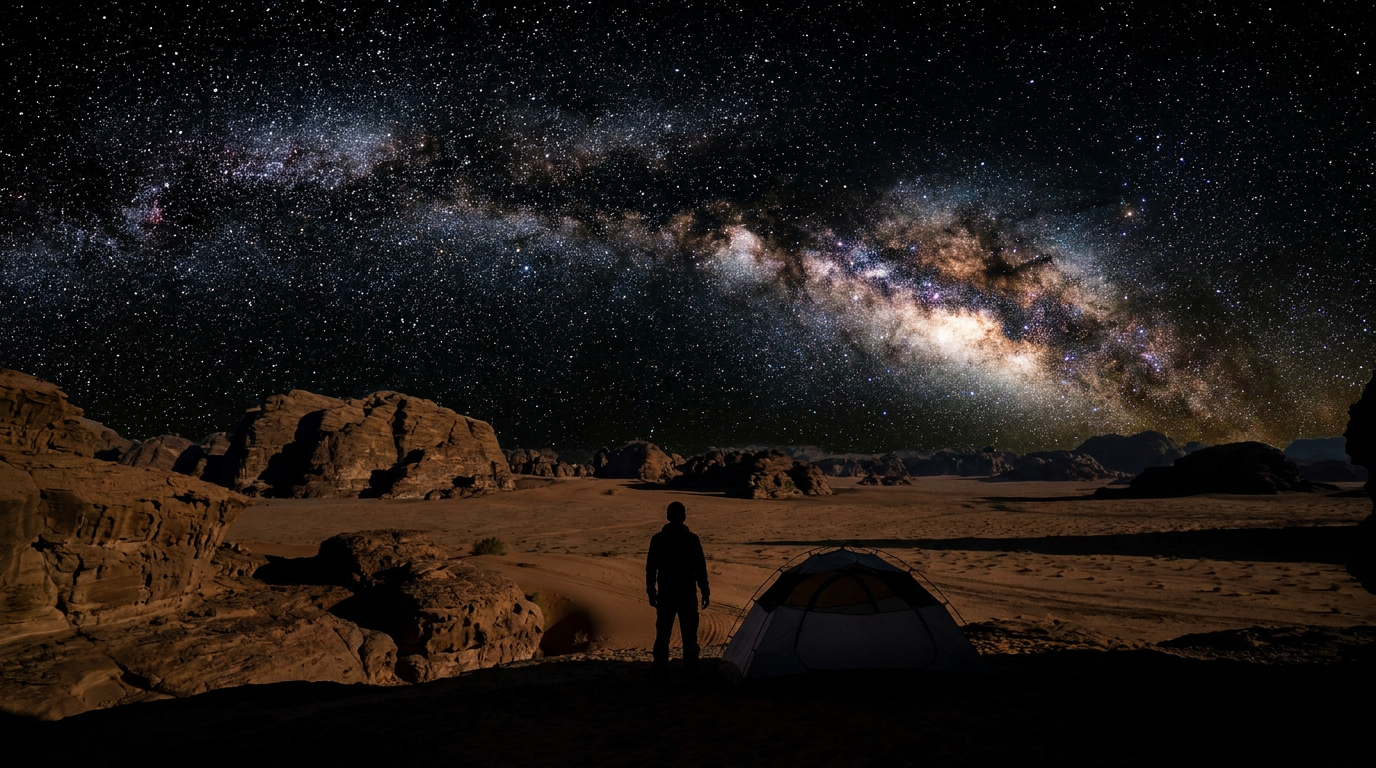
At the top of the scale, a Bortle Class 9 location represents a typical inner-city sky. In these heavily light-polluted environments, the sky glows with a brilliant, artificial twilight, and the entire celestial sphere is effectively erased from view. In stark contrast, a Bortle Class 1 site offers the darkest skies currently available on Earth. These remote sanctuaries are entirely free of artificial skyglow, presenting a nocturnal environment that closely resembles the skies our ancestors observed for millennia. The visual difference between these extremes is staggering. In a rare Class 1 or Class 2 environment, the fully dark-adapted human eye can perceive roughly 2,500 individual stars simultaneously. The Milky Way appears not as a faint smudge, but as a highly structured, luminous band of star clouds and dark dust lanes that is bright enough to cast distinct, diffuse shadows on the ground. Faint phenomena like the zodiacal light—sunlight scattering off interplanetary dust—become brilliant features of the night.[2][7]
Protecting these dwindling pockets of absolute darkness is the primary mission of DarkSky International, a global conservation organization that evaluates and certifies International Dark Sky Places. The organization works closely with communities, parks, and protected areas worldwide to implement effective lighting policies and promote public education about the nocturnal environment. By establishing rigorous standards for outdoor lighting, they aim to halt the encroachment of artificial skyglow into the world's remaining wild spaces. The conservation movement has gained remarkable traction in recent years as public awareness of light pollution grows. By late 2025, DarkSky International celebrated a major milestone with the official certification of its 250th International Dark Sky Place. This expansive global network now includes sprawling national parks, remote nature reserves, and even dedicated dark-sky communities that have collectively committed to preserving their view of the universe for future generations, proving that darkness is a resource worth defending on a massive scale.[1]

Achieving this prestigious designation is an arduous, multi-year process. A prospective park or community must conduct comprehensive lighting inventories, often assessing thousands of individual fixtures. To meet the certification standards, existing infrastructure must be retrofitted to ensure that all outdoor lighting is fully shielded, pointing strictly downward. Furthermore, communities must transition to warm-toned bulbs that minimize the scattering of blue light in the atmosphere, effectively eliminating upward light spill while maintaining safety on the ground. Utah's Snow Canyon State Park, one of the newest additions to the international registry, exemplifies this commitment. Park staff spent years updating their infrastructure to meet these rigorous standards, joining a dense cluster of certified sanctuaries in the American Southwest. Utah now boasts the highest concentration of DarkSky-certified areas in the world, leveraging its vast public lands and dry desert air to create an unparalleled haven for stargazers and nocturnal wildlife alike.[1][8]

Achieving this prestigious designation is an arduous, multi-year process.
The broader travel industry has taken keen notice of this specialized infrastructure. Major booking platforms report that search demand for accommodations near certified dark-sky reserves has skyrocketed. This trend is heavily intertwined with the rising demand for "hushpitality"—travel experiences deliberately designed to reduce sensory input and provide deep quiet. Travelers are increasingly willing to pay a premium for eco-lodges and remote cabins that offer nothing more than silence and a spectacular view of the cosmos. This surging demand is expected to reach a fever pitch in the summer of 2026, catalyzed by a highly anticipated total solar eclipse scheduled to sweep across parts of Spain and Iceland on August 12. Travel agencies report that specialized eclipse tours and accommodations in the path of totality sold out months, and in some cases years, in advance. While the eclipse serves as the primary draw, these events frequently introduce thousands of new travelers to the broader appeal of astrotourism.[5][6][7]

Beyond the immediate spectacle of eclipses and meteor showers, astrotourism is increasingly recognized by researchers as a potent tool for social innovation and sustainable economic development. Academic studies highlight how the practice intertwines science, culture, and environmentalism, transforming the night sky into a powerful device for territorial regeneration. It offers a rare model of tourism where the primary attraction requires preservation rather than physical development or extraction. Because the absolute best stargazing inherently occurs far from major urban centers, astrotourism naturally redistributes travel revenue to peripheral and rural territories. Communities that may lack traditional tourist draws—such as pristine beaches or famous historical monuments—can leverage their isolation and lack of development as a premium asset. This geographic redistribution provides a vital economic lifeline to off-the-beaten-path regions that might otherwise struggle to attract international visitors.[4][7]
The International Astronomical Union's Office of Astronomy for Development views this economic incentive as a crucial component of global conservation efforts. They argue that dark skies are not merely a scientific resource for astronomers, but a living cultural heritage and an economic asset. When local communities realize the tangible financial value of their pristine skies, they become the fiercest and most effective advocates for responsible lighting policies and environmental protection. This community-led approach is already yielding results in regions like Coahuila, Mexico, where the LuNaR astrotourism project is actively training local guides and funding habitat restoration. By combining scientific outreach with sustainable tourism pathways, these initiatives prove that the night sky can serve as a catalyst for inclusive local development. It reframes darkness not as an absence of light or progress, but as a valuable commodity that empowers local populations.[3]
Despite these localized victories, the long-term future of astrotourism faces unprecedented new challenges. While ground-based light pollution can be effectively mitigated through municipal ordinances and shielded fixtures, the rapid deployment of commercial satellite mega-constellations in low Earth orbit introduces a novel form of skyglow. These vast networks of satellites reflect sunlight back to Earth long after dusk, creating a diffuse brightness that ignores national borders and local lighting codes. Astronomers warn that as these satellite fleets continue to multiply, they threaten to raise the baseline brightness of the night sky globally. If left unchecked, this orbital light pollution could eventually degrade the viewing experience even in the most remote, fiercely protected Bortle Class 1 sanctuaries. It represents a critical frontier in the fight for dark skies, requiring international regulatory cooperation rather than just local community action.[7]
For now, however, the astrotourism boom represents a rare and highly successful alignment of interests across multiple sectors. It is a travel trend that actively funds environmental restoration, encourages municipal energy efficiency, and provides sustainable, long-term livelihoods for rural communities that have historically been left behind by traditional tourism. By inviting humanity to look up and reconnect with the vastness of the universe, astrotourism offers a profound, quiet antidote to the digital anxieties of the modern world. It stands as a powerful reminder that sometimes the most valuable and awe-inspiring destination is simply the unpolluted dark.[7]
How we got here
2001
Amateur astronomer John E. Bortle publishes the Bortle scale to help observers quantify light pollution.
2001
The International Dark Sky Places Program is founded to encourage communities to preserve dark sites.
Late 2025
DarkSky International officially certifies its 250th protected Dark Sky Place globally.
August 2026
A total solar eclipse sweeps across Spain and Iceland, driving a massive spike in astrotourism bookings.
Viewpoints in depth
Conservationists & Astronomers
Focuses on the ecological and scientific necessity of preserving true darkness.
For scientists and environmentalists, light pollution is not just an aesthetic issue; it is a profound disruption of the natural world. Artificial skyglow interferes with the navigational instincts of migratory birds, disrupts the feeding patterns of nocturnal wildlife, and severely limits the capacity of ground-based telescopes to study the cosmos. This camp argues that darkness is a fundamental natural resource, and that stringent, enforceable lighting ordinances are required to prevent the permanent erasure of the night sky.
Rural Tourism Boards
Emphasizes the economic lifeline that astrotourism provides to off-the-beaten-path communities.
Regional planners and local tourism boards view the night sky as a powerful engine for sustainable development. Because the best stargazing inherently requires distance from major urban centers, astrotourism naturally funnels travel revenue into peripheral territories that might otherwise struggle to attract visitors. By marketing their pristine skies, these communities can fund local infrastructure, create specialized guiding jobs, and build a tourism model that relies on preservation rather than extraction.
Urban Planners & Lighting Engineers
Balances the desire for dark skies with the practical realities of municipal safety and infrastructure.
City planners acknowledge the negative impacts of light pollution but must weigh them against public safety, traffic visibility, and the logistical costs of retrofitting entire municipalities. This perspective advocates for pragmatic compromises, such as the implementation of smart LED grids that dim after midnight, the use of targeted shielding to prevent upward light spill, and the transition to warmer color temperatures that minimize atmospheric scattering without plunging streets into total darkness.
What we don't know
- Whether international regulations will be established to limit the light pollution caused by low Earth orbit satellite mega-constellations.
- How remote dark-sky communities will balance the influx of astrotourism revenue with the potential for overcrowding and infrastructure strain.
Key terms
- Bortle scale
- A nine-level numeric scale used by astronomers to measure the brightness of the night sky and the interference of light pollution.
- Skyglow
- The diffuse illumination of the night sky caused by artificial light scattering in the atmosphere, often appearing as a dome of light over cities.
- Astrotourism
- A form of sustainable travel focused on visiting destinations with exceptionally dark skies to observe celestial phenomena.
- Light pollution
- The inappropriate or excessive use of artificial light at night, which disrupts ecosystems and obscures the natural view of the cosmos.
Frequently asked
What makes a certified Dark Sky Park different from a regular park?
Certified parks have undergone rigorous lighting audits to eliminate upward light spill and have committed to ongoing public education about preserving the nocturnal environment.
Do I need an expensive telescope to enjoy astrotourism?
No. In a truly dark location (Bortle Class 1 or 2), the naked eye can see thousands of stars, the Milky Way, and even neighboring galaxies like Andromeda.
How does astrotourism help the environment?
It provides an economic incentive for rural communities to adopt responsible lighting practices, which in turn protects nocturnal wildlife and reduces energy waste.
Where are most Dark Sky Parks located?
While they exist globally, the United States currently holds the highest concentration, particularly in the American Southwest where dry air and vast public lands create ideal viewing conditions.
Sources
Source coverage
8 outlets
3 viewpoints surfaced








[1]DarkSky InternationalConservation & Science Advocates
250 International Dark Sky Places
Read on DarkSky International →[2]WikipediaConservation & Science Advocates
Bortle scale
Read on Wikipedia →[3]International Astronomical UnionConservation & Science Advocates
Astrotourism and Conservation
Read on International Astronomical Union →[4]MDPIRegional Development Planners
Astrotourism as Social Innovation for Peripheral Territories: Pathways for Sustainable Development Under Dark Skies
Read on MDPI →[5]KAYAKTravel & Hospitality Industry
The best Dark Sky Parks for stargazing in 2025 - 2026
Read on KAYAK →[6]HomeToGoTravel & Hospitality Industry
The 2026 Astrotourism Report
Read on HomeToGo →[7]Factlen Editorial TeamRegional Development Planners
Synthesis by Factlen editorial team
Read on Factlen Editorial Team →[8]Utah State ParksRegional Development Planners
Snow Canyon State Park is the World's Newest International Dark Sky Destination
Read on Utah State Parks →

Every angle. Every day.
Get travel stories with full source coverage and perspective breakdowns delivered to your inbox.